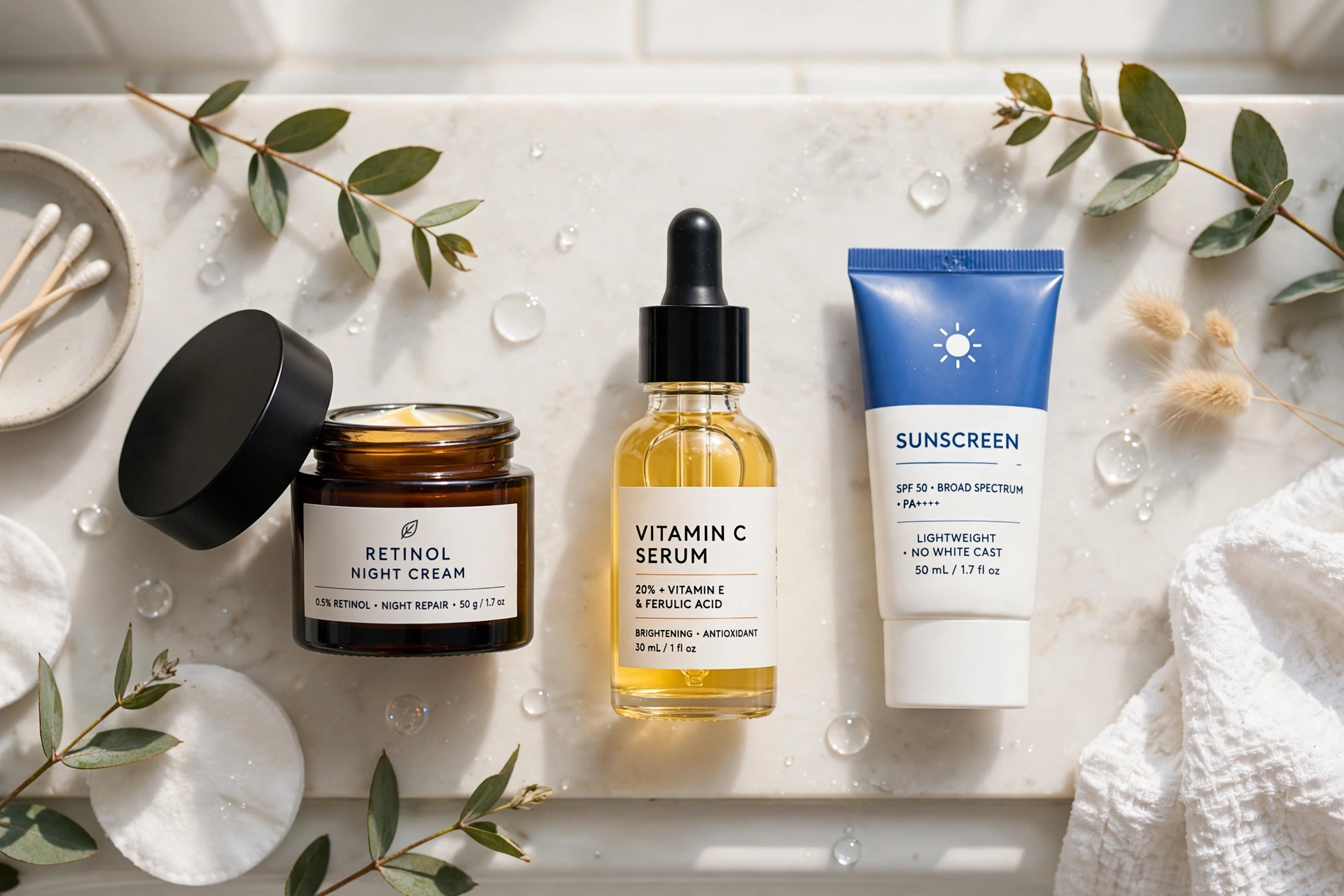
If you have ever stood in front of your bathroom shelf wondering can you use retinol and vitamin c together uk, you are far from alone. These are two of the most powerful, most researched skincare ingredients on the market, and they are also the two most likely to cause confusion. One promises smoother skin, fewer fine lines and clearer pores, while the other promises brightness, faded dark spots and antioxidant protection. Naturally, most of us want both benefits at once. The good news is that yes, you can use retinol and vitamin C together, but how you combine them matters enormously. Used in the wrong order, at the wrong strengths, or layered directly on top of each other every single night, the pair can leave your skin red, flaky and irritated. Used sensibly, with the right routine and the right UK products, they are one of the most effective anti-ageing combinations available without a prescription.
This guide explains exactly how to make the combination work for your skin. You will learn whether the two ingredients genuinely clash or whether that old warning is outdated, the safest way to split them between morning and evening, the correct order of application, how to build a full AM/PM routine around them, which UK products are worth your money at every price point, and who should avoid the combination altogether. Every product mentioned is available in the UK from retailers such as Boots, Superdrug or Cult Beauty, with realistic pound prices, and every recommendation follows UK sunscreen rules, because daily SPF is non-negotiable when you use either of these actives.
## Can You Use Retinol and Vitamin C Together UK? The Short Answer
Yes, you can use retinol and vitamin C together, and most dermatologists now agree that the old rule telling you never to mix them is outdated. The warning originally came from a genuine concern: traditional pure vitamin C, known as L-ascorbic acid, works best at a low, acidic pH, while retinol converts to its active form most efficiently at a more neutral pH. Layering them directly on top of each other was thought to destabilise both ingredients and increase irritation. Modern formulations have largely solved this problem. Many vitamin C serums now use stable derivatives such as ethyl ascorbic acid, sodium ascorbyl phosphate or tetrahexyldecyl ascorbate, which are far gentler and far less pH-sensitive than old-school L-ascorbic acid.
That said, "you can combine them" is not the same as "you should layer them together every night." Skin tolerance is the real deciding factor. If your skin is resilient, oily or already used to active ingredients, you may tolerate a gentle vitamin C serum in the morning and retinol at night with no trouble at all. If your skin is sensitive, dry, rosacea-prone or new to actives, layering both on the same evening, or starting both in the same week, is a fast route to a damaged skin barrier. The safest approach, and the one this guide recommends for most UK readers, is to split them: vitamin C in the morning, retinol at night. You get the full benefit of both, with minimal risk of irritation, and you never have to worry about pH conflicts or product pilling.
## Why Retinol and Vitamin C Sometimes Clash
To understand the combination, it helps to understand what each ingredient actually does. Retinol is a form of vitamin A. Once applied, it converts in the skin to retinoic acid, which speeds up cell turnover, boosts collagen production, unclogs pores and smooths texture. That power comes with a well-known adjustment period often called retinisation, during which peeling, dryness and mild redness are common. Retinol also makes skin more sensitive to sunlight, which is why it belongs in an evening routine and why daily sunscreen is essential.
Vitamin C, meanwhile, is a potent antioxidant. It neutralises free radical damage from UV light and pollution, brightens dull skin, fades post-inflammatory marks and supports collagen synthesis. Pure L-ascorbic acid is the most researched form, but it is also the most irritating, the most unstable, and the most likely to oxidise and turn orange in the bottle. Stable derivatives trade a small amount of potency for much better tolerance and shelf life, which makes them a smarter choice for beginners and sensitive skin.
The clash, when it happens, is rarely chemical. It is almost always about irritation load. Both ingredients are exfoliating or stimulating in their own way, and both can cause dryness, stinging or redness on their own. Stack them together, especially at high strengths, and you double that load. Add a strong acid exfoliant, a scrub or a harsh cleanser on top, and even resilient skin can protest. This is why experienced skincare users talk about "active budgets": your skin can only handle so much stimulation in one routine, and spreading powerful ingredients across the week is usually more effective than using everything every day.
## Can You Use Retinol and Vitamin C Together UK: The Safest Method
The simplest, safest and most effective method is the AM/PM split. Vitamin C goes on in the morning, where its antioxidant protection works alongside your sunscreen to defend against daytime UV and pollution damage. Retinol goes on at night, where it can work undisturbed while your skin repairs itself during sleep. This approach removes any pH concern entirely, because the two ingredients never meet on your skin, and it gives each one the time of day when it performs best.
If you prefer to use both in the evening, perhaps because your mornings are rushed, you can still do it safely with a few rules. Apply vitamin C first, wait at least ten to fifteen minutes for it to absorb fully, then apply retinol, and finish with a good moisturiser. Only attempt this if your skin already tolerates both ingredients separately, and never start both on the same night. Introduce one ingredient, use it for two to three weeks, then add the second. That way, if irritation appears, you will know exactly which product caused it.
A third option, popular with sensitive skin types, is alternate nights: vitamin C one evening, retinol the next. This works well if you find daily retinol too drying, or if you want to use a stronger vitamin C formula without overloading your skin. There is no rule that says either ingredient must be used daily to work. Consistency over months matters far more than daily frequency, and a routine you can stick to without irritation will always beat an ambitious routine you abandon after two weeks.
### Morning Routine: Vitamin C
Your morning routine should be short, protective and focused on antioxidant defence. Cleanse gently with lukewarm water or a mild cleanser, then apply your vitamin C serum to dry skin. Wait a minute or two, follow with a hydrating serum or moisturiser if needed, and always finish with a broad-spectrum sunscreen of at least SPF 30. In the UK, look for sunscreens carrying both an SPF rating and a UVA star rating, ideally four or five stars, because UVA is the wavelength most responsible for premature ageing. This step is not optional when you use retinol or vitamin C: both ingredients can increase sun sensitivity, and unprotected sun exposure will undo much of the brightening and anti-ageing work you are doing.
### Evening Routine: Retinol
Your evening routine is where retinol earns its place. Cleanse thoroughly to remove sunscreen, makeup and the day's grime, then pat your skin dry and wait until it is completely dry before applying retinol. Applying retinol to damp skin increases absorption and irritation, which is the opposite of what you want. Use a pea-sized amount for the whole face, dot it on the forehead, cheeks and chin, and spread it in a thin, even layer, avoiding the immediate eye area and the corners of the nose and mouth. Follow with a plain, fragrance-free moisturiser to seal everything in and buffer any dryness. If your skin feels tight or flaky, the sandwich method works well: apply moisturiser first, then retinol, then moisturiser again.
## Order of Application: The Golden Rules
Order matters most when you use several products in one routine. The general rule is thinnest to thickest: watery serums first, richer creams last, sunscreen always last in the morning. Vitamin C serums are usually lightweight and water-based, so they sit comfortably after cleansing and before moisturiser. Retinol products range from light serums to rich creams, so their position depends on the formula, but in a simple evening routine they come after cleansing and before or mixed with moisturiser.
There are two order mistakes worth avoiding. The first is applying retinol straight after a strong acid exfoliant such as glycolic or salicylic acid. That combination is one of the most common causes of over-exfoliation, and it can leave skin raw and reactive for days. Keep acids and retinol on different nights, or use acids in the morning and retinol at night. The second mistake is layering multiple new actives at once. If you are also curious about niacinamide, which is generally one of the gentlest and most compatible ingredients, read our guide to [niacinamide and vitamin C together](https://www.glowmagzine.com/blog/niacinamide-and-vitamin-c-together-uk/) before adding it to your routine, and introduce it separately so you can judge its effect.
## Building Your Full AM/PM Routine
A complete routine does not need ten steps. In fact, a shorter routine is usually easier to follow and kinder to your skin. Here is a simple template that works for most skin types in the UK, with optional extras clearly marked as optional rather than essential.
| Step | Morning | Evening |
|---|---|---|
| Cleanse | Gentle cleanser or lukewarm water | Gentle cleanser, double cleanse if wearing SPF or makeup |
| Treat | Vitamin C serum | Retinol (pea-sized amount) |
| Hydrate | Lightweight moisturiser if needed | Fragrance-free moisturiser |
| Protect | Broad-spectrum SPF 30 to 50 with high UVA stars | Optional facial oil or richer night cream |
Start slowly. Use retinol two or three nights per week for the first two to three weeks, then increase to every other night, then nightly only if your skin remains calm. Use vitamin C every morning if it suits you, or every other morning if you notice stinging. Keep a simple, fragrance-free moisturiser and a gentle cleanser as your constants, because when irritation strikes, stripping your routine back to those basics for a few days is the fastest way to recover. For a deeper look at pairing retinol with other popular ingredients, our guide to the [retinol and niacinamide routine order](https://www.glowmagzine.com/blog/retinol-and-niacinamide-routine-order-uk/) explains how to sequence that particular combination.
## Who Should Avoid Mixing Retinol and Vitamin C
Most people can use both ingredients, but some should proceed with extra caution or avoid the combination for now. If you have active eczema, rosacea flare-ups, perioral dermatitis or a currently damaged skin barrier, with symptoms such as stinging when you apply plain moisturiser, visible redness that does not settle, or flaking that worsens daily, pause all actives and focus on barrier repair first. Our guide on [how to repair a damaged skin barrier](https://www.glowmagzine.com/blog/how-to-repair-damaged-skin-barrier-uk/) walks through that recovery step by step. Speak to a GP or dermatologist if your symptoms persist, worsen, or you are unsure whether a skin condition is behind them, as some conditions need prescription treatment rather than over-the-counter skincare.
Pregnant or breastfeeding readers should also be cautious. Topical retinoids are generally advised against during pregnancy, so retinol should be paused and replaced with pregnancy-safe alternatives such as vitamin C, niacinamide or azelaic acid, subject to your clinician's advice. Readers over fifty who are new to retinol often do best with a low-strength, encapsulated formula and a slower build-up, and our guide to the [best retinol for beginners over 50](https://www.glowmagzine.com/blog/best-retinol-for-beginners-over-50-uk/) covers suitable UK options. If you are using prescription tretinoin, adapalene or any medicated acne treatment, check with your prescriber before adding vitamin C, because prescription retinoids are considerably stronger than over-the-counter retinol and leave less room for additional actives.
Sensitive skin is not an automatic reason to avoid either ingredient. Many sensitive skin types do beautifully with a stable vitamin C derivative and a low-strength retinol, provided both are introduced one at a time and buffered with moisturiser. If pure L-ascorbic acid stings, switch to a derivative formula rather than giving up on vitamin C entirely. Our guide to the [best vitamin C serum for sensitive skin](https://www.glowmagzine.com/blog/best-vitamin-c-serum-for-sensitive-skin-uk/) compares the gentlest UK options. The British Association of Dermatologists provides patient information on retinoids and skin care routines through its [Skin Health Info](https://www.skinhealthinfo.org.uk/) service, which is a reliable place to check general advice before starting a new active.
## Best UK Products for Retinol and Vitamin C Together
UK availability matters, because importing skincare from overseas can mean long waits, customs charges and no easy returns. The products below are all stocked by UK retailers and cover a range of budgets, so you can build the routine without spending a fortune.
| Product | Type | Approximate UK Price | Where to Buy |
|---|---|---|---|
| The Ordinary Ascorbyl Glucoside Solution 12% | Stable vitamin C derivative | Around £9 | Boots, Cult Beauty |
| CeraVe Vitamin C Serum | Vitamin C with ceramides | Around £15 | Boots, Superdrug |
| La Roche-Posay Pure Vitamin C Serum | L-ascorbic acid, stronger formula | Around £38 | Boots, Cult Beauty |
| The Ordinary Retinal 0.2% Emulsion | Gentle retinal, beginner-friendly | Around £15 | Boots, Cult Beauty |
| CeraVe Resurfacing Retinol Serum | Encapsulated retinol | Around £20 | Boots, Superdrug |
| Medik8 Crystal Retinal 3 | Mid-strength retinal | Around £45 | Cult Beauty |
Budget shoppers should start with The Ordinary or CeraVe, both of which deliver proven ingredients at very fair prices. If you want a more luxurious experience or a formula with additional soothing ingredients, Medik8 and La Roche-Posay are excellent mid-range choices. Whatever you choose, check the bottle for a period-after-opening symbol and store vitamin C away from heat and light, because oxidised vitamin C loses potency and can irritate skin. If your serum turns dark orange or brown, it has oxidised and should be replaced.
## Common Mistakes to Avoid
The most common mistake is starting everything at once. A new cleanser, a new vitamin C serum, a new retinol and a new exfoliant in the same week makes it impossible to identify the culprit when irritation appears, and it overwhelms your skin's tolerance. Introduce one product at a time, with at least two weeks between new actives, and patch test new products on a small area such as the jawline before using them all over your face.
The second mistake is using too much retinol. A pea-sized amount genuinely covers the whole face, and using more does not speed up results, it only speeds up peeling. The third mistake is skipping sunscreen. Retinol increases sun sensitivity, and vitamin C works best when paired with daily SPF, so a morning without sunscreen undermines both ingredients. The fourth mistake is expecting overnight results. Vitamin C brightening typically takes four to eight weeks to become visible, while retinol's effects on fine lines and texture often take twelve weeks or more. Judge a routine after three months of consistent use, not after three days. The NHS offers general guidance on skin care and when to seek medical advice for persistent skin problems through [NHS skin conditions advice](https://www.nhs.uk/conditions/), which is worth checking if irritation does not settle.
## Frequently Asked Questions
### Can I use retinol and vitamin C on the same day?
Yes. The safest way is vitamin C in the morning and retinol at night, which lets you use both every day without them ever touching on your skin. This AM/PM split avoids pH concerns, reduces irritation and gives each ingredient its ideal time of day. If you prefer both in the evening, wait at least ten minutes between them and only do so once your skin tolerates each one separately.
### Should I apply vitamin C or retinol first?
If you use them in the same routine, apply vitamin C first because it is usually the lighter, water-based formula, then wait for it to absorb before applying retinol. In the recommended AM/PM split, the question does not arise: vitamin C goes on in the morning after cleansing, and retinol goes on at night after cleansing. Thinnest to thickest is the general rule for any routine.
### Can I mix retinol and vitamin C in my hand before applying?
No, do not mix them together in your palm or in a single bottle. Mixing can destabilise both formulas, change their pH and make it impossible to control the dose of each ingredient. Apply them as separate layers with a short wait between them, or better still, use them at different times of day as described above.
### How long should I wait between vitamin C and retinol?
If you layer them in the same routine, wait at least ten to fifteen minutes for the vitamin C to absorb fully before applying retinol. This reduces pilling and irritation. If you use the AM/PM split, no waiting time is needed beyond your normal routine, because the two ingredients are separated by many hours.
### Can sensitive skin use retinol and vitamin C together?
Yes, with care. Choose a stable vitamin C derivative rather than pure L-ascorbic acid, pick a low-strength or encapsulated retinol, introduce one ingredient at a time, and buffer with a fragrance-free moisturiser. Start retinol just two nights per week and increase slowly. If stinging or redness persists for more than a few days, pause the actives, simplify your routine and speak to a GP or dermatologist if the problem does not settle.
### Will retinol and vitamin C make my skin peel?
Some peeling is normal when you first start retinol, especially during the first two to four weeks, and it usually settles as your skin adjusts. Vitamin C rarely causes peeling on its own, but combining both at high strengths can worsen dryness. Reduce retinol frequency, use a richer moisturiser, avoid scrubs and strong acids while peeling, and never pick or exfoliate peeling skin aggressively, as that can cause marks and prolong recovery.
### Do I need sunscreen if I use retinol and vitamin C?
Yes, absolutely. Daily broad-spectrum sunscreen is essential when using either ingredient. Retinol increases sun sensitivity, and UV exposure breaks down collagen and creates the very pigmentation that vitamin C is trying to fade. In the UK, choose SPF 30 to 50 with a high UVA star rating, apply it every morning as the last step of your routine, and reapply if you spend extended time outdoors.
### Can I use retinol and vitamin C if I am over 50?
Yes, and many people over fifty find the combination particularly rewarding, because it addresses both the fine lines and the dullness that become more noticeable with age. Start with gentle, encapsulated formulas, build up slowly, and prioritise a rich moisturiser and daily SPF alongside them. Mature skin is often drier, so the sandwich method of moisturiser, retinol, moisturiser can make the adjustment period much more comfortable.
## Key Takeaways
- Yes, you can use retinol and vitamin C together, and the safest method for most people is vitamin C in the morning and retinol at night.
- Never start both ingredients in the same week; introduce one at a time so you can identify any irritation.
- Use a pea-sized amount of retinol, apply it to fully dry skin, and always buffer with a fragrance-free moisturiser.
- Daily broad-spectrum SPF 30 to 50 with a high UVA star rating is non-negotiable when using either active.
- Stable vitamin C derivatives are gentler and more reliable for sensitive skin than pure L-ascorbic acid.
- Keep acids and retinol on different nights, and judge results after three months of consistent use, not three days.
- Pause all actives and focus on barrier repair if your skin stings, stays red or flakes persistently, and speak to a GP or dermatologist if symptoms do not settle.
## Conclusion
Retinol and vitamin C are a genuinely powerful pairing, but only when they are used with patience and respect for your skin's limits. The old warning that they must never be mixed has softened into a much more useful rule: do not layer strong versions of both on the same skin at the same time until you know your tolerance, and give each ingredient the time of day when it works best. Vitamin C in the morning protects and brightens, retinol at night renews and smooths, and a simple moisturiser plus daily UK sunscreen holds the whole routine together. Start slowly, choose UK products that suit your budget and skin type, and give the combination a full three months before judging it. Done this way, retinol and vitamin C together can deliver brighter, smoother, more even skin without the redness and peeling that give the pairing its fearsome reputation.