Can You Mix Vitamin C and Hyaluronic Acid Together UK? Layering Guide
Can you mix vitamin C and hyaluronic acid together UK? Yes — learn the right order, AM/PM routine, and the best UK serums for glowing skin.
Read More arrow_forwardCan you use glycolic acid and vitamin C together safely in the UK? Yes — with the right order, timing and gentle products, you can get glow without irritation.
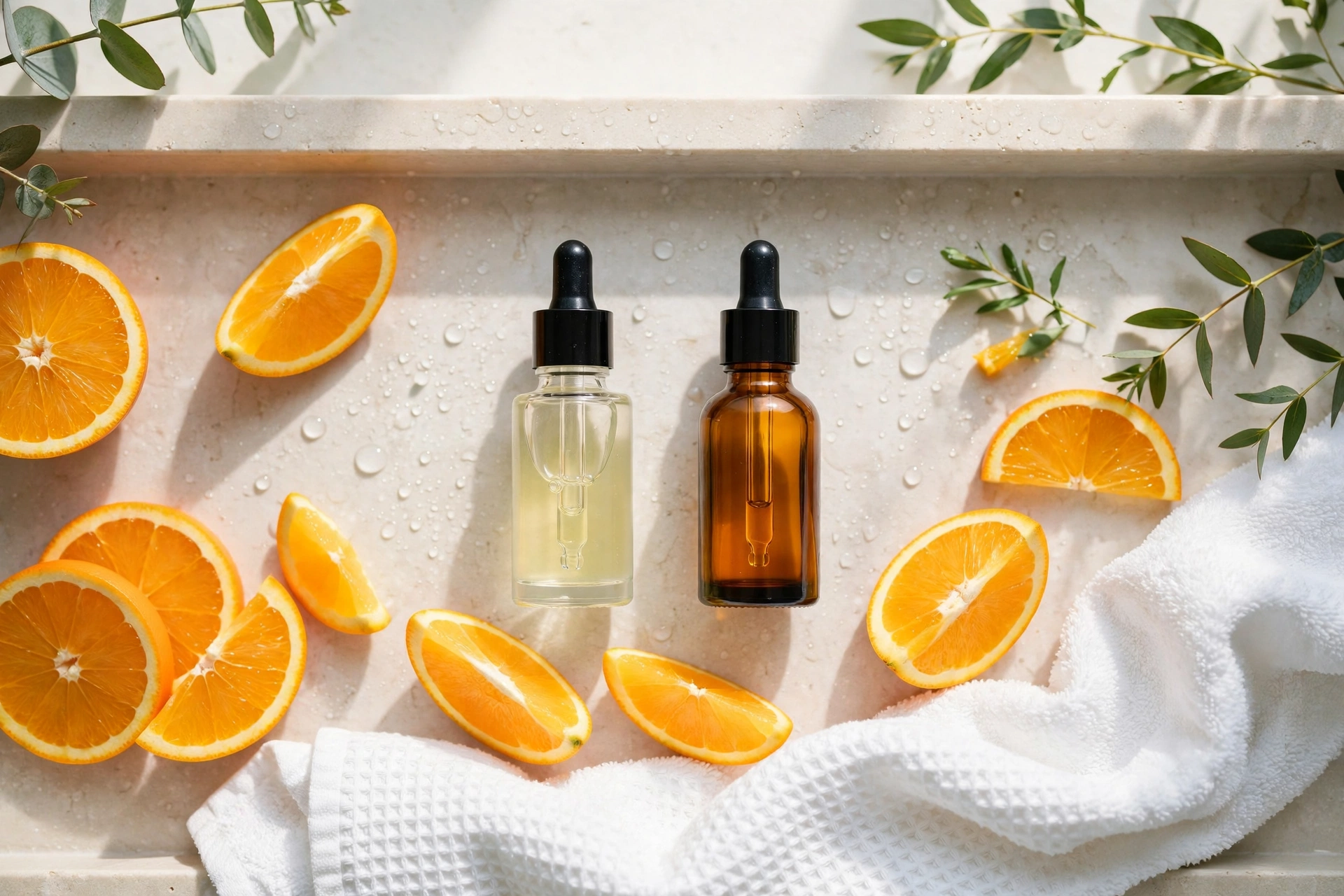
If you have ever stood in front of your bathroom shelf wondering, can you use glycolic acid and vitamin c together uk shoppers ask about every single week, you are not alone. Both ingredients are famous for brightening dull skin, fading dark marks and smoothing rough texture, so it feels logical to use them at the same time. The short answer is yes, you can use them together, but how you combine them matters far more than whether you combine them at all. Used carelessly in the same routine, glycolic acid and vitamin C can leave skin red, tight, flaky or spotty. Used thoughtfully, with the right order, the right strengths and enough recovery time, they can complement each other beautifully and deliver the glow most people are chasing.
This guide explains the science in plain English, the safest ways to layer or separate these two actives, the mistakes that cause irritation, and the UK products worth trying at Boots, Superdrug and Cult Beauty. It also covers who should be cautious, what to do if your skin reacts, and how to build a simple routine that actually suits British weather, hard water and central heating. This is general information only, not medical advice. If you have eczema, rosacea, psoriasis or any diagnosed skin condition, speak to your GP or a dermatologist before adding strong exfoliating acids to your routine.
What glycolic acid and vitamin C actually do
Glycolic acid is an alpha hydroxy acid, or AHA, made from sugar cane. It has the smallest molecular size of all the AHAs, which means it penetrates the surface of the skin efficiently and loosens the bonds between dead skin cells. When those dull, dead cells shed more quickly, fresh skin underneath looks brighter, pores look less clogged, and fine lines and uneven texture soften over time. Most over-the-counter glycolic products in the UK sit between 5% and 10%, although stronger peels used in clinics can be much higher. At home, lower strengths used consistently almost always beat a harsh product used once and then abandoned because of irritation.
Vitamin C, most commonly in the form of L-ascorbic acid or gentler derivatives such as ethyl ascorbic acid and sodium ascorbyl phosphate, is a powerful antioxidant. It helps defend skin against pollution and UV damage, supports collagen production, and interferes with excess melanin production, which is why it is so popular for dark spots, post-blemish marks and general dullness. Pure L-ascorbic acid works best at a low pH, usually around 3.5 or below, and at concentrations between 10% and 20%. Derivative forms are less potent but far kinder, which makes them a sensible starting point for sensitive or reactive skin.
The two ingredients target different steps in the brightening process. Glycolic acid clears the path by exfoliating, while vitamin C works on tone, antioxidant protection and collagen support. That is why pairing them is so tempting, and why, when the pairing is managed well, the results can be better than using either ingredient alone. The problem is not that they cancel each other out in some dramatic chemical explosion. The real problem is cumulative irritation: two potent, low-pH actives applied together can overwhelm the skin barrier, especially in winter, after sun exposure, or when other strong actives are also in the mix.
Why the old warning still circulates
For years, skincare forums repeated a simple rule: never mix vitamin C and AHAs. That advice came from a reasonable concern. Pure vitamin C is most stable and effective at a very low pH, and glycolic acid also lowers skin pH. Early thinking suggested that changing the pH could destabilise vitamin C or make it less effective. Modern formulation science is more nuanced. Many vitamin C derivatives are stable across a wider pH range, and skin pH recovers quickly after a product is applied. Dermatologists now generally agree that the bigger risk is irritation, not a complete loss of effectiveness. In other words, the question is less about chemistry in the bottle and more about tolerance on your face.
That nuance matters for UK shoppers because so many popular products are already formulated with both ingredients, or with a gentle derivative plus a low dose of acid. If you buy a well-formulated product that combines them, the manufacturer has already tested that balance. The risk rises when you stack two separate, strong, low-pH products on top of each other, morning and night, without rest days. Understanding that distinction will help you make calmer, smarter choices.
How can you use glycolic acid and vitamin c together uk without irritation?
The safest answer for most people is to separate them by time of day. Use vitamin C in the morning and glycolic acid in the evening. This is the method dermatologists recommend most often, and it plays to each ingredient's strengths. Vitamin C in the morning gives you antioxidant protection during the day, when pollution and UV exposure are at their highest. Glycolic acid at night works while you sleep, when skin is in repair mode and you are not adding sun sensitivity on top of exfoliation. This split also means your skin only deals with one strong active at a time, which dramatically lowers the chance of redness and peeling.
Start slowly, even if you have used one of these ingredients before. If you are new to both, introduce vitamin C first for two weeks, then add glycolic acid two or three evenings a week. If you already use one comfortably, add the second at a low strength and only two or three times a week. Watch for warning signs for at least a fortnight: persistent redness, stinging that lasts more than a few minutes, flaking, tightness, or new breakouts in areas where you do not usually get spots. Mild tingling for a minute or two can be normal with glycolic acid, but burning, swelling or raw patches are not. If those appear, pause both actives, return to a gentle cleanser and moisturiser, and reintroduce only one at a time.
Another gentle option is alternate days. Use vitamin C on Monday, Wednesday and Friday mornings, and glycolic acid on Tuesday, Thursday and Saturday evenings, with Sunday as a full rest day. This rhythm works particularly well for combination, sensitive or mature skin, and for anyone who lives with cold, windy weather or spends a lot of time in heated rooms. You still get the benefits of both ingredients across the week, but your barrier gets regular breathing space. Consistency over months matters far more than intensity over a single week.
The correct order if you do layer them in one routine
Some people prefer to layer both in the same routine, and it can be done, provided you follow a careful order and keep strengths modest. The general rule is thinnest to thickest, and lowest pH first. In practice, that usually means applying vitamin C serum first, waiting a few minutes for it to absorb, and then applying a glycolic product. However, many skincare experts suggest the reverse for comfort: apply glycolic acid first, wait 15 to 20 minutes so skin pH can begin to normalise, and then apply vitamin C. There is no single perfect answer, because formulations differ, and the best approach is to follow the instructions on the specific products you own.
If you choose same-routine layering, keep these guardrails in place. Use a vitamin C derivative rather than pure 20% L-ascorbic acid, and keep glycolic acid at 5% to 7% rather than 10% or higher. Use the combination no more than two or three times a week at first. Always follow with a barrier-supporting moisturiser containing ceramides, glycerin or squalane, and never skip sunscreen the next morning. If you use prescription retinoids, strong retinol, benzoyl peroxide or another exfoliating acid on the same night, do not add both glycolic acid and vitamin C as well. That is a recipe for a compromised barrier, and no amount of glow is worth weeks of recovery.
When can you use glycolic acid and vitamin c together uk in one routine?
Timing is not just about morning versus evening. Season, lifestyle and your current skin condition all change the answer. In summer, when UV levels are higher and you may be sweating or swimming, same-night layering is riskier because freshly exfoliated skin is more sun-sensitive. In winter, cold air and central heating already dry skin out, so again, separation is kinder. The sweet spot for experimenting with combined use is usually spring or autumn, when the weather is milder and your skin is not already stressed by extremes.
Your skin type also matters. Oily, resilient skin with no history of sensitivity often tolerates combined use sooner than dry, sensitive or rosacea-prone skin. Mature skin can benefit enormously from both ingredients, because cell turnover slows with age, but it also tends to be thinner and drier, so a slow, alternate-day approach is usually wiser. If you are dealing with active acne, open spots or a damaged barrier, pause exfoliation altogether until your skin has calmed. Learning how to repair a damaged skin barrier first will save you far more time than pushing through irritation in pursuit of faster results.
Pregnancy and breastfeeding deserve a specific note. Glycolic acid in over-the-counter strengths is generally considered low risk, but vitamin C products vary, and some formulations contain additional ingredients that are not recommended during pregnancy. This article is general information, not medical advice, and anyone who is pregnant, breastfeeding or trying to conceive should check with their GP, midwife or dermatologist before starting a new active ingredient. The same caution applies if you take medication that increases sun sensitivity, such as certain antibiotics or acne treatments.
Morning and evening routines that actually work
A good routine does not need ten steps. It needs the right actives, used at the right time, with enough moisture and sun protection to support them. Below is a simple, UK-friendly framework you can adapt. Keep your cleanser gentle, lukewarm water only, and pat dry rather than rubbing with a towel.
A simple morning routine with vitamin C
Start with a gentle, non-foaming cleanser or just lukewarm water if your skin feels dry. Apply vitamin C serum to clean, slightly damp skin and let it absorb for a minute or two. Follow with a hydrating serum or light moisturiser, then sunscreen. In the UK, sunscreen is not just a holiday product. The NHS and dermatologists advise daily sun protection because UVA rays pass through cloud and glass and contribute to ageing and pigmentation all year round. Look for broad-spectrum SPF 30 or higher, and SPF 50 if you are using exfoliating acids, treating dark marks, or spending time outdoors. Reapply if you are outside for long periods.
For product ideas, a gentle derivative serum such as a 10% ethyl ascorbic acid formula is a good starting point and is widely stocked at Cult Beauty from around £20 to £35. If you prefer a high-street option, several Boots own-brand and mid-range vitamin C serums now use stabilised derivatives and cost between £12 and £25. Pure L-ascorbic acid serums from premium brands can cost £60 to £150, and while they can be very effective, they oxidise faster, can stain, and are more likely to sting. Price is not a reliable guide to suitability for your skin.
A simple evening routine with glycolic acid
In the evening, cleanse thoroughly, especially if you wear makeup or SPF. Two or three nights a week, apply your glycolic product after cleansing and before heavier serums or moisturiser. A toner, pad or serum format all work; what matters is the percentage and how often you use it. Follow with a rich, fragrance-free moisturiser. If your skin feels tight, layer a hydrating serum underneath the moisturiser, or use the sandwich method: moisturiser, then glycolic product, then moisturiser again. This buffers the acid without removing its benefit entirely.
On non-glycolic nights, keep things simple: cleanser, hydrating serum, moisturiser, and any treatment your skin already tolerates. Resist the urge to add a second exfoliant, a scrub or a strong retinol on the same night as glycolic acid. If you use retinol regularly, it is worth reading about other popular pairings, including whether you can use retinol and vitamin C together, because the same principles of separation, strength and rest days apply. Rotating actives across the week is how experienced skincare users get results without constant irritation.
Comparison table: glycolic acid vs vitamin C at a glance
Feature
Glycolic acid (AHA)
Vitamin C
Main job
Exfoliates dead skin, smooths texture
Brightens tone, antioxidant protection
Best time of day
Evening, 2–3 times a week
Morning, daily if tolerated
Typical UK strength
5%–10% for home use
10%–20% L-ascorbic acid, or gentler derivatives
Main side effect
Redness, peeling, sun sensitivity
Stinging, oxidation, occasional breakouts
Key partner rule
Never stack with strong retinol on the same night
Pair with SPF in the morning for best protection
Good for
Dullness, rough texture, clogged pores
Dark spots, dullness, uneven tone
Avoid if
Barrier damaged, active eczema flare, sunburn
Skin reacts to pure L-ascorbic acid at high strength
Use this table as a quick reference, not as a substitute for patch testing. Your skin's response over two to four weeks tells you more than any chart can.
UK shopping guide: what to buy and what to skip
UK shoppers have a real advantage: Boots, Superdrug and Cult Beauty stock a wide range of well-formulated, reasonably priced actives, and UK labelling rules require clear ingredient lists and safety information. When shopping, look for the percentage of glycolic acid and the form of vitamin C on the packaging. Avoid products that hide their active concentration behind vague claims such as "with glycolic" or "vitamin C complex" with no further detail. You do not need the strongest product on the shelf; you need the one you can use consistently without irritation.
Budget picks worth considering include glycolic toning solutions around £8 to £15 at Superdrug and Boots, and stabilised vitamin C serums in the £12 to £30 range. Mid-range options from brands stocked at Cult Beauty, typically £25 to £55, often offer better textures, added hydrators such as hyaluronic acid, and more stable packaging. Premium serums above £70 can be excellent, but they are not automatically better, and a £100 serum that oxidises in a clear bottle on a sunny shelf is worse than a £20 serum in opaque, airtight packaging that stays fresh. Store vitamin C away from heat and light, close the cap tightly, and discard it if it turns dark orange or brown, which signals oxidation.
Watch out for marketing traps. A product labelled "glow" or "radiance" may contain fragrance, essential oils or drying alcohol that undermine the benefits of the actives inside. If you have sensitive skin, choose fragrance-free formulas wherever possible. Readers dealing with redness may also find our guide to the best fragrance-free moisturiser for rosacea useful, because the moisturiser you pair with strong actives matters just as much as the actives themselves. A calm, well-moisturised barrier tolerates exfoliation far better than a dry, stripped one.
Common mistakes that cause irritation
The most common mistake is starting both ingredients at full strength, every day, at the same time. Skin needs time to build tolerance, and tolerance is built in weeks, not days. The second mistake is skipping sunscreen. Glycolic acid increases sun sensitivity, and UV exposure can darken the very pigmentation you are trying to fade, undoing your progress. The third mistake is over-exfoliating in other ways: physical scrubs, cleansing brushes used aggressively, and multiple acid products layered together all add up, even if each one seems gentle alone.
Another frequent error is judging a product after three days. Brightening and texture improvements take four to twelve weeks of consistent use, because skin cell turnover itself takes around four weeks. If you change products every week, you never give any routine a fair test, and you increase the chance of a reaction to a new ingredient. Keep a simple note on your phone: product, strength, frequency, and any reaction. Patterns become obvious quickly when you track them.
People also forget the rest of the routine. Hard water in many parts of the UK, hot showers, harsh foaming cleansers and over-washing can all weaken the barrier. If your skin feels tight after washing, your cleanser is too strong. Switch to a gentle, low-foam formula and keep water lukewarm. Small changes like these often make the difference between tolerating actives and constantly fighting irritation.
Who should avoid combining them?
Most healthy adult skin can use both ingredients with the separation strategy above. Extra caution is needed if you have rosacea, eczema, perioral dermatitis, very dry or reactive skin, or a recently damaged barrier. In those cases, start with one ingredient only, at the gentlest strength, and seek professional advice before adding the second. If you have fungal acne or persistent breakouts that do not respond to usual care, it is also worth understanding the underlying cause before adding exfoliating acids, and our guide on how to treat fungal acne on the forehead explains why fungal breakouts need a different approach from ordinary spots.
You should also pause both ingredients before and after professional treatments such as chemical peels, laser, microneedling or strong prescription treatments, following your clinician's advice. After sunburn, a chemical peel at home, or any procedure that leaves skin raw, give your barrier at least two weeks of gentle care before reintroducing acids or high-strength vitamin C. If you develop swelling, blistering, a rash that spreads, or signs of infection, stop all actives and seek medical advice promptly. Again, this is general information, not medical advice, and persistent skin problems deserve professional assessment rather than another new product.
Sensitive skin alternatives
If pure vitamin C stings, try a derivative such as sodium ascorbyl phosphate or 3-O-ethyl ascorbic acid, which are far gentler and still effective for brightness over time. If glycolic acid feels too strong, consider lactic acid or mandelic acid, both larger-molecule AHAs that exfoliate more gently, or polyhydroxy acids such as gluconolactone, which are suitable for many sensitive skin types. You do not have to use glycolic acid specifically to get glow. The best exfoliant is the one your skin tolerates happily three times a week, not the strongest one you can endure once.
Practical tips for glow without the burn
Patch test each new product separately, behind the ear or along the jawline, for at least three days before using it on your full face.
Introduce one active at a time, with at least two weeks between new additions, so you know what caused any reaction.
Keep glycolic acid to two or three evenings a week at first, even if the packaging suggests daily use.
Use vitamin C in the morning and glycolic acid at night as your default split; only try same-routine layering once both are tolerated separately.
Always follow acids with moisturiser, and always wear broad-spectrum SPF 30 or higher the next day.
Store vitamin C in a cool, dark place and replace it once it turns dark orange or brown.
Give any routine at least six weeks before judging results, and photograph your skin in the same light monthly to track real change.
On rest days, focus on hydration and barrier support rather than adding another active to fill the gap.
For authoritative background on how alpha hydroxy acids work and who should take care with them, DermNet NZ provides a clear dermatology overview of alpha hydroxy acids while the NHS explains why daily sun protection matters in the UK, including on cloudy days, in its guidance on sunburn and sun protection.
Frequently Asked Questions
Can I use glycolic acid and vitamin C on the same day?
Yes. The safest way is vitamin C in the morning and glycolic acid in the evening. This gives you the benefits of both without stacking two strong, low-pH products in a single routine. If your skin is sensitive, alternate days instead.
Should vitamin C or glycolic acid go first?
If you layer them in one routine, most experts suggest applying the thinner, lower-pH product first and waiting several minutes, or applying glycolic acid first and waiting 15 to 20 minutes before vitamin C. In practice, separating them by time of day avoids the question entirely and is kinder to most skin.
Can beginners use both together?
Beginners can, but should not start both at once. Start with vitamin C for two weeks, then add glycolic acid two evenings a week at 5% to 7%. Build up slowly, watch for redness or peeling, and keep rest days in your week.
Will mixing them make vitamin C useless?
No, not in any dramatic sense. The main risk of combining them is irritation, not a total loss of effectiveness. Modern vitamin C derivatives are stable across a wider pH range than pure L-ascorbic acid, and skin pH recovers after application. Separation by time of day removes most of the concern.
How long before I see results?
Expect subtle brightness within two to four weeks and more noticeable improvements in tone and texture after eight to twelve weeks of consistent use. Dark marks fade slowly, and sunscreen is essential, because UV exposure can darken pigmentation even while you are treating it.
Can I use glycolic acid and vitamin C if I have sensitive skin?
Possibly, with gentler forms. Choose a vitamin C derivative rather than pure L-ascorbic acid, and a lower-strength glycolic product or a gentler acid such as lactic acid. Patch test carefully, use alternate days, and stop if you develop persistent redness, stinging or flaking. Seek professional advice if sensitivity is linked to a diagnosed condition.
Do I need sunscreen if I use these ingredients?
Yes, every day. Glycolic acid increases sun sensitivity, and vitamin C works best as part of a routine that includes sun protection. In the UK, use broad-spectrum SPF 30 as a minimum and SPF 50 if you are treating pigmentation or using exfoliating acids regularly.
What should I do if my skin reacts?
Stop both actives immediately and return to a gentle cleanser, a plain moisturiser and sunscreen. Once your skin has calmed for at least a week, reintroduce only one product at a lower frequency. If redness, swelling or blistering persists, seek medical advice rather than trying another active.
Key Takeaways
Yes, you can use glycolic acid and vitamin C together, but separation by time of day is the safest method for most people.
Use vitamin C in the morning for antioxidant protection and glycolic acid in the evening, two to three times a week, for exfoliation.
Start slowly, introduce one active at a time, and build tolerance over weeks rather than days.
Keep strengths modest at first: 5% to 7% glycolic acid and a gentle vitamin C derivative if your skin is sensitive.
Sunscreen every day is non-negotiable, because exfoliated skin is more sun-sensitive and UV can worsen pigmentation.
A calm, well-moisturised barrier tolerates actives far better than dry, over-exfoliated skin, so rest days and gentle cleansing matter.
If you are pregnant, breastfeeding, or living with a diagnosed skin condition, get professional advice before starting strong actives.
Glycolic acid and vitamin C are a powerful pair, but power needs patience. The UK shoppers who get the best results are rarely the ones using the strongest products every day. They are the ones who separate their actives sensibly, protect their barrier, wear sunscreen without fail, and give their routine time to work. Start with vitamin C in the morning, add glycolic acid on a few evenings a week, and listen to your skin before increasing anything. If you want to explore related routines, our guides on menopause skincare and sun protection for different skin tones, including the best skincare routine for menopause skin and the best Korean sunscreen for oily skin, can help you build a complete routine around these two hero ingredients. With a calm, consistent approach, brighter, smoother, more even skin is a realistic goal, not a gamble with irritation.
Can you mix vitamin C and hyaluronic acid together UK? Yes — learn the right order, AM/PM routine, and the best UK serums for glowing skin.
Read More arrow_forward
Can you pair glycolic acid with niacinamide safely? This UK guide covers layering order, AM/PM routines, Boots picks and who should avoid it.
Read More arrow_forward
Peptides vs retinol for beginners UK — which should you start with, can you use both, and which UK products are worth your money? The full beginner guide.
Read More arrow_forward
Can you use AHA BHA and retinol together UK? Yes, with the right schedule. Safe combos, alternate-night routines and the best UK products.
Read More arrow_forward
Azelaic acid and vitamin C layering UK made simple: the right order, morning vs evening routines, rosacea-safe tips and top UK products from £9.
Read More arrow_forwardCalculate your Body Mass Index (BMI) in seconds. BMI is a quick screening number…
Use now arrow_forwardFind your daily calorie needs based on your age, sex, height, weight and activit…
Use now arrow_forwardFind how much water you should drink each day, in litres and glasses, based on y…
Use now arrow_forward