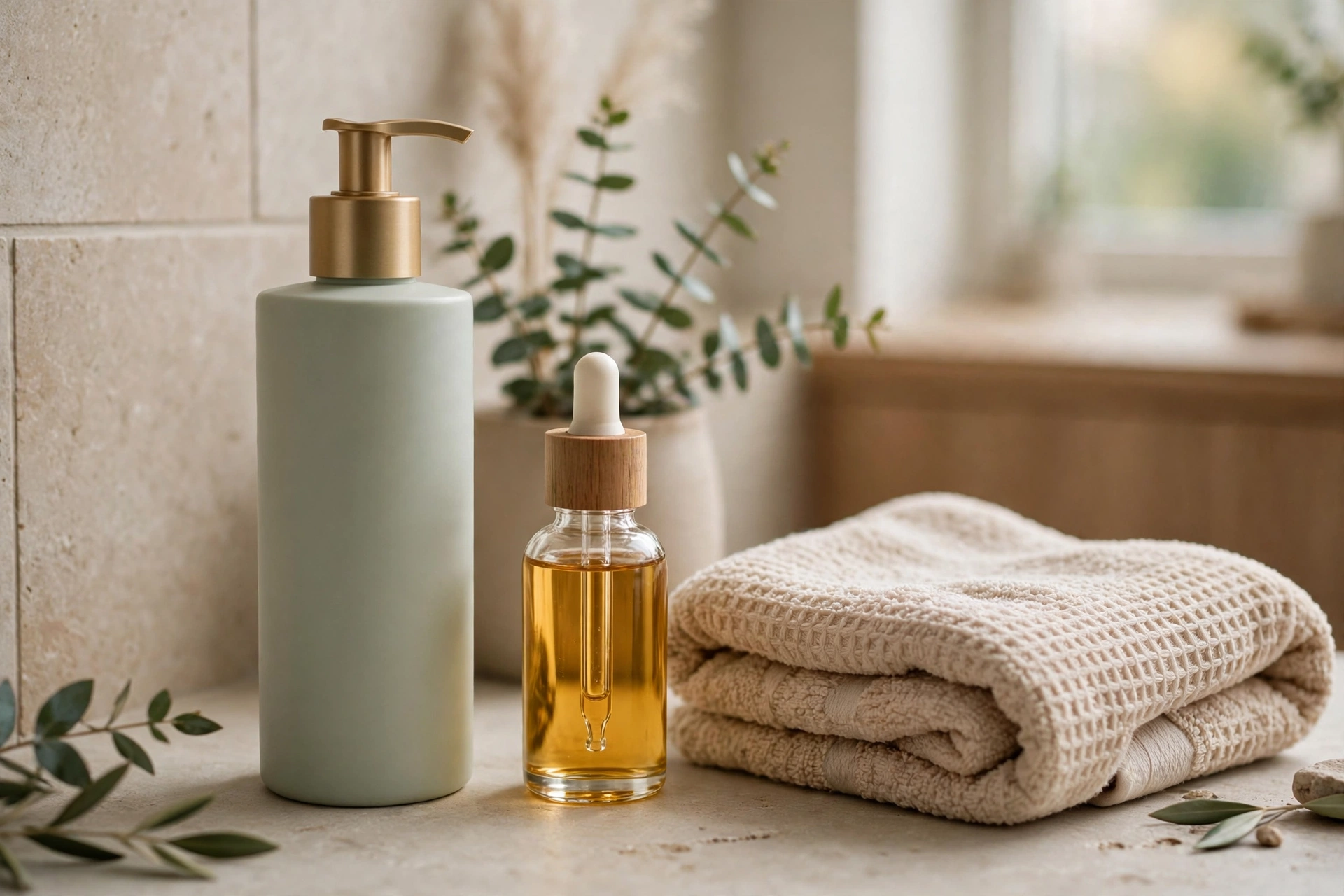
How to Treat Dry Flaky Scalp in Winter UK: A Calm-Scalp Routine
A gentle UK winter routine for a dry, flaky scalp: soothing washes, moisture, and habits that calm itching without stripping your hair.
Read More arrow_forwardSeven calm, fragrance-free shampoos for a sensitive scalp, with UK prices, what to avoid, and a gentle washing routine.
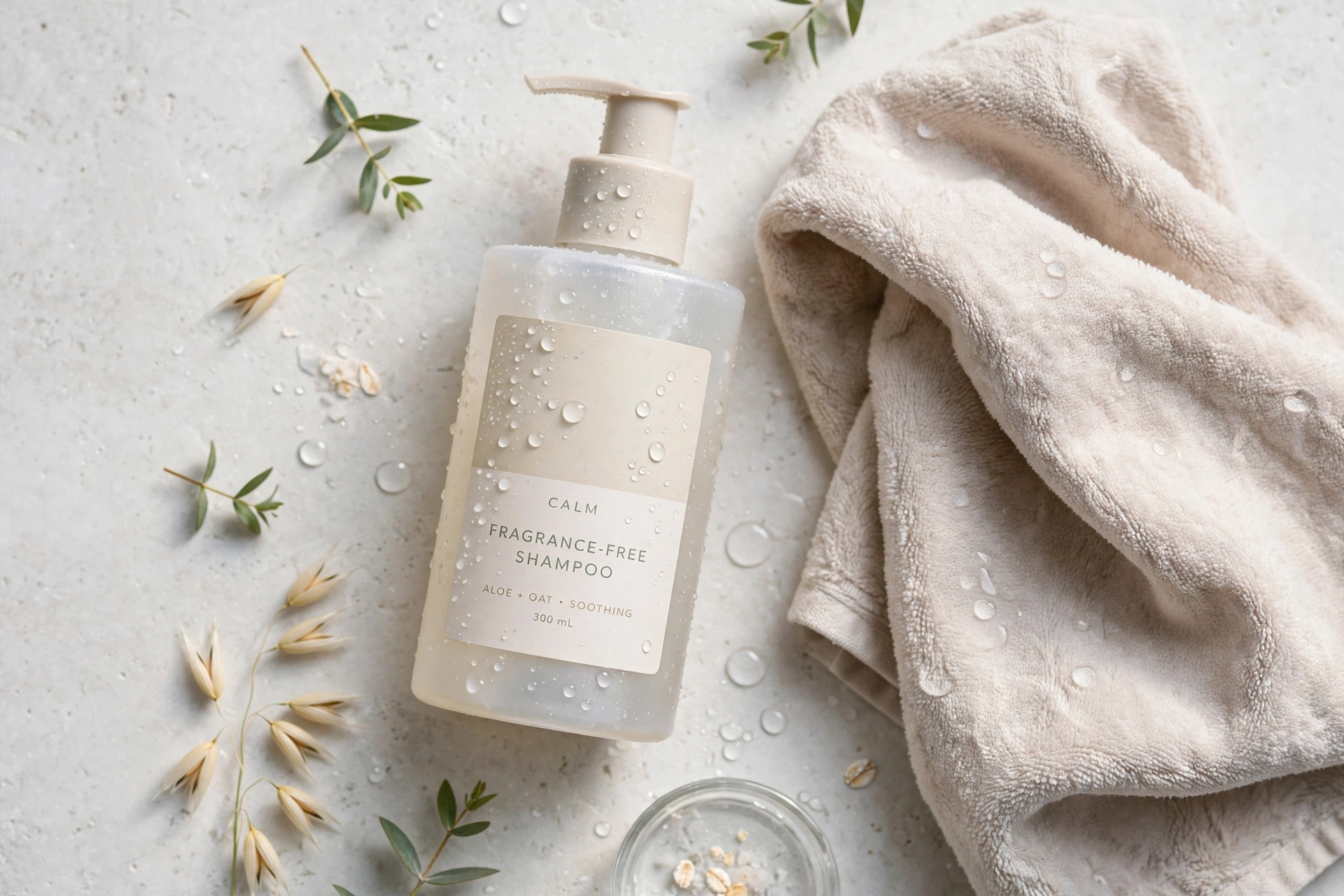
An itchy, tight, or easily irritated scalp can turn hair washing from a routine task into something you dread. You wash your hair, it feels clean for a day, then the itching returns, flakes appear on dark clothes, or your scalp feels sore where your hair parts. If you are searching for the best fragrance free shampoo for sensitive scalp uk, fragrance is often the first suspect worth removing. It is one of the most common irritants in hair care, and it hides in products that claim to be gentle, natural, or even hypoallergenic. This guide explains why scalps react, what to look for, and seven calm product types that are widely available in the UK.
A sensitive scalp is not a single diagnosis. It can mean dryness, contact irritation from fragrance or preservatives, dandruff, seborrhoeic dermatitis, eczema, psoriasis, or simply a scalp that has been over-washed, over-styled, or exposed to very hot water and harsh shampoo. That is why one shampoo will not fix every scalp problem, and why it is important to know when to see a GP or dermatologist. A fragrance-free shampoo is an excellent starting point for most irritated scalps, because it removes a major trigger and lets you see whether your scalp calms down within a few weeks. If it does not, or if you notice hair loss, spreading redness, crusting, or sores, seek medical advice rather than trying stronger products at home.
UK shoppers have a real advantage here. Fragrance-free shampoos are now stocked in Boots, Superdrug, supermarkets, and pharmacies, not just specialist shops, and many are affordable. You do not need an expensive salon product to get a calm scalp. In fact, some salon shampoos are heavily fragranced and can make irritation worse, even if they make hair smell wonderful for a day. The goal of this guide is practical: a shampoo that cleans without stripping, soothes rather than stings, and leaves hair manageable, at a price you can afford to use regularly. Prices below are typical UK ranges only, because prices vary by size, retailer, and offers, so always check the current price before buying.
## Why Scalps React to Fragrance
Fragrance in shampoo is rarely a single ingredient. The word parfum or fragrance on a label can cover dozens of individual chemicals, including some that are known contact allergens. The scalp has many hair follicles and oil glands, and shampoo stays in contact with it for several minutes, especially if you massage it in or leave it to work. That contact, repeated several times a week, is enough to trigger irritation in sensitive people. The reaction may not be dramatic. It can be mild itching, tightness, flaking, or redness along the hairline, behind the ears, or at the nape of the neck, places where shampoo tends to linger during rinsing.
Essential oils are often presented as a natural alternative to synthetic fragrance, but for a sensitive scalp they can cause the same problem. Lavender, tea tree, peppermint, and citrus oils are all potential irritants, especially in higher concentrations or when used daily. Tea tree oil is sometimes marketed for dandruff, but it can irritate a sensitive scalp and should be patch tested carefully, or avoided entirely if your scalp is reactive. Natural does not mean gentle. If your scalp is already sore, the safest choice is a product with no added fragrance at all, whether synthetic or natural. Look for the words fragrance-free on the front, and check the ingredient list for parfum, fragrance, and essential oil names.
Other ingredients can also irritate a sensitive scalp, although fragrance is the most common culprit. Strong sulphates, such as sodium lauryl sulfate, can be drying for some people, although many people tolerate gentler sulphates without any problem. Drying alcohols, harsh preservatives, and very strong medicated ingredients used too often can also contribute. That does not mean you must avoid every sulphate or preservative. It means that if your scalp is reactive, a gentler cleansing system, a shorter ingredient list, and a fragrance-free formula give your scalp the best chance to recover. If you use hair dye, bleach, or chemical treatments, tell your hairdresser about your sensitive scalp, because those treatments can also trigger irritation and need extra care.
Washing habits play a role too. Very hot water, vigorous scrubbing with nails, double-shampooing every time, and leaving shampoo on for a long time can all irritate a sensitive scalp, even with a gentle product. So can infrequent washing, because oil, sweat, and product build-up can irritate the scalp in a different way. Finding a balance, usually washing every two to three days for most people, with lukewarm water and fingertips rather than nails, helps more than switching shampoo every week. Give a new fragrance-free shampoo at least two to three weeks of consistent use before judging it, unless it clearly makes irritation worse, in which case stop and try a simpler formula. For authoritative background on scalp and skin conditions, the [British Association of Dermatologists](https://www.bad.org.uk/) provides patient information, and the [NHS skin conditions guide](https://www.nhs.uk/conditions/) can help you decide when to seek care.
## What Makes the Best Fragrance Free Shampoo for Sensitive Scalp UK Different
The best fragrance free shampoo for sensitive scalp uk is not the one with the most claims on the bottle. It is the one that cleans effectively without stripping, has a short and calm ingredient list, and is easy to rinse out fully. A good sensitive-scalp shampoo uses gentle cleansers, such as sodium laureth sulfate in a mild formula, cocamidopropyl betaine, or other gentle surfactants, and it avoids added fragrance, drying alcohols, and unnecessary colourants. It should lather enough to feel clean, but it does not need a huge foam to work. In fact, very foamy shampoos can be more stripping, so a moderate lather is often a good sign.
UK water and weather matter. Hard water, which is common in much of England, can leave mineral build-up that makes hair feel dull and the scalp feel dry. A gentle clarifying wash once every few weeks can help, but a daily clarifying shampoo is too harsh for a sensitive scalp. In winter, cold air and central heating dry both skin and scalp, so a moisturising, fragrance-free shampoo plus a gentle conditioner on the lengths can prevent the tight, flaky feeling many people notice from November onwards. In summer, sweat, sunscreen, and swimming can irritate the scalp, so rinsing after swimming and washing out sunscreen from the hairline helps. The right shampoo for winter may feel slightly heavier than the one you prefer in summer, and that is normal.
Availability and value matter just as much as ingredients. A fragrance-free shampoo you can buy at Boots, Superdrug, or your supermarket, in a size that lasts a month, is far more useful than a rare import that costs £30 and runs out in two weeks. Many UK pharmacy and supermarket own-brand sensitive shampoos are fragrance-free, gentle, and excellent value, often costing less than half the price of a prestige equivalent. The ingredient list matters more than the brand. Check for fragrance-free labelling, a gentle cleanser system, and the absence of essential oils if your scalp is reactive, and you have already filtered out most unsuitable products. If you also struggle with dry, damaged hair, our guide to the [best hair oil for dry, damaged hair](https://www.glowmagzine.com/blog/best-hair-oil-for-dry-damaged-hair-uk/) explains how to nourish lengths without irritating the scalp.
Conditioner deserves attention too, because many people switch to a fragrance-free shampoo but keep a heavily fragranced conditioner that sits on the scalp and hairline. If your scalp is sensitive, choose a fragrance-free conditioner as well, apply it mainly to the lengths and ends rather than the roots, and rinse thoroughly. A leave-in product, hair oil, or styling product with strong fragrance can also undo the benefit of a calm shampoo, so check those products too. The scalp does not distinguish between fragrance from shampoo and fragrance from a styling spray. Keeping the whole routine fragrance-free for a few weeks gives you the clearest test of whether fragrance was the trigger.
## What to Look for in a Gentle Shampoo
Start by reading the ingredient list, not the front label. Fragrance-free should mean no parfum, no fragrance, and no essential oils. Hypoallergenic is a marketing term, not a guarantee, so it does not replace checking the list. Look for gentle cleansers and soothing ingredients such as glycerin, panthenol, allantoin, or oat extract. Avoid products with a long list of botanical extracts if your scalp is reactive, because each extract is another potential irritant. A short, boring ingredient list is often the best sign for a sensitive scalp. If you have dandruff, look for a fragrance-free anti-dandruff option with an active ingredient such as zinc pyrithione, selenium sulfide, or ketoconazole, but use it as directed and not every day unless your GP or pharmacist advises it.
Texture and format matter. A clear, light shampoo suits oily scalps and fine hair, while a creamier shampoo suits dry scalps and thicker hair. A shampoo bar can be fragrance-free and plastic-free, but some bars are alkaline and can feel drying, so choose one specifically made for sensitive scalps and rinse well. A pump bottle is practical in the shower, especially if you wash your hair with your eyes closed, because it avoids fumbling with caps. For travel or gym use, a smaller tube is easier to carry. Think about how you wash your hair, not just what the product claims. If you wash daily because you exercise, a very gentle formula is essential, because daily washing with a harsh shampoo will keep irritation going.
Consider your hair type alongside your scalp. A shampoo that calms your scalp but leaves your hair tangled, frizzy, or flat will not be used for long. Fine hair needs a lighter formula that does not weigh it down, while thick or curly hair often needs a creamier shampoo plus a good conditioner on the lengths. Colour-treated hair needs a gentle, sulphate-conscious formula to protect colour, although fragrance-free does not automatically mean colour-safe, so check for colour-protection claims if that matters to you. If your scalp is dry and flaky in winter, our guide on [how to treat a dry, flaky scalp in winter](https://www.glowmagzine.com/blog/how-to-treat-dry-flaky-scalp-in-winter-uk/) pairs well with this article, because it covers washing frequency, water temperature, and scalp massage in more detail.
Price and size are practical UK considerations. A 250ml bottle used every two to three days typically lasts four to six weeks, while a 400ml or 500ml bottle lasts longer and is usually better value per millilitre. Supermarket and pharmacy own-brands are often the best value, and they are frequently included in multi-buy offers at Boots and Superdrug. A prestige fragrance-free shampoo may feel more luxurious, but it does not necessarily clean or soothe better. Spend more only if the texture, scent-free feel, or hair result genuinely justifies it for you. Keep a spare bottle if you find one that works, because fragrance-free options can sell out, and switching products repeatedly makes it harder to keep a scalp calm.
## 7 Calm Picks for a Sensitive Scalp
The picks below are described by product type, so you can find a matching product at your usual UK retailer. Prices are typical ranges only and vary by size, retailer, and offers. Always check the current ingredient list, because formulas change, and patch test if your scalp is very reactive.
### 1. Fragrance-Free Gentle Daily Shampoo
This is the best starting point for most sensitive scalps. A gentle daily shampoo with mild cleansers, glycerin, and no fragrance cleans without stripping and suits washing every two to three days. Typical UK price: £4 to £10 for a standard bottle at Boots, Superdrug, or a supermarket. It suits all hair types, although very dry hair may need conditioner on the lengths. Use a coin-sized amount, massage with fingertips, and rinse thoroughly. If your scalp calms within two to three weeks, you have found your baseline product.
### 2. Fragrance-Free Anti-Dandruff Shampoo
If flakes are your main problem, a fragrance-free anti-dandruff shampoo with zinc pyrithione or selenium sulfide targets the yeast and flaking associated with dandruff and seborrhoeic dermatitis. Typical UK price: £5 to £12, widely available at pharmacies and supermarkets. Use it two to three times a week, leave it on the scalp for a few minutes as directed, then rinse well. Alternate with a gentle daily shampoo if your scalp feels dry. If flaking is severe, crusty, or spreads beyond the scalp, see a GP or pharmacist for advice, because stronger treatment may be needed.
### 3. Creamy Fragrance-Free Shampoo for Dry Scalps
For a dry, tight scalp, especially in winter, a creamier shampoo with added moisturisers such as glycerin, panthenol, or oat extract cleans without leaving the scalp feeling stripped. Typical UK price: £6 to £14. This type suits thick, curly, or dry hair, and it pairs well with a fragrance-free conditioner on the ends. Avoid very hot water, which undoes the benefit of a moisturising formula. If your scalp is both dry and itchy, this pick is often more comfortable than a clear, lightweight shampoo.
### 4. Lightweight Fragrance-Free Shampoo for Fine or Oily Hair
Fine hair and oily scalps need a lighter formula that cleans thoroughly without weighing hair down. A clear, fragrance-free shampoo with gentle cleansers removes oil and build-up while keeping the scalp calm. Typical UK price: £4 to £11. This type is also useful if you wash daily after exercise, because it is gentle enough for frequent use. Focus shampoo on the scalp, not the lengths, and let the rinse water clean the ends. Applying conditioner only to the lengths prevents roots from looking flat.
### 5. Fragrance-Free Shampoo for Eczema-Prone or Very Reactive Scalps
If you have eczema, psoriasis, or a history of contact allergy, a shampoo designed for very sensitive or eczema-prone skin is the safest choice. These formulas usually have the shortest ingredient lists, no fragrance, and gentle cleansers, and they are often sold in pharmacies. Typical UK price: £6 to £15. Use it consistently for several weeks, avoid other fragranced hair products during the test period, and seek dermatology advice if irritation persists. Our guide to [repairing a damaged skin barrier](https://www.glowmagzine.com/blog/how-to-repair-damaged-skin-barrier-uk/) explains the same gentle, consistent approach for skin, which applies equally to the scalp.
### 6. Fragrance-Free Shampoo Bar for Sensitive Scalps
A shampoo bar can be a good plastic-free option, provided it is specifically made for sensitive scalps and is fragrance-free. Some bars are very alkaline and can feel drying, so choose a pH-balanced bar and rinse thoroughly. Typical UK price: £6 to £12 per bar, which often lasts as long as two bottles of liquid shampoo. Lather the bar in your hands first, rather than rubbing it directly on a sore scalp, then massage the lather in with fingertips. Store the bar on a draining dish so it dries between washes and lasts longer. If a bar leaves your hair feeling waxy, especially in hard-water areas, it may not suit your water type.
### 7. Fragrance-Free Colour-Safe Gentle Shampoo
Colour-treated hair with a sensitive scalp needs a shampoo that is both gentle on the scalp and kind to colour. A fragrance-free, sulphate-conscious formula protects colour while avoiding fragrance irritation. Typical UK price: £8 to £18, with options at Boots, Superdrug, and Cult Beauty. Wash with lukewarm rather than hot water to protect colour, and avoid clarifying shampoos unless you need to remove build-up. If you colour your hair at home, do a patch test as directed on the dye, because dye allergy is separate from shampoo irritation and needs its own check.
## How to Wash and Soothe a Sensitive Scalp With the Best Fragrance Free Shampoo for Sensitive Scalp UK
Technique matters as much as product choice. Start by wetting hair thoroughly with lukewarm water, never very hot water, which strips oils and irritates the scalp. Apply a coin-sized amount of shampoo to your palms, lather lightly, then massage into the scalp with your fingertips, not your nails, for about a minute. Focus on the scalp, because the lengths will be cleaned by the rinse water running through them. Rinse thoroughly, for longer than you think necessary, because leftover shampoo along the hairline and behind the ears is a common cause of lingering itching. If your hair is very oily or you have used a lot of styling product, a second, smaller wash is fine, but do not double-shampoo every time out of habit.
Conditioner should go on the lengths and ends, not scrubbed into the scalp, unless the product is specifically designed for scalp use. Leave it for a couple of minutes, then rinse well. After washing, pat hair dry with a towel rather than rubbing vigorously, which can irritate the scalp and cause breakage. Avoid tight hairstyles, heavy gels, and dry shampoo with strong fragrance while your scalp is recovering. Dry shampoo can be useful between washes, but choose a fragrance-free version if you use it, and do not rely on it for several days in a row, because build-up can irritate the scalp further. Brushing gently with a clean brush, and washing hats, pillowcases, and hair tools regularly, also reduces irritation from trapped oil and product residue.
In winter, when UK homes are heated and the air is cold, a sensitive scalp often needs extra care. Wash slightly less often if your hair allows it, use a creamier shampoo, and avoid going outside with wet hair in very cold weather. In summer, rinse after swimming, because chlorine and salt water can dry and irritate the scalp, and rinse sunscreen from the hairline after outdoor days. If you use a [winter skincare routine for rosacea-prone skin](https://www.glowmagzine.com/blog/best-winter-skincare-routine-for-rosacea-prone-skin-uk/), you will recognise the same principle: gentle cleansing, barrier support, and avoiding triggers matter more than adding more products. For the scalp, that means one gentle shampoo, one gentle conditioner, and patience.
## Comparison Table: The 7 Picks at a Glance
| Pick | Best for | Texture | Typical UK price | Where to find it |
|---|---|---|---|---|
| Gentle daily shampoo | Everyday sensitive scalps | Light liquid | £4–£10 | Boots, Superdrug, supermarkets |
| Anti-dandruff shampoo | Flakes and dandruff | Medicated liquid | £5–£12 | Pharmacies, supermarkets |
| Creamy shampoo for dry scalps | Dry, tight scalps in winter | Creamy | £6–£14 | Boots, Superdrug, pharmacies |
| Lightweight shampoo for fine hair | Fine or oily hair | Clear, light | £4–£11 | Boots, Superdrug, supermarkets |
| Eczema-prone scalp shampoo | Very reactive scalps | Gentle liquid | £6–£15 | Pharmacies, Boots |
| Shampoo bar | Plastic-free routine | Solid bar | £6–£12 | Boots, Superdrug, specialist shops |
| Colour-safe gentle shampoo | Colour-treated hair | Gentle liquid | £8–£18 | Boots, Superdrug, Cult Beauty |
Prices are typical ranges only and vary by size, retailer, and offers. Start with one pick, use it for two to three weeks, and only switch if irritation clearly worsens or does not improve. Changing shampoo every few days prevents your scalp from settling and makes it impossible to identify the trigger.
## Frequently Asked Questions
### How long does it take for a sensitive scalp to calm down?
Most people notice some improvement within two to three weeks of switching to a fragrance-free shampoo and gentler washing habits, if fragrance was the main trigger. Full calming can take four to six weeks. If there is no improvement after six weeks, or symptoms worsen, see a GP, pharmacist, or dermatologist for further advice.
### Should I wash my hair every day if my scalp is sensitive?
Not necessarily. Washing every two to three days suits most people, because it removes oil and build-up without over-stripping. If you exercise daily or have a very oily scalp, daily washing with a very gentle shampoo is fine. Avoid very hot water and vigorous scrubbing, which irritate the scalp more than washing frequency alone.
### Is sulphate-free always better for a sensitive scalp?
No, sulphate-free is not automatically better. Some sulphate-free shampoos still contain fragrance or other irritants, while some gentle sulphate shampoos are perfectly calm for sensitive scalps. Focus on the full ingredient list, especially fragrance, rather than a single sulphate-free claim. If sulphates dry your scalp, a gentler cleanser system is worth trying.
### Can fragrance-free shampoo help with dandruff?
A fragrance-free shampoo can help if fragrance was irritating your scalp, but dandruff itself often needs an active anti-dandruff ingredient, such as zinc pyrithione or selenium sulfide. Choose a fragrance-free anti-dandruff shampoo, use it as directed, and alternate with a gentle shampoo if your scalp feels dry. Seek advice if flaking is severe or spreads.
### Are natural or organic shampoos safer for sensitive scalps?
Not always. Natural shampoos often contain essential oils and botanical extracts that can irritate a sensitive scalp, even though they sound gentle. Organic certification does not guarantee fragrance-free status. Always check for parfum, fragrance, and essential oil names, regardless of natural or organic claims.
### Can I use conditioner if my scalp is sensitive?
Yes, but choose a fragrance-free conditioner and apply it mainly to the lengths and ends, not the scalp. Rinse thoroughly, because leftover conditioner on the scalp can cause itching. If your hair is very short, use a very small amount and rinse well. A leave-in conditioner with fragrance can also irritate the scalp, so check that product too.
### When should I see a doctor about scalp irritation?
See a GP or dermatologist if you notice hair loss, spreading redness, crusting, sores, blistering, signs of infection, or irritation that does not improve after six weeks of gentle care. Also seek advice if you have psoriasis, eczema, or another diagnosed condition affecting the scalp. For clear, referenced information, [DermNet NZ](https://dermnetnz.org/) covers many scalp and skin conditions in plain language.
### Does hard water in the UK make scalp sensitivity worse?
Hard water can leave mineral build-up that makes hair feel dull and the scalp feel dry, especially in areas with very hard water. A gentle clarifying wash once every few weeks can help, but do not use a harsh clarifying shampoo daily. Rinsing thoroughly and using a gentle conditioner on the lengths usually manages hard-water effects without irritating the scalp.
## Key Takeaways
- Fragrance is a common scalp irritant, so a truly fragrance-free shampoo is the best starting point for a sensitive scalp.
- Choose a gentle cleanser system, a short ingredient list, and a texture that suits your hair type and the season.
- Wash with lukewarm water, massage with fingertips, rinse thoroughly, and apply conditioner mainly to the lengths.
- Give a new shampoo two to three weeks of consistent use before judging it, and keep the rest of your hair routine fragrance-free during the test.
- See a GP or dermatologist for hair loss, spreading redness, crusting, sores, or irritation that does not improve after six weeks.
## Conclusion
A sensitive scalp does not need an expensive or complicated routine. It needs one gentle, fragrance-free shampoo, used correctly, and a little patience. Remove fragrance first, wash with lukewarm water and fingertips, rinse thoroughly, and keep conditioner off the scalp. Start with the gentle daily pick that fits your hair type and budget, switch to an anti-dandruff or creamier option only if your symptoms point that way, and give your scalp two to three weeks to settle. Check ingredient lists rather than trusting front-label claims, and ask a pharmacist, GP, or dermatologist if irritation persists or worries you. With the right shampoo and a calm routine, most sensitive scalps feel noticeably better, and hair washing becomes an ordinary part of the day again rather than something to dread.
A gentle UK winter routine for a dry, flaky scalp: soothing washes, moisture, and habits that calm itching without stripping your hair.
Read More arrow_forward
The best hair oil for hair growth in 2026 — rosemary, pumpkin seed, and peppermint oils ranked by science, plus how to use them for real results.
Read More arrow_forwardCalculate your Body Mass Index (BMI) in seconds. BMI is a quick screening number…
Use now arrow_forwardFind your daily calorie needs based on your age, sex, height, weight and activit…
Use now arrow_forwardFind how much water you should drink each day, in litres and glasses, based on y…
Use now arrow_forward