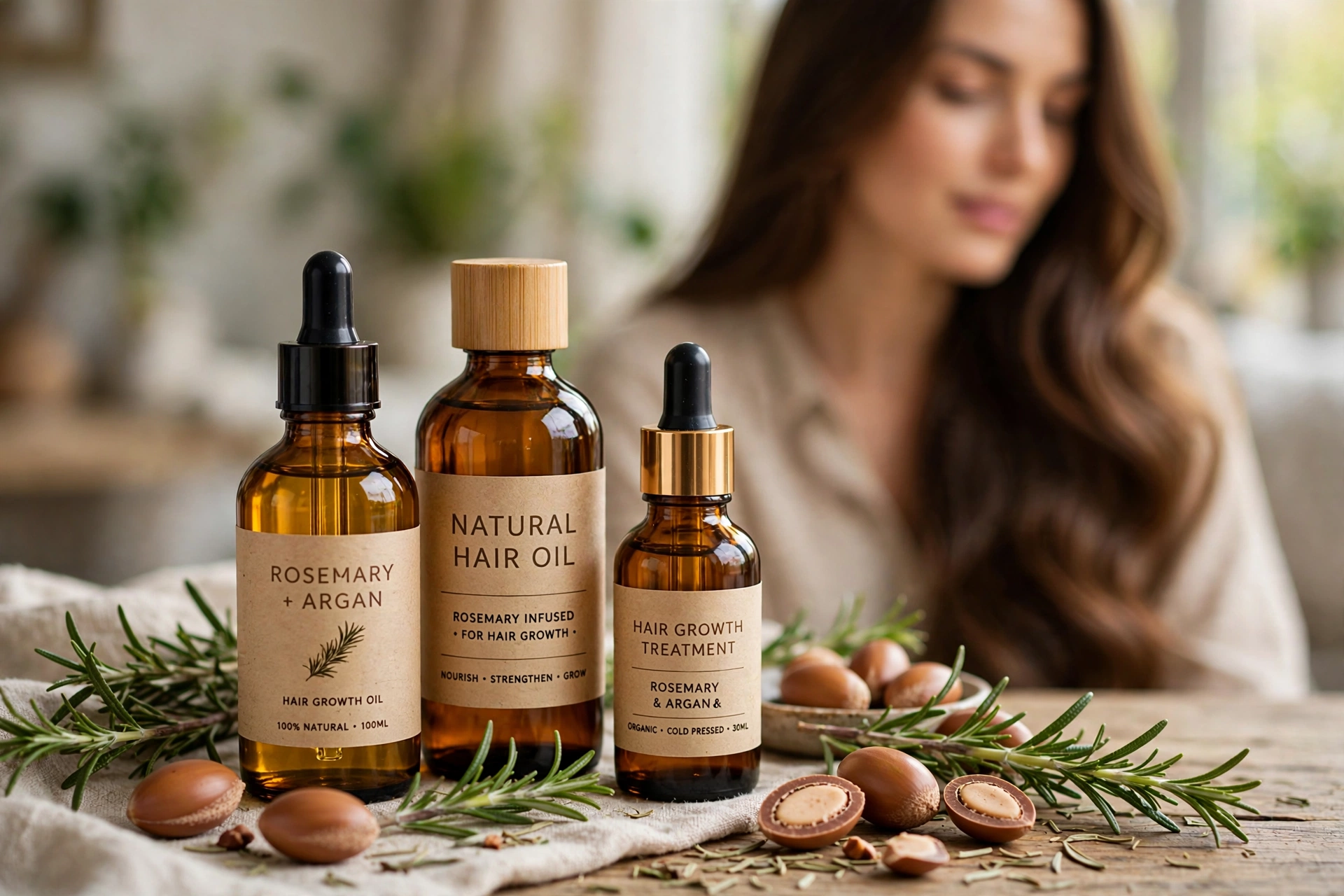
Every few months, a new "miracle" hair oil goes viral — a before-and-after so dramatic it racks up millions of views overnight. Rosemary oil had its moment. Then it was pumpkin seed oil, Batana oil, and a parade of Ayurvedic blends promising inches in weeks. If you are wondering which of these actually deserve a place in your routine, this guide is for you. We have ranked the best hair oils for hair growth in 2026 by one standard only: evidence. What does the science say? What do dermatologists and trichologists actually recommend? And just as importantly — how do you use these oils correctly, because even the best hair oil for hair growth fails when it is applied wrong.
Here is the honest truth up front: no oil grows hair overnight, and no oil overrides genetics or hormonal hair loss on its own. But several oils have genuine clinical research behind them — one famous trial even pitted rosemary oil against minoxidil 2% — and when used consistently with proper scalp care, they can meaningfully improve hair density, reduce shedding, and create the healthy scalp environment hair needs to thrive. Let us separate what actually works from what is just good marketing.
How Hair Oils Can (and Cannot) Help Hair Growth
To understand which oils are worth your money, you need to understand what hair oil can realistically do. Hair grows from follicles in the scalp, and the growth phase (anagen) of each follicle is largely determined by genetics, hormones, nutrition, and age. No topical oil rewrites that code. But oils influence several factors around the follicle that absolutely affect how much hair you keep and how healthy it looks:
Scalp circulation. Some oils (notably rosemary and peppermint) appear to stimulate blood flow to the scalp when massaged in. Better circulation means better nutrient delivery to follicles — the same principle behind why scalp massage itself is associated with improved hair thickness in small studies.
Inflammation control. Chronic low-grade scalp inflammation — from seborrheic dermatitis, product buildup, or oxidative stress — can push follicles into the shedding phase prematurely. Anti-inflammatory oils help calm this environment.
DHT-related mechanisms. Dihydrotestosterone (DHT) shrinks hair follicles in androgenetic alopecia (pattern hair loss). A few natural oils show mild anti-androgenic activity in lab studies, though the evidence in humans is far thinner than for pharmaceutical DHT blockers.
Breakage prevention. This is the unglamorous superpower of hair oils. Most "growth" disappointment is actually breakage — hair grows half an inch a month from the root, but if the ends snap off at the same rate, length never accumulates. Oils that penetrate the hair shaft (coconut, olive) reduce protein loss and breakage, so you retain the length you grow. For many people, this alone is transformative.
What oils cannot do: revive dead follicles (once a follicle is fully miniaturized and scarred, nothing topical brings it back), override significant hormonal hair loss alone, or produce visible density changes in under 2-3 months. Set expectations accordingly and you will not be disappointed.
The Science-Ranked List: Best Hair Oils for Hair Growth in 2026
1. Rosemary Oil — The Most Studied
Rosemary oil is the best-supported natural hair oil for growth, full stop. The landmark 2015 randomized trial published on ncbi.nlm.nih.gov compared rosemary oil to minoxidil 2% in people with androgenetic alopecia over six months — and found rosemary oil produced a comparable increase in hair count, with less scalp itching as a side effect. Later research has explored its mechanisms: improved scalp circulation, anti-inflammatory effects, and possible mild inhibition of DHT binding at the follicle.
How to use it: Rosemary essential oil must be diluted — never apply it neat. Mix 3-5 drops into a tablespoon of carrier oil (jojoba, grapeseed, or sweet almond), massage into the scalp for 3-5 minutes, leave for at least 30 minutes (or overnight), then shampoo out. Use 2-3 times per week. Pre-diluted rosemary scalp serums are convenient, but check that rosemary is high on the ingredient list, not a token drop for fragrance.
Best for: Early-stage thinning, general shedding, anyone wanting the most evidence-backed natural option.
2. Pumpkin Seed Oil — The DHT-Blocker Candidate
Pumpkin seed oil earned its reputation from a 2014 randomized, placebo-controlled trial (also indexed on ncbi.nlm.nih.gov) in which men with pattern hair loss taking pumpkin seed oil supplements saw a 40% increase in hair count versus 10% for placebo over 24 weeks. The proposed mechanism is inhibition of 5-alpha-reductase, the enzyme that converts testosterone to follicle-shrinking DHT.
Important caveat: That trial used oral supplements (400mg daily), not topical oil. Topical pumpkin seed oil is widely used and plausibly helpful — it is rich in zinc, fatty acids, and antioxidants that support scalp health — but the headline "40% more hair" number comes from the supplement form. For topical use, look for cold-pressed, unrefined pumpkin seed oil and apply it as a pre-shampoo scalp treatment.
Best for: Pattern thinning concerns, people who want both topical and internal approaches (supplements exist, but discuss with your doctor first).
3. Peppermint Oil — The Circulation Booster
A well-known 2014 animal study found that 3% peppermint oil outperformed both jojoba oil and minoxidil 3% in promoting hair growth in mice, apparently by stimulating blood flow and extending the anagen (growth) phase. Human data is lacking — mice are not people — but peppermint oil's vasodilating, tingling effect on the scalp is real and pleasant, and improved circulation is a plausible growth-supporting mechanism.
How to use it: Dilute to 2-3% in a carrier oil (about 3 drops per tablespoon), massage into the scalp, leave 20-30 minutes. The cooling tingle is normal; burning is not — if it burns, you used too much. Avoid getting it near the eyes.
Best for: Sluggish scalps, people who enjoy the stimulating tingle, pairing with scalp massage routines.
4. Coconut Oil — The Breakage Preventer
Coconut oil does not stimulate new growth directly, but it may be the single best oil for retaining the length you already grow. Research shows coconut oil's lauric acid penetrates the hair shaft and significantly reduces protein loss during washing — outperforming mineral oil and sunflower oil in head-to-head testing. Less protein loss means less breakage, which means your hair actually gets longer over time.
How to use it: As a pre-shampoo treatment on the lengths (not necessarily the scalp — it can be comedogenic for some scalps), leave for 30+ minutes or overnight, then shampoo thoroughly. Fine-haired people should use it sparingly to avoid weighed-down roots.
Best for: Breakage-prone hair, split ends, anyone whose hair "never grows past a certain length" (it grows — it is breaking).
5. Castor Oil — The Density Illusionist (With Real Benefits)
Castor oil is thick, sticky, and beloved in hair-growth communities. The evidence for it stimulating growth is mostly anecdotal, but its ricinoleic acid has documented anti-inflammatory and antimicrobial properties, and its sheer viscosity coats the hair shaft, making hair look and feel thicker immediately. Jamaican black castor oil (roasted, with ash content that raises its pH) is the traditional favorite for edges and thinning hairlines.
How to use it: Warm a small amount between palms, apply to the scalp and edges, massage, leave 1-2 hours or overnight. It is very thick — cut it with a lighter carrier oil (grapeseed or sweet almond) for easier application and wash-out. Use weekly.
Best for: Thinning edges, protective styling, very dry scalps that need heavy moisture.
6. Argan Oil — The All-Rounder
Argan oil's fame comes from its use on hair lengths rather than growth stimulation — it is rich in vitamin E, ferulic acid, and fatty acids that smooth frizz, add shine, and protect against heat damage. For growth purposes, its value is indirect: healthier, less-damaged lengths break less, and a moisturized scalp flakes less. It will not regrow a receding hairline, but as part of a routine it earns its place.
How to use it: A few drops on damp or dry lengths as a finisher; a light scalp massage with argan oil suits dry, itchy scalps. Look for 100% pure, cold-pressed argan oil — many "argan" products contain only trace amounts.
Best for: Frizz control, shine, heat protection, dry scalp comfort.
7. Jojoba Oil — The Scalp Balancer
Jojoba is technically a liquid wax, not an oil, and its structure closely resembles human sebum. That makes it uniquely good at balancing scalp oil production — moisturizing dry scalps without clogging, and helping dissolve excess sebum and buildup on oily scalps. A balanced, buildup-free scalp is a better environment for growth. It is also the ideal carrier oil for diluting rosemary or peppermint essential oils.
Best for: Oily or flaky scalps, as a carrier for essential oils, lightweight daily scalp moisture.
8. Batana Oil — The Viral Newcomer (Proceed With Realistic Expectations)
Batana oil, from the American palm nut traditionally used by Honduras's Miskito people, went massively viral in 2024-2025. It is rich in fatty acids and genuinely nourishing as a hair oil. But as of 2026, there are no peer-reviewed clinical trials demonstrating it grows hair — the dramatic before-and-afters are anecdotal and often involve people also changing multiple other variables. If you enjoy it as a conditioning treatment, great. Just do not pay luxury prices expecting clinically proven regrowth.
How to Build a Hair Oil Routine for Growth
The best hair oil for hair growth only works if the routine around it is right. Here is the protocol trichologists recommend:
The Weekly Scalp Treatment (2-3x per week)
Choose your active oil. Rosemary (diluted) is the top evidence pick. Pumpkin seed or peppermint are solid alternatives.
Massage for 3-5 minutes. Use fingertips (not nails) in firm circular motions across the entire scalp. This is not optional — massage itself boosts circulation and is part of why oiling works. An inexpensive silicone scalp massager helps if your fingers tire.
Leave it on. Minimum 30 minutes; 2 hours to overnight is ideal for deep treatments. Cover your pillow with a towel or use a shower cap.
Shampoo thoroughly. Oil treatments require proper removal — one shampoo often is not enough. Use a clarifying or sulfate shampoo for the oiling wash (it is fine 2-3x weekly), focusing on the scalp. Follow with conditioner on the lengths only.
Be consistent for 3-6 months. Hair cycles are slow. Follicles need months of improved conditions before visible density changes appear. Take monthly photos in the same lighting to track progress objectively.
Daily/Leave-In Support
A pea-sized amount of argan or jojoba oil on the lengths (not scalp) tames frizz and prevents breakage between washes.
If you heat-style, apply a heat protectant — no oil fully protects against 450°F flat irons, despite what some labels imply.
For protective styles (braids, wigs), light oiling of the scalp 1-2x weekly prevents the dryness and buildup that cause shedding when styles come out.
The Scalp-Care Foundations Oils Cannot Replace
Oiling works best on a healthy scalp. If you have dandruff, seborrheic dermatitis, or persistent itching and flaking, treat that first — an inflamed, flaky scalp will not grow its best hair no matter what oil you use, because the scalp barrier is compromised much like facial skin (the same repair principles in our damaged skin barrier guide apply: calm inflammation first, then treat). A ketoconazole or salicylic acid shampoo used weekly can reset a troubled scalp; our salicylic acid guide explains how this BHA exfoliant works, and the same principles apply to scalp exfoliation. If shedding is sudden, patchy, or severe, see a dermatologist — that pattern suggests conditions (telogen effluvium, alopecia areata, thyroid issues) that oils alone cannot address.
Hair Growth Oils vs. Minoxidil: An Honest Comparison
Since the rosemary-vs-minoxidil trial invites the comparison, let us be direct. Minoxidil remains the most proven topical for hair regrowth, with decades of clinical data across large populations. Rosemary oil's single small trial showing comparable results is promising, not conclusive — the minoxidil evidence base is vastly larger. That said, minoxidil has downsides oils do not: initial shedding phases, scalp irritation in some users, the need for indefinite continuous use (stopping means losing gains), and cost.
A reasonable approach many dermatologists endorse: use evidence-backed oils (rosemary, pumpkin seed) as your foundation for scalp health and mild thinning, and discuss minoxidil with your doctor if thinning is moderate to advanced or progressing. They are not mutually exclusive — some people use both, applying minoxidil as directed and oiling on alternate days. Just do not apply oils immediately before minoxidil, as heavy oils can interfere with its absorption; separate them by several hours.
What About Hair Growth Supplements and Diet?
Topical oils are only half the story. Hair is built from protein, and follicles are among the most metabolically active tissues in the body — they suffer first when nutrition is lacking. Before buying another oil, check the basics:
Protein: Inadequate protein intake is a common, overlooked cause of shedding. Most adults need roughly 0.8-1g per kg of body weight daily; active people need more.
Iron and ferritin: Low ferritin (stored iron) is one of the most common lab findings in women with excessive shedding. If your shedding is diffuse and persistent, ask your doctor to check ferritin — not just hemoglobin.
Vitamin D and B12: Deficiencies in both are linked to hair shedding and are extremely common. Supplementation helps only if you are actually deficient, so test rather than guess.
Biotin: Despite its marketing, biotin helps hair growth only in true biotin deficiency, which is rare. High-dose biotin can also interfere with lab tests (including thyroid and heart panels) — tell your doctor if you take it.
The pattern is consistent: fix deficiencies and your hair oil routine works dramatically better, because the follicles finally have the building blocks they need. Nutrition is the soil; oils are the fertilizer.
7 Mistakes That Sabotage Hair Oiling
Applying essential oils undiluted. Rosemary and peppermint essential oils can cause chemical burns or severe irritation at full strength. Always dilute: 3-5 drops per tablespoon of carrier oil.
Oiling a dirty, buildup-covered scalp. Oil on top of weeks of dry shampoo and product residue just seals in the gunk. Clarify first, then oil.
Leaving heavy oils on for days. Beyond overnight, prolonged oil-sitting can trap sweat and bacteria against the scalp, worsening dandruff and folliculitis. Oil, then wash — that is the cycle.
Expecting results in 3 weeks. Hair grows ~1.25cm per month. Density changes need 3-6 months minimum. Anyone promising faster is selling hope, not hair.
Ignoring the real diagnosis. Sudden clumps in the shower, bald patches, or a rapidly widening part deserve a dermatologist, not a new oil. Oils support healthy follicles; they do not treat alopecia areata, scarring alopecias, or thyroid-driven shedding.
Using coconut oil on an acne-prone hairline. Coconut oil is comedogenic for some people — if you break out along the hairline or forehead, keep it on the lengths only, or switch to jojoba.
Buying overpriced blends with fairy-dust actives. A $60 "growth blend" with 27 oils usually contains meaningful amounts of none of them. Buy single, pure, cold-pressed oils and blend them yourself — cheaper and more potent.
Frequently Asked Questions
Which oil grows hair the fastest?
No oil grows hair "fast" — hair grows at a genetically set rate of about 1.25cm per month, and no topical changes that speed. What oils can do is reduce shedding and breakage so you keep more of what grows, and improve scalp conditions so follicles stay in the growth phase longer. Of all the options, rosemary oil has the strongest clinical evidence for actually increasing hair count, based on the 2015 trial comparing it to minoxidil 2%. But "fastest" is the wrong frame — think "most supported by evidence over 3-6 months."
Can I mix rosemary oil directly into my shampoo?
You can, but it is less effective than a dedicated scalp treatment. Shampoo stays on the scalp for a minute or two — not enough contact time for meaningful absorption. The evidence-backed method is a pre-shampoo scalp massage treatment left on for 30+ minutes, 2-3 times weekly. If you do add it to shampoo, use 5-10 drops per 100ml and shake well before each use — but consider it a bonus, not your main treatment.
Is it better to apply hair oil to a dry or damp scalp?
Dry scalp, in almost all cases. Water and oil do not mix, so applying oil to a wet scalp reduces absorption and makes massage slippery and ineffective. The one exception is using lightweight oils on damp hair lengths as a leave-in smoother — that works beautifully. But for growth-focused scalp treatments: dry scalp, thorough massage, then leave time before washing.
How long should I leave hair oil on before washing?
At least 30 minutes for the active ingredients to absorb and the massage benefits to kick in. Two hours to overnight is the sweet spot for deep treatments — studies on oil penetration show benefits increase with contact time up to several hours. Beyond overnight (24+ hours), returns diminish and you risk trapping sweat and bacteria against the scalp. The rhythm is: oil, wait, wash. Repeat 2-3 times weekly.
Can hair oils cause hair loss?
Oils themselves do not cause hair loss, but misuse can increase shedding indirectly. Leaving heavy oils on an unwashed scalp for days can worsen seborrheic dermatitis and folliculitis — both of which increase shedding. Vigorous scratching with nails during application can break hairs. And comedogenic oils on acne-prone hairlines cause breakouts, not hair loss, but the resulting inflammation is not scalp-friendly. Used correctly (diluted, massaged gently, washed out properly), oils reduce shedding rather than causing it.
Should I use hair oil if I have an oily scalp?
Yes, with the right oil and method. It sounds counterintuitive, but jojoba oil — which mimics human sebum — can help balance oily scalps and dissolve hardened sebum plugs that clog follicles. The key is using lightweight oils (jojoba, grapeseed), applying pre-shampoo rather than as a leave-in, and shampooing thoroughly afterward. Avoid heavy castor or coconut oil sitting on an already-oily scalp. If your scalp is very oily with flaking, address potential seborrheic dermatitis first, since no oil fixes that alone.
Do I need to buy expensive hair growth oil blends?
No. Most luxury "growth blends" contain tiny amounts of many oils — great marketing, weak dosing. The evidence-backed approach is cheaper: buy single, pure, cold-pressed oils (rosemary essential oil + jojoba carrier, for example) and blend them yourself at effective concentrations. A $15 bottle of rosemary essential oil and a $10 bottle of jojoba will outperform most $60 blends and last months. Spend your money on purity and proper dilution, not pretty packaging.
When should I see a dermatologist about hair loss instead of trying oils?
See a dermatologist promptly if you notice: sudden heavy shedding (clumps in the shower or on the pillow), distinct bald patches, a rapidly widening part or visibly shrinking ponytail over weeks, scalp pain/burning/itching that does not resolve, or shedding that continues beyond 3 months despite good care. These patterns suggest telogen effluvium, alopecia areata, androgenetic alopecia, or thyroid issues — conditions where early medical treatment makes a major difference. The American Academy of Dermatology's hair loss guidance is a good starting point for understanding when shedding is normal and when it is not. Oils are excellent support for healthy follicles, but they are not a substitute for diagnosis.
Key Takeaways
The best hair oil for hair growth by evidence is rosemary oil — a 2015 trial found it comparable to minoxidil 2% for hair count over 6 months. Always dilute essential oils (3-5 drops per tablespoon of carrier).
Pumpkin seed oil shows promise for DHT-related thinning (40% hair count increase in a supplement trial); peppermint oil boosts scalp circulation; coconut oil prevents breakage so you retain length.
Technique matters as much as product: 3-5 minute scalp massage, 30+ minutes of contact time, 2-3x weekly, thorough shampooing after — sustained for 3-6 months.
Oils cannot revive dead follicles, override hormonal hair loss alone, or work in weeks. They improve scalp environment, reduce shedding and breakage, and support healthy follicles.
Fix the foundations first: treat dandruff/scalp inflammation, check protein intake, iron/ferritin, vitamin D and B12 — deficiencies sabotage every topical effort.
Skip overpriced multi-oil blends; buy pure single oils and dilute them yourself for better potency at a fraction of the cost.
Sudden, patchy, or severe shedding deserves a dermatologist — oils support healthy hair but do not treat medical hair loss conditions.
For sensitive or reactive scalps, choose fragrance-free formulas — the same principle in our fragrance-free skincare guide applies to scalp products: fewer irritants, calmer skin.
Conclusion
The best hair oil for hair growth in 2026 is not the one with the most viral before-and-after — it is rosemary oil, diluted properly, massaged into the scalp consistently for months. Behind it stand pumpkin seed oil, peppermint oil, and the unglamorous workhorses (coconut, jojoba, argan) that protect the hair you already have. The formula is not mysterious: pick an evidence-backed oil, massage it in 2-3 times a week, wash it out properly, eat enough protein, fix any deficiencies, and give it half a year.
Hair growth rewards the patient and punishes the impatient. The people posting miraculous 30-day transformations are usually showing reduced breakage, better lighting, or wishful thinking — real follicle-level change takes months because hair cycles are slow. But slow is not the same as ineffective. Start your oiling routine this week, take a photo in consistent lighting, and check back in three months. Your future hair will thank you for starting today rather than waiting for a miracle product that does not exist.