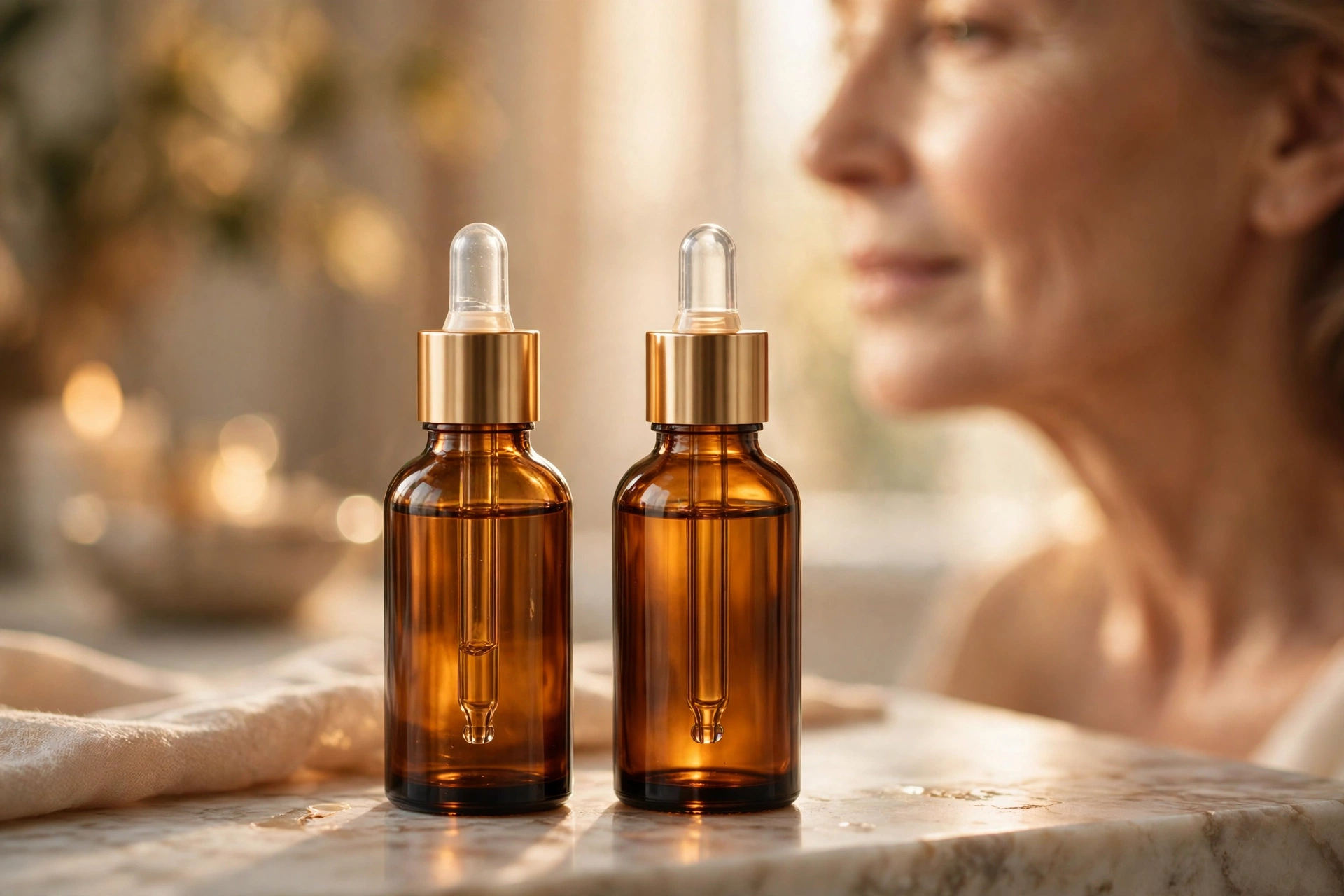
Retinal vs Retinol: Which Is Better for Wrinkles? (2026 Guide)
Retinal vs retinol — which wins for wrinkles? We compare strength, speed, side effects, and who should use each.
Read More arrow_forwardDiscover the 15 best fragrance-free skincare products for sensitive skin — gentle cleansers, moisturizers and sunscreens that calm, never irritate.
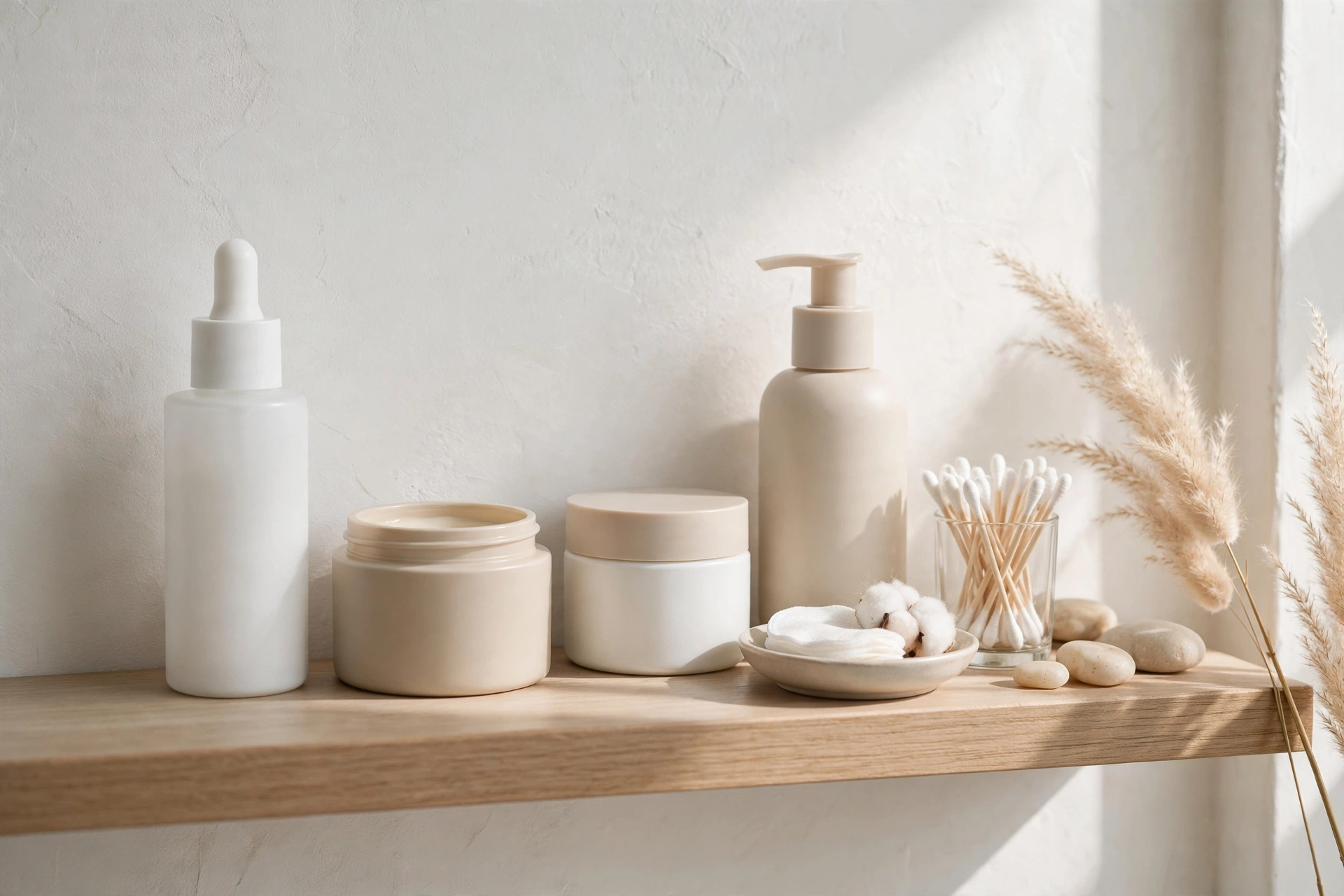
If your skin stings, flushes, or breaks out every time you try a new product, you are not alone — and the culprit hiding in your routine might be something you can barely even smell. Fragrance is one of the most common causes of contact dermatitis and product-related irritation in the world, yet it appears in the vast majority of skincare formulas, from luxury serums to budget cleansers. Even products that smell like "nothing" can contain masking fragrances designed to cover up the natural scent of raw ingredients.
The good news is that the fragrance-free skincare movement has matured. In 2026, sensitive skin no longer means boring, ineffective formulas. Today's best fragrance-free products pair genuinely gentle, non-irritating bases with proven active ingredients — ceramides, niacinamide, hyaluronic acid, mineral UV filters — so you can treat dryness, dullness, redness, and early signs of aging without the burn.
In this guide, we break down exactly what "fragrance-free" really means (and the label tricks brands use), why sensitive skin thrives without scent, how to spot hidden fragrance on an ingredient list, and — most importantly — our 15 favorite fragrance-free skincare products across cleansers, moisturizers, sunscreens, serums, and more. Every pick is selected for sensitive-skin safety, real performance, and honest value.
Walk down any beauty aisle and you will see three terms used almost interchangeably: fragrance-free, unscented, and hypoallergenic. They are not the same thing, and understanding the difference is the single most important skill for anyone with reactive skin.
Fragrance-free means the product contains no added fragrance chemicals or essential oils intended to scent the formula. This is the gold standard for sensitive skin. Note the word "added": some raw ingredients have a faint natural odor, so a fragrance-free product may still smell faintly of its base ingredients — that is normal and harmless.
Unscented is the tricky one. An unscented product simply has no noticeable smell — but brands often achieve that by adding masking fragrances, chemicals whose entire job is to neutralize or cover the scent of other ingredients. So an "unscented" moisturizer can legally contain fragrance compounds while smelling like nothing. If you have sensitive skin, treat "unscented" with suspicion and always check the full ingredient list.
Hypoallergenic sounds reassuring but is essentially unregulated in most countries. There is no legal definition, no required testing standard, and no certification a brand must pass to use the word. A "hypoallergenic" product can still contain fragrance. Ignore the marketing term; trust the ingredient list instead.
Fragrance is not a single ingredient — it is a cocktail. Under labeling rules in the US and EU, the word "fragrance" or "parfum" on an ingredient list can represent dozens or even hundreds of individual aroma chemicals, and brands are not required to disclose them individually as long as the blend is considered a trade secret. That means one innocent-looking word can hide known sensitizers like linalool, limonene, citronellol, geraniol, eugenol, and cinnamal.
Dermatologists consistently rank fragrance among the top five causes of allergic contact dermatitis. Reactions range from immediate stinging and flushing to delayed rashes, itchy patches, and perioral dermatitis that appears hours or days later — which is why many people never connect their breakouts to the scented serum they love. Fragrance sensitivity can also develop over time: a product you tolerated for years can suddenly start causing reactions as your immune system becomes sensitized.
Essential oils deserve a special warning here. "Natural fragrance" from lavender, tea tree, citrus, or ylang-ylang oils sounds wholesome, but these are still complex mixtures of volatile compounds, and several — notably lavender and tea tree — are documented sensitizers. For truly reactive skin, "naturally scented" is not safer than synthetic fragrance. Fragrance-free means none of it.
Sensitive skin is not a formal medical diagnosis — it is a description of skin with a weakened or easily disrupted barrier. When the skin barrier is compromised, it loses water faster (transepidermal water loss) and lets irritants penetrate more easily. Fragrance compounds are small, volatile molecules that slip through a weakened barrier with ease, which is why the same scented lotion feels fine on resilient skin but sets sensitive skin on fire.
Fragrance reactions are not always dramatic. Watch for these subtler signals that scented products may be working against you:
Stinging or burning within minutes of application, especially on damp skin or around the eyes and mouth
Persistent flushing or blotchiness that lingers long after you apply a product
Tiny flesh-colored bumps or rough texture on the cheeks and jawline
Itchy, dry patches that appear a day or two after introducing a new product
Perioral dermatitis — small red bumps clustered around the mouth and nose, a classic fragrance-reaction pattern
Lip reactions — chapped, peeling lips that never heal can be caused by fragranced lip balms and even by scented products migrating from the surrounding skin
If several of these sound familiar, try a two-week fragrance detox: switch your entire routine to fragrance-free basics and watch what happens. Many people are stunned by how quickly redness fades once the constant low-grade irritation stops.
While anyone can develop fragrance sensitivity, certain conditions make it far more likely — and far more rewarding to eliminate:
Eczema (atopic dermatitis): The barrier is already impaired, and fragrance is a documented flare trigger. Fragrance-free emollients are the foundation of eczema management.
Rosacea: Heat, flushing, and a hyper-reactive vascular response mean even mild fragrance can trigger a flare. Dermatologists routinely advise rosacea patients to strip fragrance from every step.
Contact dermatitis: If you have ever had a confirmed allergy to fragrance mix on patch testing, avoidance is the only treatment — and cross-reactions are common, so broad avoidance matters.
Post-procedure skin: After chemical peels, laser treatments, microneedling, or even aggressive exfoliation, the barrier is temporarily stripped. Fragrance-free healing formulas prevent setbacks during recovery.
Pregnancy-related sensitivity: Hormonal shifts can make previously tolerated products suddenly irritating. Switching to fragrance-free staples is a simple, safe precaution.
Marketing claims will mislead you; the INCI ingredient list will not. Here is how to audit any product in under a minute.
Beyond the obvious "fragrance," "parfum," and "aroma," look for these red flags:
Essential oils listed by their Latin names — Lavandula angustifolia (lavender), Melaleuca alternifolia (tea tree), Citrus limon (lemon), Cananga odorata (ylang-ylang). Botanical names sound scientific, but they are still fragrance.
Individual aroma chemicals — linalool, limonene, citronellol, geraniol, citral, eugenol, coumarin, benzyl alcohol (can be a preservative at low levels, but is also a fragrance allergen), alpha-isomethyl ionone.
"Natural fragrance" or "fragrance (natural)" — still fragrance.
Masking agents in products labeled "unscented" — if you see "fragrance" anywhere on an "unscented" label, that is a masking fragrance.
One practical tip: ingredient lists are ordered by concentration. Fragrance near the end of the list means a lower dose, but for truly sensitized skin, even trace amounts can trigger a reaction — and rinse-off products are only marginally safer than leave-on ones.
A few third-party seals are worth trusting more than brand marketing:
The National Eczema Association's Seal of Acceptance — products are reviewed for known irritants and sensitizers, including fragrance. A genuinely useful shortcut for eczema-prone shoppers.
EU allergen labeling — in Europe, 26 individual fragrance allergens must be listed by name when present above tiny thresholds, which makes label-reading far easier. If a product is sold in the EU, check its EU ingredient list for the fullest disclosure.
Dermatologist-tested — better than nothing, but unregulated; it only means a dermatologist was involved in some test, not that the product is non-irritating for everyone.
The most reliable certification, frankly, is your own patch test. Dab a new product on a small area behind the ear or along the jawline once daily for 5–7 days before using it on your whole face. Delayed reactions are common with fragrance allergy, so a single-day test is not enough.
Every product below is fragrance-free (no added fragrance, no essential oils, no masking scent), widely available, and chosen for sensitive-skin tolerance plus real results. We have organized them by routine step so you can build a complete regimen.
1. Gentle hydrating cream cleanser (e.g., CeraVe Hydrating Cleanser type). The classic sensitive-skin workhorse: a non-foaming cream formula with ceramides and hyaluronic acid that cleans without stripping. Ideal for dry to normal sensitive skin, and it doubles as a first-step morning cleanse.
2. Fragrance-free foaming gel cleanser (e.g., La Roche-Posay Toleriane type). If you have oily or combination sensitive skin and hate the "filmy" feel of cream cleansers, a gentle foaming gel with niacinamide gives a satisfying cleanse while keeping the pH balanced. Look for sulfate-free formulas.
3. Fragrance-free cleansing balm or oil (e.g., Vanicream-style gentle balm). For removing sunscreen and makeup without tugging, a simple fragrance-free balm melts everything off and rinses clean. A must if you wear daily SPF — which you should.
4. Barrier-repair cream with ceramides (e.g., CeraVe Moisturizing Cream type). Thick, occlusive, and endlessly dependable, this style of cream combines ceramides, cholesterol, and fatty acids — the three lipids your barrier is made of. Excellent as a night cream or for eczema-prone skin.
5. Lightweight gel-cream moisturizer (e.g., fragrance-free hyaluronic gel type). Oily sensitive skin still needs moisture. A gel-cream with hyaluronic acid and glycerin hydrates without heaviness or shine, and layers beautifully under sunscreen.
6. Colloidal oatmeal moisturizer (e.g., Aveeno-style calming lotion). Colloidal oatmeal is one of the few ingredients with genuine clinical backing for calming itch and redness. A fragrance-free oatmeal moisturizer is a smart pick during flare-ups or seasonal sensitivity.
7. Squalane-based minimalist moisturizer. For skin that reacts to everything, fewer ingredients win. A simple squalane oil or squalane-plus-ceramide lotion mimics your skin's own lipids, absorbs fast, and rarely causes issues — a favorite among dermatologists for ultra-reactive patients.
8. Mineral SPF 50 with zinc oxide (e.g., fragrance-free sheer mineral type). Mineral filters sit on top of the skin rather than absorbing into it, making them the default recommendation for reactive, rosacea-prone, and post-procedure skin. Modern sheer formulas avoid the dreaded white cast far better than older versions.
9. Lightweight chemical SPF for daily wear (e.g., fragrance-free fluid SPF 50). If mineral formulas feel too heavy, newer-generation chemical filters in a fragrance-free fluid base offer invisible, comfortable daily protection. Patch-test first if you are highly reactive — a small minority react to chemical filters themselves.
10. Fragrance-free SPF moisturizer hybrid. A moisturizer with built-in SPF 30+ simplifies busy mornings and guarantees you actually apply enough. Keep a dedicated sunscreen for long outdoor days, but for office days, the hybrid is the product you will actually use consistently.
11. Niacinamide 10% serum (fragrance-free). Niacinamide strengthens the barrier, calms redness, regulates oil, and fades post-inflammatory marks — arguably the single best-tolerated active for sensitive skin. A simple fragrance-free niacinamide serum slots into any routine, morning or night.
12. Hyaluronic acid hydrating serum (fragrance-free). Pure hydration with virtually no irritation potential. Apply to damp skin, then seal with moisturizer. Look for formulas with multiple molecular weights of hyaluronic acid plus glycerin for layered hydration.
13. Azelaic acid 10% treatment (fragrance-free). A dermatologist favorite for rosacea, redness, and uneven tone, azelaic acid is anti-inflammatory, antibacterial, and brightening — yet gentler than most acids. Mild tingling on first use is normal; persistent burning means you should scale back.
14. Fragrance-free micellar water. The gentlest possible makeup remover and morning refresh in one. No rinsing, no rubbing, no fragrance — just sweep over skin with a soft cotton pad. Keep it in your routine for lazy nights and travel.
15. Fragrance-free healing ointment or balm. For cracked lips, dry patches, windburn, or post-exfoliation recovery, a simple petrolatum-based healing ointment is the ultimate barrier Band-Aid. Fragrance-free versions avoid the menthol and scent that make standard lip balms secretly irritating.
If none of the categories above fits your exact need, use this checklist when evaluating any fragrance-free product: short ingredient list (fewer ingredients, fewer suspects); barrier-supporting ingredients like ceramides, cholesterol, squalane, glycerin, and hyaluronic acid; no denatured alcohol high on the list; pH-balanced cleansers (around 5.5); and packaging that minimizes contamination — pumps and tubes beat open jars for sensitive skin.
Switching to fragrance-free products one at a time is smart — it lets you identify what your skin actually likes. Here is how a full routine looks once you are ready.
Cleanse with lukewarm water and your gentle cleanser (or just water if your skin is very dry — a valid option).
Treat with a fragrance-free antioxidant or niacinamide serum on dry skin.
Moisturize with your gel-cream or lotion, while skin is still slightly damp to lock in hydration.
Protect with a full finger-length of fragrance-free SPF 30 or higher. This is the non-negotiable step — UV damage worsens redness, sensitivity, and every sign of aging.
First cleanse with your fragrance-free cleansing balm or micellar water to dissolve sunscreen and makeup.
Second cleanse with your gentle cream or gel cleanser.
Treat — this is when actives belong: azelaic acid for redness, or a gentle retinoid alternative a few nights per week if your skin tolerates it. Introduce one active at a time, two to three nights per week, building up slowly.
Moisturize generously with your barrier cream. On dry nights, layer a thin veil of healing ointment over everything ("slugging") to seal it all in.
Patch-test every new product for 5–7 days on the jawline or behind the ear before full-face use. Fragrance reactions are often delayed.
Introduce one product at a time, waiting at least a week between additions. If something goes wrong, you will know exactly what caused it.
Apply products to slightly damp skin — it boosts hydration absorption and reduces the amount of product you need, which means less potential irritation.
Use lukewarm water only. Hot water strips natural oils and triggers flushing, especially in rosacea-prone skin.
Do not over-exfoliate. Sensitive skin rarely needs more than once-weekly gentle exfoliation. Overdoing acids or scrubs undoes all your barrier-repair work.
Check your non-skincare products too. Fragranced shampoo, laundry detergent, and fabric softener transfer to the pillowcase and jawline all night. Switching these to fragrance-free versions often clears "mystery" breakouts.
Keep a simple skin diary for the first month — note products, weather, diet changes, and flare-ups. Patterns emerge quickly and save you months of guessing.
Fragrance adds no functional benefit to a formula — it exists purely for sensory appeal. So while resilient skin may tolerate it fine, nobody's skin needs fragrance. If you have ever experienced stinging, flushing, or unexplained breakouts, switching is one of the highest-impact changes you can make. Even for non-sensitive skin, fragrance-free is simply the lower-risk choice.
Yes. Removing fragrance eliminates the most common irritant, but other ingredients — strong acids, high-dose retinoids, denatured alcohol, certain preservatives — can still cause reactions. "Fragrance-free" means lower risk, not zero risk, which is why patch-testing every new product remains essential regardless of the label.
Fragrance-free means no fragrance chemicals were added at all. Unscented only means the product has no noticeable smell — brands often achieve that with masking fragrances that still appear on the ingredient list. For sensitive skin, always choose fragrance-free and verify by reading the full ingredient list.
Not necessarily. Essential oils like lavender, tea tree, citrus, and ylang-ylang are complex mixtures of volatile compounds, and several are documented skin sensitizers. "Natural fragrance" can irritate just as much as synthetic fragrance. Truly sensitive skin should avoid both.
Most people notice less stinging and flushing within the first one to two weeks, as the constant low-grade irritation stops. Barrier repair — smoother texture, fewer dry patches, calmer redness — typically takes four to six weeks of consistent use, which is the skin's natural renewal cycle. Take before-and-after photos; the change is often more dramatic than it feels day to day.
Absolutely. Fragrance contributes nothing to a product's performance — cleansing power, hydration, UV protection, and anti-aging benefits all come from the active and base ingredients. Many of the most clinically respected skincare brands in the world are entirely fragrance-free. You are giving up nothing but the smell.
If you have facial sensitivity that will not resolve, yes — it is worth trying. Fragranced hair products rinse down over the face, and scented laundry products sit against your cheeks all night via the pillowcase. Many people discover their "mystery" jawline and cheek breakouts clear up only after switching these indirect-contact products too.
Fragrance is one of the top causes of skin irritation — and the word "fragrance" on a label can hide dozens of undisclosed chemicals.
Fragrance-free beats unscented every time — unscented products can legally contain masking fragrances.
"Hypoallergenic" is marketing, not a standard — always verify with the ingredient list.
Essential oils and "natural fragrance" are not safer for reactive skin than synthetic fragrance.
Build your routine around barrier support: gentle cleanser, niacinamide or hydrating serum, ceramide moisturizer, and daily SPF — all fragrance-free.
Patch-test everything for 5–7 days and introduce one product at a time.
Do not forget indirect contact — shampoo, detergent, and pillowcases matter too.
Going fragrance-free is not about giving something up — it is about removing the single most common obstacle between your skin and the results you want. The fifteen products above prove that sensitive skin no longer has to choose between gentle and effective: modern fragrance-free formulas deliver ceramides, niacinamide, mineral SPF, and proven actives without the burn, the flush, or the mystery rashes.
Start with the fundamentals — a gentle cleanser, a barrier-supporting moisturizer, and a daily sunscreen — then add targeted treatments one at a time. Give your skin four to six weeks, keep your routine simple, and let the ingredient list (not the marketing) guide every purchase. Your barrier will thank you, and your mirror will show it.
Retinal vs retinol — which wins for wrinkles? We compare strength, speed, side effects, and who should use each.
Read More arrow_forward
Does volufiline really plump lips and cheeks? This 2026 guide covers how it works, realistic timelines, safety, and honest buying advice.
Read More arrow_forward
Red, stinging, tight skin? Your barrier may be damaged. This 7-day repair routine with ceramides and niacinamide restores it.
Read More arrow_forward
The best caffeine eye serums for dark circles and puffiness — how caffeine works, what to look for, top formulas, and pro application tips for 2026.
Read More arrow_forward
PDRN serum — salmon-derived DNA fragments for skin repair, elasticity and hydration. What the science says, how to use it, and how to buy smart.
Read More arrow_forwardCalculate your Body Mass Index (BMI) in seconds. BMI is a quick screening number…
Use now arrow_forwardFind your daily calorie needs based on your age, sex, height, weight and activit…
Use now arrow_forwardFind how much water you should drink each day, in litres and glasses, based on y…
Use now arrow_forward