15 Best Fragrance-Free Skincare Products for Sensitive Skin (2026)
Discover the 15 best fragrance-free skincare products for sensitive skin — gentle cleansers, moisturizers and sunscreens that calm, never irritate.
Read More arrow_forwardDoes volufiline really plump lips and cheeks? This 2026 guide covers how it works, realistic timelines, safety, and honest buying advice.
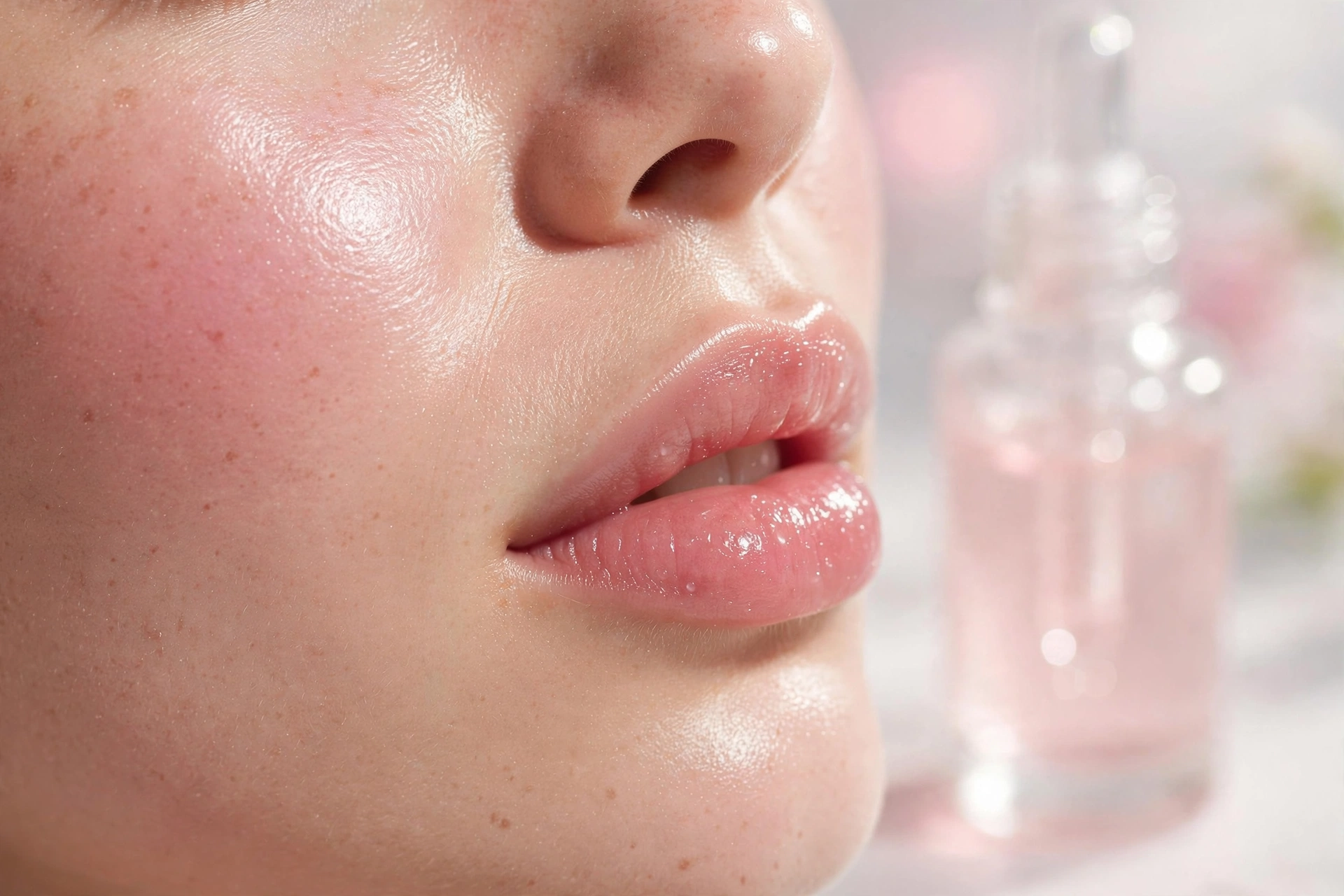
If you have spent any time on skincare TikTok, Reddit, or beauty forums lately, you have almost certainly come across a cosmetic ingredient with an unusual name and a big promise: volufiline. Search results are full of breathless claims — that a few drops of this plant-derived oil can plump up thin lips, round out hollow cheeks, and even fill under-eye tear troughs without a single injection. It sounds almost too good to be true. So is volufiline a genuine skincare breakthrough, or just another overhyped trend that will fade away?
This guide takes an honest, evidence-based look at volufiline. We will cover what it actually is, how it supposedly works, what the real scientific evidence says, what you can realistically expect on your lips and cheeks (and when), how to use it correctly, the safety profile, how it compares to injectable fillers and other plumping ingredients, and — critically — how to buy a legitimate product instead of an overhyped one. No miracle claims, no filler-fear-mongering: just the facts, so you can decide whether volufiline deserves a place in your routine.
Before you spend a single dollar on a volufiline product, it helps to understand what the ingredient actually is — because the marketing copy around it is often vague, and vague marketing is where unrealistic expectations begin.
Volufiline is not a single plant extract, despite what some product labels imply. It is a trademarked cosmetic ingredient blend developed by the French company Sederma (now part of the Croda beauty-ingredients group). The blend consists of two components:
Squalane — a lightweight, stable emollient oil derived from plant sources. Squalane is one of the most skin-compatible moisturizers in cosmetics; it mimics the skin's own lipids, absorbs quickly, and leaves virtually no greasy residue.
Hydrogenated polyisobutene — a synthetic emollient that gives the blend a smooth, cushiony slip and helps other ingredients spread and absorb evenly.
The active plant material in the blend is a fraction derived from the root of Anemarrhena asphodeloides, a perennial herb native to East Asia. The root is known as zhi mu in traditional Chinese medicine, where it has a long history of use — though its traditional applications have nothing to do with cosmetic lip plumping, and that history should not be mistaken for evidence of modern efficacy.
In practical terms, then: volufiline is a squalane-based carrier oil containing a concentrated fraction of an East Asian root extract. When you see "volufiline" on an ingredient list, you are looking at a proprietary blend, not a raw plant oil you could press in your kitchen.
Volufiline was originally positioned by Sederma as a cosmetic ingredient for targeted volume enhancement — marketed primarily to formulators making products for breast and body firming, interestingly enough. The ingredient's data sheet referenced claims about stimulating the storage of lipids in fat cells, which formulators translated into "volume-boosting" marketing.
The lip-and-cheek craze, however, was born online. Beauty influencers began applying volufiline serums directly to lips and cheek hollows, documenting subtle changes in before-and-after photos. The ingredient's name alone did heavy lifting: "volufiline" sounds like volume plus fill, which primes the brain to see filling effects. Add the appeal of a needle-free alternative to lip filler — no appointment, no bruising, no $600+ syringe — and a viral trend was inevitable.
It is worth remembering that viral popularity is not the same as proven efficacy. Many beloved skincare ingredients went viral first and earned their evidence later (niacinamide, for instance, ended up well supported). Others never earned it. Volufiline sits somewhere in between: there is a plausible mechanism and some limited supporting data, but the gap between what the manufacturer claims and what independent researchers have verified is significant. The next section walks through that honestly.
To evaluate volufiline, you need to understand the mechanism the manufacturer proposes — and then separate what has actually been demonstrated from what is marketing extrapolation.
Sederma's core claim is that volufiline promotes adipogenesis — the process by which precursor cells (preadipocytes) develop into mature fat cells and accumulate lipid droplets. The proposed chain of events goes like this:
The Anemarrhena asphodeloides fraction penetrates the upper layers of the skin.
It interacts with signaling pathways in the subcutaneous fat layer beneath, encouraging preadipocytes to differentiate into adipocytes.
These mature fat cells store more triglycerides, increasing their volume.
The increased fat-cell volume translates to visibly plumper tissue in the treated area — fuller lips, rounder cheeks.
The manufacturer's in-vitro (lab-dish) studies showed increased lipid accumulation in cultured adipocytes exposed to the ingredient. Sederma also published small in-vivo tests — including a well-cited one involving application to the bust area — reporting measurable increases in tissue volume via specialized imaging.
Here is where honesty matters. The existing evidence for volufiline has several important limitations:
Manufacturer-funded data. Nearly all of the published testing comes from Sederma itself, not from independent research groups. Manufacturer data is not automatically wrong, but it is not subject to the same scrutiny as peer-reviewed independent research.
Small sample sizes. The in-vivo studies involved small numbers of subjects. Small studies can detect real effects, but they are also more vulnerable to chance variation and measurement quirks.
Different application sites. Much of the volume data comes from body (bust) application, not the lips or cheeks. Skin thickness, blood flow, fat distribution, and tissue mechanics differ dramatically between the décolletage and the vermilion border of the lips. Results from one site do not automatically transfer to another.
Short timeframes. The studies measured changes over weeks, not months. We have very little data on whether any gains persist, fade, or reverse after you stop using the product.
No direct comparison to placebo in most public summaries. Without rigorous control groups, it is hard to separate a true pharmacological effect from the moisturizing and massaging effects of applying any oil twice daily.
None of this means volufiline does nothing. Squalane is a genuinely excellent moisturizer, and well-moisturized lips do look fuller — dehydration alone can make lips look thin and lined. Massage during application increases local blood flow, which temporarily plumps tissue. These real, immediate effects may explain much of what users report in the first week or two. Whether there is an additional, slower adipogenesis-driven effect on top of that is the part that remains unproven for facial use.
The bottom line: volufiline has a plausible mechanism and limited supporting evidence, but it has not been shown — by independent, robust research — to increase fat volume in the lips or cheeks the way an injectable filler increases volume. Treat it as a cosmetic ingredient with interesting potential, not as a filler in a bottle.
Lips are the number-one target for volufiline users, so let us get specific about what this ingredient can and cannot do for them.
The lips are unique: the skin on the vermilion (the red part) is extremely thin, with minimal stratum corneum and a dense network of capillaries close to the surface. This means:
Moisturization shows up fast. Squalane-based products can make lips look smoother and slightly fuller within hours, simply by hydrating the tissue and smoothing surface lines. Many "volufiline worked in three days" reports are likely describing this hydration effect.
Blood flow matters. Massaging any oil into the lips boosts circulation, creating a temporary rosy plumpness that fades within an hour or two. Again, this is real — it is just not volufiline-specific.
True volume change is slow and subtle. If adipogenesis occurs at all in lip tissue, it would take weeks of consistent use to produce anything visible — and the effect would be modest. Lips contain very little subcutaneous fat compared to the cheeks, which limits how much "fat plumping" can physically happen there.
A realistic framing: volufiline may help your lips look their best — hydrated, smooth, with a slight fullness boost — but it will not replicate lip filler. Injectable hyaluronic acid filler physically adds a milliliter or more of gel into the lip tissue in minutes. No topical cosmetic ingredient can do that, and any product claiming otherwise is misleading you.
If your goal is subtly improved lip appearance without injections, volufiline is a reasonable experiment. If your goal is visibly larger lips, you will be disappointed, and your money is better saved toward a professional consultation.
Frequency: Apply twice daily — morning and evening — to clean, dry lips. Consistency matters more than quantity.
Technique: Use a tiny amount (a rice-grain-sized drop) and massage gently into the lips and the skin just above and below them for 30–60 seconds. The massage itself is part of the routine.
Layering: In the morning, follow with an SPF lip product — volufiline offers no sun protection, and UV damage accelerates lip thinning. In the evening, you can layer a richer lip balm or sleeping mask over it to lock in moisture.
Avoid the waterline and inner mouth. Keep the product on the outer lip tissue; the carrier oils are not meant to be ingested in quantity, and inner-mouth application just wastes product.
Patch test first. Apply to a small area beside the mouth for 24 hours before full lip use, especially if you have reactive or allergy-prone skin.
The cheeks — and the closely related under-eye hollow (tear trough) — are the second major target area, and the logic here is slightly stronger than for lips.
Unlike lips, the cheeks have a meaningful layer of subcutaneous fat, including distinct fat pads (the malar and submalar pads) that contribute to youthful facial fullness. In theory, an adipogenesis-promoting ingredient has more tissue to work with here. Users most often target:
Cheek hollows — the slightly sunken area below the cheekbones that becomes more pronounced with age or weight loss.
Nasolabial-adjacent flatness — the midface area that loses volume over time.
Overall midface fullness — a general "youthful roundness" goal.
Application is straightforward: massage a small amount into the targeted cheek area twice daily, using upward circular motions. Many users combine this with facial massage or gua sha routines, which complicates attribution — massage alone can temporarily improve the look of facial fullness through fluid movement and muscle relaxation. If you are testing volufiline's effect, keep your massage routine constant so you can judge the ingredient, not the technique.
The tear trough — the groove between the lower eyelid and the upper cheek — is one of the most delicate areas on the face. The skin here is the thinnest on the body, and the area is prone to puffiness, milia, and irritation. A few cautions:
Do not apply directly to the eyelid or lash line. Keep volufiline on the upper cheekbone area below the hollow, not on the mobile eyelid.
Watch for milia. Rich oils near the eyes can trigger tiny white bumps (milia) in susceptible people. If they appear, stop and switch to a lighter formula or discontinue eye-area use.
Puffiness vs. hollowness. If your under-eye concern is puffiness or bags (fluid/fat protrusion), a plumping ingredient is the wrong tool — it may make the area look heavier. Volufiline is only conceptually relevant for true hollowness.
Keep expectations minimal. This is the area where anecdotal results are weakest and irritation risk is highest. Many dermatologists would suggest you skip under-eye application entirely and focus on the cheeks.
Nobody can give you a guaranteed timeline, but a reasonable framework based on the mechanism and user reports looks like this:
Days 1–7: Hydration and smoothing effects. Lips look better; skin feels softer. This is the carrier oil doing its job.
Weeks 2–4: Any early adopters reporting change usually describe subtle improvements in smoothness and a slight fullness that may partly be continued moisturization.
Weeks 4–8: The window in which manufacturer data suggests measurable volume changes could appear. This is the minimum fair trial period.
Weeks 8–12: If you are going to see anything beyond moisturization, it should be apparent by now. Take consistent photos (same lighting, same angle, no makeup) every two weeks to judge objectively.
After stopping: There is no good data on persistence. Assume any effect fades over weeks once you discontinue — this is a maintenance ingredient, not a permanent change.
If you see zero difference after 12 weeks of twice-daily use, volufiline is probably not going to work for you, and continuing is just an expensive moisturizing routine.
Getting the most out of volufiline — or any active ingredient — comes down to correct usage. Here is the complete playbook.
Pure volufiline (the raw ingredient blend) is sold to formulators, not consumers. Finished consumer products typically contain volufiline at 5% to 10% concentration. This range matters:
Below 5%: Likely too dilute to match the concentrations used in manufacturer testing. A product listing volufiline near the end of a long ingredient list is probably including a token amount for label appeal.
5–10%: The range used in the supporting studies. This is what you want to see.
Above 10%: Rare in finished products and not clearly better. More is not automatically more effective with cosmetic ingredients, and higher concentrations raise the odds of irritation without proven added benefit.
How to check: Look at the ingredient list. In most regions, ingredients are listed in descending order of concentration. If "volufiline" (or its INCI components) appears in the first third of the list, the concentration is likely meaningful. If it is buried after fragrance, dyes, and a dozen extracts, be skeptical. Some reputable brands state the percentage outright — that transparency is a good sign.
Volufiline products are oil-based, so they follow standard layering rules:
Cleanse and pat skin dry.
Water-based treatments first — toner, hyaluronic acid serum, niacinamide, or other watery serums. Let each absorb for a minute.
Volufiline product — apply to the targeted areas (lips, cheeks). A little goes a long way; two to three drops is plenty for both cheeks.
Moisturizer — your regular cream goes over the top to seal everything in.
SPF (morning only) — always the final daytime step.
In the evening, you can finish with a richer occlusive (a balm or sleeping mask) over the volufiline layer if your skin tolerates it — this may improve penetration and comfort.
Twice daily is the standard tested rhythm. Once daily is acceptable if your skin is sensitive or your routine is already crowded, but expect a slower and subtler trajectory. The single biggest predictor of any result — with volufiline or any skincare active — is consistency over weeks, not heroic application in week one followed by abandonment.
Good partners: Hyaluronic acid (hydration synergy), niacinamide (barrier support), ceramides, squalane-based moisturizers, vitamin E.
Use with caution in the same routine: Strong retinoids (tretinoin, adapalene) and high-strength acids (glycolic, salicylic) on the same area at the same time. There is no known dangerous interaction, but combining multiple actives raises irritation risk, and irritation undermines the whole project. If you use retinoids, apply them at night and volufiline in the morning, or alternate nights.
SPF is non-negotiable. UV radiation breaks down collagen and accelerates the very volume loss you are trying to counteract. A plumping routine without sunscreen is self-defeating.
Volufiline has a generally favorable safety profile, which is one of its genuine selling points. But "generally safe" is not "risk-free for everyone."
The ingredient's components — squalane and hydrogenated polyisobutene — are both widely used, well-tolerated cosmetic emollients with long safety histories. Squalane in particular is considered suitable for most skin types, including sensitive and acne-prone skin, because it is non-comedogenic for most people and closely resembles human sebum.
The Anemarrhena asphodeloides fraction is a plant extract, and plant extracts are where most cosmetic sensitivities originate. However, reported adverse reactions to volufiline specifically are uncommon in the available literature and user reports.
Mild irritation or redness — uncommon, but possible, especially on the lips or around the eyes where skin is thin.
Breakouts or clogged pores — hydrogenated polyisobutene is heavier than squalane; in acne-prone individuals, oil-based products on the cheeks can occasionally trigger congestion. If you are breakout-prone, apply only to the precise target area rather than all over the face, and monitor for two weeks.
Milia around the eyes — as discussed, rich oils near the eyes can cause tiny white bumps in susceptible people.
Allergic reaction — rare, but any botanical ingredient can sensitize. A patch test is cheap insurance.
Unwanted fullness — this sounds like a joke, but it is a real consideration: if volufiline does promote local fat storage, applying it carelessly (say, slathered across the entire lower face) could theoretically add fullness where you do not want it. Targeted application is both more effective and more prudent.
Pregnant or breastfeeding individuals: There is no specific safety data for volufiline in pregnancy. The components are topical and low-risk in principle, but the standard advice applies — check with your healthcare provider before adding new actives.
People with active eczema, dermatitis, or broken skin in the target area: heal the barrier first.
Anyone with a known allergy to plant extracts in the lily family or to any listed ingredient.
People expecting filler-like results: The risk here is financial and emotional, not medical — but it counts. Do not spend money you cannot afford to lose on an outcome the evidence does not support.
Volufiline does not exist in a vacuum. Here is how it honestly compares to the alternatives people consider for the same goals.
This is the comparison that matters most, because so much volufiline marketing leans on it — implicitly or explicitly.
Factor | Volufiline (topical) | Hyaluronic acid filler (injectable)
Mechanism | Proposed adipogenesis + moisturization | Physical gel placed in tissue
Result speed | Weeks (if at all) | Immediate
Result magnitude | Subtle at best | Dramatic, precisely controllable
Duration | Unknown; likely fades after stopping | 6–18 months depending on product/area
Cost | $15–$60 per product | $500–$1,500+ per syringe
Risks | Mild irritation, breakouts | Bruising, swelling, lumps, vascular occlusion (rare but serious)
Evidence | Limited, manufacturer-led | Extensive clinical literature
Reversibility | Simply stop using | Hyaluronidase can dissolve HA filler
The honest summary: fillers and volufiline are not in the same category. Fillers are a medical procedure with immediate, significant, well-documented results and real (if uncommon) risks. Volufiline is a cosmetic moisturizer-plus with an interesting but unproven volumizing claim. Anyone telling you a serum "replaces" filler is selling you something.
That said, they are not mutually exclusive. Some people use volufiline as a maintenance companion between filler appointments — keeping the tissue hydrated and healthy. There is nothing wrong with that approach as long as expectations stay grounded.
Topical hyaluronic acid is the most established "plumping" skincare ingredient, and it works through a completely different mechanism: it binds water in the upper skin layers, temporarily smoothing fine lines and giving skin a juicier look. The effect is immediate but superficial and washes off.
Choose HA if you want reliable, immediate surface plumping and hydration with decades of safety data.
Choose volufiline if you are specifically experimenting with the deeper fat-volume hypothesis and accept the uncertainty.
Use both if you want: HA serum first (water-based), volufiline oil over it. They layer well and address different layers of the "plump" equation.
"Plumping peptides" (like Matrixyl/Matrixyl 3000, copper peptides, or acetyl hexapeptide-8/Argireline) generally target collagen production or muscle-micro-movement rather than fat volume. They have their own evidence bases — modest but real for collagen-supporting peptides — and work on a timescale of weeks to months, similar to volufiline's claimed timeline. Peptides and volufiline can be used together without conflict; they pursue fullness through different biological pathways.
Lip plumpers based on menthol, cinnamon oil, capsicum, or niacin derivatives work by irritation: they mildly inflame the lip tissue, increasing blood flow and causing temporary swelling. The effect is visible within minutes and gone within an hour or two. Downsides: stinging, dryness with repeated use, and the plumping is literally inflammation — not something to do daily for months.
Volufiline is the opposite philosophy: no sting, no immediate drama, a slow hypothetical tissue effect. If you want instant gratification for an evening out, a traditional plumper delivers it. If you want a daily routine without chronic irritation, volufiline is the calmer (if less proven) choice.
This is where commercial intent meets consumer protection. The volufiline market is full of legitimate products — and full of opportunistic ones. Here is how to tell them apart.
Look for 5–10% volufiline. Stated percentage on the packaging or product page is the gold standard of transparency.
Check the ingredient-list position. Early in the list = meaningful amount. Buried at the end = marketing dust.
Beware "with volufiline" front-label claims on products where it appears after fragrance in the ingredients. The front label is advertising; the ingredient list is the truth.
A good volufiline product should have:
A short, clean formula — the blend is oil-based, so expect squalane and hydrogenated polyisobutene near the top.
No unnecessary irritants for a leave-on lip/cheek product: avoid high alcohol content, strong synthetic fragrance, and known sensitizers if your skin is reactive.
Complementary hydrators (glycerin, ceramides, vitamin E) are a plus.
Clear usage instructions and a realistic claims tone on the packaging.
"Filler in a bottle" / "Botox alternative" language. Any brand claiming injectable-equivalent results from a topical serum is either ignorant or dishonest — either way, do not buy from them.
No ingredient list available. Legitimate cosmetics disclose full ingredients. No list, no purchase.
Before/after photos with different lighting, angles, or makeup. This is the oldest trick in beauty marketing. Dramatic transformations in days are lighting, not lipids.
Suspiciously cheap "pure volufiline oil" from unknown sellers. The genuine raw ingredient is a specialized cosmetic blend; rock-bottom prices on marketplace sites often mean diluted or mislabeled product.
Miracle timelines ("visible results in 24 hours," "guaranteed 2-cup increase" style claims). Realistic brands talk about weeks of consistent use.
No brand identity — unbranded droppers with stock photos and no company information, reviews only on the seller's own site.
Rather than naming specific brands — formulations change, availability varies by country, and endorsements age badly — think in categories:
Dedicated volufiline serums from established indie skincare brands. These are the most straightforward option: a simple oil/serum built around the ingredient at a stated concentration. Look for brands with a track record, real customer reviews on independent platforms, and transparent ingredient lists.
Lip-specific volufiline treatments. Some brands formulate the ingredient into lip-targeted products with complementary hydrators. Convenient if lips are your only target; check that volufiline is not just a trace addition to a regular lip balm.
Facial oils listing volufiline prominently. If cheeks are your target, a face oil with volufiline high on the ingredient list can serve double duty as your facial oil step. Just confirm the concentration logic above.
DIY raw-ingredient suppliers. Some cosmetic-ingredient suppliers sell volufiline to home formulators. This route is only for experienced DIYers who understand safe formulation, preservation, and usage rates — it is not a shortcut for beginners, and misformulated DIY products carry real irritation risk.
Price-wise, expect to pay roughly $15–$60 for a legitimate finished product, depending on brand positioning and bottle size. Prices far outside this range in either direction deserve scrutiny.
Buy for the experiment, not the miracle. Choose a transparent product at 5–10%, commit to 8–12 weeks of twice-daily targeted use, photograph your progress objectively, and be willing to conclude it did not work for you. That is the entire strategy — and it protects both your wallet and your expectations.
Beyond the basics, these small optimizations add up:
Take baseline photos. Same room, same lighting, same camera distance, relaxed face, no makeup — on day one, then every two weeks. Memory is unreliable; photos are not.
Be consistent with timing. Tie application to existing habits (after brushing teeth, morning and night) so you do not skip days.
Do not layer five new products at once. If you introduce volufiline alongside three other new actives, you will never know what did what — or what caused a reaction. Introduce it alone, wait two weeks, then add other changes.
Stay hydrated and protect your skin barrier. No topical can outwork chronic dehydration, smoking, or unprotected sun exposure. The fundamentals amplify everything else.
Massage technique matters. For cheeks, use upward, outward strokes for 60 seconds. For lips, gentle circular massage. Consistent technique also makes your photo comparisons fair.
Keep the product fresh. Oil-based serums oxidize. Store away from heat and sunlight, close the cap promptly, and respect the period-after-opening symbol (usually 6–12 months).
Reassess at 12 weeks. Set a calendar reminder. If the photos show nothing, stop — or continue purely as a pleasant facial oil, without the plumping expectation.
Do not combine with lip filler healing. If you get injectable filler, wait until fully healed (your injector will advise, typically 1–2 weeks) before resuming any vigorous lip massage or new topicals.
It might produce subtle improvements, but the honest answer is that robust independent evidence is lacking. What is well established: the squalane base is an excellent moisturizer, and hydrated, massaged tissue looks fuller. Whether the Anemarrhena asphodeloides fraction meaningfully increases fat volume in facial tissue — as the manufacturer claims — has not been proven by independent research. Expect a good moisturizing oil with interesting potential, not a filler alternative.
Hydration and smoothing effects appear within days. Any deeper volumizing effect, if it occurs, would need a minimum of 4–8 weeks of twice-daily use, with 8–12 weeks as a fair trial period. Claims of dramatic change in days should be treated as marketing, not science.
Finished products typically use 5–10%, which matches the range in the manufacturer's testing. Below 5% is likely too dilute to matter; above 10% offers no proven additional benefit. Prefer brands that state the percentage openly, and check that volufiline appears early in the ingredient list.
It is generally well tolerated — squalane and hydrogenated polyisobutene are both long-established cosmetic emollients. Possible issues include mild irritation, breakouts in acne-prone skin, milia around the eyes, and rare botanical allergies. Patch test before full use, avoid broken skin, and consult your healthcare provider if pregnant or breastfeeding, as specific safety data for those groups does not exist.
No. Injectable fillers place a physical volume of gel into the tissue with immediate, significant, precisely controllable results backed by extensive clinical evidence. No topical cosmetic can replicate that. Volufiline is best viewed as a complementary skincare step — or a low-commitment experiment for people who want subtle improvement without procedures — not as a replacement.
You can apply it to the upper cheek below the hollow, but keep it off the eyelids and lash line, watch for milia, and keep expectations very low — this is the highest-risk, lowest-evidence application site. If your concern is puffiness rather than hollowness, skip it entirely; plumping ingredients can make bags look worse.
Very likely, yes. There is no good data showing permanent change from topical volufiline. The moisturizing effects fade within days of stopping, and any deeper effect would presumably reverse over weeks as fat-cell lipid storage normalizes. Think of it as maintenance, not a one-time fix.
Check four things: a stated or ingredient-list-plausible concentration of 5–10%; a full, transparent ingredient list with volufiline appearing early; realistic marketing language (weeks of use, subtle results — not "filler in a bottle"); and a real brand with independent reviews. Avoid unbranded marketplace droppers, missing ingredient lists, and miracle-timeline claims.
Volufiline is a trademarked cosmetic blend of squalane, hydrogenated polyisobutene, and an Anemarrhena asphodeloides root fraction — not a raw plant oil, and not a filler.
The proposed mechanism is adipogenesis (fat-cell lipid storage), supported mainly by small manufacturer-led studies — independent verification for facial use is lacking.
Realistic expectations: better hydration and smoothness within days; any subtle volumizing effect needs 8–12 weeks of twice-daily use; it will never match injectable fillers.
Lips benefit mostly from the moisturizing base; cheeks are the more plausible target due to real subcutaneous fat; under-eyes are high-risk and low-evidence — apply with caution or skip.
Buy smart: look for 5–10% concentration, early ingredient-list placement, transparent brands, and realistic claims. Reject "filler in a bottle" marketing and unbranded mystery oils.
Safety is generally good but patch test, avoid broken skin, watch for milia near eyes, and check with a healthcare provider if pregnant or breastfeeding.
It layers well with hyaluronic acid, niacinamide, and ceramides; keep strong retinoids and acids separated in your routine; SPF remains non-negotiable.
Judge with photos, not memory — baseline and biweekly pictures in identical conditions, with a firm 12-week reassessment point.
Volufiline occupies an interesting middle ground in skincare: more substantive than pure hype, less proven than its marketing suggests. The ingredient itself is built on skin-friendly, well-tolerated components, the proposed mechanism is biologically plausible, and the manufacturer's early data is genuinely intriguing. But intriguing is not proven — and the leap from small bust-area studies to "plumper lips and cheeks" is exactly the kind of extrapolation that deserves skepticism.
So should you try it? If you go in with clear eyes — buying a transparent 5–10% product, applying it consistently for 8–12 weeks, photographing your progress, and accepting that "subtle improvement or nothing" are both possible outcomes — then it is a reasonable, low-risk experiment. Many users genuinely enjoy it as a nourishing lip and facial oil regardless of the volumizing question.
What you should not do is buy it as a filler substitute, spend money you cannot afford on miracle claims, or trust before-and-after photos with suspiciously perfect lighting. Skincare rewards the patient and the skeptical in equal measure. Volufiline may earn a permanent place in your routine — or it may teach you that your money was better spent on a great moisturizer, daily SPF, and, if you truly want volume, a consultation with a qualified injector. Either way, you will have made the decision with facts instead of hype, and that is always the better-looking choice.
Discover the 15 best fragrance-free skincare products for sensitive skin — gentle cleansers, moisturizers and sunscreens that calm, never irritate.
Read More arrow_forward
Retinal vs retinol — which wins for wrinkles? We compare strength, speed, side effects, and who should use each.
Read More arrow_forward
Red, stinging, tight skin? Your barrier may be damaged. This 7-day repair routine with ceramides and niacinamide restores it.
Read More arrow_forward
The best caffeine eye serums for dark circles and puffiness — how caffeine works, what to look for, top formulas, and pro application tips for 2026.
Read More arrow_forward
PDRN serum — salmon-derived DNA fragments for skin repair, elasticity and hydration. What the science says, how to use it, and how to buy smart.
Read More arrow_forwardCalculate your Body Mass Index (BMI) in seconds. BMI is a quick screening number…
Use now arrow_forwardFind your daily calorie needs based on your age, sex, height, weight and activit…
Use now arrow_forwardFind how much water you should drink each day, in litres and glasses, based on y…
Use now arrow_forward