
15 Best Fragrance-Free Skincare Products for Sensitive Skin (2026)
Discover the 15 best fragrance-free skincare products for sensitive skin — gentle cleansers, moisturizers and sunscreens that calm, never irritate.
Read More arrow_forwardPDRN serum — salmon-derived DNA fragments for skin repair, elasticity and hydration. What the science says, how to use it, and how to buy smart.
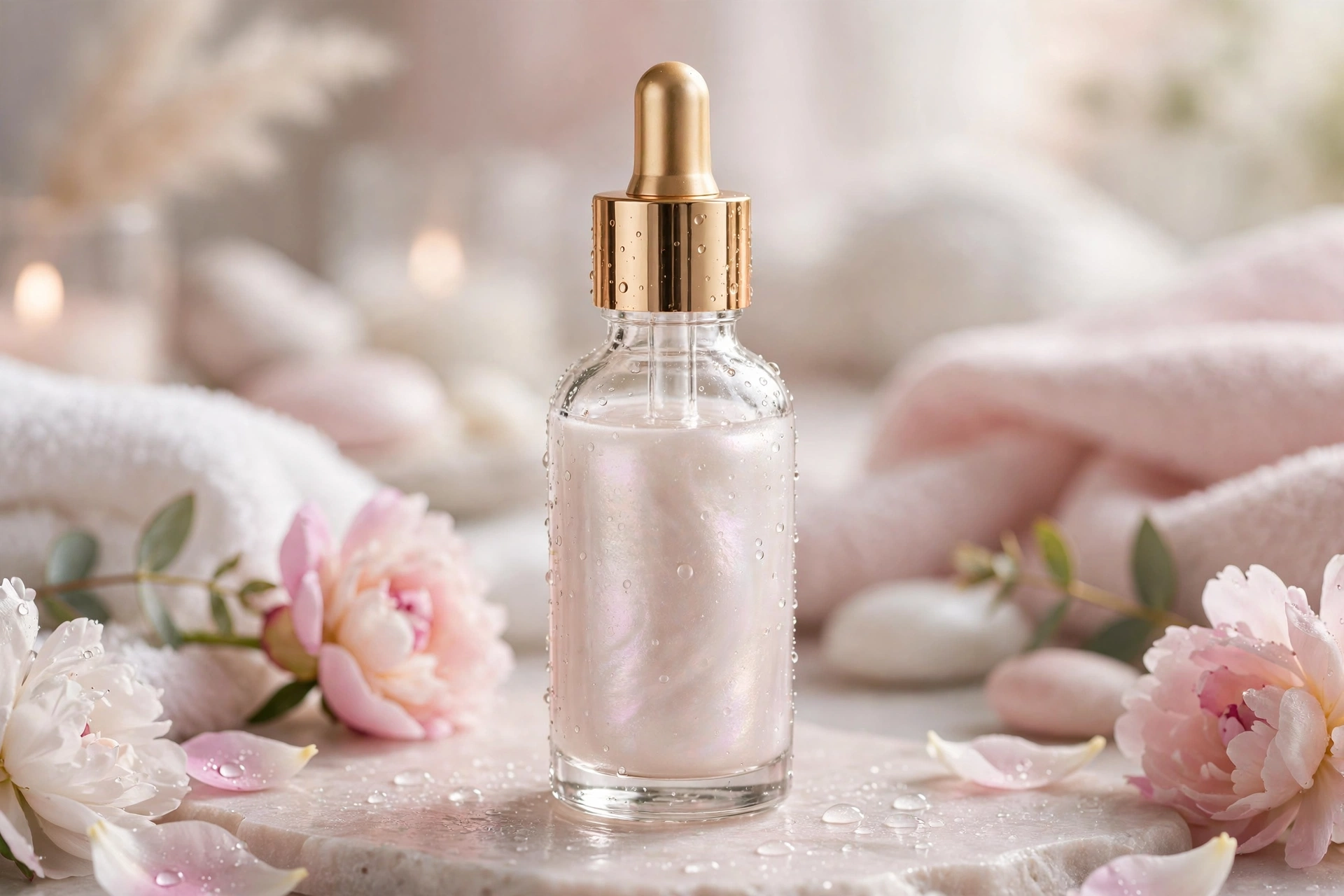
If you have spent any time on skincare TikTok, Instagram, or YouTube in the past year, you have almost certainly heard someone raving about "salmon sperm" skincare. Yes, that phrase — and no, it is not a prank. The ingredient behind the buzz is PDRN, short for polydeoxyribonucleotide, a compound derived from the DNA of salmon. What began as a niche injectable treatment in South Korean dermatology clinics — known as the "Rejuran" or "salmon DNA" treatment — has exploded into one of the biggest skincare trends of the decade, with PDRN serums now lining the shelves of K-beauty retailers worldwide.
But is PDRN serum genuinely worth adding to your routine, or is it just another viral moment with a memorable name? The honest answer is more nuanced than most social media clips suggest. PDRN has a real, documented history in medicine — it has been used in wound healing, burn treatment, and tissue regeneration research for years. That gives it a stronger scientific foundation than many trendy ingredients that arrive with little more than a catchy marketing story. At the same time, much of the strongest evidence for PDRN comes from injectable and medical contexts, not from the cosmetic serums sold over the counter. Understanding that distinction is the key to deciding whether this ingredient deserves a place in your routine.
This guide walks you through everything you need to know: what PDRN actually is and where it comes from, how it works at the cellular level, the benefits the research supports, how to use a PDRN serum correctly in your routine, what to look for when buying one, how it compares to other popular ingredients like retinol, snail mucin, and hyaluronic acid, and the safety considerations you should know about — including the important fish allergy caution. By the end, you will be able to shop for and use PDRN serum like someone who actually understands it.
PDRN stands for polydeoxyribonucleotide — quite a mouthful, which is why everyone just says "PDRN." It is a mixture of DNA fragments (deoxyribonucleotides) extracted and purified from the milt — the reproductive tissue — of salmon. Before you let the "salmon sperm DNA" framing make you uncomfortable, it is worth knowing that this sourcing method is chosen for a practical reason: salmon DNA is remarkably similar to human DNA, which is believed to help it integrate well with human skin cells and minimize irritation.
PDRN is not a single molecule but a blend of DNA fragments of varying lengths, typically purified into a standardized, pharmaceutical-grade raw material. It has been studied for decades in medical and wound-care contexts, where it is known for its role in supporting tissue repair and regeneration. In recent years, cosmetic chemists figured out how to formulate it into topical serums, creams, and masks — and the K-beauty industry ran with it.
PDRN's journey to your serum bottle starts in South Korean dermatology clinics. Around the mid-2010s, an injectable skin treatment called Rejuran — often marketed as the "salmon DNA injection" or "skin healer injection" — became wildly popular in Korea. The treatment involves injecting PDRN (combined with polynucleotides, or PN) into the skin to stimulate repair and rejuvenation. Korean celebrities credited it with their famous "glass skin," and it quickly became one of the most requested in-clinic procedures in Seoul.
The injectable form showed genuine promise for improving skin texture, elasticity, and healing after procedures like laser treatments. But injections are expensive, require clinic visits, and are not accessible to most people. Cosmetic brands saw the opportunity: if PDRN worked as an injectable, could a topical serum deliver at least some of the benefit at a fraction of the cost and hassle? That question launched the PDRN serum category, which has since grown into one of K-beauty's flagship exports.
The "salmon DNA facial" is essentially the in-clinic or at-home ritual built around PDRN: a treatment or product routine that promises deep repair and a plump, lit-from-within glow. The trend's virality owes a lot to its name — "salmon sperm facial" is simply impossible to scroll past — but it stuck around because early adopters genuinely reported visible improvements in skin texture, hydration, and healing after breakouts.
Social media did the rest. Before-and-after videos, dermatologist explainers, and celebrity mentions turned PDRN from a clinic curiosity into a mainstream skincare ingredient. By 2026, you will find PDRN serums from dozens of K-beauty brands, and the ingredient has started appearing in Western formulations too. The trend has staying power because it sits at the intersection of two things consumers care about deeply: visible results and a compelling science story.
To understand how PDRN works, you need a quick refresher on skin biology. Your skin is constantly renewing itself, but that process slows with age, sun damage, and inflammation. PDRN is thought to support the skin's own repair machinery in a few key ways.
First, PDRN breaks down into smaller building blocks — nucleotides and nucleosides — that cells can use to make new DNA. When skin cells are damaged (by UV light, pollution, or a picking session you regret), they need raw materials to repair and replicate. PDRN effectively supplies the building blocks for that repair process. Think of it less like a signal that tells cells to do something new, and more like delivering construction materials to a job site that is already active.
Second, research suggests PDRN interacts with adenosine receptors — particularly the A2A receptor — which play a role in regulating inflammation and promoting tissue regeneration. By engaging these pathways, PDRN may help calm inflammatory processes while encouraging the growth of healthy new tissue. This dual action — anti-inflammatory plus pro-repair — is what makes PDRN interesting as a skincare ingredient rather than just a laboratory curiosity.
Some of the most compelling PDRN research comes from wound healing studies. In medical literature, PDRN has been investigated for treating diabetic ulcers, burns, and post-surgical wounds, where it has shown the ability to accelerate tissue repair. Studies have observed increased fibroblast activity — fibroblasts are the cells that produce collagen and elastin, the structural proteins that keep skin firm and bouncy. When fibroblasts are more active, the skin can rebuild its support structure more effectively.
This is where an important honesty check matters: most of this wound-healing and collagen research was conducted with injectable or medical-grade PDRN, not with a $30 serum applied to the surface of the skin. Topical application faces an obvious challenge — getting a large, water-loving DNA fragment through the skin's protective barrier in meaningful amounts. Cosmetic formulators address this with delivery systems, smaller fragment sizes, and supporting ingredients, but the evidence for topical PDRN serums specifically is thinner than the evidence for PDRN as a molecule. The mechanism is plausible and the medical data is real, but you should think of serum results as likely milder and more gradual than what injectable studies suggest.
Where does cosmetic PDRN actually come from? The salmon milt used is typically a byproduct of the fishing industry — tissue that would otherwise go to waste. It undergoes extensive purification to isolate the DNA fragments, removing proteins and other cellular material that could cause irritation or immune reactions. The result is a standardized, pharmaceutical-grade ingredient.
One detail worth knowing: cosmetic PDRN is often labeled as "sodium DNA" on ingredient lists rather than "PDRN." Sodium DNA is the cosmetic naming convention for the same material. So if you are scanning an ingredient label and see "sodium DNA" high on the list, you are looking at a PDRN product. Some brands also use "DNA sodium salt" — same ingredient, different naming. This naming quirk matters because brands that actually formulate with meaningful amounts will usually call out PDRN on the front label, while the INCI name on the back reads sodium DNA.
It is also worth noting that because salmon DNA is so similar to human DNA, PDRN has a relatively low irritation profile — it is not recognized by the skin as a foreign invader the way some botanical extracts are. That said, purification quality matters enormously, which is why buying from reputable manufacturers is not just marketing talk but a genuine safety consideration.
The headline benefit of PDRN serum is repair. If your skin barrier is compromised — from over-exfoliating, retinoid irritation, a harsh climate, or just life — PDRN's repair-supporting properties make it a strong candidate for your recovery routine. Users commonly report that skin feels calmer and looks more even after a few weeks of consistent use, and the mechanism (supplying DNA building blocks and engaging regenerative pathways) lines up with that experience. It is particularly popular as a post-procedure or post-breakout treatment, where the skin needs to rebuild. If you think of your skincare routine as having an offense (actives that push change, like exfoliants and retinoids) and a defense (barrier-supporting products), PDRN serum sits firmly on the defense side.
As skin ages, it loses elasticity — the ability to snap back — because collagen and elastin production slows down. PDRN's association with increased fibroblast activity is the basis for its firmness claims: more active fibroblasts should mean better maintenance of the skin's structural proteins. Realistic expectations matter here. A PDRN serum is not going to lift sagging skin the way a surgical procedure would, and even the injectable form works gradually over multiple sessions. What topical PDRN may offer is a modest improvement in the skin's bouncy, resilient feel over weeks to months — subtle, but noticeable in the mirror and in how makeup sits.
Many PDRN serums are formulated with humectants like hyaluronic acid and glycerin alongside the PDRN itself, so part of the hydration you feel comes from the formula, not the star ingredient. But PDRN also supports the skin barrier's integrity, and a healthier barrier loses less water through the skin's surface (a process called transepidermal water loss, or TEWL). The result is skin that stays hydrated longer between applications. The "plump" look people associate with PDRN is really the combination of surface hydration plus a calmer, better-functioning barrier. Practical tip: apply your PDRN serum to slightly damp skin to help humectant ingredients pull in extra moisture.
PDRN is not a brightening agent in the same category as vitamin C, niacinamide, or alpha arbutin — it does not directly block melanin production. Any brightening effect is indirect: when inflammation calms down and the barrier heals, post-inflammatory marks fade faster and the skin's overall tone looks more even. If fading dark spots is your main goal, PDRN should be a supporting player, not the lead. Pair it with a dedicated brightening active and let PDRN do what it does best — creating the calm, healthy environment in which your other products work better.
This may be PDRN's most practical everyday benefit. A compromised barrier shows up as sensitivity, redness, rough texture, and products that suddenly sting. By supporting the skin's repair processes and reducing the low-grade inflammation that undermines barrier function, PDRN serum can help break the cycle of irritation. Many users find it works beautifully as the "calm down" step in a routine that otherwise includes stronger actives. If your skin is reactive, PDRN's low irritation profile makes it one of the safer trendy ingredients to experiment with.
Put the pieces together — repair support, fibroblast activity, barrier integrity, hydration — and you get a reasonable anti-aging story. PDRN will not replace sunscreen (nothing does), and it is not as proven for wrinkle reduction as retinoids. But as part of a long-term strategy, keeping the skin in a constant state of good repair is itself an anti-aging move: skin that heals well and stays calm shows damage more slowly. Think of PDRN as a maintenance ingredient for aging gracefully rather than a corrective ingredient that erases existing wrinkles.
Serum placement follows the classic rule: apply products from thinnest to thickest. PDRN serums are typically lightweight, watery-to-slightly-viscous textures, so they slot in right after cleansing and toning, before heavier serums, moisturizers, and oils. A standard routine looks like this:
Cleanser
Toner or essence (optional but helpful on damp skin)
PDRN serum
Other treatment serums (vitamin C, niacinamide, etc.)
Moisturizer
Sunscreen (morning) or facial oil (evening)
If you use multiple serums, a good rule of thumb is to apply PDRN serum before stronger actives — it acts as a calming buffer layer. In the morning, always finish with sunscreen; PDRN does not protect against UV damage, and unprotected skin will undo any repair work you are doing.
Most PDRN serums are gentle enough for twice-daily use, morning and evening. There is no strong evidence that more frequent application beyond that adds benefit — your skin can only use so many raw materials at once. Consistency beats intensity here: daily use for 4–8 weeks is a reasonable trial period before judging results. If your skin is currently irritated or barrier-damaged, start with once-daily evening use and build up as your skin calms.
PDRN plays well with others, which is one of its practical strengths:
Vitamin C: An excellent pairing. Vitamin C provides antioxidant protection and brightening; PDRN provides repair support. Use vitamin C first (it works best at a lower pH on clean skin), let it absorb for a minute, then layer PDRN serum over it. In the morning, this combination followed by sunscreen is a strong daytime routine.
Retinoids (retinol, tretinoin): This is arguably PDRN's best partnership. Retinoids are the gold standard for anti-aging but commonly cause irritation, peeling, and barrier disruption — exactly the problems PDRN helps address. Use your retinoid in the evening as directed, and use PDRN serum either in the same routine (apply PDRN first as a buffer, then retinoid) or on alternate "recovery" nights. Many people find this combination lets them tolerate retinoids they previously had to abandon.
Niacinamide: Another friendly pairing. Niacinamide supports barrier function and tone; PDRN supports repair. They do not conflict, and layering them is fine. If your PDRN serum already contains niacinamide (many do), you do not need a separate niacinamide product.
Good partners: hyaluronic acid, ceramides, peptides, centella asiatica (cica), panthenol, squalane, and gentle hydrating toners. These all support the same goals — hydration, barrier health, calm — and layer without conflict.
Use with care: strong exfoliating acids (glycolic, salicylic at high percentages) and benzoyl peroxide. These are not forbidden with PDRN, but they work against its calming purpose if overused. On nights you do a strong acid treatment, you can still use PDRN afterward as a recovery step — just do not stack every active on the same night. The practical rule: PDRN on recovery nights, strong actives on treatment nights, and never introduce two new products at once so you can tell what is actually helping.
Here is where PDRN shopping gets tricky: concentration labeling is inconsistent across brands. Some products advertise "PDRN 10,000 ppm" — ppm means parts per million, so 10,000 ppm equals 1%. Others advertise percentages directly, like "3% PDRN" or "5% PDRN." A few give no number at all and simply list sodium DNA among the ingredients.
A higher number is not automatically better. What matters is where sodium DNA appears in the full ingredient list (ingredients are listed in descending order of concentration) and what the overall formula contains. A serum with 1% PDRN plus ceramides, peptides, and good humectants will likely outperform a serum with 5% PDRN in a bare-bones base. Treat the percentage as one data point, not the verdict.
As mentioned earlier, "sodium DNA" is the standard cosmetic ingredient name for PDRN — so do not be put off when the INCI list says sodium DNA instead of PDRN. They are the same material. What you want to see is sodium DNA (or DNA sodium salt) listed reasonably high in the ingredients, ideally within the first half of the list. If it appears near the very end after fragrance and preservatives, the amount is likely negligible — a marketing dusting rather than a functional dose. Brands that are proud of their PDRN content will usually state a ppm or percentage on the front label; brands that hide it in the fine print at the end of the list are telling you something too.
The supporting cast often determines whether a PDRN serum actually delivers. Look for:
Humectants (hyaluronic acid, glycerin, beta-glucan) for hydration
Barrier supporters (ceramides, cholesterol, fatty acids, niacinamide) to lock in the repair work
Peptides (copper peptides, matrixyl-type peptides) for complementary firmness support
Soothing agents (centella asiatica, panthenol, allantoin, madecassoside) that reinforce the calming angle
Antioxidants (vitamin E, green tea extract) for daytime environmental defense
Avoid formulas heavy in drying alcohols (alcohol denat. high on the list), strong synthetic fragrance, or essential oils at high concentrations — these undermine the gentle, reparative purpose of the product.
PDRN serums typically come in dropper bottles or airless pumps. Either works, but airless pump packaging is preferable because it limits the product's exposure to air and light, which helps preserve the formula's stability over its months of use. If your serum comes in a dropper bottle, store it in a cool, dark place — not on a sunny bathroom shelf — and use clean hands. Refrigeration is not required, but keeping it away from heat extends its effective life. Check the PAO (period-after-opening) symbol on the packaging, usually 6 or 12 months, and do not stretch a serum far beyond it.
EGF is another repair-focused ingredient with Korean skincare roots. Both aim to support skin regeneration, but they work differently: EGF is a signaling protein that tells cells to grow and divide, while PDRN supplies the nucleotide building blocks cells need for repair and engages adenosine pathways. In practice, they are complementary rather than competitive — some premium formulas even combine them. If you must choose, EGF has a longer cosmetic track record, while PDRN has the stronger medical wound-healing literature. Either is a reasonable pick for a repair-focused routine.
Snail mucin (snail secretion filtrate) is K-beauty's original "weird but effective" hydrator, and the comparison is natural since both went viral for unusual sourcing. Snail mucin is primarily a hydrating, soothing humectant with some glycolic acid and allantoin content — excellent for moisture and texture, with a huge base of user love. PDRN has the more specific repair/regeneration mechanism and the medical research pedigree. They layer beautifully together (many routines use both), so this is less an either/or choice and more a question of which benefit you want to emphasize: snail mucin for hydration and glow, PDRN for repair and resilience.
This is the most important comparison for setting expectations. Retinol (and prescription tretinoin) remains the most evidence-backed topical anti-aging ingredient in existence, with decades of clinical trials showing wrinkle reduction, collagen stimulation, and tone improvement. PDRN does not compete with that evidence base for topical use — not even close. What PDRN offers instead is gentleness: it is far less likely to irritate, requires no acclimation period, and can be used by people whose skin cannot tolerate retinoids. The smart move for most people is not choosing between them but using both — retinoids for proven anti-aging power, PDRN to keep the skin calm and supported while the retinoid does its work.
Hyaluronic acid is a hydration specialist: it holds up to 1,000 times its weight in water and gives skin that immediate plump, dewy look. PDRN is a repair specialist with hydration as a secondary benefit. They are not substitutes — hyaluronic acid does not support tissue repair, and PDRN does not hydrate as dramatically on contact. Most good PDRN serums already include hyaluronic acid, which tells you everything: the formulators consider them complementary, and so should you.
PDRN has a reassuring safety profile overall. Because salmon DNA closely resembles human DNA and the ingredient is highly purified, topical PDRN is generally well tolerated, including by sensitive skin types. Irritation reports are uncommon, and it does not cause the peeling, purging, or sun sensitivity associated with retinoids and strong acids. It is also considered safe for long-term daily use — there is no need to cycle it the way you might cycle a strong active.
This is the single most important safety note in this guide: if you have a fish or salmon allergy, be cautious with PDRN products. While cosmetic PDRN is extensively purified to remove proteins (the usual allergy triggers), the source material is salmon-derived, and cross-reactivity cannot be entirely ruled out. Anyone with a known fish allergy should patch test carefully — apply a small amount behind the ear or on the inner forearm, wait 24–48 hours, and watch for redness, itching, or swelling — and ideally consult a dermatologist or allergist before full-face use. This is not theoretical caution; it is the one hard contraindication for this ingredient.
Beyond the allergy question, side effects from topical PDRN are rare and mild. Some users report temporary redness or a tingling sensation on first use, usually because their barrier was already compromised rather than because of the PDRN itself. Breakouts are occasionally reported, but these are more often attributable to the serum's overall formula (oils, silicones, or other base ingredients) than to PDRN. As with any new product, introduce it alone — not alongside three other new products — so you can identify the culprit if your skin reacts.
PDRN serum is a good fit if you:
Have a damaged or sensitive skin barrier and need a repair-focused step
Use retinoids or exfoliating acids and want a calming buffer product
Are dealing with post-breakout marks and want to support faster-looking recovery
Want gentle anti-aging maintenance without the irritation of stronger actives
Love K-beauty trends but want one with actual research behind it
Have dry or dehydrated skin that needs barrier support alongside hydration
Consider skipping or proceeding carefully if you:
Have a fish or salmon allergy (patch test first, consult a professional)
Are pregnant or breastfeeding — not because PDRN is known to be harmful, but because cosmetic PDRN lacks specific safety data for pregnancy, and the conservative choice with any under-studied ingredient is to check with your doctor
Expect dramatic, rapid anti-aging results — PDRN works gradually and subtly
Are on a tight budget and do not already own the basics — sunscreen, a gentle cleanser, and a moisturizer will do more for your skin per dollar than any trendy serum
With dozens of PDRN serums on the market, here is how to separate the worthwhile from the hype:
Check the front-label claim and the back-label reality. A brand advertising a specific PDRN concentration (ppm or percentage) is making a verifiable claim. Cross-check it against the ingredient list: sodium DNA should appear in the first half, not buried at the end.
Judge the whole formula, not just the star. Look for the supporting ingredients listed above — humectants, ceramides, peptides, soothing agents. A thoughtful formula signals a brand that understands what PDRN is for.
Prefer reputable K-beauty manufacturers. PDRN purification quality matters for both efficacy and safety. Established Korean skincare brands with GMP-certified manufacturing are a safer bet than anonymous white-label products with no traceable maker.
Match the format to your routine. Serums are the most concentrated and flexible option. If you prefer simplicity, PDRN moisturizers and sheet masks exist, but serums give you the most control over layering.
Be skeptical of miracle claims. Any product promising to "erase wrinkles in 7 days" or "replace Botox" is lying to you — about PDRN or anything else. Honest brands talk about repair, hydration, and gradual improvement.
Consider the price-to-formula ratio. PDRN is not an inherently expensive raw material at cosmetic concentrations. A mid-range price from a reputable brand is the sweet spot; extreme luxury pricing is paying for the brand, not the PDRN.
Patch test, especially if you have any fish sensitivity. Even with no known allergy, a 24-hour patch test is cheap insurance with any new active.
A note on specific product recommendations: the PDRN serum market moves fast, with new launches every quarter, so naming individual "best" products risks going stale quickly. Instead of chasing a specific bottle, use the checklist above — it will serve you better than any ranked list, because it teaches you to evaluate whatever is on the shelf when you shop.
Give it time. Skin cell turnover takes roughly 28 days (longer as you age). Judge a PDRN serum after 6–8 weeks of consistent use, not after three days.
Take progress photos. Subtle, gradual improvements are easy to miss in the mirror. A weekly photo in the same lighting tells the true story.
Use it as your retinoid's best friend. The single highest-value use of PDRN serum for most people is buffering retinoid irritation — apply PDRN first, retinoid after, and watch tolerance improve.
Do not skip sunscreen. PDRN repairs; sunscreen prevents. A repair ingredient without sun protection is like bailing water without plugging the leak.
Layer on damp skin. After cleansing or toning, apply PDRN serum while skin is still slightly damp to maximize the hydrating ingredients in the formula.
Less is more. A pea-sized amount or a few drops is enough for the whole face. Slathering on extra does not speed results.
Store it properly. Cool, dark place; cap tightly; respect the period-after-opening date. A degraded serum helps no one.
Keep the rest of your routine stable. If you change five products at once, you will never know what worked. Introduce PDRN into an otherwise stable routine.
PDRN serum is designed to support the skin's natural repair processes. It supplies DNA building blocks that cells use for repair and replication, engages pathways involved in calming inflammation and encouraging tissue regeneration, and — in well-formulated serums — is paired with hydrating and barrier-supporting ingredients. The practical result most users report is calmer, more resilient, better-hydrated skin with improved texture over several weeks. It is best thought of as a repair-and-maintenance ingredient rather than a dramatic corrective treatment.
PDRN is extracted from salmon milt, which is the reproductive tissue of male salmon — so the "salmon sperm DNA" nickname is technically in the right neighborhood, though "salmon DNA" is the more accurate and less sensational description. The DNA undergoes extensive purification to produce a standardized ingredient, and salmon DNA is used because of its close similarity to human DNA. On ingredient labels it usually appears as "sodium DNA."
Set realistic expectations: most users report noticing improved hydration and calmness within 1–2 weeks, with more meaningful texture and resilience improvements after 4–8 weeks of consistent twice-daily use. PDRN works by supporting gradual biological repair processes, not by delivering an instant cosmetic effect. If you have not noticed any difference after two full months of consistent use, the product may not be a meaningful addition for your skin.
Yes — this is one of the best combinations in skincare. Retinol drives proven anti-aging results but often causes irritation; PDRN serum helps calm and support the barrier, which can improve your tolerance of retinol. Apply the PDRN serum first as a buffer layer, then your retinol product. Alternatively, use PDRN serum in the morning and retinol at night. Either approach lets each ingredient do its job without conflict.
Generally, yes. PDRN has a low irritation profile and is frequently recommended for sensitive or barrier-damaged skin precisely because it is calming rather than stimulating. The one major exception is fish or salmon allergy — if that applies to you, patch test carefully and consult a professional first. Also check the full ingredient list of any serum for fragrances or essential oils that could irritate sensitive skin independently of the PDRN.
PDRN (polydeoxyribonucleotide) and PN (polynucleotide) are closely related — both are DNA-derived materials from similar sources, and the terms are sometimes used loosely. Technically, PN refers to longer-chain polynucleotides, while PDRN refers to a mixture of shorter fragments. In injectable treatments like Rejuran, both are used. In cosmetic serums, you will almost always see PDRN (labeled as sodium DNA). For practical shopping purposes, treat them as siblings in the same ingredient family with similar intended benefits.
No. PDRN serums are typically lightweight, water-based treatments focused on repair — they do not provide the occlusive, moisture-sealing function of a moisturizer. Always follow your PDRN serum with a moisturizer (and sunscreen in the morning) to seal in the hydration and protect the barrier work the serum is doing. Skipping moisturizer is one of the most common reasons people feel a serum "didn't work."
The PDRN boom has attracted low-effort products, as every viral ingredient does. Red flags include: no mention of PDRN concentration anywhere with sodium DNA buried at the end of the ingredient list, absurd miracle claims ("Botox in a bottle"), no identifiable manufacturer, and prices that seem too good to be true for the claimed concentration. Stick to the buying checklist in this guide — verifiable concentration claims, sensible supporting formulas, reputable manufacturers — and you will avoid the worst of it.
PDRN (polydeoxyribonucleotide) is a salmon-DNA-derived ingredient that supplies the building blocks for skin cell repair and engages regenerative pathways — with real medical wound-healing research behind the molecule.
Its popularity started with Rejuran injectable "salmon DNA" treatments in Korean clinics; topical serums aim to deliver milder, gradual versions of those benefits at home.
The strongest evidence comes from injectable and medical contexts — be honest with yourself that cosmetic serum evidence is thinner, and expect subtle, gradual results.
Best uses: barrier repair, calming retinoid irritation, post-breakout recovery, hydration support, and gentle anti-aging maintenance.
It layers well with vitamin C, retinol, and niacinamide — apply PDRN serum after cleansing/toning and before heavier products.
On labels, look for "sodium DNA" in the first half of the ingredient list, plus supporting humectants, ceramides, and soothing agents; be wary of miracle claims.
Fish/salmon allergy is the key contraindication — patch test and consult a professional if it applies to you.
Consistency for 6–8 weeks plus daily sunscreen is the formula for judging whether PDRN earns its place in your routine.
PDRN serum earns its place among the more interesting skincare trends of recent years — not because of its viral name, but because it arrives with something most viral ingredients lack: a genuine scientific backstory. The wound-healing and tissue-repair research behind PDRN is real, its mechanism is biologically plausible, and its low irritation profile makes it one of the safer trendy ingredients to try. The honest caveats matter just as much: most of the strongest evidence comes from medical and injectable use, not from the serum on your shelf, so expect supportive, gradual improvement rather than transformation.
Used wisely — as a repair-focused step that calms, hydrates, and supports your barrier while your proven actives (retinoids, vitamin C, sunscreen) do the heavy lifting — PDRN serum can be a genuinely useful addition to a thoughtful routine. Shop with the checklist in this guide, give it two months of consistent use, protect your skin from the sun every single day, and let the results speak for themselves. In a skincare world full of noise, PDRN is one trend that rewards an informed approach.
Discover the 15 best fragrance-free skincare products for sensitive skin — gentle cleansers, moisturizers and sunscreens that calm, never irritate.
Read More arrow_forward
Retinal vs retinol — which wins for wrinkles? We compare strength, speed, side effects, and who should use each.
Read More arrow_forward
Does volufiline really plump lips and cheeks? This 2026 guide covers how it works, realistic timelines, safety, and honest buying advice.
Read More arrow_forward
Red, stinging, tight skin? Your barrier may be damaged. This 7-day repair routine with ceramides and niacinamide restores it.
Read More arrow_forward
The best caffeine eye serums for dark circles and puffiness — how caffeine works, what to look for, top formulas, and pro application tips for 2026.
Read More arrow_forwardCalculate your Body Mass Index (BMI) in seconds. BMI is a quick screening number…
Use now arrow_forwardFind your daily calorie needs based on your age, sex, height, weight and activit…
Use now arrow_forwardFind how much water you should drink each day, in litres and glasses, based on y…
Use now arrow_forward