Niacinamide Serum Benefits: How to Use It for Pores, Oil and Dark Spots (2026 Guide)
Niacinamide serum benefits explained — how it minimizes pores, controls oil and fades dark spots, plus how to use it correctly in 2026.
Read More arrow_forwardSalicylic acid for acne — how this BHA unclogs pores, clears blackheads and prevents breakouts. Usage guide, percentages and best formulas.
Of all the ingredients promising clear skin, few have the track record of salicylic acid. Dermatologists have recommended this beta hydroxy acid (BHA) for decades, and it remains the gold standard for treating blackheads, whiteheads, clogged pores, and mild-to-moderate acne. Yet despite its fame, most people use it wrong — too strong, too often, layered with the wrong products — and end up with irritation instead of results.
Salicylic acid works differently from the scrubs and harsh "acne washes" that dominated skincare in the past. Instead of sitting on the surface, it's oil-soluble, which means it can actually travel into your pores, dissolving the mix of sebum and dead skin cells that causes congestion. That's why it's uniquely effective against blackheads and the deep, clogged-pore breakouts that other ingredients can't reach.
This complete 2026 guide covers everything: how salicylic acid works at a scientific level, the difference between BHA and AHA exfoliants, which concentration you actually need (spoiler: stronger isn't better), exactly how to use it without wrecking your skin barrier, what to layer it with and what to avoid, the best formulas worth buying this year, and answers to the questions people ask most. Whether you're dealing with stubborn blackheads or recurring breakouts, you'll finish this guide knowing precisely how to make salicylic acid work for you.
Salicylic acid is a beta hydroxy acid — a chemical exfoliant derived originally from willow bark (modern skincare uses lab-synthesized versions for purity and consistency). The "beta" in BHA refers to its chemical structure: unlike alpha hydroxy acids (AHAs) such as glycolic and lactic acid, which are water-soluble, salicylic acid is oil-soluble (lipophilic).
That single property is what makes it the acne-fighting specialist. Your pores are filled with sebum — oil. A water-soluble AHA largely works on the skin's surface, loosening dead cells and improving texture and tone. Salicylic acid, being oil-soluble, mixes with the sebum inside the pore and exfoliates within the pore lining itself. It dissolves the "glue" holding dead skin cells together inside the follicle, allowing the plug of oil and debris to clear out naturally.
Beyond exfoliation, salicylic acid is also:
Comedolytic — it prevents and breaks down comedones (blackheads and whiteheads), the precursors to most breakouts.
Anti-inflammatory — it's chemically related to aspirin (acetylsalicylic acid) and calms the redness and swelling of inflamed pimples.
Keratolytic — at higher concentrations it softens and sheds the outer layer of skin, which is why it's also used for warts, calluses, and dandruff (in different formulations).
This is the most common point of confusion, so let's settle it clearly:
Choose salicylic acid (BHA) if your main concerns are blackheads, whiteheads, clogged pores, oily skin, or acne. It works inside the pore where these problems start.
Choose AHAs (glycolic, lactic, mandelic acid) if your main concerns are surface texture, dullness, fine lines, or post-acne dark marks. They resurface the top layer of skin beautifully but don't penetrate oily pores as effectively.
Many people benefit from both — for example, a BHA for pore congestion plus a gentle AHA for glow — but they should generally be used on alternating days or in separate routines, not layered together, to avoid over-exfoliation. Research summarized through the National Institutes of Health supports salicylic acid's comedolytic and anti-inflammatory mechanisms as the basis for its long-standing role in acne therapy.
To understand why salicylic acid works so well, it helps to understand how a pimple forms. Acne begins when excess sebum mixes with dead skin cells inside the hair follicle, forming a plug (a microcomedone). If the plug stays closed beneath the surface, it's a whitehead; if it opens and oxidizes, it's a blackhead. When Cutibacterium acnes bacteria multiply in that trapped, oxygen-poor environment, inflammation follows — the red, painful pimples and cysts.
Salicylic acid intervenes at the earliest stage. By exfoliating inside the pore lining, it:
Dissolves existing plugs — loosening blackheads and whiteheads so they clear without squeezing.
Prevents new plugs — keeping the follicle lining shedding normally so sebum flows out instead of getting trapped.
Reduces inflammation — calming the redness around active breakouts.
Normalizes oil flow — it doesn't "dry up" oil like harsh astringents; it keeps the exit route clear so oil doesn't accumulate.
This is also why consistency matters more than intensity. A gentle 2% formula used regularly prevents the microcomedones that would have become next month's breakouts. An aggressive 10% peel used once in a while can't do that preventive work — and it risks damaging your skin barrier, which can trigger even more breakouts.
Low concentrations are ideal for sensitive skin, beginners, or daily use in cleansers and toners. They provide mild pore-clearing with minimal irritation risk. If your skin is reactive, start here — and pair your routine with calming, fragrance-free products for sensitive skin while you adjust.
Two percent is the maximum concentration allowed in over-the-counter leave-on products in many regions, and it's the concentration with the most clinical evidence behind it. A well-formulated 2% salicylic acid serum or liquid exfoliant, used 2–4 times per week, handles blackheads, congestion, and mild-to-moderate acne for the vast majority of people. There is rarely a reason for a typical consumer to go higher in a leave-on product.
Higher strengths appear in rinse-off peels, masks, and professional treatments. They exfoliate more aggressively and carry significantly more irritation risk. These are occasional-use products, not daily treatments, and they're best approached cautiously — or under a dermatologist's guidance. The American Academy of Dermatology notes that chemical peels can improve acne but should be chosen based on skin type and used as directed to avoid complications.
This deserves emphasis: moving from 2% to a higher percentage doesn't clear acne "faster" — it increases the risk of redness, peeling, sensitivity, and barrier damage, which can actually trigger more breakouts. The people with the clearest skin from salicylic acid are almost always the ones using a moderate strength consistently, not the ones chasing the highest number on the label.
Patch test first. Apply a small amount behind the ear or along the jawline for 2–3 days. No reaction means you're good to proceed.
Start 2–3 times per week, evenings only. Apply to clean, dry skin after cleansing. A pea-sized amount for the full face is plenty — more product doesn't mean more results.
Wait before layering. Give the BHA 10–20 minutes to work at its optimal pH before applying moisturizer. (If you're short on time, even 5 minutes is better than layering immediately.)
Moisturize after. Always follow with a non-comedogenic moisturizer. Exfoliation without moisturization leads to dehydration, which triggers more oil production.
Increase gradually. After 2–3 weeks with no irritation, you can move to every other night if your skin needs it. Most people never need daily use.
Salicylic acid cleansers (usually 0.5%–2%) are the gentlest entry point — the acid has brief contact time, so irritation risk is low. Good for sensitive skin or as a complement to a leave-on formula used less often.
Toners and liquid exfoliants (typically 2%) are the classic format — light, spreadable, effective. This is the format most people should choose.
Leave-on serums and gels (2%) offer the most sustained contact and are excellent for targeted congestion.
Spot treatments with salicylic acid can calm individual pimples, but they don't prevent new ones — they're a supplement to, not a replacement for, full-face prevention.
Night is better. Salicylic acid can increase sun sensitivity (all exfoliants do), and nighttime application gives it hours of uninterrupted contact. If you use it in the morning for any reason, sunscreen is absolutely non-negotiable — and your sunscreen needs to be removed thoroughly at night, which is where the double cleansing method becomes essential: leftover SPF mixed with BHA-loosened debris is a recipe for congestion.
Every exfoliant increases photosensitivity. Daily broad-spectrum SPF 30+ isn't optional when using salicylic acid — it's part of the treatment. Unprotected sun exposure on exfoliated skin accelerates dark marks and aging, undoing exactly what you're trying to fix.
Niacinamide: Calms inflammation, regulates oil, and strengthens the barrier — an excellent partner. Use niacinamide in the morning and BHA at night, or layer niacinamide after your BHA has absorbed.
Hyaluronic acid: Hydrates without clogging. Apply to damp skin after BHA, then seal with moisturizer.
Ceramides and barrier-supporting moisturizers: Essential after every BHA application. A ceramide-rich moisturizer from a dermatologist-developed brand helps offset any dryness.
Azelaic acid: A gentle multitasker for redness and marks that pairs well with BHA on alternating nights.
BHA + retinoids (retinol, tretinoin, retinal): Both are powerful; together they're a fast track to irritation for most people. Use them on alternating nights, not layered. If you're exploring retinoids for texture and wrinkles, our comparison of retinal vs. retinol will help you choose the right one before combining routines.
BHA + other exfoliating acids (glycolic, lactic): Don't stack exfoliants in the same routine. Alternate nights if you want both.
BHA + benzoyl peroxide: Both treat acne but through different mechanisms; used together they often cause excessive dryness. Many dermatologists suggest benzoyl peroxide in the morning and BHA at night if your skin tolerates it — but start with one.
BHA + vitamin C (L-ascorbic acid): The pH conflict reduces effectiveness and increases irritation. Vitamin C in the morning, BHA at night.
One active per routine is the safest default. BHA at night + gentle hydrating products is a complete, effective routine for most people. Complexity is the enemy of consistency — and consistency is what clears skin.
Your ideal candidate. A 2% leave-on BHA 3–4 times per week, with a lightweight non-comedogenic moisturizer, addresses the root cause of most oily-skin breakouts: trapped sebum and dead cells. Resist the urge to also use harsh scrubs or alcohol toners — over-stripping increases inflammation.
Yes, dry skin gets blackheads too (often on the nose). Use a lower frequency — 1–2 times per week — and a hydrating formula or a BHA cleanser rather than a strong leave-on. Follow with rich moisturizer. If flaking appears, you're overdoing it; scale back before your barrier suffers.
Proceed with caution but don't assume it's off-limits. Start with a salicylic acid cleanser (brief contact, low irritation) 2–3 times per week, or a 0.5%–1% leave-on formula. Keep the rest of the routine minimal and fragrance-free. Discontinue if you get persistent redness or stinging — some sensitive skin simply prefers alternatives like azelaic acid.
The classic use case. Consistent BHA use loosens blackheads over 4–6 weeks — but manage expectations: "sebaceous filaments" (the tiny dots on the nose) are a normal part of skin anatomy, not dirt, and they can't be permanently removed. BHA minimizes their appearance; pore strips and squeezing just cause damage. For a deeper dive into pore science, DermNet NZ's dermatology library offers authoritative, dermatologist-reviewed explanations.
Salicylic acid body washes and sprays work well for bacne — the mechanism is identical. Apply to the affected areas in the shower, leave for a minute before rinsing, and follow with a non-comedogenic body moisturizer. Wear breathable fabrics and shower after sweating.
Salicylic acid helps prevent the breakouts that cause marks, and its exfoliating action gradually fades post-inflammatory hyperpigmentation — but it's slow on marks alone. For faster fading, pair your BHA routine (alternate nights) with niacinamide, azelaic acid, or vitamin C in the morning, plus strict sunscreen.
"Purging" is real but widely misunderstood. Because salicylic acid accelerates cell turnover, it can bring existing microcomedones (invisible developing clogs) to the surface faster — small pimples appearing in areas where you usually break out, clearing within 2–4 weeks.
It's not purging if:
Breakouts appear in areas where you never normally break out.
You're getting painful cysts, significant redness, itching, or stinging.
It continues beyond 4–6 weeks without improvement.
Those signs point to irritation or a reaction — stop the product, simplify your routine, and focus on barrier repair before reintroducing any exfoliant more slowly or trying a gentler formula.
Rather than endorsing a single "best" product (formulations change, and skin is personal), here's what to look for in each category:
2% salicylic acid at an effective pH (3–4).
No added fragrance or drying alcohol.
Soothing supporting ingredients like green tea, centella, or niacinamide.
A texture you'll actually use — lightweight liquids layer best under moisturizer.
0.5%–2% salicylic acid, gentle surfactant base, pH around 5.5.
Non-stripping feel — your face shouldn't feel tight after rinsing.
Best as a second cleanse in the evening or a morning cleanse a few times per week — and remember, if you're wearing sunscreen daily, the double cleansing method ensures your BHA isn't fighting through a layer of leftover SPF.
Extremely high percentages marketed for daily full-face use.
"Maximum strength" claims paired with alcohol-heavy bases.
Heavy fragrance, especially in leave-on formulas.
No clear usage instructions — reputable brands tell you exactly how often to apply.
For salicylic acid specifically, price correlates weakly with effectiveness. The molecule is the molecule — a well-formulated affordable 2% BHA often outperforms a luxury product with a weaker formula. Spend your money on the formula quality (pH, supporting ingredients, no irritants) rather than the brand prestige — established dermatologist-developed brands offer reliable, well-tested options across price points.
Consistency beats intensity. A gentle 2% formula used 3 nights a week for two months will outperform an aggressive peel used sporadically. Put it in your routine and forget about chasing stronger products.
Apply to dry skin. Damp skin increases penetration and irritation risk. Cleanse, pat dry, wait a minute, then apply BHA.
Don't spot-treat your way out of prevention. Dabbing BHA on individual pimples feels productive, but full-face application 2–4 times weekly prevents the next breakout — that's where the real value is.
Give it 6–8 weeks. Skin cycles take about a month; judging a BHA after one week is like judging a gym after one workout. Take a photo on day one and compare at week six.
Simplify everything else. While introducing BHA, pause other strong actives for two weeks. A minimal routine (gentle cleanser, BHA, moisturizer, sunscreen) lets you accurately judge what's working.
Watch the jawline and hairline. These areas collect sunscreen, hair products, and phone grime — extend your BHA application fully to the hairline and jaw, where congestion hides.
Pillowcases matter. Change them 2–3 times per week while treating acne. A BHA can't outpace nightly re-contamination from a dirty pillowcase.
Don't pick. BHA loosens clogs so they clear on their own — picking inflamed skin while using exfoliants dramatically increases the risk of scarring and dark marks.
Most people don't need to, and daily use increases irritation risk without proportional benefit. Start 2–3 times per week; increase to every other night only if your skin tolerates it well and still needs more. If 2% every other night isn't controlling your acne after 8 weeks, see a dermatologist rather than increasing frequency further.
Expect initial texture improvement in 2–3 weeks, visible blackhead reduction in 4–6 weeks, and meaningful breakout reduction in 6–8 weeks of consistent use. Deep or hormonal breakouts may need longer, or prescription treatment alongside.
Not in the same routine — alternate nights instead. A common effective schedule: BHA on Monday/Wednesday/Friday, retinoid on Tuesday/Thursday/Saturday, rest on Sunday. If you're new to both, introduce one at a time, starting with the BHA for a month before adding the retinoid.
This is a question for your doctor, not a blog. Topical salicylic acid in low OTC concentrations is generally considered low-risk, but high-concentration peels and oral salicylates are a different matter — dermatology references consistently advise consulting your healthcare provider. When in doubt, ask your OB-GYN or dermatologist.
Three possibilities: (1) normal purging of existing microcomedones (2–4 weeks, usual breakout zones only); (2) irritation from too-high frequency or bad layering (new zones, redness, stinging); (3) a damaged barrier from overuse. If it's (2) or (3), stop, repair with gentle barrier-supporting products per our barrier repair guide, then restart slower.
It helps with marks (post-inflammatory hyperpigmentation) through exfoliation, but it cannot fix textured scars like icepick or boxcar scars — those involve deeper dermal damage that no topical exfoliant can remodel. Textured scarring needs dermatologist procedures (microneedling, lasers, subcision). BHA's real strength is preventing the breakouts that cause scars in the first place.
After. Salicylic acid needs direct contact with clean skin at its formulated pH to penetrate pores effectively. Applying moisturizer first buffers it and significantly reduces efficacy. The correct order: cleanse → BHA on dry skin → wait 10–20 minutes → moisturizer → (morning: sunscreen).
Yes — like all actives, it degrades over time, especially with heat and light exposure. Most products last 12 months after opening (check the PAO symbol on the packaging). An oxidized or expired BHA won't just be weaker — degraded formulas can irritate. Store it in a cool, dark place and replace yearly.
Salicylic acid is an oil-soluble BHA that exfoliates inside the pore, dissolving the sebum-and-dead-cell plugs that cause blackheads, whiteheads, and breakouts — while also calming inflammation.
2% is the sweet spot for leave-on products; higher percentages increase irritation without meaningfully better results for typical acne.
Start 2–3 nights per week on clean, dry skin, wait 10–20 minutes, then moisturize — increase frequency only gradually, and most people never need daily use.
Never layer BHA with retinoids or other exfoliating acids in the same routine; alternate nights instead, and keep vitamin C to the morning.
Daily broad-spectrum SPF 30+ is mandatory — exfoliated skin is more sun-sensitive, and sunscreen must be removed thoroughly each night.
Give it 6–8 weeks of consistent use before judging; distinguish true purging (usual zones, clears in weeks) from irritation (new zones, redness, stinging).
Affordable, well-formulated 2% products work as well as luxury ones — prioritize formula quality (effective pH, no fragrance, soothing supports) over brand prestige.
Salicylic acid earned its reputation the hard way: decades of dermatologist recommendations and millions of clear-skin success stories. It's not magic — it's chemistry, applied patiently. The people who get transformative results aren't the ones using the strongest formula or the most products; they're the ones who picked a solid 2% BHA, used it 3 nights a week, moisturized properly, wore sunscreen daily, and gave it two full months.
If blackheads, clogged pores, or recurring breakouts are your main frustration, salicylic acid is very likely the single most effective over-the-counter ingredient you can add to your routine. Start low, go slow, keep the rest of your routine simple — and let the BHA do what it does best: keep your pores clear from the inside out. And if 8 weeks of proper use doesn't move the needle, that's valuable information too — it means it's time for a dermatologist, not a stronger product.
Niacinamide serum benefits explained — how it minimizes pores, controls oil and fades dark spots, plus how to use it correctly in 2026.
Read More arrow_forward
Best sunscreens of 2026 — mineral vs chemical compared, how to choose for your skin type, and the reapplication rules most people get wrong.
Read More arrow_forward
Hyaluronic acid serum guide — how it hydrates skin, the damp-skin rule, molecular weights explained, and the best formulas for 2026.
Read More arrow_forward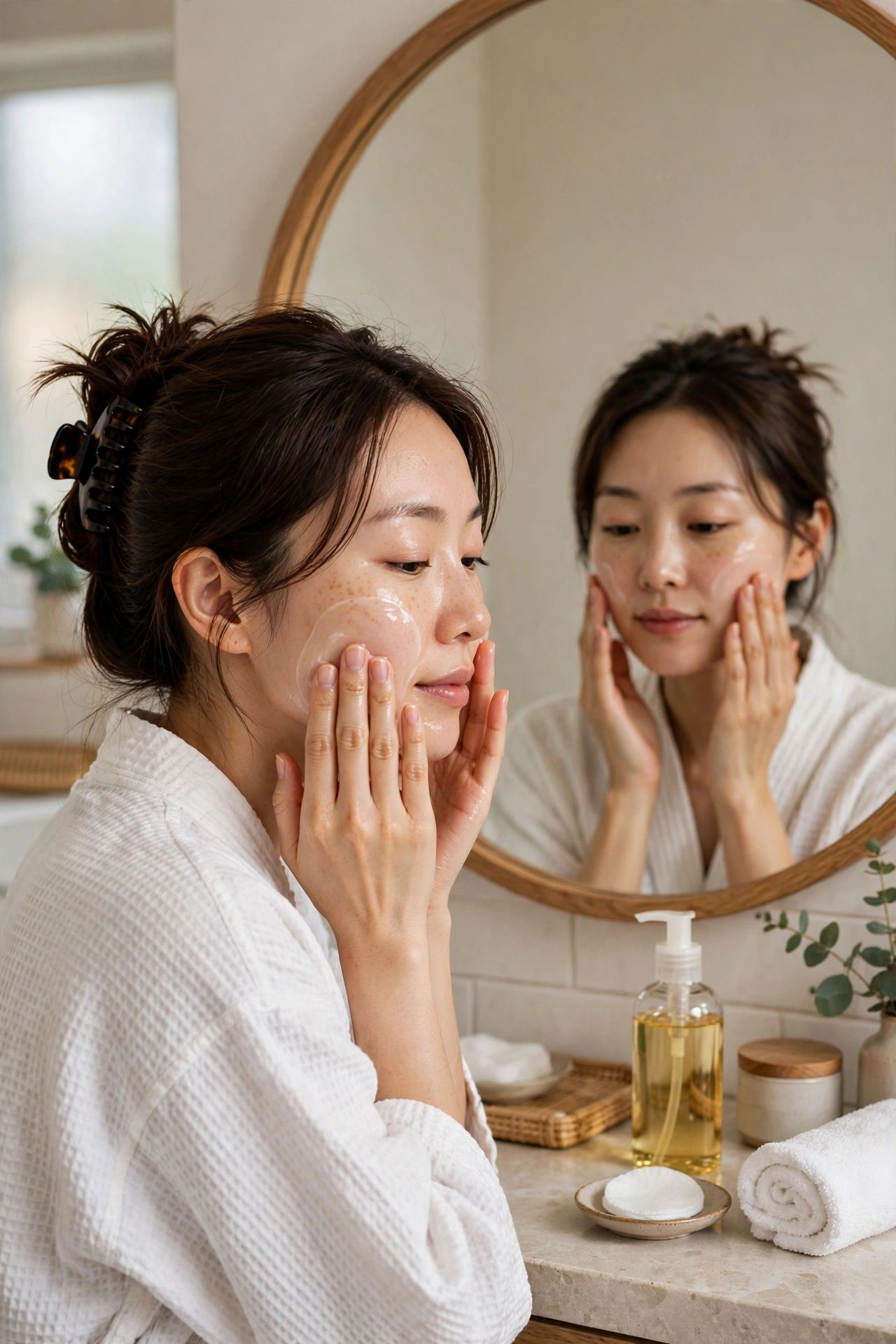
The double cleansing method explained — how oil + water-based cleansers clear pores, prevent breakouts and boost glow. Full routine for every skin type.
Read More arrow_forward
The best vitamin C serums for glowing skin in 2026 — how to choose the right formula, how to layer it, and what to avoid.
Read More arrow_forwardCalculate your Body Mass Index (BMI) in seconds. BMI is a quick screening number…
Use now arrow_forwardFind your daily calorie needs based on your age, sex, height, weight and activit…
Use now arrow_forwardFind how much water you should drink each day, in litres and glasses, based on y…
Use now arrow_forward