Niacinamide Serum Benefits: How to Use It for Pores, Oil and Dark Spots (2026 Guide)
Niacinamide serum benefits explained — how it minimizes pores, controls oil and fades dark spots, plus how to use it correctly in 2026.
Read More arrow_forwardThe double cleansing method explained — how oil + water-based cleansers clear pores, prevent breakouts and boost glow. Full routine for every skin type.
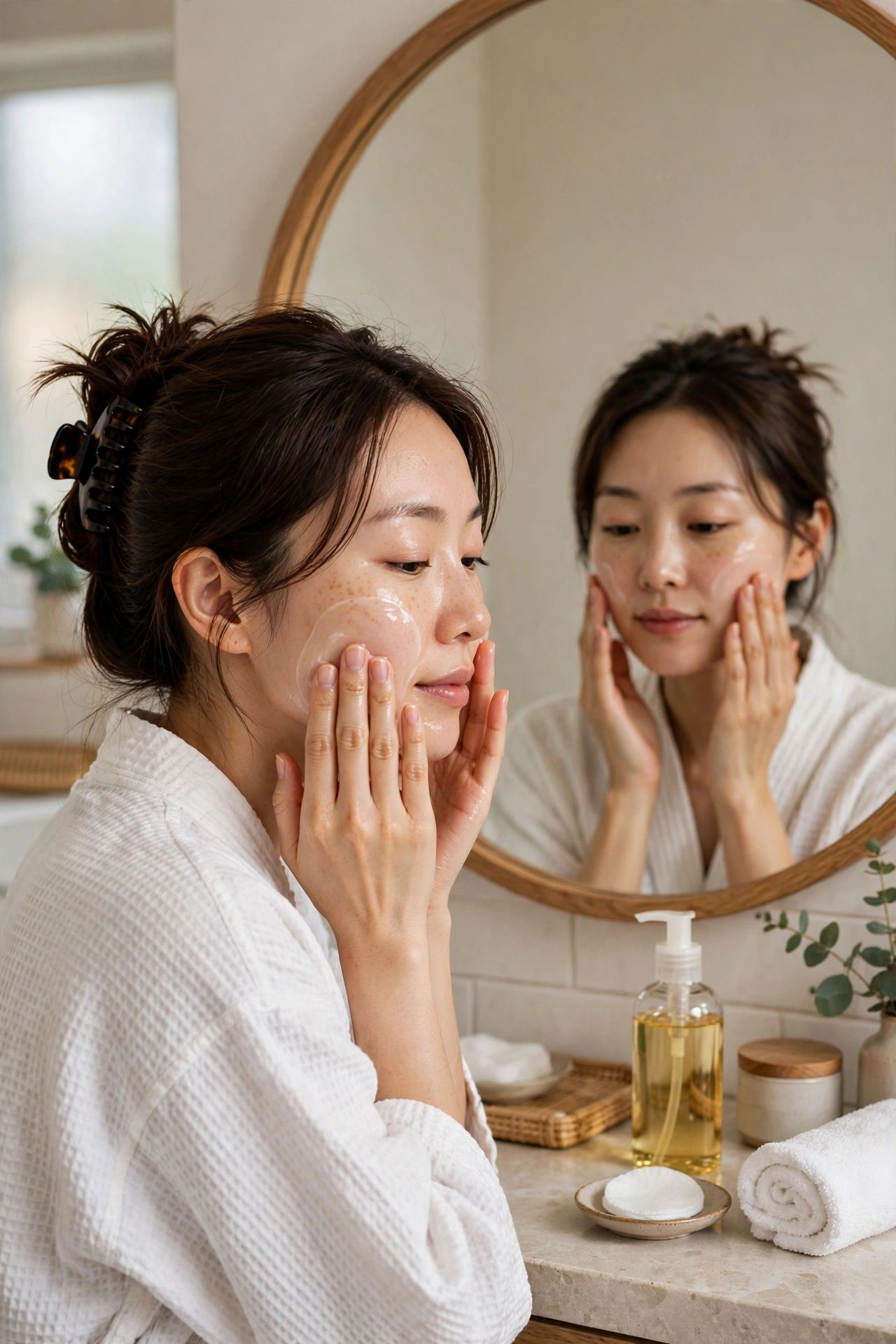
If your skin still looks dull, congested, or breaks out no matter how expensive your serums are, the problem might not be what you're putting on your face — it might be that you're not taking everything off properly. The double cleansing method, the cornerstone of the famous Korean skincare routine, is the single most underrated step for achieving clear, glowing skin. And yet most people either skip it, do it wrong, or do it with the wrong products.
Double cleansing is exactly what it sounds like: washing your face twice, first with an oil-based cleanser and then with a water-based cleanser. But there is real science behind why this two-step approach works better than any single "deep cleansing" product. Oil dissolves oil. A single foaming cleanser is great at removing water-soluble debris like sweat and environmental pollution, but it struggles with oil-soluble residue: sunscreen, makeup, sebum, and waterproof formulas. That leftover film clogs pores, feeds breakout-causing bacteria, and blocks the expensive actives in your serums from absorbing properly.
In this complete 2026 guide, we'll break down everything you need to know: the science of how the double cleansing method works, step-by-step instructions, the best oil cleansers for every skin type and budget, how to double cleanse correctly for oily, dry, sensitive, and acne-prone skin, the mistakes that quietly ruin your results, and answers to the most common questions. By the end, you'll know exactly how to make this simple technique work for your unique skin.
The double cleansing method is a two-step evening cleansing routine that originated in Korea and Japan, where thorough makeup and sunscreen removal has been a beauty ritual for decades. It consists of:
First cleanse (oil-based): An oil cleanser, cleansing balm, or micellar-style oil applied to dry skin to dissolve oil-based impurities — makeup, sunscreen, excess sebum, and waterproof products.
Second cleanse (water-based): A gentle gel, foam, or cream cleanser applied to damp skin to wash away sweat, dirt, pollution particles, and any remaining residue from the first cleanse.
The logic is rooted in the basic chemistry principle of "like dissolves like." Oil-based cleansers bind to and lift away oil-soluble substances that water-based cleansers simply cannot grab effectively. The second cleanse then ensures nothing is left behind and preps the skin to absorb toner, serum, and moisturizer.
It's important to understand what double cleansing is not. It is not using an exfoliating scrub twice. It is not washing your face with harsh soap two times in a row, which would strip your barrier. And it is definitely not something you need to do twice a day — more on that below. Done correctly with gentle products, double cleansing leaves skin thoroughly clean without tightness, squeakiness, or dryness.
Dermatologists have long noted that incomplete cleansing is a hidden driver of congestion and dullness. A study-informed review of cleansing science published via the National Institutes of Health confirms that surfactants in water-based cleansers are optimized for water-soluble soil, while oil-based cleansers are required to effectively emulsify and remove lipophilic (oil-loving) substances like sebum plugs, sunscreen filters, and cosmetic waxes.
Your skin's surface collects two categories of debris throughout the day. Water-soluble impurities include sweat, environmental grime, and some pollution particles. Oil-soluble impurities include your skin's own sebum, sunscreen filters (most are oil-soluble), makeup pigments and waxes, and waterproof formulas designed specifically to resist water.
A foaming or gel cleanser relies on surfactants that form micelles around dirt and rinse away with water. That works beautifully for water-soluble debris — but it is inefficient at dissolving oil-based films. That is why people who wear sunscreen daily and only use one cleanser often develop tiny closed comedones along the hairline, jaw, and forehead: leftover sunscreen and sebum are slowly plugging their pores. An oil cleanser melts that residue first, and the second cleanse sweeps everything away.
When oil-based residue sits in pores overnight, it oxidizes and combines with dead skin cells — this is precisely how blackheads and congestion form. Consistent double cleansing in the evening removes that residue before it can oxidize. Over weeks, most people notice fewer blackheads on the nose and chin, smaller-looking pores, and fewer of those deep, painful under-the-skin breakouts along the jawline.
This is also why double cleansing is such a powerful partner for acne treatments. If you're using a BHA like salicylic acid to keep pores clear, the treatment can only work on skin that's genuinely clean. Our guide to salicylic acid for acne explains how chemical exfoliants penetrate pores — but penetration depends on a properly cleansed surface, which is exactly what the double cleansing method provides.
Double cleansing isn't mandatory for everyone, every day. Here's an honest breakdown.
Daily sunscreen wearers: If you apply SPF every morning (and you should), double cleansing at night is the most reliable way to remove it fully. Most modern sunscreens are water-resistant and oil-based — a single cleanse rarely removes them completely.
Makeup wearers: Foundation, concealer, waterproof mascara, and long-wear formulas are designed to stay put. An oil-based first cleanse dissolves them without the tugging and rubbing that irritates skin.
Oily and congestion-prone skin: Excess sebum mixes with sunscreen and pollution to create the pore-clogging film that causes blackheads. Double cleansing manages this better than any single harsh cleanser.
City dwellers: Urban pollution particles bind to sebum and sunscreen. A two-step cleanse is the most effective way to clear them, reducing oxidative stress on skin.
If you spent the day at home with no makeup and no sunscreen, a single gentle cleanse in the evening is perfectly fine. Many dermatologists also advise that morning routines should almost always be a single cleanse (or just a lukewarm water rinse for dry and sensitive skin) — overnight, your skin only produces light sebum, and over-cleansing in the morning can strip the barrier. The American Academy of Dermatology recommends washing twice daily but emphasizes gentleness over intensity.
Sensitive skin can absolutely double cleanse — in fact, it often prefers it, because oil cleansing removes makeup and sunscreen without the friction of wiping or scrubbing. The key is choosing a fragrance-free cleansing balm or oil and a low-pH, non-foaming second cleanser. If your skin is reactive, our guide to the best fragrance-free skincare products for sensitive skin will help you build a non-irritating routine around your double cleanse.
Start with dry hands and a dry face. This is the most important detail people get wrong. Oil cleansers need direct contact with the oils on your skin to dissolve them; water creates a barrier that reduces effectiveness.
Dispense the product. Use a coin-sized amount of cleansing oil or a grape-sized scoop of cleansing balm (warm it between your palms until it melts into an oil).
Massage for 60 seconds. Using gentle, circular motions, massage the oil over your entire face — forehead, cheeks, nose, chin, and around the eyes. Spend extra time on areas with heavy makeup or sunscreen. This massage also boosts circulation and helps loosen blackheads. Be gentle around the eyes.
Emulsify with water. Wet your hands with lukewarm water and massage again for 15–20 seconds. The oil will turn milky white — this emulsification step is what allows the oil (and everything it dissolved) to rinse away with water.
Rinse thoroughly with lukewarm water. Never use hot water — it strips the skin.
Apply your water-based cleanser to damp skin. A pea-to-dime-sized amount is enough.
Massage for another 60 seconds. Focus on the T-zone and along the hairline and jawline, where residue hides. Use light pressure — the cleanser does the work, not your fingers.
Rinse with lukewarm water and pat dry with a clean towel. Pat, don't rub.
Total time: about 2 minutes. That's it. Many people report that the 60-second massage rule alone — regardless of products — visibly improved their skin, because most of us rush cleansing in under 20 seconds.
Lightweight liquid oils that spread easily and rinse clean with emulsification. Best for: most skin types, heavy makeup wearers, and anyone who dislikes residue. Look for formulas based on lightweight plant oils (sunflower, jojoba, grapeseed) rather than heavy mineral oil blends, though well-formulated mineral-oil cleansers are non-comedogenic and perfectly fine too.
Solid-to-oil formulas in a jar. Best for: dry and sensitive skin, travel (no spills), and people who enjoy a richer texture. Balms tend to be more nourishing and are excellent at removing waterproof makeup. Always use the included spatula and keep water out of the jar to prevent contamination.
Micellar water is not a true first cleanse in the classic sense, but it works as a light first step for minimal-makeup days. However, it requires cotton pads (friction) and doesn't dissolve heavy sunscreen as thoroughly as an oil. Think of it as the backup option, not the main event.
Fragrance and essential oils if you're sensitive or acne-prone — they add irritation risk with zero cleansing benefit.
Coconut oil as a DIY cleanser — despite its popularity online, coconut oil is highly comedogenic (rated 4 out of 5 on the comedogenic scale) and frequently triggers breakouts.
Makeup wipes as a replacement — they drag across skin, leave residue, and don't cleanse thoroughly enough to count as a first cleanse.
A gentle gel or light foaming cleanser with a pH around 5.5. Avoid "squeaky clean" formulas with harsh sulfates — over-stripping triggers rebound oil production. If you're also treating breakouts, a second cleanser with a low concentration of salicylic acid can be a smart multitasker; see our complete BHA guide for how to layer it safely.
A creamy, non-foaming cleanser or a hydrating gel that cleans without stripping. Look for ceramides, glycerin, or hyaluronic acid in the formula. A classic well-formulated option is a ceramide-based hydrating cleanser — CeraVe's Hydrating Facial Cleanser is a widely recommended example developed with dermatologists.
A fragrance-free, low-pH, minimal-ingredient cleanser. Fewer actives is better here. Patch-test any new second cleanser along the jawline for a few days before committing, and keep your routine simple while your skin adjusts. Our roundup of fragrance-free skincare for sensitive skin covers safe pairings.
A gentle cleanser is still the priority — harsh "acne" cleansers used twice daily often worsen inflammation. Use a mild second cleanser and let your leave-on treatments (BHA, retinoids, benzoyl peroxide) do the heavy lifting. If breakouts persist despite proper cleansing, the issue may be a compromised barrier rather than dirt; our guide on how to repair a damaged skin barrier explains the signs and the fix.
First cleanse: Lightweight cleansing oil (grapeseed or sunflower-based). Massage 60 seconds, focusing on the T-zone.
Second cleanse: Gentle gel cleanser, pH ~5.5. Optional: a BHA-containing cleanser 2–3 nights per week for extra pore clearing.
After: Lightweight hydrating toner, niacinamide serum if desired, oil-free gel moisturizer.
Frequency: Every evening. Morning: single cleanse or water rinse.
First cleanse: Nourishing cleansing balm with shea or squalane. The balm's richness protects against any dryness.
Second cleanse: Cream or milky cleanser — absolutely no foaming formulas.
After: Hydrating toner or essence, hyaluronic acid serum on damp skin, rich moisturizer, facial oil if needed.
Frequency: Every evening makeup/sunscreen days; on bare-skin days, a single cream cleanse is enough.
First cleanse: Fragrance-free cleansing balm or oil, minimal ingredient list. Patch-test first.
Second cleanse: Ultra-gentle, fragrance-free cream or gel cleanser. Lukewarm water only.
After: Keep it minimal — a soothing moisturizer with ceramides or centella. Introduce new products one at a time.
Frequency: Evenings only when you've worn SPF or makeup; otherwise single cleanse.
First cleanse: Non-comedogenic cleansing oil or balm — double cleansing actually reduces breakouts by preventing oxidized sebum buildup, as long as the oil itself is non-comedogenic.
Second cleanse: Gentle cleanser; optionally alternate with a salicylic acid cleanser a few nights per week (never twice daily — that's over-exfoliation).
After: Lightweight non-comedogenic moisturizer. Apply BHA or retinoid treatments on fully dry skin per their instructions.
Frequency: Every evening. If skin gets irritated, scale back the second cleanser's actives before abandoning double cleansing itself.
First cleanse: Balanced cleansing oil — lightweight enough for the T-zone, nourishing enough for drier cheeks.
Second cleanse: Gentle gel cleanser; you can spend more massage time on the oily T-zone and less on dry areas.
After: Hydrating serum all over, lighter moisturizer on the T-zone, richer cream on dry patches (multi-moisturizing).
Water prevents the oil from bonding with sebum and sunscreen. Always start dry — dry hands, dry face. This single correction fixes the majority of "double cleansing broke me out" complaints.
If you rinse the oil off without adding water and massaging until it turns milky, a film of oil (plus everything it dissolved) stays on your skin. That film is what clogs pores. Emulsify for at least 15 seconds before rinsing.
The second cleanse should be gentle. Using a strong foaming or exfoliating cleanser every night after an oil cleanse strips the barrier, causing dryness, sensitivity, and — ironically — more breakouts. If your skin feels tight or squeaky after cleansing, your second cleanser is too harsh — learn the warning signs of a damaged skin barrier and switch to something gentler.
Morning skin doesn't need two cleanses. Over-cleansing compromises the barrier and triggers excess oil production. Double cleanse in the evening; single-cleanse (or water-rinse) in the morning.
Not all oils are equal. Coconut oil, wheat germ oil, and cocoa butter are highly comedogenic. Stick to non-comedogenic, well-formulated cleansing oils and balms from reputable, dermatologist-developed brands.
A 10-second swipe doesn't dissolve waterproof sunscreen or loosen blackheads. The 60-second massage is where the real work happens — it's also when the oil loosens sebaceous filaments, so don't skip it on the nose and chin.
Hot water feels satisfying but strips natural lipids and aggravates redness and sensitivity. Lukewarm — comfortable, not steaming — is the correct temperature for both cleanses and every rinse.
The 60-60 rule: 60 seconds for the oil massage, 60 seconds for the second cleanse. Set a timer for the first week until it becomes habit.
Remove heavy eye makeup first if you wear waterproof mascara — hold a soaked cotton pad (or a small amount of cleansing oil) over closed eyes for 20 seconds before massaging, so you don't have to rub.
Cleanse as soon as you get home if you won't be going out again — there's no benefit to letting sunscreen and pollution sit on your skin until bedtime.
Keep a separate hand towel for your face and wash it every 2–3 days. Reusing a damp towel reintroduces bacteria.
Don't double cleanse over active, open breakouts aggressively — be extra gentle, avoid scrubbing motions, and let the products do the work.
Seasonal adjustment: In winter, switch to a richer balm first cleanse and a cream second cleanser; in summer, lighter oil and gel formulas usually suffice.
If you wear mineral sunscreen, note that zinc oxide and titanium dioxide are notoriously stubborn — an oil first cleanse is especially important, and you may need the full 60-second massage to lift them completely.
Track your skin for 3–4 weeks before judging results. Pore appearance and congestion improve gradually as the backlog of residue clears.
Once a day, in the evening — and only on days you've worn sunscreen, makeup, or been exposed to significant pollution. On bare-skin days at home, a single gentle cleanse is enough. Never double cleanse twice a day; morning calls for a single cleanse or just lukewarm water.
A proper double cleanse shouldn't cause purging (that's associated with actives like retinoids and exfoliating acids, not cleansers). If you break out after starting, the usual culprits are: applying oil to wet skin, skipping emulsification, using a comedogenic oil, or a too-harsh second cleanser. Fix the technique before blaming the method.
Yes — it's one of the best things oily skin can do. Oil cleansing dissolves excess sebum and oxidized pore plugs more effectively than foaming cleansers alone, and because you're not stripping the skin, oil production often normalizes. The key is a lightweight, non-comedogenic oil and a gentle (not harsh) second cleanser.
You can, but it's a compromise. Micellar water doesn't dissolve heavy or waterproof sunscreen as thoroughly as an oil or balm, and the cotton-pad friction can irritate sensitive skin. It's fine for light-makeup days, but for full sunscreen or makeup removal, a true oil-based first cleanse performs noticeably better.
If you wear sunscreen daily — which dermatologists universally recommend — yes, you should still double cleanse in the evening. Sunscreen filters are oil-soluble and water-resistant by design, and they're the most common source of the invisible residue that clogs pores in non-makeup wearers.
On freshly double-cleansed skin, apply products thinnest to thickest: toner or essence, water-based serums (like niacinamide or vitamin C), treatment serums, eye cream, moisturizer, and finally facial oil or occlusive if your skin needs it. Clean skin absorbs actives significantly better — which is exactly why the cleanse matters so much.
Yes, with simple, gentle products. Teen skin dealing with excess oil and sunscreen-related congestion benefits from the method, but teens should avoid harsh second cleansers and leave acne treatment to proper leave-on products rather than aggressive scrubbing.
Most people notice smoother texture and less "end of day" congestion within 1–2 weeks. Visible improvement in blackheads, pore appearance, and breakout frequency typically takes 3–6 weeks of consistent evening double cleansing, as the accumulated residue backlog clears.
The double cleansing method means an oil-based first cleanse on dry skin, followed by a gentle water-based second cleanse — it removes oil-soluble residue (sunscreen, makeup, sebum) that single cleansing leaves behind.
Always apply the oil cleanser to dry skin, massage for 60 seconds, emulsify with water until milky, then rinse — skipping emulsification is the top cause of breakouts from the method.
Double cleanse once daily in the evening (on sunscreen/makeup days); mornings need only a single cleanse or water rinse.
Match products to your skin type: lightweight oils + gel cleansers for oily skin, rich balms + cream cleansers for dry skin, fragrance-free minimal formulas for sensitive skin.
Never use coconut oil as a DIY first cleanse, never use hot water, and never pair double cleansing with a harsh stripping second cleanser.
Expect smoother texture in 1–2 weeks and visible congestion improvement in 3–6 weeks of consistent use.
The double cleansing method isn't a trend — it's basic cleansing chemistry applied properly, and it's the foundation every effective skincare routine is built on. Serums, retinoids, and treatments can only perform on skin that's genuinely clean, and for anyone wearing daily sunscreen or makeup, a single cleanse simply doesn't get you there.
Start tonight: pick a non-comedogenic oil cleanser or balm suited to your skin type, pair it with a gentle second cleanser, and commit to the 60-second massage rule for one month. Pay attention to your pores, your blackheads, and how your other products absorb. For most people, double cleansing is the quiet, unglamorous habit that finally makes everything else in the routine work better — and that clear, lit-from-within glow stops being a filter and starts being your skin.
Niacinamide serum benefits explained — how it minimizes pores, controls oil and fades dark spots, plus how to use it correctly in 2026.
Read More arrow_forward
Best sunscreens of 2026 — mineral vs chemical compared, how to choose for your skin type, and the reapplication rules most people get wrong.
Read More arrow_forward
Salicylic acid for acne — how this BHA unclogs pores, clears blackheads and prevents breakouts. Usage guide, percentages and best formulas.
Read More arrow_forward
Hyaluronic acid serum guide — how it hydrates skin, the damp-skin rule, molecular weights explained, and the best formulas for 2026.
Read More arrow_forward
The best vitamin C serums for glowing skin in 2026 — how to choose the right formula, how to layer it, and what to avoid.
Read More arrow_forwardCalculate your Body Mass Index (BMI) in seconds. BMI is a quick screening number…
Use now arrow_forwardFind your daily calorie needs based on your age, sex, height, weight and activit…
Use now arrow_forwardFind how much water you should drink each day, in litres and glasses, based on y…
Use now arrow_forward