Retinol and Niacinamide Routine Order: AM/PM Layering Guide (UK)
Retinol and niacinamide routine order explained: which goes first, AM vs PM layering, the sandwich method, UK product picks and beginner schedules.
Read More arrow_forwardPregnancy-safe skincare UK guide: ingredients to avoid (retinoids, salicylic acid), NHS-aligned safe swaps, and a trimester routine with £ prices.
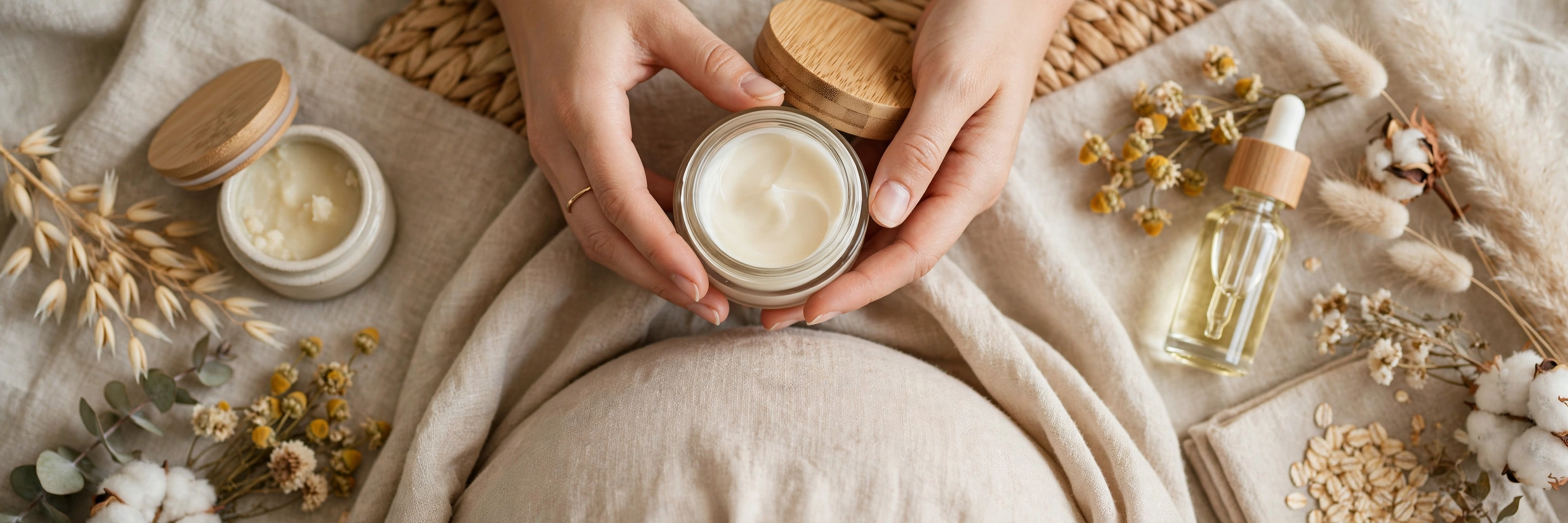
The moment you see those two lines on the test, everything changes — including your skincare routine. Suddenly the retinol you swear by and the salicylic acid cleanser that keeps your breakouts at bay are question marks. What is actually safe? What should you stop immediately? And what can you use instead so your skin does not fall apart for nine months?
This guide gives you the UK-specific, evidence-based answers. It aligns with NHS guidance and dermatology consensus, lists exactly which ingredients to avoid (and why), provides safe swaps with real products available at Boots, Superdrug and Cult Beauty with £ prices, and lays out a simple trimester-friendly routine. It is not a substitute for your midwife or GP — but it will make that conversation much more informed.
Important disclaimer: This article is for general information only and is not medical advice. Always discuss skincare changes with your GP, midwife or dermatologist, especially if you use prescription treatments.
Pregnancy hormones — chiefly oestrogen and progesterone — transform your skin:
Increased sensitivity. Many women find products they tolerated for years suddenly sting or cause redness. The skin barrier can become more reactive, which is why the principles in our skin barrier repair guide are useful reading now.
Melasma ("pregnancy mask"). Up to 70% of pregnant women develop patches of darker pigmentation on the face, triggered by hormones plus UV. Daily sunscreen for dark skin and all skin tones becomes even more critical — melasma is far easier to prevent than to fade.
Pregnancy acne. Rising androgens can trigger breakouts, often in women who have not had spots since their teens.
Stretch marks and itching. As skin stretches, itching (especially on the belly) is common.
The safety question comes down to systemic absorption: could an ingredient get into your bloodstream in amounts that affect the baby? For most cosmetic ingredients the answer is no — but for a handful of potent actives, the risk is real or the data is insufficient, and caution is the rule.
These are the non-negotiables. Stop them as soon as you know you are pregnant (or when trying to conceive, for retinoids).
This is the big one. Oral retinoids (isotretinoin) are proven teratogens — they cause birth defects. Topical retinoids are absorbed in much smaller amounts, and while the absolute risk from cosmetic retinol is debated, the consensus from dermatologists and the NHS-aligned guidance is unambiguous: avoid all topical retinoids during pregnancy. This includes retinol, retinal/retinaldehyde, tretinoin, adapalene and tazarotene — prescription or over-the-counter. Our comparison of retinal vs retinol for wrinkles explains how these work, but during pregnancy, shelve them all.
Low concentrations in a rinse-off cleanser (around 0.5–2%, washed off within a minute) are generally considered low-risk, but leave-on salicylic acid products, peels and high concentrations should be avoided — high-dose salicylic acid is related to aspirin, and systemic salicylates carry risks in pregnancy. If you rely on salicylic acid for acne, switch to the safe alternatives below.
Used for pigmentation and melasma, hydroquinone has a high systemic absorption rate (35–45%) — far higher than most cosmetic ingredients. Because of this, it is on every dermatologist's avoid list in pregnancy, even though it is prescription-only in the UK.
Some older chemical UV filters (notably oxybenzone) have raised theoretical concerns in animal studies. However, the British Association of Dermatologists and NHS guidance remain clear: the proven risks of UV exposure far outweigh theoretical sunscreen concerns. If you prefer to be cautious, choose mineral (zinc oxide/titanium dioxide) sunscreens during pregnancy — they are not absorbed systemically. See the mineral options in our mineral vs chemical sunscreen guide.
In-clinic peels (high-strength glycolic, TCA), laser treatments and Botox/fillers are routinely deferred during pregnancy — not necessarily because harm is proven, but because safety data in pregnancy is lacking and the procedures are elective.
Some essential oils (clary sage, rosemary, juniper, among others) are traditionally contraindicated in pregnancy, particularly in the first trimester. The evidence is limited, but the standard advice is to avoid concentrated essential oils and choose fragrance-free products — which is better for your newly sensitive skin anyway.
Found in some nail products and fragranced cosmetics. The UK/EU already restricts formaldehyde in cosmetics, but check nail hardeners and keratin treatments. Choose "5-free" or "10-free" nail polishes if you paint your nails.
Good news: the workhorse ingredients of a great routine are fine.
Hyaluronic acid. A hydrating humectant with no systemic concerns. Our hyaluronic acid serum guide covers how to layer it properly.
Niacinamide (vitamin B3). Considered safe and genuinely useful in pregnancy — it helps with redness, uneven tone and barrier support. See whether you can combine niacinamide with vitamin C for brightening.
Vitamin C (ascorbic acid and derivatives). Topical vitamin C is considered safe in pregnancy and is one of the best options for tackling pregnancy pigmentation. Our roundup of the best vitamin C serums can help you choose.
Azelaic acid. A dermatologist favourite for pregnancy: effective against acne, rosacea and pigmentation, with an excellent safety profile. Available over the counter (The Ordinary, ~£10) and on prescription (Skinoren) in the UK.
Peptides. Signalling peptides (like Matrixyl) are considered safe and make a good stand-in for retinoids. Our peptides vs retinol for beginners guide explains the swap in detail.
Ceramides, glycerin, squalane. Barrier-supporting moisturisers are completely safe and especially valuable as sensitivity rises.
Glycolic and lactic acid (low concentrations). Small amounts in rinse-off or low-strength leave-on products (under ~10%) are generally considered acceptable — but patch-test, as sensitivity is higher.
Zinc oxide / titanium dioxide sunscreens. The safest sunscreen choice in pregnancy.
Benzoyl peroxide (low strength). Generally considered acceptable for acne in limited use — discuss with your pharmacist.
For authoritative backing, the NHS medicines guidance and the British Association of Dermatologists are the UK references to trust over influencer advice.
Instead of (avoid) | Safe pregnancy alternative | UK product pick & price
Retinol / tretinoin (anti-ageing) | Peptides + bakuchiol | The Ordinary Matrixyl 10% + HA (~£10.90, Boots); Indeed Labs Bakuchiol (~£20, Boots)
Salicylic acid leave-on (acne) | Azelaic acid 10% | The Ordinary Azelaic Acid Suspension 10% (~£10, Boots/Superdrug)
Hydroquinone (pigmentation) | Vitamin C + niacinamide + azelaic acid | La Roche-Posay Vitamin C Serum (~£38, Boots); The Ordinary Niacinamide 10% (~£6)
Harsh foaming cleanser | Gentle hydrating cleanser | CeraVe Hydrating Cleanser (~£10, Boots)
Chemical sunscreen (if cautious) | Mineral SPF 50 | La Roche-Posay Anthelios Mineral SPF 50 (~£20, Boots)
Strong glycolic toner | Lactic acid 5% or PHA toner | The Ordinary Lactic Acid 5% + HA (~£7.50, Boots)
Bakuchiol deserves a special mention: a plant-derived ingredient with retinol-like effects on fine lines and tone, and no known pregnancy concerns. It is the closest thing to a pregnancy-safe retinol alternative — though manage expectations: it is gentler, and results take longer.
Keep it simple. Pregnancy is not the time for a 10-step routine — a gentle, consistent core routine beats an aggressive one every time.
This is the highest-caution period. Strip back to basics:
AM: gentle cleanser → hyaluronic acid serum on damp skin → moisturiser → mineral or gentle chemical SPF 50.
PM: gentle cleanser (or double cleanse if wearing make-up/SPF) → niacinamide serum → moisturiser.
Avoid: retinoids, high-dose acids, new aggressive actives, essential oils, professional peels.
Often the "glow" trimester — increased blood flow can genuinely improve radiance. You can cautiously add:
Add: vitamin C serum in the morning (under SPF) for glow and pigmentation prevention; azelaic acid in the evening for any breakouts or dark patches.
Watch for melasma: be religious about SPF reapplication. A wide-brimmed hat plus tinted SPF gives the best protection against visible-light-triggered pigmentation.
Skin is stretched, possibly itchy, and sensitivity peaks.
Focus: barrier support — ceramide moisturisers, squalane oil, fragrance-free everything.
Body: a rich body oil or cream (sweet almond oil, shea butter) for belly itching; keep showers lukewarm.
Do not start any new strong actives now. If breakouts appear, azelaic acid remains your safest targeted treatment.
Hormonal breakouts typically appear on the chin, jawline and cheeks. Safe approach: gentle cleansing, azelaic acid 10%, niacinamide, and spot-treating with low-strength benzoyl peroxide if needed. What NOT to do: reach for your old salicylic acid pads or adapalene (Differin) — both are on the avoid list. If acne is severe, your GP can prescribe pregnancy-safe options.
Brownish patches on the forehead, cheeks and upper lip. Prevention is everything: SPF 50 daily, reapplied, plus a hat. Treatment during pregnancy is limited to vitamin C, niacinamide and azelaic acid — hydroquinone and strong peels must wait until after breastfeeding. Most melasma fades significantly after delivery, especially with continued sun protection.
No cream has been proven to prevent stretch marks — genetics and the rate of stretching matter most. That said, keeping skin supple with regular moisturising (cocoa butter, shea butter, hyaluronic body lotions) reduces itching and supports skin elasticity. Products marketed as "stretch mark miracles" are overpromising; a £8 tub of shea butter does the same job as a £40 branded cream.
Switch to fragrance-free formulas, reduce exfoliation frequency, and lean on barrier ingredients (ceramides, centella, squalane). If redness persists, the guidance in our barrier repair article applies directly.
Most restrictions ease after delivery, but breastfeeding has its own cautions: topical retinoids are still generally advised against while nursing (small amounts can transfer), and anything applied to the chest area should be minimal and fully absorbed before feeding. Hydroquinone remains best avoided. The good news: vitamin C, niacinamide, azelaic acid, peptides and bakuchiol are all fine while breastfeeding. Many women reintroduce retinol only after weaning — discuss timing with your GP. And keep the SPF habit: melasma can linger for months postpartum.
Book a conversation if: you were using prescription tretinoin/adapalene when you found out you are pregnant (do not panic — topical exposure risk is low, but get advice); you need acne treatment beyond over-the-counter options; you develop severe itching (especially on palms and soles — this can signal obstetric cholestasis, which needs medical assessment); or any rash is spreading, painful or blistering.
No. All topical retinoids — retinol, retinal, tretinoin, adapalene — should be avoided during pregnancy as a precaution. Use peptides or bakuchiol instead for anti-ageing, and reintroduce retinoids only after breastfeeding (with GP guidance).
Rinse-off cleansers with low concentrations (0.5–2%) are generally considered low-risk, but leave-on salicylic acid products, peels and high concentrations should be avoided. Azelaic acid is the safest effective alternative for acne and pigmentation.
Yes. Niacinamide (vitamin B3) is considered safe in pregnancy and is useful for redness, uneven tone and barrier support. It pairs well with vitamin C and hyaluronic acid.
Yes — topical vitamin C is considered safe and is one of the best pregnancy-safe options for preventing and fading melasma and dark spots. Apply it in the morning under sunscreen.
Mineral sunscreens (zinc oxide, titanium dioxide) are the most conservative choice since they are not absorbed into the skin. That said, UK dermatology guidance is clear that any broad-spectrum SPF 50 is far safer than going unprotected.
No — these are routinely deferred during pregnancy. There is no safety data in pregnancy, and they are elective procedures. Wait until after breastfeeding.
Yes. Hyaluronic acid is a naturally occurring hydrating molecule with no systemic safety concerns in pregnancy. It is one of the best ingredients for combating pregnancy dryness and sensitivity.
Most dermatologists advise waiting until you have finished breastfeeding before reintroducing topical retinoids. Discuss the timing with your GP, and reintroduce slowly — postpartum skin can be more sensitive.
Stop all retinoids (retinol, retinal, tretinoin, adapalene) as soon as you know you are pregnant — this is the number-one rule.
Avoid leave-on/high-dose salicylic acid, hydroquinone, professional peels, Botox/fillers and concentrated essential oils.
Safe and effective: hyaluronic acid, niacinamide, vitamin C, azelaic acid, peptides, bakuchiol, ceramides and mineral sunscreens.
Azelaic acid is the pregnancy-safe multitasker — it tackles acne, pigmentation and redness in one step (~£10 at Boots).
Melasma prevention is critical: SPF 50 daily plus a hat, since treatment options are limited during pregnancy.
Keep routines simple and fragrance-free; sensitivity peaks in the third trimester.
This guide is information, not medical advice — confirm changes with your GP or midwife, especially for prescription products.
Pregnancy does not mean abandoning skincare — it means choosing smarter. The ingredients that matter most for healthy, glowing skin (hydration, barrier support, vitamin C, niacinamide, daily SPF) are all perfectly safe. Park the retinoids for nine months, lean on azelaic acid and peptides, protect relentlessly against pigmentation, and you will come through with your skin in better shape than you feared. When in doubt, the NHS and your midwife outrank any influencer — including us.
Retinol and niacinamide routine order explained: which goes first, AM vs PM layering, the sandwich method, UK product picks and beginner schedules.
Read More arrow_forward
Peptides vs retinol for beginners: which is right for you? This UK comparison covers effectiveness, side effects, costs, and a beginner routine for each.
Read More arrow_forward
Can you use niacinamide and vitamin C together? Yes — the old myth is debunked. Here's the UK guide to layering them safely for brighter, calmer skin.
Read More arrow_forward
Find the best sunscreen for dark skin in the UK in 2026 — zero white cast, Boots & Superdrug availability, and £-priced picks for melanin-rich skin.
Read More arrow_forward
Can you mix AHA/BHA with retinol? Yes — with the right method. This UK guide covers safe layering, AM/PM routines, and who should avoid the combo.
Read More arrow_forwardCalculate your Body Mass Index (BMI) in seconds. BMI is a quick screening number…
Use now arrow_forwardFind your daily calorie needs based on your age, sex, height, weight and activit…
Use now arrow_forwardFind how much water you should drink each day, in litres and glasses, based on y…
Use now arrow_forward