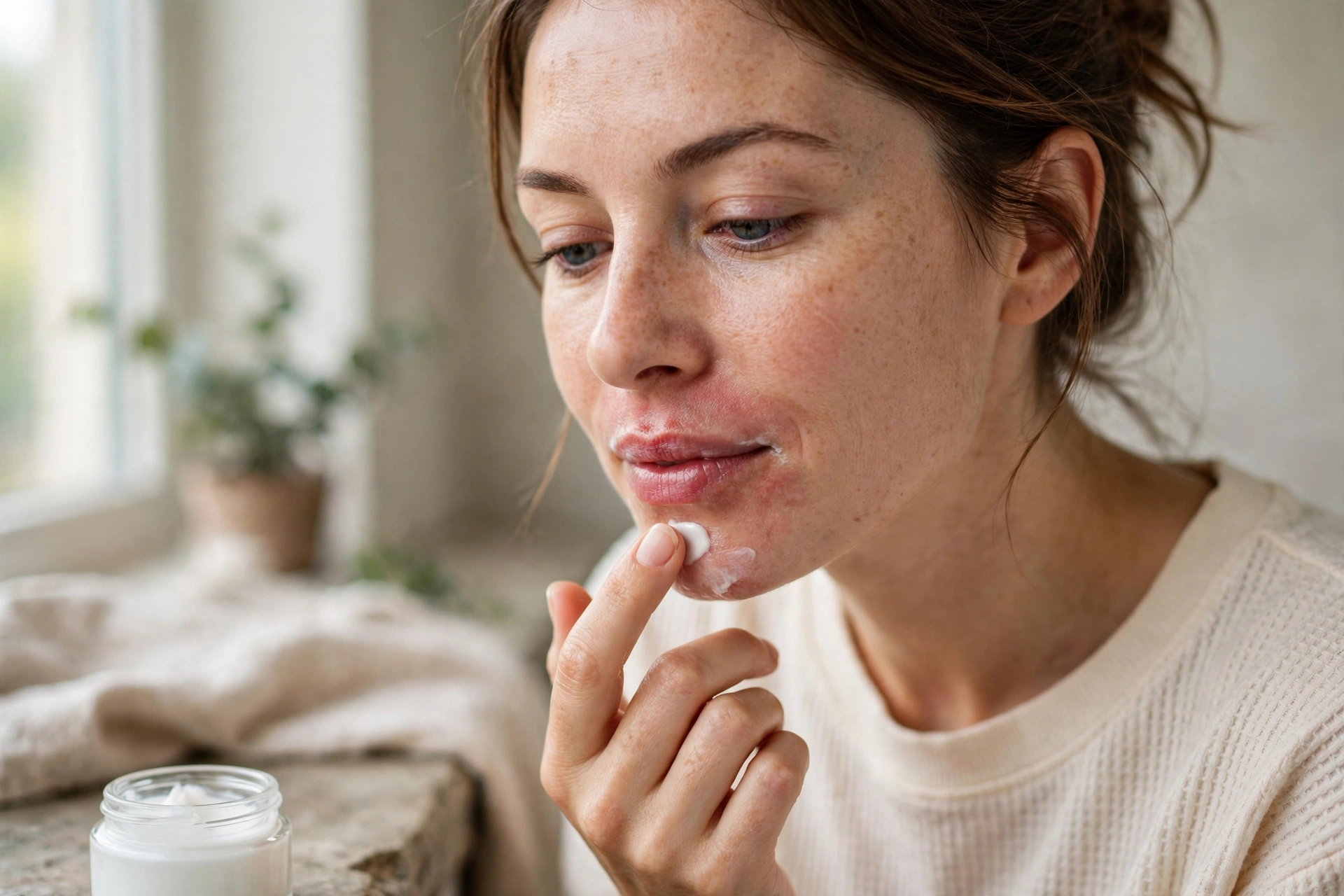
How to Treat Perioral Dermatitis With Gentle Skincare UK: A Calm Routine
Learn how to treat perioral dermatitis with gentle skincare UK: a calm, fragrance-free routine, triggers to discuss with your GP, and UK product tips.
Read More arrow_forwardDiscover the best winter lip care routine for chapped lips uk, with gentle exfoliation, barrier balms, SPF and overnight repair for soft lips.
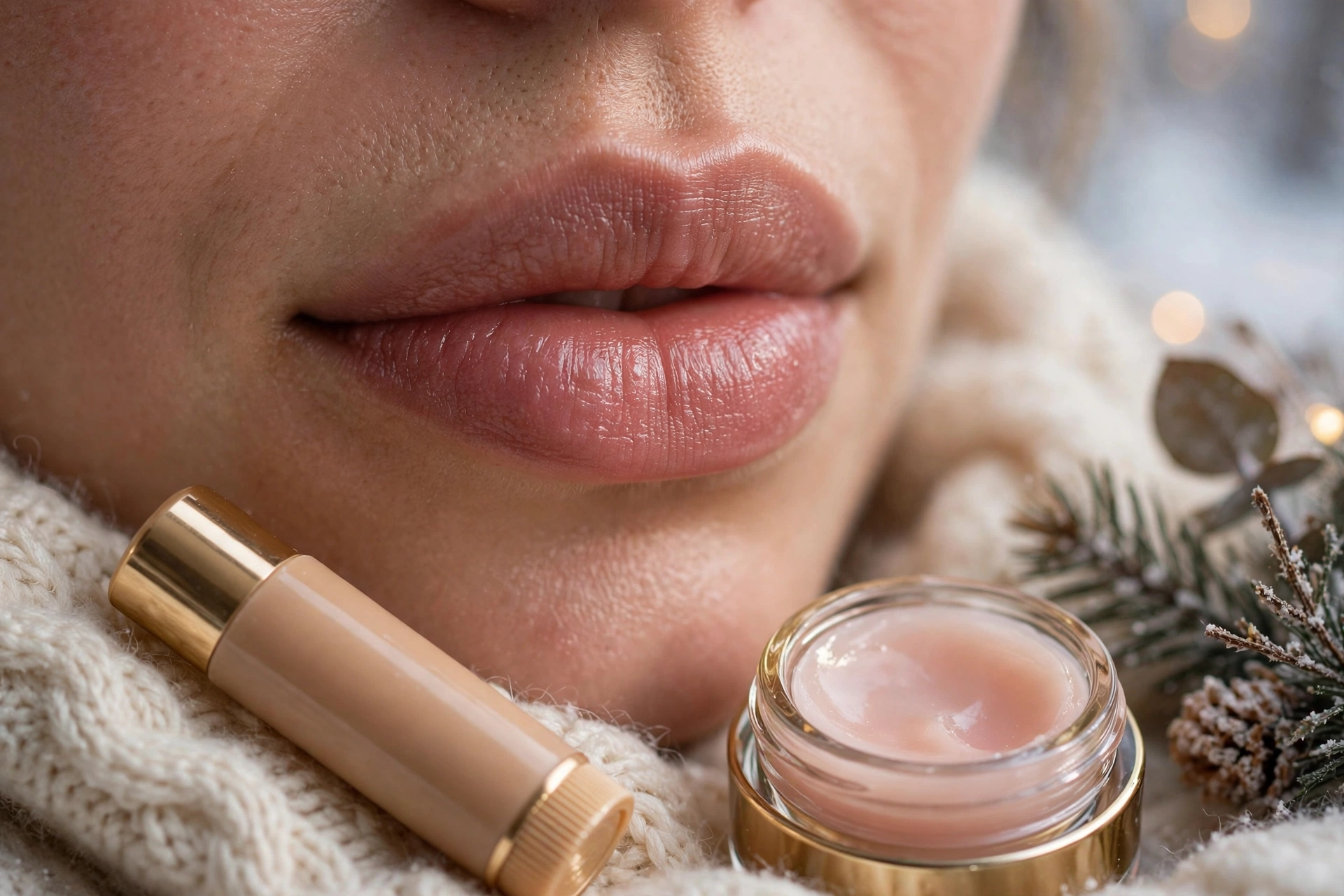
If your lips feel tight, flaky or sore every time the temperature drops, the best winter lip care routine for chapped lips uk is not about buying one miracle balm, but about building a small, consistent habit that protects the delicate lip barrier from cold wind, dry indoor heating and repeated licking. Lips are uniquely vulnerable in winter because they have very thin skin, no oil glands of their own, and almost no melanin to protect them from sunlight. That combination means they lose moisture quickly, crack easily, and heal more slowly than the skin on the rest of your face. The good news is that a simple routine, done morning and night with the right products, can transform chapped lips within a week or two, and keep them comfortable right through to spring.
Many people in the United Kingdom reach for a lip balm only when their lips already hurt, and then wonder why the balm does not seem to work. The problem is usually not the balm itself, but the timing and the technique. A balm applied to already cracked, flaky lips can only do so much if dead skin is sitting on top, if the lips are being licked throughout the day, or if the balm contains irritating ingredients such as strong fragrance, menthol or camphor that feel cooling at first but dry the lips out further. A proper winter routine prevents damage before it starts, repairs it gently when it happens, and uses products that support the barrier rather than stripping it. This guide gives you that routine step by step, with UK shopping tips, a comparison of balm types, and practical advice for cold commutes, outdoor exercise and cosy nights indoors.
Before diving into products, it is worth understanding why winter is so hard on lips. Outside, cold air holds less moisture, and wind strips away the thin protective layer on the lip surface. Inside, central heating creates warm but very dry air that continues to draw moisture out. Breathing through the mouth, which many people do more in winter when colds and congestion strike, dries the lips further. Add hot drinks, salty foods, matte lipsticks and the habit of licking dry lips for temporary relief, and you have a perfect recipe for chapping. The routine below addresses each of those factors in turn, without asking you to give up your normal life or buy a drawer full of products.
## Best Winter Lip Care Routine for Chapped Lips UK: The Core Steps
The core routine has four steps, and it takes less than two minutes in the morning and at night. First, cleanse gently: there is no need for a harsh scrub or a foaming cleanser on the lips, just lukewarm water and a soft cloth or your usual gentle face cleanser smoothed over the lip area. Second, exfoliate very gently, but only once or twice a week, and only when the lips are not cracked or bleeding. Third, apply a hydrating layer, such as a lip serum or a thin layer of a plain, fragrance-free moisturiser, to give the lips water to hold on to. Fourth, seal that hydration in with a barrier balm containing occlusive ingredients such as petrolatum, shea butter, beeswax or ceramides. That final sealing step is the most important one in winter, because without it, moisture simply evaporates into dry air within minutes.
### Morning routine for cold days
In the morning, start with lukewarm water and a gentle cleanse, then apply a light hydrating layer if your lips feel dry. Follow with a lip balm that contains SPF, because winter sun, especially on bright, frosty days or when reflected off wet pavements, can still damage the lips. Many people forget SPF for lips in winter, yet the lips have almost no natural sun protection, and sun damage can worsen dryness and sensitivity over time. If you wear lipstick, apply balm first and let it settle for a few minutes, then blot lightly and apply colour on top. A creamy or satin lipstick will usually feel far more comfortable than a long-wear matte formula in January, so consider switching finishes for the coldest months rather than struggling through with a drying product.
### Evening routine for overnight repair
Night is when the most repair happens, because you are not eating, drinking, talking or facing wind for several hours, and a thick layer of balm can work undisturbed. After cleansing and brushing your teeth, apply a generous layer of a rich lip treatment, a lip mask, or plain petrolatum-based ointment. Do not worry about looking polished; this is treatment time, not makeup time. If your lips are very sore, a thick ointment is often more soothing than a waxy stick balm, because it spreads without dragging and forms a continuous protective film. Keep the product on your bedside table so you do not forget it, and reapply if you wake up in the night. Within a few nights, most people notice less tightness in the morning and fewer flakes during the day.
### What to carry during the day
A winter lip routine only works if you can maintain it away from home. Keep a small, fragrance-free balm in your coat pocket, your bag and your desk drawer, so you are never caught without one on a windy walk or a long commute. Reapply after eating, drinking a hot coffee, or spending time outdoors, and always reapply before going back outside after being in a heated building. The change in temperature and humidity when you step outdoors is a key moment for moisture loss, so a fresh layer of balm before that transition acts like a coat for your lips. Choose a tube or pot format you actually enjoy using, because the best balm is the one you will reapply consistently, not the one with the prettiest packaging.
## Why Lips Chap So Easily in British Winter
Understanding the cause helps you choose the right solution, rather than simply trying product after product. The skin on the lips, known as the vermilion, is thinner than facial skin and lacks the sweat and oil glands that help other areas stay supple. It also has a weaker barrier, which means water escapes more easily and irritants penetrate more readily. In British winter, that vulnerability meets a series of challenges: cold, wind, rain, low humidity indoors, and frequent temperature changes as you move between heated shops, offices, cars and the outdoors. Each change stresses the barrier a little more, and without regular protection, small dry patches can quickly become painful cracks, especially at the corners of the mouth.
Licking the lips is the most common habit that makes chapping worse, even though it feels helpful in the moment. Saliva evaporates quickly and leaves the lips drier than before, while enzymes in saliva can further irritate already damaged skin. If you catch yourself licking, try applying balm instead, and keep a balm visible on your desk or in your pocket as a replacement habit. Similarly, picking or peeling flakes may feel satisfying, but it often removes healthy skin underneath and creates raw areas that take longer to heal. Gentle exfoliation once a week is far better than daily picking, and a thick overnight treatment will soften flakes so they come away naturally without force.
Diet, hydration and general health also play a supporting role. Drinking water regularly helps overall hydration, although it will not single-handedly cure chapped lips if the barrier is unprotected. A diet low in essential fatty acids or B vitamins can contribute to dryness for some people, and certain medications, including some acne treatments, can cause lip dryness as a side effect. If your lips are persistently cracked despite a good routine, or if cracking at the corners keeps returning, it is worth checking reliable health information from the [NHS skin conditions pages](https://www.nhs.uk/conditions/) or speaking to your GP or pharmacist, because angular cheilitis, eczema or a nutritional issue sometimes needs specific treatment beyond a balm.
## Choosing the Right Balm: A Practical Comparison
Not all lip balms are equal, and the type you choose matters more in winter than the brand name. Waxy stick balms are convenient and portable, but they can be too thin for very chapped lips, especially if they rely mainly on wax rather than occlusive ingredients. Squeeze tubes and pots often contain richer, more emollient formulas that spread easily and form a better seal, although pots require clean fingers to avoid contamination. Ointments based on petrolatum are the most occlusive and are often the best choice for severely chapped or cracked lips, because they lock in moisture so effectively. Lip masks, usually sold in pots or tubes, are essentially thicker overnight treatments and are ideal for the evening step of the routine.
Balm type table: Waxy stick balm — Everyday daytime use, quick reapplication on the go — Thin protection, may need frequent reapplying in wind. Rich tube balm — Daily winter use, comfortable under lipstick — Check for fragrance or flavouring if lips are sensitive. Petrolatum ointment — Severely chapped or cracked lips, overnight repair — Can feel heavy, so save for night or very cold days. Overnight lip mask — Intensive repair, very dry lips, cold snaps — Use a generous layer at night, not as a daytime base.
When reading labels, look for barrier-supporting ingredients such as petrolatum, shea butter, cocoa butter, beeswax, ceramides, squalane and hyaluronic acid in a balm base. These ingredients either attract water, soften the lip surface, or seal moisture in, and a good winter formula will often combine at least two of those functions. Be cautious with ingredients that create a tingling or cooling sensation, such as menthol, camphor, eucalyptus or strong peppermint oil, because that tingle can be a sign of irritation rather than healing, and it often leads to more licking and more dryness. Fragrance and flavouring are also common irritants for sensitive lips, so a fragrance-free option is the safest starting point if your lips are already sore. You can find similar barrier-first thinking in our guide on [how to repair a damaged skin barrier](https://www.glowmagzine.com/blog/how-to-repair-damaged-skin-barrier-uk/), which explains why simple, protective formulas often outperform complicated ones.
### Shopping in the UK: budget, mid-range and premium
In the UK, excellent lip care is available at every price level from Boots, Superdrug and Cult Beauty, as well as from pharmacy brands. Budget options often include plain petrolatum ointments and simple fragrance-free balms that do the core job brilliantly, and they are a sensible choice if you go through balm quickly in winter. Mid-range options add nicer textures, SPF protection, and ingredients such as ceramides or shea butter in more elegant formulas that sit well under makeup. Premium options may offer luxurious textures, lip masks with additional peptides or botanical butters, and beautiful packaging, but they are not necessary for healthy lips, and a premium price does not guarantee a better barrier. Spend according to what you enjoy using consistently, and prioritise fragrance-free formulas and SPF for daytime use over marketing claims.
### Ingredients to avoid when lips are already sore
When lips are cracked, the ingredient list matters even more. Avoid strong exfoliating acids on the lips, harsh scrubs with large particles, and products with high levels of alcohol, which can sting and dry the surface further. Retinol and strong vitamin C serums intended for the face should not be applied directly to sore lips, because the lip skin is too thin to tolerate them comfortably. If you use a lip scrub, choose one with very fine, gentle particles, use it only once a week, and skip it entirely until any cracks have healed. The goal in winter is protection and repair, not aggressive exfoliation, and a gentle approach will heal chapping faster than a harsh one.
## Best Winter Lip Care Routine for Chapped Lips UK for Very Dry Lips
If your lips are already very dry, cracked or peeling, you need a more intensive version of the core routine for a week or two, until the barrier recovers. Start by pausing all matte lipsticks, lip stains and flavoured balms, and switch to the simplest possible products: a gentle cleanser, a plain ointment, and an SPF balm for daytime. In the morning, apply a thin layer of ointment, let it settle, then apply an SPF lip balm on top before going outside. During the day, reapply every one to two hours, and always after eating or drinking. In the evening, after cleansing, apply a thick layer of ointment or a lip mask and leave it on all night without wiping it off. This intensive routine may feel heavy at first, but it gives the lips the uninterrupted protection they need to heal.
### Gentle exfoliation, done correctly
Exfoliation helps only when it is gentle and infrequent. Once a week, after a warm shower when the lips are soft, use a very soft toothbrush, a damp flannel, or a fine lip scrub, and move it over the lips in small, light circles for no more than thirty seconds. Stop immediately if there is any stinging or bleeding, and follow straight away with a thick balm. Do not exfoliate cracked, bleeding or very sore lips, and do not exfoliate more than twice a week even when the lips feel rough, because over-exfoliation thins the barrier further and creates a cycle of flaking. For most people, a weekly gentle buff combined with nightly ointment is enough to keep the surface smooth without causing damage.
### Dealing with cracks at the corners
Cracks at the corners of the mouth, sometimes called angular cheilitis, are particularly painful and can be caused by drooling during sleep, mouth breathing, ill-fitting dentures, nutritional deficiencies, or a fungal or bacterial irritation. A barrier ointment can help protect the area, but if corner cracks persist for more than a week or two, keep returning, or show signs of infection such as spreading redness, swelling or yellow crusting, seek advice from a pharmacist, GP or dentist rather than continuing with balm alone. Detailed dermatology information is available from [DermNet NZ](https://dermnetnz.org/), and general guidance on skin conditions can be found through the [British Association of Dermatologists](https://www.bad.org.uk/). Treating the underlying cause is essential, because no balm can heal a crack that is constantly being reopened or irritated.
### Lip care for outdoor winter activities
If you enjoy winter walks, running, cycling or time at the coast, your lips need extra protection, because wind chill and prolonged exposure accelerate moisture loss. Apply a thick layer of SPF balm before you set out, and consider a scarf or snood that can shield the lower face from direct wind without rubbing the lips raw. Reapply balm at regular intervals during the activity, especially if you are breathing hard through your mouth, and apply another thick layer as soon as you come indoors. For skiers or walkers in bright conditions, SPF is especially important, because snow and water reflect ultraviolet light onto the lips from below as well as from above. Keep a balm in an accessible pocket rather than buried in a bag, so reapplication is easy even with gloves on.
## Winter Habits That Help, and Habits That Hurt
Small daily habits make a surprisingly large difference to lip comfort in winter. Using a humidifier in the bedroom, or simply placing a bowl of water near a radiator, can raise indoor humidity and reduce overnight moisture loss. Drinking water regularly, avoiding excessively salty or spicy foods when lips are sore, and wiping the mouth gently after eating rather than rubbing it, all help the barrier recover. At night, try to breathe through your nose where possible, and if congestion forces mouth breathing, a thicker overnight ointment becomes even more important. These habits do not replace a good balm, but they create an environment in which the balm can work properly, rather than fighting against constant dryness.
Habits that hurt are equally worth naming. Licking, picking, biting and peeling are the main culprits, followed by using drying matte lip products without a protective base, and by applying heavily fragranced or tingling balms to already damaged lips. Smoking and vaping can also dry and irritate the lips, and they slow healing, so reducing exposure during a bad chapping episode can help recovery. Finally, avoid sharing lip products when lips are cracked, because broken skin is more vulnerable to infection. Keep your own balm clean, replace pots that have become contaminated, and wash your hands before applying product from a pot, especially if you are also dealing with a cold sore or another lip condition.
### Lip care alongside the rest of your face
Lip care works best when it matches the rest of your winter skincare routine. If you use a rich winter moisturiser for your face, you can smooth a tiny amount over the lip border as well, although the lips themselves still need a dedicated balm on top. If you have combination skin and use a lighter face cream, you may still need a much richer lip treatment, because the lips have no oil glands to compensate. Readers with reactive skin may find that fragrance-free face and lip products together reduce overall irritation, and our guide to the [best winter moisturiser for combination skin](https://www.glowmagzine.com/blog/best-winter-moisturiser-for-combination-skin-uk/) and our guide to the [best fragrance-free sunscreen for sensitive skin](https://www.glowmagzine.com/blog/best-fragrance-free-sunscreen-for-sensitive-skin-uk/) both cover that barrier-first approach. For cold-weather facial routines more generally, the [best winter skincare routine for rosacea-prone skin](https://www.glowmagzine.com/blog/best-winter-skincare-routine-for-rosacea-prone-skin-uk/) offers useful tips that translate well to lip care, such as avoiding harsh exfoliation and prioritising gentle, protective layers.
## Frequently Asked Questions
### How often should I apply lip balm in winter?
As often as your lips feel dry, and at minimum morning, before going outdoors, after eating or drinking, and at night. In very cold or windy weather, reapplying every one to two hours is normal and sensible. Frequent reapplication is not a sign of dependence; it is simply replacing the protective layer that wind, food and talking wear away.
### Is it bad to use lip balm every day?
No, daily use of a gentle, fragrance-free balm is not harmful and does not make your lips dependent on it. Lips cannot moisturise themselves the way other skin can, so regular external protection is a normal part of winter care. Problems usually come from irritating ingredients or from picking and licking, not from the act of applying balm itself.
### Should I exfoliate chapped lips?
Only gently, only once a week, and only when the lips are not cracked or bleeding. A soft flannel or a fine scrub used lightly can remove surface flakes, but over-exfoliation will worsen chapping. If your lips are sore, skip exfoliation entirely and focus on thick ointment and time until they heal.
### Does lip balm need SPF in winter?
Yes, ideally. Lips have very little natural sun protection, and ultraviolet light can damage them even on cold, bright days, especially when reflected off snow, water or wet pavements. Choose a daytime balm with SPF 30 or higher, and reapply it during prolonged outdoor time, just as you would a facial sunscreen.
### Why do my lips chap even when I use balm?
Common reasons include a balm with irritating ingredients such as menthol or fragrance, licking or picking, not reapplying often enough, or applying balm only after damage has already occurred. Try switching to a plain, fragrance-free ointment, reapplying more frequently, and adding a thick overnight layer for a week to see if the pattern improves.
### Can I wear lipstick over a lip balm in winter?
Yes, and it is often the most comfortable approach. Apply balm first, let it settle for a few minutes, blot lightly, then apply a creamy or satin lipstick. Avoid long-wear matte formulas on very chapped days, or use them only over a generous balm base, and remove makeup gently in the evening before applying your overnight treatment.
### What should I do if my lips are cracked and bleeding?
Pause exfoliation and lipstick, cleanse gently, and apply a thick, plain ointment such as petrolatum several times a day and generously at night. Avoid licking, picking and irritating ingredients, and keep the area protected from wind. If cracking does not improve within a week or two, or shows signs of infection, seek advice from a pharmacist or GP.
### Are natural oils enough for winter lip care?
Natural oils such as shea butter or coconut oil can soften lips, but on their own they are often less occlusive than petrolatum-based ointments, so moisture can still escape in cold, dry air. They work best as part of a balm formula or layered under an ointment, rather than as the sole winter treatment for very chapped lips.
## Key Takeaways
- Lips chap easily in winter because they are thin, lack oil glands, and face cold wind plus dry heated air.
- The core routine is simple: gentle cleanse, weekly gentle exfoliation only, a hydrating layer, and a barrier balm to seal moisture in.
- Use an SPF lip balm every day, even in winter, and a thick ointment or lip mask overnight for repair.
- Reapply after eating, drinking and going outdoors, and carry a fragrance-free balm wherever you go.
- Avoid licking, picking, menthol or camphor balms, and harsh scrubs, all of which worsen chapping.
- For very dry lips, switch to plain ointment, pause matte lipstick, and give the barrier a week or two of intensive care.
- Seek professional advice if corner cracks persist, or if there are signs of infection.
## Conclusion
Soft lips in winter do not require an expensive collection or a complicated routine, just a consistent habit built around protection and repair. Cleanse gently, exfoliate rarely and lightly, hydrate, seal with a good barrier balm, protect with SPF during the day, and repair with a thick ointment at night. Shop sensibly at Boots, Superdrug or Cult Beauty, choosing fragrance-free formulas at budget, mid-range or premium levels according to what you enjoy using, and remember that the balm you reapply faithfully is worth far more than the perfect product left at home. With a week or two of steady care, most chapped lips feel noticeably softer, and with the full winter routine in place, you can face cold mornings, windy walks and cosy evenings without the constant tightness and flaking that make winter so uncomfortable. If your lips do not improve despite careful routine, or if cracks keep returning, do not hesitate to ask a pharmacist or GP for advice, because healthy, comfortable lips are well worth that extra step.
Learn how to treat perioral dermatitis with gentle skincare UK: a calm, fragrance-free routine, triggers to discuss with your GP, and UK product tips.
Read More arrow_forward
A gentle, UK-focused winter routine for rosacea-prone skin, with barrier-friendly cleansers, moisturisers and SPF picks from Boots and Superdrug.
Read More arrow_forward
A practical UK guide to treating hormonal acne in your 30s, with a simple routine, proven ingredients and high-street buys that actually work.
Read More arrow_forwardA gentle, pregnancy safe skincare routine UK guide: which ingredients to avoid, safe swaps, and a simple AM/PM routine for glowing skin.
Read More arrow_forwardLearn how to repair damaged skin barrier UK skin with a gentle 4-week plan, £ prices, UK stockists and a simple AM/PM routine that calms redness and dryness.
Read More arrow_forwardCalculate your Body Mass Index (BMI) in seconds. BMI is a quick screening number…
Use now arrow_forwardFind your daily calorie needs based on your age, sex, height, weight and activit…
Use now arrow_forwardFind how much water you should drink each day, in litres and glasses, based on y…
Use now arrow_forward