If you are wondering how to treat perioral dermatitis with gentle skincare UK readers can actually stick to, the first thing to know is that less is genuinely more. Perioral dermatitis is a red, bumpy, sometimes flaky rash that appears mainly around the mouth, and it can also spread to the nose and eyes. It is uncomfortable, it is visible, and it is frustratingly easy to make worse by throwing new products at it. The good news is that a calm, simplified routine gives irritated skin the best chance to settle, and in the UK you can build that routine entirely from fragrance-free products available at Boots, Superdrug and Cult Beauty. This guide explains what a gentle approach looks like, which triggers are worth discussing with your GP or dermatologist, and how to rebuild your routine step by step. It is general information only, not medical advice: if your rash is spreading, painful, infected-looking, or not improving, please see your GP or a dermatologist rather than trying to treat it alone.
## What Perioral Dermatitis Looks Like and Why It Flares
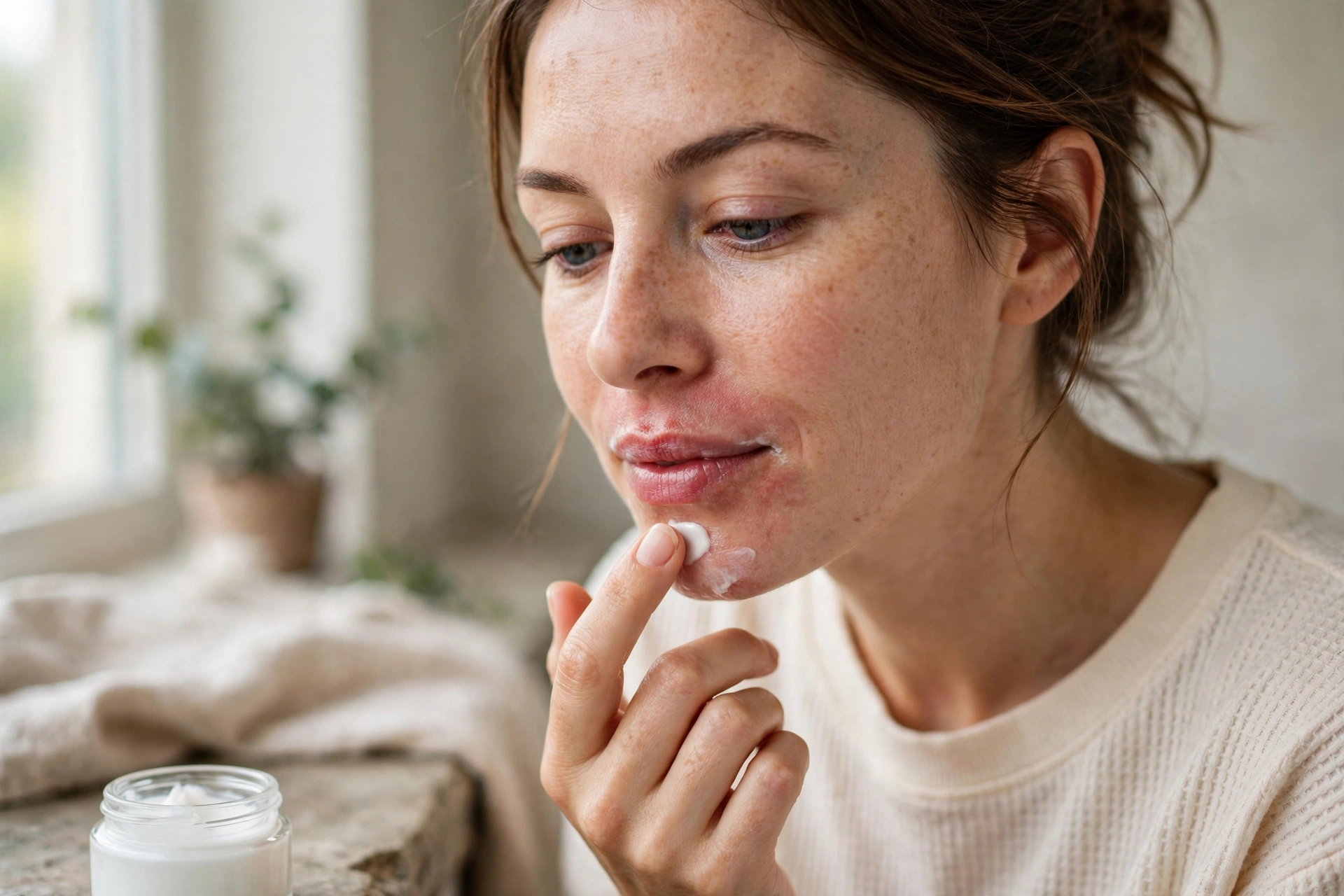
Perioral dermatitis typically shows up as small red bumps, mild redness and dry or flaky patches around the mouth, often with a narrow clear ring of unaffected skin right next to the lips. Some people also notice itching, burning or tightness, and the rash may extend to the folds beside the nose or around the eyes. It is not contagious, and it is not caused by poor hygiene — in fact, over-washing and over-treating are far more common aggravators than under-washing.
Dermatologists do not point to a single cause, but several triggers come up again and again in clinical guidance, and these are worth discussing with your clinician: topical steroid creams used on the face for a long time, heavy or fragranced skincare and makeup, certain toothpastes (particularly those containing sodium lauryl sulfate), and sometimes inhaled steroid sprays where residue reaches the skin around the mouth. Hormonal changes and a disrupted skin barrier can also play a role. The British Association of Dermatologists provides patient information on perioral dermatitis that explains these associations in plain language, and the [British Association of Dermatologists patient information leaflet on perioral dermatitis](https://www.bad.org.uk/pils/perioral-dermatitis/) is a reliable starting point for understanding the condition. For general information about when to seek NHS care for a skin rash, the [NHS guidance on rashes](https://www.nhs.uk/conditions/rashes/) explains the red flags that mean you should contact your GP promptly.
One important point: this article does not prescribe steroids, antibiotics or any prescription treatment. Some people with perioral dermatitis do need prescription treatment, and stopping a long-term steroid cream can temporarily worsen the rash before it improves — that is exactly why changes to prescribed medication should be discussed with your GP or dermatologist first, never stopped suddenly on the basis of a blog post.
## How to Treat Perioral Dermatitis With Gentle Skincare UK: The Calm-Down Phase
The calm-down phase is the heart of how to treat perioral dermatitis with gentle skincare UK dermatologists would recognise: strip the routine back to the bare minimum, remove likely irritants, and give the barrier time to recover. For most people this means two to four weeks of a radically simple routine before reintroducing anything else.
Start by pausing everything non-essential. That includes scrubs, chemical exfoliants, retinoids, vitamin C serums, anti-ageing treatments, sheet masks, fragranced oils and heavy occlusive balms around the affected area. Keep only a gentle cleanser, a plain fragrance-free moisturiser and a mineral sunscreen if you go outdoors. If you use a prescribed cream, do not stop it without speaking to your clinician, but do tell them about every other product you are using, including toothpaste and lip products, because the full picture helps them advise you.
Wash with lukewarm water, never hot, and use your fingertips rather than a flannel or cleansing brush. Pat dry with a clean soft towel instead of rubbing. Apply moisturiser while the skin is still slightly damp to lock in hydration. If even a basic moisturiser stings, that is useful information: it suggests the barrier is significantly disrupted, and a simpler formula or a short break from all leave-on products (sometimes called "zero therapy") is something to discuss with your clinician.
## Building Your Gentle Morning Routine
A gentle morning routine for perioral dermatitis has just three steps, and each one should feel boring — boring is the goal.
First, cleanse lightly. In the morning, many people do fine with lukewarm water alone, or a tiny amount of a fragrance-free, soap-free cleanser if the skin feels oily. Avoid foaming cleansers with sulfates and anything marketed as "deep-cleansing" or "purifying" while the rash is active. For broader guidance on choosing a non-stripping cleanser, our guide to the [best cleanser for combination skin](https://www.glowmagzine.com/blog/best-cleanser-for-combination-skin-uk/) explains what to look for in a gentle formula, though during a flare you should go even simpler than a combination-skin routine suggests.
Second, moisturise with a plain, fragrance-free cream or lotion. Look for short ingredient lists built around glycerin, ceramides, squalane or colloidal oatmeal, and avoid fragrance, essential oils, denatured alcohol and lanolin while the rash is active. In the UK, fragrance-free barrier creams from brands such as CeraVe, La Roche-Posay Toleriane and Eucerin are widely stocked at Boots and Superdrug, typically in the £10–£20 range, and own-brand fragrance-free moisturisers can work just as well if the formula is simple. Patch-test any new product on a small area of the jaw for a few days before using it around the mouth.
Third, protect with sunscreen. UV exposure can aggravate irritated skin, and if you are using any prescribed treatment, sun protection matters even more. Choose a fragrance-free mineral sunscreen with zinc oxide or titanium dioxide, SPF 30 or higher, and apply it as the last morning step. Mineral formulas are usually better tolerated than chemical filters on reactive skin, although any new product should still be patch-tested.
## How to Treat Perioral Dermatitis With Gentle Skincare UK: The Evening Routine
The evening routine is where most people accidentally overdo it, because evenings feel like the time for "treatments". During a flare, resist that instinct. Cleanse gently to remove sunscreen and any makeup, moisturise with the same plain cream you used in the morning, and stop there. No serums, no spot treatments on the rash, no overnight masks. If you wear makeup, keep it minimal, fragrance-free and easy to remove, and clean brushes and sponges regularly so they do not harbour irritants.
If your skin feels very dry or tight in the evening, a slightly richer fragrance-free cream at night is reasonable, but avoid layering multiple products. One well-chosen moisturiser beats a stack of five "calming" products that each contain a different potential irritant. Keep a simple diary for two weeks: note what you used, any new product, toothpaste changes, and whether the rash felt better or worse. Patterns often emerge that a single day's observation would miss.
## Triggers to Discuss With Your Clinician
Because perioral dermatitis has several known associations, a conversation with your GP or dermatologist is more useful than guessing. Useful topics to raise include:
- Any steroid cream, nasal spray or inhaler you use, and how long you have used it on or near the face.
- Your toothpaste: fluoride toothpastes without sodium lauryl sulfate are available in UK supermarkets and pharmacies, and switching is a low-risk change to discuss if your current toothpaste is a suspect.
- Lip products, lip balms and lipsticks, including any with fragrance, flavouring or menthol.
- New skincare, hair products or laundry products introduced in the weeks before the rash appeared.
- Whether the rash is spreading to the eyes, which needs prompt medical attention.
DermNet, the dermatology resource used by clinicians and patients alike, describes the clinical features of perioral dermatitis and notes the association with topical steroids and irritant cosmetics — see [DermNet on perioral dermatitis](https://dermnetnz.org/topics/perioral-dermatitis) for a detailed clinical overview. Bringing a list of your current products to the appointment, with photos of ingredient lists, saves time and helps your clinician spot a likely culprit quickly.
## Ingredients to Avoid During a Flare
While everyone's triggers differ, the following are sensible to avoid around the mouth until the rash has settled and your clinician advises otherwise: fragrance and parfum, essential oils, menthol and peppermint, denatured alcohol, witch hazel, physical scrubs, alpha and beta hydroxy acids, retinoids, benzoyl peroxide, and heavy cocoa or shea butter balms that trap heat and irritants against the skin. This is not a permanent ban list — many people can reintroduce some of these later — but during an active flare, each one is an unnecessary variable.
Equally, be cautious with "natural" or DIY remedies. Lemon juice, apple cider vinegar, toothpaste applied to spots, and undiluted essential oils are all common internet suggestions that can worsen irritation and damage the barrier further. A gentle, boring, fragrance-free routine is less exciting than a miracle remedy, but it is the approach with the best evidence behind it.
## Rebuilding After the Flare: Slow Reintroduction
Once the rash has been calm for at least two weeks, you can begin reintroducing products one at a time, with at least a week between each new addition. This slow pace is what makes it possible to identify a culprit if the rash returns: if you reintroduce three products at once and flare, you will not know which one caused it. Start with the product you miss most, apply it away from the mouth first, and only extend it to the full face if there is no reaction after a week.
Many people find their long-term routine stays simpler than before the flare, and that is a good outcome rather than a loss. A gentle cleanser, a fragrance-free moisturiser, daily sunscreen and one well-tolerated active used a few times a week is a complete routine for most skin types. If you want to rebuild a fuller routine thoughtfully, our guide on [how to repair a damaged skin barrier](https://www.glowmagzine.com/blog/how-to-repair-damaged-skin-barrier-uk/) walks through the same slow-reintroduction logic in more detail, and our [winter skincare routine for sensitive skin](https://www.glowmagzine.com/blog/winter-skincare-routine-for-sensitive-skin-uk/) covers cold-weather adjustments that suit reactive skin.
## Comparison Table: Flare Routine vs Everyday Routine
| Step | During a flare | Once calm for 2+ weeks |
| --- | --- | --- |
| Cleanser | Lukewarm water or soap-free fragrance-free cleanser, once or twice daily | Gentle fragrance-free cleanser, twice daily |
| Moisturiser | Plain fragrance-free cream with ceramides or glycerin | Same base, possibly a richer night cream in winter |
| Sunscreen | Fragrance-free mineral SPF 30+ | Fragrance-free mineral or chemical SPF 30+ if tolerated |
| Actives | None on the affected area | Reintroduce one at a time, weekly intervals |
| Exfoliation | None | Gentle chemical exfoliant 1x weekly at most, if tolerated |
| Makeup | Minimal, fragrance-free, easy to remove | Normal routine, patch-test new products |
| Toothpaste | Discuss SLS-free option with clinician or dentist | Keep whatever works without triggering a flare |
## Practical Tips for Daily Life in the UK
Small daily habits make a surprising difference. Rinse your mouth after using an inhaler or nasal spray so residue does not sit on the skin around the mouth, and discuss spacer or rinsing technique with your pharmacist if you use inhalers. Change pillowcases twice a week during a flare and wash them fragrance-free. Avoid very hot showers on the face, and keep hair products, especially fragranced sprays and oils, away from the rash area. In winter, a scarf over the lower face can protect against wind, but choose a soft, freshly washed fabric and avoid wool directly against irritated skin.
UK-specific practicalities matter too. You can book a GP appointment through the NHS App, and many pharmacies offer a consultation for skin concerns that can help you decide whether a GP visit is needed. If you are referred to dermatology, waiting times vary by area, so starting with a GP appointment and a clear product diary is the fastest route to useful advice. Keep receipts and photos of products that coincided with the flare; if a product turns out to be the trigger, that record helps you avoid it in future and helps others in your household avoid the same issue.
## When to Seek Medical Advice Promptly
See your GP promptly, or call NHS 111 if you cannot get an appointment, if: the rash spreads rapidly or reaches the eyes; there is yellow crusting, pus, increasing pain or swelling that could suggest infection; the rash has not improved after several weeks of a simplified routine; you need to stop or change a prescribed steroid cream; or the rash is significantly affecting your sleep, work or confidence. A dermatologist can confirm the diagnosis — perioral dermatitis can look similar to rosacea, acne or contact dermatitis, and the right treatment depends on getting the diagnosis right. Our guide to the [best fragrance-free moisturiser for rosacea](https://www.glowmagzine.com/blog/best-fragrance-free-moisturiser-for-rosacea-uk/) is useful background reading if rosacea is also on your clinician's differential, since the gentle-routine principles overlap.
## Frequently Asked Questions
### How long does perioral dermatitis take to calm down with gentle skincare?
It varies. Some people notice improvement within two to three weeks of simplifying their routine and removing triggers, while others need several months, especially if a prescription treatment is involved. If there is no improvement after four to six weeks of a genuinely simple routine, or the rash worsens, see your GP. Consistency matters more than speed: chopping and changing products every few days makes it impossible to tell what is helping.
### Can I wear makeup while I have perioral dermatitis?
You can, but keep it minimal and fragrance-free, and remove it gently each evening. Avoid heavy, long-wear or waterproof formulas around the mouth, and skip lip products with fragrance, flavouring or menthol until the rash has settled. If makeup seems to worsen the rash, take a break from it for a week and see whether the skin improves.
### Should I stop using steroid cream on my face?
Do not stop a prescribed steroid cream suddenly without speaking to your GP or dermatologist. Stopping abruptly can cause a rebound flare that looks worse before it improves, and your clinician may advise a gradual taper or a switch to a non-steroid treatment. Bring the cream and its packaging to your appointment so the strength and duration of use are clear.
### Is perioral dermatitis contagious or caused by poor hygiene?
No. It is not contagious, and it is not caused by being unclean. Over-washing, harsh scrubs and too many products are far more likely to aggravate it than under-washing. A gentle routine and clean pillowcases and towels are sensible hygiene, but aggressive cleansing will not help and often makes things worse.
### Can toothpaste really trigger perioral dermatitis?
Some clinicians report an association with toothpastes containing sodium lauryl sulfate and with fluoridated toothpastes, though the evidence is not conclusive for everyone. Switching to an SLS-free toothpaste is a low-risk change worth discussing with your clinician or dentist, especially if the rash is worst around the mouth and appeared after a toothpaste change.
### What sunscreen should I use on irritated skin around the mouth?
A fragrance-free mineral sunscreen with zinc oxide or titanium dioxide, SPF 30 or higher, is usually the best-tolerated option during a flare. Apply it after moisturiser, patch-test first, and reapply if you are outdoors for long periods. If every sunscreen you try stings, discuss options with your pharmacist or GP rather than skipping sun protection entirely.
### Will the rash come back once it clears?
It can recur, particularly if a trigger is reintroduced. The slow-reintroduction approach described above is the best defence: reintroduce products one at a time, keep a note of anything that coincides with a flare, and keep your baseline routine simple. Many people find that keeping fragrance and harsh exfoliants out of their routine long-term keeps recurrences away.
### Do I need to see a dermatologist, or is my GP enough?
Most cases can be assessed and managed by a GP, who can refer to dermatology if the diagnosis is uncertain, the rash is severe or widespread, or first-line approaches are not working. Seeing your GP first is the right route in the UK, and a product diary plus photos of the rash over time will make the appointment more productive.
## Key Takeaways
- Simplify first: cleanser, fragrance-free moisturiser and mineral sunscreen are enough during a flare.
- Remove likely irritants — fragrance, essential oils, scrubs, acids and retinoids — and reintroduce products one at a time only after two calm weeks.
- Discuss steroid creams, inhaler residue and toothpaste with your GP or dermatologist; never stop prescribed medication suddenly.
- Patch-test every new product, keep a two-week product diary, and use UK-available fragrance-free options from Boots or Superdrug, typically £10–£20.
- Seek prompt medical advice if the rash spreads to the eyes, looks infected, or does not improve after several weeks.
## Conclusion
Learning how to treat perioral dermatitis with gentle skincare UK routines is really about learning to do less, more carefully. A stripped-back routine, patience with the calm-down phase, honest conversations with your clinician about triggers and prescribed products, and slow reintroduction afterwards give your skin the best chance to recover — and keep it recovered. The rash is frustrating, especially on the face, but a calm routine is not a compromise: for reactive skin, it is the most effective routine there is. If your skin is not settling, or you are unsure about the diagnosis, book that GP appointment and take your product diary with you. Your skin, and your confidence, are worth the careful approach.