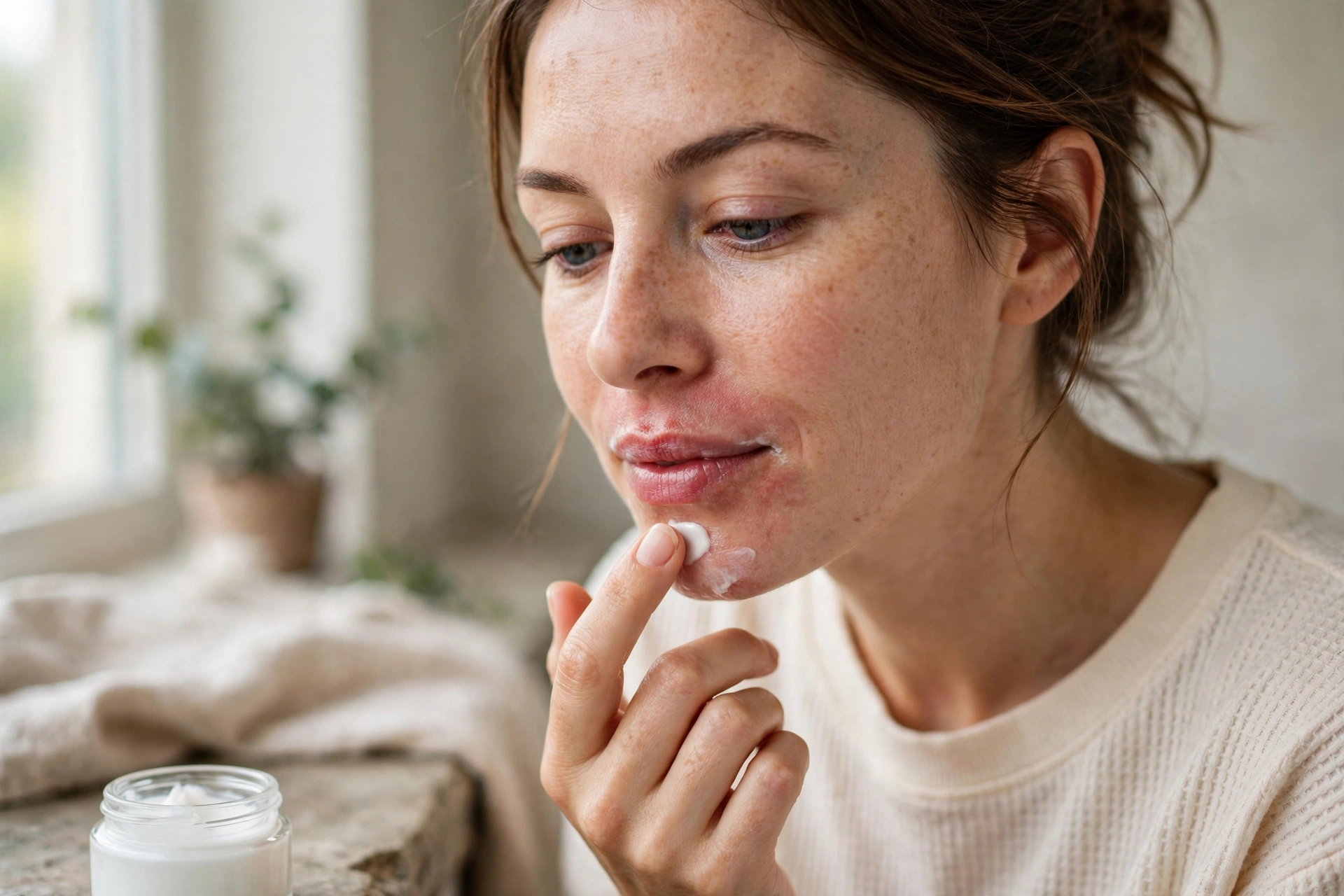
How to Treat Perioral Dermatitis With Gentle Skincare UK: A Calm Routine
Learn how to treat perioral dermatitis with gentle skincare UK: a calm, fragrance-free routine, triggers to discuss with your GP, and UK product tips.
Read More arrow_forwardA practical UK guide to treating hormonal acne in your 30s, with a simple routine, proven ingredients and high-street buys that actually work.
If you thought acne was something you left behind at school, your thirties can come as an unwelcome surprise. Learning how to treat hormonal acne in your 30s uk is different from treating teenage breakouts, because adult skin is often drier, more sensitive and slower to heal, while the breakouts themselves tend to be deeper, more painful and concentrated around the jawline, chin and neck. The good news is that hormonal acne in your thirties is very treatable, and you do not need a ten-step routine or an expensive clinic plan to see real improvement. What you need is consistency, the right active ingredients used in the right order, and a routine you can actually stick to through busy work weeks, changing seasons and the realities of British weather.
This guide walks you through exactly that: what causes hormonal acne in your thirties, a simple morning and evening routine built around products you can buy at Boots, Superdrug or Cult Beauty, the ingredients worth your money and the ones to skip, and the point at which it makes sense to see your GP or a dermatologist for prescription help. Everything here is tailored to the UK, from prices in pounds to the products stocked on the British high street.
## Why Hormonal Acne Appears in Your 30s
Hormonal acne is driven by fluctuations in hormones, particularly androgens, which stimulate the oil glands and increase sebum production. When excess oil mixes with dead skin cells inside the pore, it creates the perfect environment for breakouts. In your thirties, several triggers can set this off even if your skin was clear in your twenties. Coming off hormonal contraception, changes in your menstrual cycle, pregnancy or breastfeeding, perimenopause, stress, and conditions such as polycystic ovary syndrome (PCOS) can all shift your hormone balance enough to spark breakouts.
Adult hormonal acne has a distinctive pattern. It tends to appear on the lower third of the face, along the jawline, chin and upper neck, and it often flares in the week before your period. The spots are frequently deep, tender cysts or nodules rather than surface whiteheads, and they can leave red or brown marks that linger for weeks after the spot itself has gone. That is why the approach in your thirties should be gentler and more patient than the harsh, drying treatments many of us used as teenagers. Over-stripping adult skin damages the barrier, which causes more inflammation, more breakouts and slower healing, a vicious cycle that is entirely avoidable.
## How to Treat Hormonal Acne in Your 30s UK: A Simple Morning Routine
A good morning routine for hormonal acne has four jobs: cleanse gently, treat with one proven active, hydrate without clogging pores, and protect with sunscreen. Keep it short. A routine you do every single day beats a complicated one you abandon after a week.
### Step 1: Gentle Cleanser
Start with a gentle, non-foaming or low-foaming cleanser. CeraVe Hydrating Facial Cleanser (around £12 at Boots) and La Roche-Posay Toleriane Dermo-Cleanser (around £14 at Boots) are both excellent choices because they clean without stripping. Use lukewarm water, massage for about thirty seconds, and pat dry with a clean towel. Avoid harsh scrubs, cleansing brushes used aggressively, and cleansers loaded with fragrance or drying alcohols, all of which irritate inflamed skin.
### Step 2: Treatment Serum
In the morning, a niacinamide serum is a brilliant choice for hormonal acne. Niacinamide calms redness, supports the skin barrier and helps regulate oil production without irritation. The Ordinary Niacinamide 10% + Zinc 1% (around £6 at Boots) is one of the best-value options in the UK, while Paula's Choice 10% Niacinamide Booster (around £48 at Cult Beauty) is a good upgrade if you prefer a more elegant formula. If you want to understand how niacinamide works alongside other actives, our guide to [niacinamide and vitamin C together](https://www.glowmagzine.com/blog/niacinamide-and-vitamin-c-together-uk/) explains the combinations that are safe and the ones to avoid.
### Step 3: Lightweight Moisturiser
Even oily, acne-prone skin needs moisturiser. Skipping it signals your skin to produce more oil, which makes breakouts worse. Choose an oil-free gel or light lotion, such as La Roche-Posay Effaclar H Iso-Biome (around £19 at Boots) or CeraVe PM Facial Moisturising Lotion (around £14 at Superdrug). Apply a pea-sized amount over the whole face, not just the dry patches.
### Step 4: Sunscreen Every Day
Sunscreen is non-negotiable, especially when you use active ingredients that increase sun sensitivity, and because UV exposure darkens the marks left behind by spots. Look for a broad-spectrum SPF 30 or higher that is labelled non-comedogenic. La Roche-Posay Anthelios Invisible Fluid SPF50+ (around £19 at Boots) is a UK favourite that sits well under makeup. If you have a deeper skin tone and worry about white cast, our guide to the [best sunscreen for dark skin with no white cast](https://www.glowmagzine.com/blog/best-sunscreen-dark-skin-no-white-cast-uk/) rounds up UK options that blend invisibly.
## How to Treat Hormonal Acne in Your 30s UK: Your Evening Routine
Evenings are when the heavy lifting happens. This is when you use your exfoliating acid or retinoid, the ingredients that actually unclog pores and speed up cell turnover. The golden rule is to introduce one active at a time, start slowly, and never layer strong actives on the same night until your skin has adjusted.
### Step 1: Double Cleanse at Night
If you wear makeup or sunscreen, start with a cleansing balm or micellar water, then follow with your gentle cleanser. The Body Shop Camomile Cleansing Butter (around £12) and Bioderma Sensibio H2O (around £13 at Boots) both remove the day effectively without irritating breakouts. Double cleansing at night prevents the residue build-up that clogs pores along the jawline.
### Step 2: Exfoliate Two to Three Times a Week
A salicylic acid (BHA) product is the classic choice for hormonal acne because it is oil-soluble, meaning it can get inside the pore and dissolve the congestion that causes deep jawline spots. Paula's Choice Skin Perfecting 2% BHA Liquid Exfoliant (around £35 at Cult Beauty) is widely considered the best in its class, while The Ordinary Salicylic Acid 2% Solution (around £6.50 at Boots) is a budget-friendly alternative. Use it two to three evenings a week on clean, dry skin, and skip it on nights when you use a retinoid until your skin is comfortable with both. For a deeper explanation of how acids interact with retinoids, see our guide to [AHA BHA and retinol together](https://www.glowmagzine.com/blog/aha-bha-and-retinol-together-uk/).
### Step 3: Retinoid on Alternate Nights
Retinoids are the single most proven topical ingredient for acne, and they also help with the fine lines and uneven texture that start to matter in your thirties. If you are new to retinoids, start with an over-the-counter retinol two nights a week and build up gradually. CeraVe Resurfacing Retinol Serum (around £20 at Boots) is a gentle, well-tolerated starting point. If you are ready to learn the correct order of application, our guide to the [retinol and niacinamide routine order](https://www.glowmagzine.com/blog/retinol-and-niacinamide-routine-order-uk/) shows exactly how to layer them without irritation. If your skin barrier is already damaged or reactive, read our guide on [how to repair a damaged skin barrier](https://www.glowmagzine.com/blog/how-to-repair-damaged-skin-barrier-uk/) before adding any strong active.
### Step 4: Barrier-Friendly Night Cream
Finish with a simple, fragrance-free moisturiser. On retinoid nights, the sandwich method works well: moisturiser, then retinoid, then moisturiser again. This buffers irritation without reducing effectiveness. Avoid heavy oils and thick creams on breakout-prone areas, and keep your pillowcase clean by changing it at least twice a week, since bacteria and hair products transfer to the jawline overnight.
## The Best Ingredients for Hormonal Acne
Beyond the routine above, a few ingredients deserve special mention. Azelaic acid is a quiet hero for adult hormonal acne: it is antibacterial, anti-inflammatory and helps fade the red and brown marks spots leave behind, and it is usually well tolerated even by sensitive skin. The Ordinary Azelaic Acid Suspension 10% (around £9 at Boots) is an easy UK buy. Benzoyl peroxide, in a low 2.5% wash or spot treatment, kills acne-causing bacteria and is useful for inflamed spots, but use it sparingly because it can bleach towels and pillowcases. For a full overview of how ingredients interact, check a skincare ingredient combinations guide that maps out safe pairings before mixing new actives.
Equally important is knowing what not to use. Harsh physical scrubs, high-strength peels used too often, essential oils applied neat, and stacking three or four new actives at once will all make hormonal acne worse. Coconut oil and heavy cocoa butter on the face are common culprits for jawline congestion. If a product stings every time you use it, that is your skin asking you to stop, not a sign that it is working.
## Diet, Stress and Lifestyle Factors
No diet cures hormonal acne, but a few patterns are worth knowing. High-glycaemic foods and, for some people, large amounts of skimmed milk are associated with more frequent breakouts, while a diet rich in vegetables, oily fish, nuts and whole grains supports overall skin health. You do not need to cut out entire food groups, but noticing whether breakouts reliably follow certain foods can be useful information to take to your GP.
Stress is a genuine trigger because cortisol raises oil production, so sleep, movement and stress management are legitimate parts of an acne plan, not vague wellness advice. Aim for seven to nine hours of sleep, keep your phone away from your jawline during long calls, clean your makeup brushes weekly, and tie hair back at night so hair products stay off your chin and jaw. Small habits like these remove daily sources of congestion that no serum can fix on its own.
## When to See a GP or Dermatologist
Self-care goes a long way, but some situations need medical help, and getting it sooner rather than later prevents scarring. See your GP if your acne is painful, cystic or leaving scars, if it has not improved after three months of a consistent over-the-counter routine, if you have irregular periods, excess facial hair or hair thinning alongside breakouts, or if acne is seriously affecting your confidence or mental health. The NHS provides clear guidance on [acne treatments available through your GP](https://www.nhs.uk/conditions/acne/), including topical retinoids, antibiotics and hormonal treatments, while the British Association of Dermatologists offers a detailed patient information leaflet on [acne](https://www.bad.org.uk/pils/acne/) that explains prescription options and what to expect from them.
Prescription options your GP may discuss include topical tretinoin, oral antibiotics for a limited course, and for women, co-cyprindiol or other hormonal contraception where appropriate. A dermatologist can offer spironolactone, which blocks androgen effects on the skin, and isotretinoin for severe cases. These are powerful treatments with real side effects, so they belong in a medical consultation, not in an online shopping basket. Bring a list of what you have already tried, how long you used it, and photos of your skin at its worst, since breakouts often look calmer on appointment day.
## UK Shopping Guide: Where to Buy
One advantage of treating hormonal acne in the UK is how easy the good products are to find. Boots stocks CeraVe, La Roche-Posay and The Ordinary in most large stores, and its app regularly runs 3-for-2 offers on skincare that bring the price of a full routine down considerably. Superdrug is the best place for budget buys and its own-label ranges, while Cult Beauty is worth checking for Paula's Choice and higher-end serums, especially during its sale events. Look for the Boots No7 and Superdrug points schemes to save on repeat purchases, and always buy from authorised retailers rather than marketplace sellers, since counterfeit skincare is a real problem online.
A realistic starter routine costs around £40 to £50: a gentle cleanser, a niacinamide or azelaic acid serum, a BHA exfoliant and a moisturiser with SPF. You do not need to buy everything at once. Start with cleanser, moisturiser and sunscreen, add one active, wait a month, then add the next. Your skin, and your bank balance, will thank you.
## Frequently Asked Questions
### How long does it take to see results from a hormonal acne routine?
Most people see fewer new breakouts within four to six weeks, but meaningful improvement usually takes eight to twelve weeks, and retinoids can take up to three months to show their full effect. Skin cell turnover takes around 28 days in your thirties, so any product needs at least one full cycle before you judge it. Take dated photos every two weeks so you can track progress objectively rather than relying on how your skin feels on a bad day.
### Can I use retinol and BHA on the same night?
It is best not to when you are starting out, because combining them increases irritation and peeling. Use BHA two or three nights a week and retinol on alternate nights, and only combine them once your skin tolerates both comfortably. If you notice stinging, flaking or increased redness, drop back to one active and rebuild slowly.
### Does hormonal acne mean I need a blood test?
Not always, but your GP may arrange blood tests if you have irregular periods, excess hair growth, sudden severe acne, or other signs of a hormonal condition such as PCOS. Most hormonal acne is driven by normal hormone sensitivity in the skin rather than abnormal hormone levels, so a normal blood test does not mean your acne is not hormonal.
### Should I stop wearing makeup while treating hormonal acne?
No, you do not need to give up makeup. Choose non-comedogenic, fragrance-free formulas, apply with clean brushes or washed hands, and always remove makeup thoroughly at night. Mineral foundations are often well tolerated, and a light, breathable base is better than a heavy full-coverage formula layered over inflamed skin.
### Is dairy really linked to acne?
The evidence is mixed but not imaginary: some studies link high intake of skimmed milk with more frequent acne, possibly because of hormones naturally present in milk and its effect on insulin. Cheese and yoghurt show weaker links. If you suspect dairy plays a role, try reducing skimmed milk for six to eight weeks and note any change, but do not cut out calcium sources without replacing them.
### Can stress alone cause hormonal acne in your 30s?
Stress alone rarely causes acne from nothing, but it is a powerful amplifier. Stress raises cortisol, which increases oil production and inflammation, so breakouts often flare during demanding periods at work, poor sleep or major life changes. Managing stress through sleep, exercise and boundaries is a genuine part of treatment, not an optional extra.
### What is the difference between hormonal acne and regular acne?
Hormonal acne follows a pattern: it clusters on the jawline, chin and neck, flares with the menstrual cycle, and often involves deep, painful cysts. Regular acne is more evenly spread across the forehead, nose and cheeks and is driven more by oil and dead skin build-up than by hormone fluctuations. The distinction matters because hormonal acne responds better to ingredients like azelaic acid and retinoids, and sometimes needs prescription hormonal treatment.
## Key Takeaways
- Hormonal acne in your thirties clusters on the jawline, chin and neck, flares with your cycle, and needs a gentler approach than teenage acne.
- A simple routine wins: gentle cleanser, one proven active, lightweight moisturiser and daily SPF, used consistently for at least twelve weeks.
- Niacinamide, salicylic acid, azelaic acid and retinoids are the ingredients with the strongest evidence; introduce them one at a time.
- Protect your skin barrier, change pillowcases often, and keep hair products and phones away from the jawline.
- See your GP if acne is painful, scarring, or unchanged after three months, or if you have signs of a hormonal condition such as PCOS.
## Conclusion
Treating hormonal acne in your thirties is a marathon, not a sprint, but it is one you can absolutely win with a routine built on evidence rather than trends. Start simple, add actives slowly, protect your skin barrier, and use the excellent, affordable products available on the British high street. If over-the-counter care is not enough after a few consistent months, prescription treatment through your GP or a dermatologist can make a dramatic difference, and asking for that help is a sensible next step, not a failure. Your skin in your thirties deserves patience and consistency, and with both, clearer skin is a realistic goal rather than a distant hope.
Learn how to treat perioral dermatitis with gentle skincare UK: a calm, fragrance-free routine, triggers to discuss with your GP, and UK product tips.
Read More arrow_forward
A gentle, UK-focused winter routine for rosacea-prone skin, with barrier-friendly cleansers, moisturisers and SPF picks from Boots and Superdrug.
Read More arrow_forwardA gentle, pregnancy safe skincare routine UK guide: which ingredients to avoid, safe swaps, and a simple AM/PM routine for glowing skin.
Read More arrow_forwardLearn how to repair damaged skin barrier UK skin with a gentle 4-week plan, £ prices, UK stockists and a simple AM/PM routine that calms redness and dryness.
Read More arrow_forward
Discover the best winter lip care routine for chapped lips uk, with gentle exfoliation, barrier balms, SPF and overnight repair for soft lips.
Read More arrow_forwardCalculate your Body Mass Index (BMI) in seconds. BMI is a quick screening number…
Use now arrow_forwardFind your daily calorie needs based on your age, sex, height, weight and activit…
Use now arrow_forwardFind how much water you should drink each day, in litres and glasses, based on y…
Use now arrow_forward