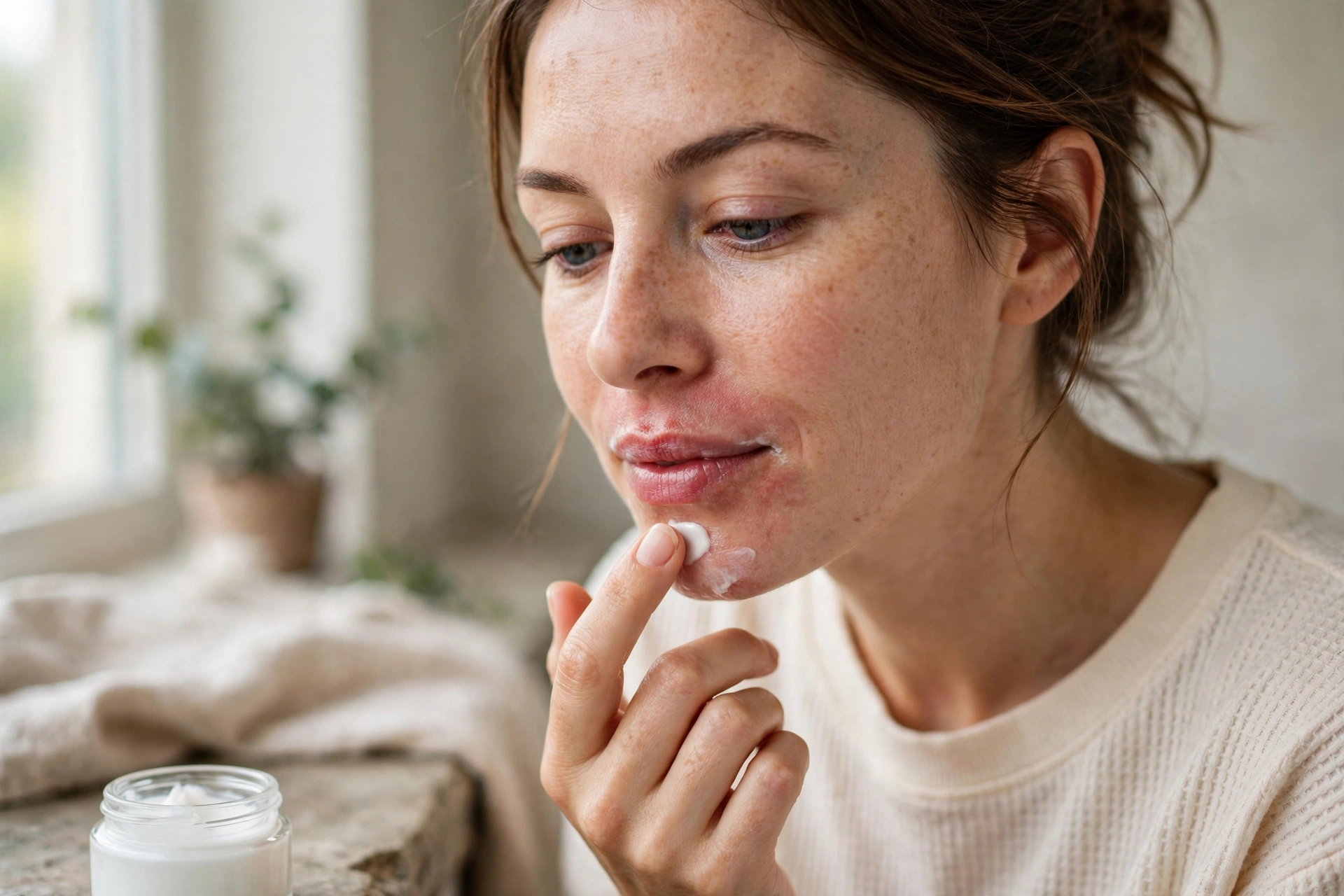
How to Treat Perioral Dermatitis With Gentle Skincare UK: A Calm Routine
Learn how to treat perioral dermatitis with gentle skincare UK: a calm, fragrance-free routine, triggers to discuss with your GP, and UK product tips.
Read More arrow_forwardA gentle, UK-focused winter routine for rosacea-prone skin, with barrier-friendly cleansers, moisturisers and SPF picks from Boots and Superdrug.
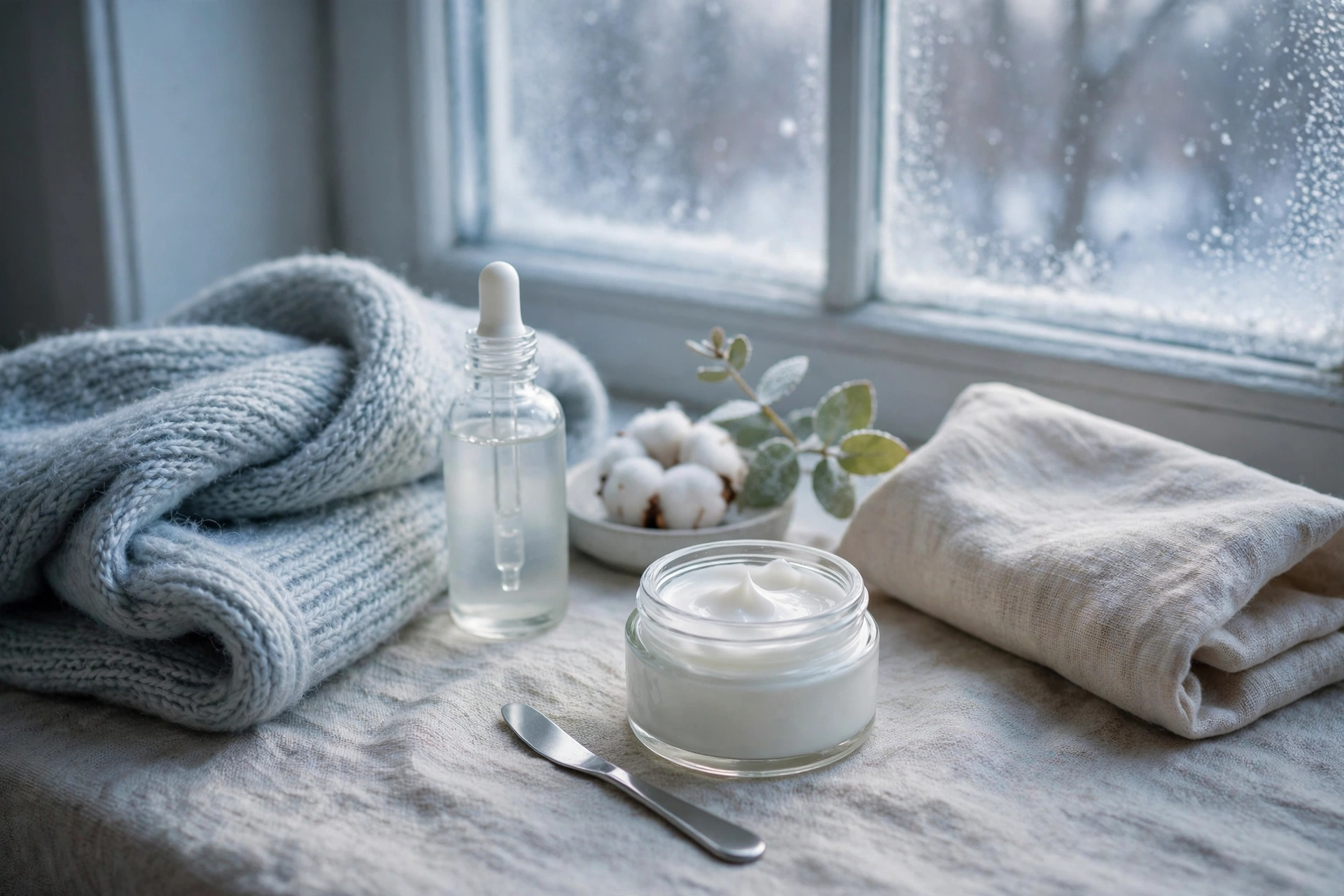
If you live with rosacea, winter in the UK can feel like a test your skin never asked to take. Cold wind outside, dry central heating inside, hot showers, heavy scarves and festive food and drink can all push redness, flushing, bumps and stinging over the edge. The good news is that a simpler, steadier routine usually works better than adding more active products. This guide sets out the best winter skincare routine for rosacea prone skin uk, built around barrier protection, gentle cleansing, fragrance-free moisture and daily sunscreen, with product types and UK shops where you can find them without guesswork.
Rosacea is not one single condition. For some people it means persistent redness across the cheeks and nose. For others it means visible blood vessels, spots that look like acne but are not acne, eye irritation, or skin that stings when almost anything is applied. Winter tends to make every subtype harder, because the skin barrier loses water faster in cold, dry air and becomes more reactive. That is why this routine is deliberately boring in the best possible way: few products, no fragrance, no harsh exfoliation, no hot water, and no sudden changes in the middle of a flare.
Before you change anything, a quick note on safety. If you have not had your redness diagnosed, if you have eye pain, vision changes, severe swelling, or skin that is broken, bleeding or infected, see your GP or a dermatologist first. Skincare can support rosacea care, but it does not replace medical treatment. Many people in the UK use prescribed treatments such as metronidazole gel, azelaic acid or ivermectin cream alongside a gentle routine, and your routine should fit around those prescriptions, not fight them.
## Why Winter Makes Rosacea Worse in the UK
British winter is a perfect storm for reactive skin. Temperatures drop, humidity falls, wind strips moisture from the face, and then you step into a heated home, office or shop where the air is even drier. That rapid change from cold to warm is a classic flushing trigger. Add long hot showers, wool scarves rubbing the cheeks, spicy food, alcohol at festive gatherings, and stress, and it is easy to see why December and January are peak flare months.
The skin barrier is the key idea here. Think of it as a brick wall: skin cells are the bricks and lipids such as ceramides, cholesterol and fatty acids are the mortar. In rosacea-prone skin that wall is often already weaker, so water escapes more easily and irritants get in more easily. Cold weather widens those gaps. A winter routine therefore has one main job, which is to protect and rebuild that wall every single day, rather than to chase glow, exfoliation or anti-ageing results at all costs.
Practical habits matter as much as products. Keep showers lukewarm and short, pat skin dry instead of rubbing, avoid sitting directly next to radiators or open fires for long periods, and wear a soft, breathable scarf or snood rather than rough wool pressed against your cheeks. If you go from freezing pavement into a hot shop, give your skin a minute to adjust rather than immediately applying a hot drink to your face or standing under a hand dryer. Small changes like these reduce the number of flushes you have to recover from.
It also helps to track your own triggers for two or three weeks. Note the weather, what you ate and drank, what products you used, and when flushing happened. Patterns often emerge quickly. One person may find wind is the main problem, another may find central heating and hot baths are worse, and a third may find that a particular cleanser or a fragranced night cream is the real culprit. A simple notebook or phone note is enough, and it will help you and your clinician make better decisions.
## The Best Winter Skincare Routine for Rosacea Prone Skin UK: Morning Steps
Morning skincare for rosacea-prone skin should be short, soothing and protective. You are preparing skin for wind, cold and indoor heating, not stripping it clean. If your skin feels comfortable after sleep, you may not even need a full wash in the morning. Lukewarm water alone, followed by moisturiser and sunscreen, is often enough and is far gentler than a foaming cleanser twice a day.
Start by splashing with lukewarm water or, if you prefer a cleanser, use a small amount of a fragrance-free, non-foaming cream or milk cleanser. Massage it gently with fingertips, rinse with lukewarm water, and pat dry with a soft towel. Avoid micellar waters with added fragrance, cleansing wipes that drag across the skin, and any cleanser that leaves your face feeling tight or squeaky. Tightness is not cleanliness; it is a sign the barrier has been stripped.
Next, while skin is still slightly damp, apply a soothing serum if you use one. In winter, most rosacea-prone skin does best with simple hydrators such as glycerin, hyaluronic acid or beta-glucan, or a calming ingredient such as centella asiatica or allantoin. Keep it to one serum in the morning. This is not the season to layer three new actives at once. If you use a prescribed treatment in the morning, apply it exactly as your clinician directed, usually after cleansing and before moisturiser, and wait a few minutes before the next step.
Then apply a fragrance-free moisturiser generously. Look for ceramides, squalane, glycerin and niacinamide at a gentle concentration. Creams are usually better than light lotions in winter, because they seal in moisture for longer. In the UK you can find excellent barrier creams at Boots and Superdrug without spending a fortune, including pharmacy favourites from CeraVe, La Roche-Posay Toleriane, Avene and Eucerin. Choose a plain, fragrance-free version rather than a perfumed or anti-ageing variant, even if the packaging looks more appealing.
Finally, apply sunscreen every morning, even on grey days. UV radiation passes through cloud, and winter sun reflected off wet pavements can still trigger rosacea. A mineral sunscreen with zinc oxide or titanium dioxide is often better tolerated than a chemical sunscreen, and a fragrance-free formula designed for sensitive skin is the safest starting point. If you want product ideas, our guide to the [best sunscreen for dark skin with no white cast](https://www.glowmagzine.com/blog/best-sunscreen-dark-skin-no-white-cast-uk/) explains gentle, sheer UK sunscreen options in detail. Apply sunscreen as the last step, allow it to settle, and reapply if you spend a long time outdoors.
## The Best Winter Skincare Routine for Rosacea Prone Skin UK: Evening Steps
Evening is when repair happens, so keep it calm and consistent. Remove sunscreen and any makeup with a gentle method first. A fragrance-free cleansing balm or micellar water for sensitive skin, used with soft fingertips or a damp muslin cloth, is usually kinder than scrubbing with wipes. Follow with the same gentle cream cleanser you use in the morning if needed, or just the balm if your skin already feels clean and comfortable. Double cleansing is fine only if both steps are truly gentle; if your skin stings afterwards, drop back to one step.
After cleansing, apply any prescribed treatment first on clean, dry skin, exactly as directed. This matters because layering a heavy cream underneath a prescription gel can change how well it absorbs, while applying it over a rich cream may dilute it. If you are unsure about order, ask your pharmacist or dermatologist. Once a prescribed product has settled, apply a hydrating serum or a thin layer of a soothing product if you wish, then a richer night cream.
Winter nights are the right time for a slightly heavier moisturiser, sometimes called slugging in skincare circles, but with an important difference for rosacea. A thin layer of plain petrolatum-based ointment or a very rich ceramide cream over your usual moisturiser can lock in moisture on bitterly cold nights. Try it on a small area first, and skip it if it traps heat and makes flushing worse. Not everyone with rosacea tolerates occlusion, so treat it as an experiment, not a rule.
Avoid the temptation to add strong exfoliants, retinoids or vitamin C serums in the middle of winter unless your skin is already stable and your clinician agrees. If you do use azelaic acid, which many people with rosacea find helpful, introduce it slowly and read our guide on [how to use azelaic acid for rosacea](https://www.glowmagzine.com/blog/how-to-use-azelaic-acid-for-rosacea-uk/) for a gentle starting method. For general barrier repair, the advice in [how to repair a damaged skin barrier](https://www.glowmagzine.com/blog/how-to-repair-damaged-skin-barrier-uk/) is also useful, because the same principles of fewer products and more ceramides apply in winter.
## What to Avoid in Winter If You Have Rosacea
Knowing what to leave out is often more valuable than knowing what to add. Fragrance is the biggest avoidable irritant, including essential oils, perfumed creams, fragranced face wipes and heavily scented hair products that transfer onto the face. Even products labelled natural can irritate rosacea-prone skin, so fragrance-free means fragrance-free, not just lightly scented.
Strong physical scrubs, rough washcloths, facial brushes and peel-off masks should also be paused in winter. They create micro-irritation that healthy skin might tolerate but rosacea-prone skin often cannot. Chemical exfoliants such as glycolic acid, salicylic acid and strong lactic acid peels are similarly risky during a flare. If your skin is calm and you want gentle exfoliation, a very low-strength polyhydroxy acid used once a week at most is a safer discussion to have with your dermatologist, rather than a daily acid toner.
Other winter triggers are lifestyle-based rather than product-based. Very hot baths and showers, saunas, steam rooms, sitting too close to a fire, and drinking very hot drinks while outdoors in the cold can all cause flushing. Alcohol, spicy food, caffeine in large amounts and sudden temperature changes are common triggers too, although triggers vary from person to person. You do not need to give up everything you enjoy, but noticing which triggers affect you most lets you plan around them, for example by choosing lukewarm drinks, eating spicy food at home where you can cool down afterwards, or pacing festive drinks with water and food.
Be cautious with new launches and gift sets in winter. A beautifully packaged set with five new products is a patch-testing nightmare for reactive skin. If you receive skincare as a gift, patch test one product at a time on the jawline for several days before using it on the full face, and keep your proven winter staples ready to return to if anything stings. Your skin will thank you for boring consistency over festive novelty.
## Building a Simple Winter Kit in the UK
You do not need an expensive ten-step routine. A complete winter kit for rosacea-prone skin can be just five products: a gentle cleanser, a hydrating serum or essence, a fragrance-free barrier moisturiser, a mineral sunscreen, and a richer night cream or ointment for the coldest nights. If you use a prescription treatment, that counts as your active step, and you may not need an additional serum at all.
When shopping in the UK, Boots and Superdrug both stock fragrance-free pharmacy skincare ranges, and Cult Beauty stocks a wider range of soothing, fragrance-free serums and barrier creams if you want to try a more specialist brand. Look for the words fragrance-free, for sensitive skin, and non-comedogenic on the label, and check the ingredients list for alcohol denat high up the list, which can be drying. Price is not a reliable guide to gentleness: some of the best rosacea-friendly moisturisers in the UK cost under £15, while some luxury creams are full of fragrance and essential oils.
Keep your kit stable for at least four to six weeks before judging it. Rosacea skin reacts slowly, and changing products every few days makes it impossible to tell what is helping and what is harming. If a product stings, burns or increases redness for more than a few minutes, stop it and return to your simplest routine of cleanser, moisturiser and sunscreen until calm returns. If redness spreads, becomes painful, or does not settle, seek medical advice rather than trying another new product.
For related winter guidance, our [winter skincare routine for sensitive skin](https://www.glowmagzine.com/blog/winter-skincare-routine-for-sensitive-skin-uk/) covers similar barrier-first principles for skin without rosacea, and our guide to the [best fragrance-free moisturiser for rosacea](https://www.glowmagzine.com/blog/best-fragrance-free-moisturiser-for-rosacea-uk/) compares gentle UK moisturisers in more detail. Reading those alongside this routine can help you choose between cream textures and price points without adding irritants.
## Diet, Lifestyle and Flare First Aid
No diet cures rosacea, but many people find that certain habits reduce how often flares happen. Staying hydrated, eating regular meals, getting enough sleep, and managing stress all support the skin barrier indirectly. Some people notice that very hot, spicy or alcoholic drinks trigger flushing, while others are more affected by cold wind than by food. Keep notes rather than following a restrictive diet you found online, and talk to your GP or a dietitian if you are considering cutting out whole food groups.
When a flare starts, the best first aid is to do less, not more. Rinse with lukewarm water, apply a plain fragrance-free moisturiser, avoid makeup and active products, and cool the skin gently with a damp cloth if that feels soothing. Do not apply ice directly to the face, do not scrub, and do not try a new strong product to fix the flare quickly. Most winter flares settle over hours to days if you return to basics and remove the trigger. Keep a small calm-down kit ready: your gentle cleanser, your plainest moisturiser, and your sunscreen, so you are not tempted to experiment when your skin is already unhappy.
Stress is an underrated winter trigger, especially around the festive season, work deadlines and darker days. Gentle movement, fresh air on calmer days, sleep routines and time away from screens can all help, not because they directly treat rosacea, but because they lower the overall reactivity of your nervous system and skin. If low mood or anxiety is affecting you in winter, speak to your GP. Looking after your general health is part of looking after your skin.
For authoritative background on rosacea, the [British Association of Dermatologists patient information on rosacea](https://www.bad.org.uk/) explains subtypes and treatments in plain language, and [NHS guidance on rosacea](https://www.nhs.uk/conditions/rosacea/) covers when to seek medical help and what treatments are available in the UK. If you are ever unsure whether redness is rosacea, eczema, or something else, those sources and your GP are far safer guides than social media.
## Frequently Asked Questions
### Should I wash my face twice a day in winter if I have rosacea?
Not necessarily. Many people with rosacea do better with a gentle cleanse in the evening and lukewarm water only in the morning. If you wear sunscreen and makeup, an evening cleanse is important, but a second foaming wash in the morning often strips the barrier for no benefit. Judge by comfort: if skin feels tight after washing, your cleanser or frequency is too harsh.
### Do I still need sunscreen in UK winter?
Yes. UV rays are present all year, even on cloudy days, and sun exposure is a common rosacea trigger. A fragrance-free mineral sunscreen applied every morning is one of the most protective steps in a winter routine. Choose a formula you enjoy wearing, because the best sunscreen is the one you will actually use daily.
### Can I use retinol in winter with rosacea?
Some people can, but winter is a difficult time to start. Retinol can increase dryness, peeling and sensitivity, which may worsen rosacea. If your skin is stable and you want to try it, discuss it with your dermatologist, start with a very low strength used only a few nights a week, buffer it with moisturiser, and pause it during flares. Never start retinol, a new acid and a new vitamin C serum in the same week.
### What moisturiser texture is best for rosacea in cold weather?
Most people prefer a cream rather than a gel or light lotion in winter, because creams provide a stronger moisture seal. Look for ceramides, glycerin and squalane, and avoid fragrance and essential oils. If a cream feels too heavy or traps heat, try a lighter cream during the day and save the richest cream for night.
### Should I avoid all exfoliation in winter?
During a flare, yes, avoid exfoliation completely. When skin is calm, very gentle and infrequent exfoliation may be tolerated, but daily acids and scrubs are risky for rosacea-prone skin in winter. Focus on barrier repair first. If you want smoother texture, a hydrating serum and consistent moisturiser often help more than an acid.
### Is hot water really bad for rosacea?
Hot water can trigger flushing and strip natural oils, so lukewarm water is safer for washing and showering. Keep showers shorter in winter, avoid very hot baths on the face, and pat skin dry gently. Small temperature habits add up over a whole winter.
### Can makeup make winter rosacea worse?
Makeup itself is not always the problem, but fragranced primers, heavy long-wear foundations, and vigorous removal can be. Choose fragrance-free, mineral-based products where possible, apply with clean fingers or a soft sponge rather than a brush that drags, and remove makeup gently in the evening. Patch test any new product before full-face use.
### When should I see a doctor about winter rosacea flares?
See your GP if redness is new and undiagnosed, if you have eye symptoms such as gritty eyes, sensitivity to light or vision changes, if skin becomes painful, swollen or infected, or if over-the-counter care and prescribed treatments are not controlling flares. Early medical advice prevents complications and helps you build a routine that works with treatment, not against it.
## Key Takeaways
- Winter worsens rosacea mainly through cold wind, dry indoor heating, hot water and rapid temperature changes, all of which weaken the skin barrier.
- The best winter approach is simple and consistent: gentle cleansing, one soothing hydrator, a fragrance-free ceramide moisturiser, and daily mineral sunscreen.
- Morning routines can be water-only plus moisturiser and sunscreen; evening routines should remove sunscreen gently and allow prescribed treatments to work first.
- Avoid fragrance, essential oils, scrubs, strong acids and new multi-product gift sets during winter, especially during a flare.
- Boots, Superdrug and Cult Beauty all stock suitable fragrance-free options in the UK, and price does not predict gentleness.
- Track your personal triggers, patch test new products, and seek medical advice for undiagnosed redness, eye symptoms or flares that do not settle.
## Conclusion
A calm winter is possible for rosacea-prone skin, but it comes from protection and patience rather than from powerful new products. Keep your routine short, fragrance-free and barrier-focused, protect your face from wind and temperature swings, wear sunscreen even on grey UK days, and give any change at least a few weeks before judging it. If you follow the morning and evening steps in this guide, avoid the common winter irritants, and keep your prescribed treatment at the centre of your routine where relevant, you give your skin the best chance to stay comfortable until spring returns. Start with the products you already trust, replace only what stings or dries you out, and let consistency do the work that a crowded shelf cannot.
Learn how to treat perioral dermatitis with gentle skincare UK: a calm, fragrance-free routine, triggers to discuss with your GP, and UK product tips.
Read More arrow_forward
A practical UK guide to treating hormonal acne in your 30s, with a simple routine, proven ingredients and high-street buys that actually work.
Read More arrow_forwardA gentle, pregnancy safe skincare routine UK guide: which ingredients to avoid, safe swaps, and a simple AM/PM routine for glowing skin.
Read More arrow_forwardLearn how to repair damaged skin barrier UK skin with a gentle 4-week plan, £ prices, UK stockists and a simple AM/PM routine that calms redness and dryness.
Read More arrow_forward
Discover the best winter lip care routine for chapped lips uk, with gentle exfoliation, barrier balms, SPF and overnight repair for soft lips.
Read More arrow_forwardCalculate your Body Mass Index (BMI) in seconds. BMI is a quick screening number…
Use now arrow_forwardFind your daily calorie needs based on your age, sex, height, weight and activit…
Use now arrow_forwardFind how much water you should drink each day, in litres and glasses, based on y…
Use now arrow_forward