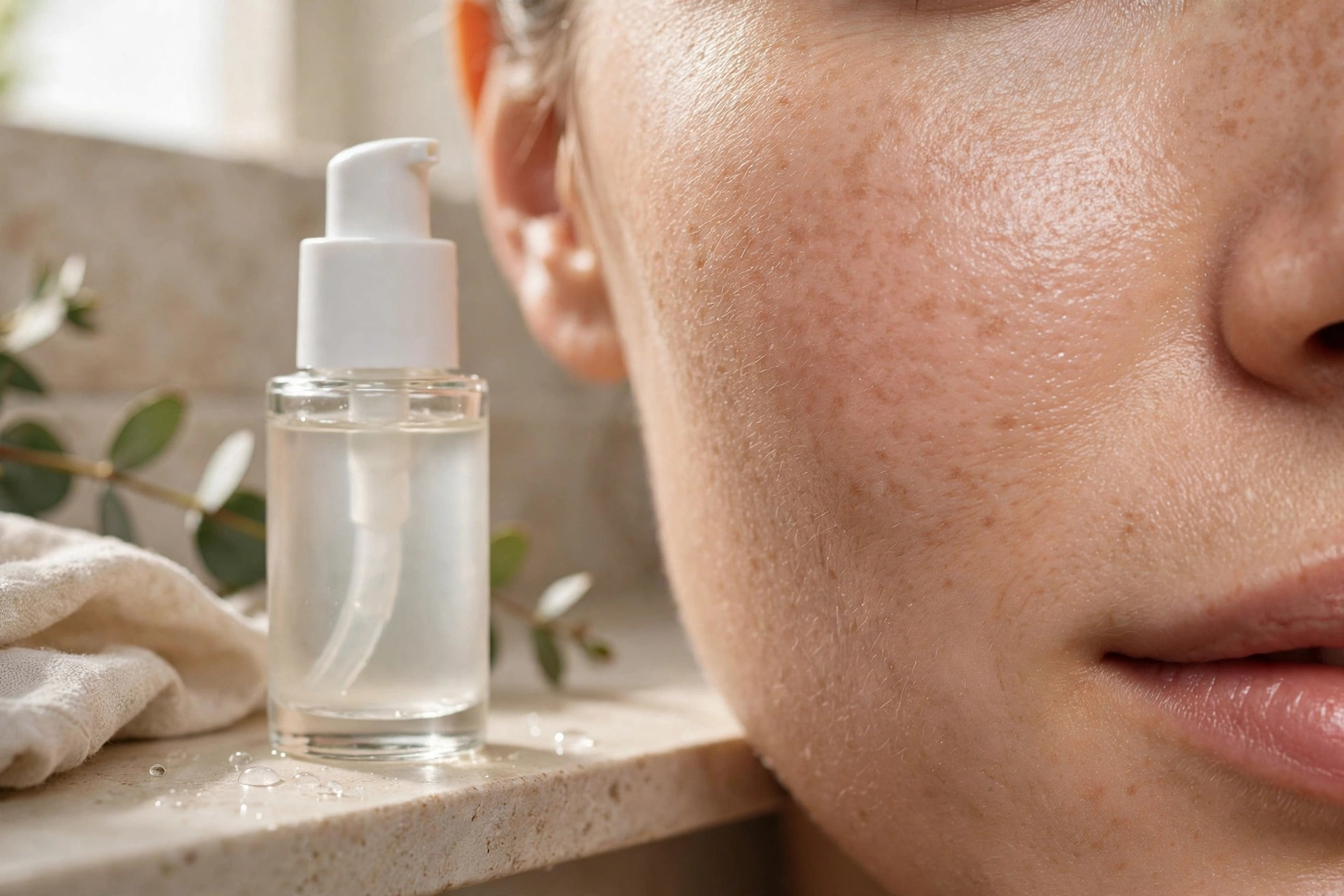
Tranexamic Acid for Dark Spots and Melasma: The Complete UK Guide (2026)
Tranexamic acid fades melasma and dark spots by blocking pigment signals. How it works, which % to use, layering rules and the best UK products.
Read More arrow_forwardCan you use tranexamic acid and niacinamide together? Yes — this UK guide covers the order, percentages, AM/PM routine and best £ product picks.
If your bathroom shelf already holds a niacinamide serum and a tranexamic acid product, you've probably wondered: can you use tranexamic acid and niacinamide together, or is this one of those combinations that cancels out or irritates your skin? The short answer is yes — not only can you use them together, but dermatologists increasingly consider this duo one of the most effective over-the-counter combinations for fading dark spots, melasma patches, and post-inflammatory hyperpigmentation (PIH), precisely because each ingredient attacks pigmentation through a completely different biological pathway.
Niacinamide works on the surface-to-mid levels of skin: it interrupts the transfer of melanin (pigment) from pigment-producing cells (melanocytes) into the surrounding skin cells (keratinocytes), so even when pigment is made, less of it shows up on your skin's surface. Tranexamic acid works further upstream — it calms the inflammatory signalling in the skin that tells melanocytes to produce excess pigment in the first place. In simple terms, niacinamide stops pigment from showing, while tranexamic acid tells the skin to make less of it. Together, they cover two separate steps of the same problem.
This guide is written for the UK shopper: £ prices, Boots, Superdrug, Cult Beauty and Space NK availability, and realistic routines that work in a British climate. We'll cover the correct order of application, ideal percentages, wait times, how to combine the duo with vitamin C and sunscreen, who should avoid the pairing, and a detailed FAQ. If you're new to tranexamic acid as an ingredient, start with our primer on tranexamic acid for dark spots and melasma in the UK before diving into combinations.
Yes, absolutely. Unlike some famous clashes in skincare — vitamin C with benzoyl peroxide, or retinoids with strong AHAs for beginners — there is no chemical incompatibility between niacinamide (vitamin B3) and tranexamic acid. They don't destabilise each other, they don't form irritating by-products, and they don't have conflicting pH requirements that would make layering them ineffective.
The science is genuinely complementary. Tranexamic acid is a synthetic derivative of the amino acid lysine. In dermatology, it was first used systemically (as oral medication) for melasma, where randomised trials showed meaningful improvement in stubborn melasma — this research is summarised in dermatology literature hosted on resources like the British Association of Dermatologists' patient information at bad.org.uk, which discusses melasma and its treatment options. When used topically, tranexamic acid inhibits plasmin — an enzyme involved in inflammation and in the signalling between skin cells that triggers excess melanin production. It's particularly noted for melasma, which is often driven by hormonal and UV-triggered inflammation rather than simple surface pigment.
Niacinamide, meanwhile, is one of the most studied topical ingredients in cosmetic dermatology. Its best-documented anti-pigmentation mechanism is blocking the transfer of melanosomes (the tiny pigment packages) from melanocytes to keratinocytes. Clinical studies — including research referenced in dermatology reviews — have shown that 4–5% niacinamide can reduce hyperpigmentation and improve skin tone, with results comparable in some studies to 4% hydroquinone (a prescription ingredient) but with far better tolerability. For a deeper dive into niacinamide on its own, read our niacinamide serum benefits guide.
The takeaway: tranexamic acid reduces the signal for pigment production; niacinamide reduces the delivery of whatever pigment is produced. Used together consistently for 8–12 weeks, they tackle dark spots from both ends — which is exactly why this pairing has become a favourite brightening routine among UK skincare enthusiasts dealing with melasma, sun spots, and acne marks.
Understanding the "why" helps you use the duo correctly and set realistic expectations.
Tranexamic acid targets the plasminogen/plasmin pathway in the skin. UV radiation and inflammation activate plasmin, which in turn increases the interaction between keratinocytes and melanocytes — essentially, damaged or inflamed skin cells send "produce more pigment" signals to melanocytes. By inhibiting plasmin, tranexamic acid quiets this inflammatory conversation. It's also been shown to reduce vascular components of melasma (the redness and blood-vessel involvement seen in some melasma patches) and to strengthen the skin barrier, which further reduces irritation-triggered pigmentation. Most topical formulas use 2–3% tranexamic acid, which research suggests is effective for melasma and PIH with excellent tolerability.
Niacinamide works primarily by inhibiting the transfer of melanosomes from melanocytes to keratinocytes — a step dermatologists call "melanosome transfer inhibition." If melanin can't move into the visible surface cells, the skin looks brighter and more even even though pigment is still being made deeper down. Niacinamide also strengthens the skin barrier (by boosting ceramide production), reduces inflammation, regulates sebum, and provides antioxidant protection. Effective concentrations for brightening typically start at 4–5%, with 10% being the most common level in UK high-street serums. Higher isn't always better — 10% niacinamide can cause flushing or irritation in sensitive skin, so 4–5% is often the sweet spot for a brightening routine.
Because melasma and dark spots are driven by multiple overlapping pathways — inflammation signalling and pigment transfer and UV damage — targeting a single pathway often gives incomplete results. The tranexamic acid + niacinamide combination is one of the few over-the-counter pairings that addresses two distinct steps of melanogenesis without the irritation profile of prescription options like hydroquinone or tretinoin. This is also why you'll increasingly see both ingredients formulated into the same serum: they play well together even in a single bottle.
With layering, the golden rule is thinnest to thickest texture, but with these two ingredients there's also a functional logic: apply the product targeting the deeper signalling first, then seal in the transfer-blocking step — though in practice, if you're using two separate serums, texture order matters more than any theoretical hierarchy.
Cleanse — use your normal cleanser. If you wear sunscreen and makeup, a proper double cleansing routine ensures your brightening serums actually penetrate.
Apply the thinner serum first. Most tranexamic acid serums are lightweight, watery fluids; most niacinamide serums are slightly more viscous. In most cases that means tranexamic acid first, niacinamide second — but check your specific products. Thinnest always goes first regardless of which ingredient it contains.
Wait 60–90 seconds between layers. You don't need the 20-minute wait times that strong acids sometimes demand. A minute or so is enough for the first layer to absorb so the second doesn't pill.
Moisturise to lock everything in. A ceramide-rich moisturiser supports the barrier, which matters because a compromised barrier worsens hyperpigmentation — barrier repair should come before any brightening actives.
Morning only: finish with SPF 30+. This is non-negotiable (more below).
Several UK-available products now contain both ingredients in one formula (usually around 2–3% tranexamic acid plus 4–10% niacinamide). With these, just apply once after cleansing and before moisturiser. This is the simplest and often most cost-effective route, and it removes any guesswork about order and wait times. Our best niacinamide serums UK 2026 roundup notes which options include tranexamic acid alongside niacinamide.
You may have read that you must wait 15–30 minutes between active ingredients. For this duo, that's overkill. Both ingredients are well tolerated, non-acidic in the exfoliating sense (tranexamic acid is an amino acid derivative, not an exfoliating acid), and neither causes the pH conflicts that demand long waits. A brief 60–90 second pause for absorption is plenty. Save your patience for ingredients that actually need it, like prescription retinoids.
More isn't always better with brightening ingredients — consistency beats concentration.
Niacinamide: 4–10%. The clinical brightening evidence clusters around 4–5%, and 10% is the high-street standard. If your skin is sensitive or you're new to niacinamide, start at 4–5% and step up only if you tolerate it well and want more sebum control. Signs you've gone too high: flushing, warmth, or a prickly sensation shortly after application.
Tranexamic acid: 2–3%. This is the range used in most published topical research and in UK high-street formulas. There's little evidence that going higher improves results, and higher concentrations can be harder to formulate elegantly.
Introducing the duo: If you're new to both, introduce them one at a time, a week apart, so that if irritation occurs you know which product caused it. Start using the combination once daily (evenings are easiest), then move to twice daily if your skin is happy after 2–3 weeks.
Timeline: Brightening ingredients are slow. Expect visible fading of dark spots in 8–12 weeks of consistent twice-daily use. Melasma — especially dermal (deeper) melasma — can take 3–6 months. Take a photo in the same lighting every two weeks so you can track progress objectively; day-to-day mirror checks are unreliable.
A sample morning routine built around the duo:
Gentle cleanser — a mild gel or cream cleanser; no need for a harsh exfoliating wash in the morning.
Tranexamic acid serum (2–3%) — apply to slightly damp skin.
Niacinamide serum (4–10%) — or use a single combined serum in place of steps 2–3.
Moisturiser — lightweight for oily skin, richer for dry skin.
Sunscreen SPF 30–50 — the most important step in any brightening routine. UV exposure actively reverses every bit of fading progress you make, and melasma is notoriously UV-triggered — even brief incidental exposure through windows or on cloudy days counts. Choose a broad-spectrum formula you'll actually wear daily; our comparison of the best sunscreens 2026: mineral vs chemical covers UK-available options for every skin type.
Can you use the duo with vitamin C in the morning? Yes — vitamin C is another excellent brightening antioxidant and there's no conflict with either niacinamide or tranexamic acid (the old myth about niacinamide + vitamin C forming irritating nicotinic acid only applies at extreme heat and very low pH, not in modern cosmetic formulations). If you want all three, the cleanest approach is: vitamin C first (thinnest, most pH-dependent), then tranexamic acid, then niacinamide — or alternate vitamin C in the morning and the brightening duo at night. If layering three serums feels like too much, try azelaic acid and vitamin C together as an alternative morning combination and keep tranexamic acid + niacinamide for evenings — you can explore vitamin C serum options separately.
Evenings are when most people prefer their brightening routine, since there's no sunscreen step to work around and skin does much of its repair overnight:
Double cleanse — oil-based cleanser or balm first, then a water-based cleanser, especially if you wore sunscreen and makeup.
(Optional) exfoliant, 2–3 nights per week — a gentle AHA or PHA can help brightening ingredients penetrate, but don't use strong exfoliating acids on the same night you introduce the duo for the first time. Once your skin is used to everything, alternating nights works well.
Tranexamic acid serum, then niacinamide serum (or one combined serum) — same order as the morning.
Moisturiser — slightly richer than your daytime one if your skin is dry.
(Optional) facial oil — as a final occlusive layer for dry skin types.
Can you use the duo with retinol at night? Yes, with care. Retinol accelerates cell turnover, which helps fade pigmentation faster, and niacinamide actually supports the skin barrier against retinoid irritation — they're a well-regarded pairing. The safest method is to use retinol on alternate nights from your brightening duo while your skin adjusts, then combine them on the same night (brightening serums first, retinol after, or retinol sandwiched between moisturiser layers) once tolerance is established. If you experience stinging, redness, or peeling, scale back to alternate nights.
For most skin types this is one of the gentlest brightening pairings available — but it's not for everyone:
Very sensitive or reactive skin: Introduce one product at a time with patch tests. Niacinamide at 10% can cause flushing in sensitive skin; a 4–5% formula or a combined serum with moderate levels is a safer start.
Broken, eczema-flare, or freshly treated skin: Don't apply brightening actives to compromised skin — repair the barrier first.
Pregnancy: Topical niacinamide is generally considered safe in pregnancy. Topical tranexamic acid has limited safety data in pregnancy — most dermatologists advise caution simply because robust studies don't exist. If you're pregnant and dealing with melasma (very common — it's often called the "mask of pregnancy"), discuss options with your GP or dermatologist; the NHS melasma guidance via nhs.uk is a good starting point for understanding the condition.
Known niacinamide sensitivity: A small number of people react to niacinamide with persistent redness or itching. If you've reacted before, this duo isn't for you — consider alternative brightening routes such as alpha arbutin instead.
Unrealistic expectations about deep melasma: Topical ingredients, however well combined, have limits with deep dermal melasma. If 3–4 months of consistent use shows no improvement, see a dermatologist — prescription options or in-clinic treatments may be needed.
You have two buying strategies: a single combined serum (simplest, cheapest) or two separate serums (more control over percentages).
Budget high-street options (£8–£15): Several UK high-street brightening serums now pair niacinamide with tranexamic acid at effective percentages — check the Superdrug and Boots own-brand and affordable skincare aisles, where brightening serums with both actives typically sit in the £8–£15 range. These are the best value entry point if you're testing whether the duo suits your skin.
Mid-range (£15–£30): Cult Beauty and Space NK stock multiple dermatologist-founded brightening serums combining 2–3% tranexamic acid with 5–10% niacinamide, often with added brightening supporters like alpha arbutin or vitamin C derivatives. Expect to pay £20–£30 for 30ml.
What to check on the label: tranexamic acid (or "tranexamoyl" derivatives) in the 2–3% range, niacinamide at 4%+, fragrance-free if you're sensitive, and packaging that protects the formula (pump or dropper bottle, not a jar).
Niacinamide serum: The Ordinary Niacinamide 10% + Zinc 1% (~£6, Boots/Superdrug) remains the UK's best-selling niacinamide serum — unbeatable value, though 10% can flush sensitive skin. For a gentler 5% option, look to CeraVe, La Roche-Posay, or Paula's Choice lines stocked at Boots (£15–£35).
Tranexamic acid serum: Dedicated tranexamic acid serums are now widely available at UK retailers in the £10–£25 range — The Inkey List and The Ordinary both offer tranexamic-focused formulas stocked at Boots, Superdrug and Cult Beauty. Look for 2–3% tranexamic acid, ideally with supporting brighteners.
Total routine cost: A separate-serum routine can be built for under £20; a premium combined serum plus a good sunscreen keeps the whole brightening routine under £50.
Budget £10–£20 for a daily broad-spectrum SPF 30–50 you'll actually enjoy wearing — Garnier Ambre Solaire, La Roche-Posay, and Eucerin all have UK high-street options. Without daily sunscreen, no brightening ingredient combination can deliver lasting results.
Sunscreen is half the treatment. Every dermatologist will tell you: the best brightening serum in the world fails without daily SPF. UV is the primary driver of melasma and dark spots — treat sunscreen as part of the duo, making it a trio.
Be consistent for 12 weeks minimum. Brightening is measured in months, not days. Set a calendar reminder to assess at week 8 and week 12.
Don't stack every brightening ingredient at once. Tranexamic acid + niacinamide + vitamin C + alpha arbutin + azelaic acid all in one routine is a recipe for irritation, not faster results. Pick your duo, add vitamin C or an exfoliant thoughtfully, and give the routine time.
Photograph your progress. Same lighting, same angle, every two weeks. Subtle fading is invisible day-to-day but obvious across eight weeks of photos.
Treat the cause too. If your dark spots are post-acne marks, keep breakouts under control; if it's melasma, strict sun protection (including a hat in strong sun) matters as much as any serum.
Store serums properly. Keep them in a cool, dark place — a bathroom cabinet away from the shower's heat and humidity is fine; the fridge isn't necessary.
Patch test new combinations. Even gentle ingredients can surprise you. Test behind the ear or along the jawline for 24–48 hours before full-face use.
Yes. Both ingredients are gentle enough for twice-daily use once your skin is accustomed to them. Start once daily for the first 1–2 weeks, then increase to morning and evening if there's no irritation.
Apply the thinner-textured serum first, which in most product pairings is the tranexamic acid serum. If you're using a combined serum containing both, order doesn't matter — just apply it after cleansing and before moisturiser.
Expect visible fading of dark spots in 8–12 weeks of consistent twice-daily use. Melasma often takes 3–6 months. Brightening ingredients work gradually by interrupting pigment production cycles, so patience and sunscreen are essential.
Yes — there's no incompatibility. Layer vitamin C first (it's the most pH-sensitive), then tranexamic acid, then niacinamide; or use vitamin C in the morning and the brightening duo at night to keep routines simple.
Yes, with a gradual introduction. Niacinamide actually helps buffer retinoid irritation. Start by alternating nights (retinol one night, brightening duo the next), then combine on the same night once your skin tolerates it.
Topical tranexamic acid at 2–3% is generally very well tolerated, even by sensitive skin types. Niacinamide is the more likely irritant of the two — if you're sensitive, choose a 4–5% niacinamide formula rather than 10%, and patch test first.
It's one of the best over-the-counter approaches for melasma, because tranexamic acid specifically targets the inflammatory signalling involved in melasma while niacinamide blocks pigment transfer. However, deep dermal melasma may not fully respond to topicals — see a dermatologist if 3–4 months of diligent use shows no improvement, and be rigorous with sunscreen regardless.
Absolutely. Sunscreen isn't about when you apply your serums — it's about protecting your skin from the UV exposure that creates and darkens pigmentation in the first place. Daily broad-spectrum SPF 30+ is mandatory for any brightening routine to work.
Yes, you can use tranexamic acid and niacinamide together — they're chemically compatible and biologically complementary.
Two pathways, one goal: tranexamic acid calms the inflammatory signals that trigger excess pigment production; niacinamide blocks the transfer of pigment into visible skin cells.
Order: thinnest serum first (usually tranexamic acid, then niacinamide), 60–90 seconds between layers, moisturiser, then SPF in the morning.
Percentages: 2–3% tranexamic acid and 4–10% niacinamide are the evidence-backed ranges; start lower if you're sensitive.
Timeline: 8–12 weeks for dark spots, 3–6 months for melasma — with daily sunscreen throughout.
Compatible with vitamin C and retinol when introduced gradually; alternate nights at first if your skin is reactive.
UK shoppers can build the full routine for under £20 (high-street separate serums) or £20–£50 (combined serums + sunscreen) at Boots, Superdrug, Cult Beauty and Space NK.
Sunscreen is non-negotiable — without daily SPF, no brightening combination can deliver lasting results.
Tranexamic acid and niacinamide together form one of the smartest, gentlest brightening combinations available on the UK high street. Where single ingredients target one step of pigmentation, this duo covers two: tranexamic acid quietens the inflammatory signals telling your skin to overproduce pigment, while niacinamide stops whatever pigment is made from reaching the surface. The result is a routine that's effective against dark spots, post-acne marks, and melasma — without the irritation or prescription requirements of harsher alternatives.
The formula for success is simple: the right order (thinnest first), the right percentages (2–3% tranexamic acid, 4–10% niacinamide), twelve weeks of consistency, and — above all — daily sunscreen. Get those four things right, and this duo earns its place as the backbone of your brightening routine. For more ingredient-combination guides in this series, explore our azelaic acid and vitamin C layering guide and our primer on tranexamic acid for dark spots and melasma.
Tranexamic acid fades melasma and dark spots by blocking pigment signals. How it works, which % to use, layering rules and the best UK products.
Read More arrow_forward
Yes, azelaic acid and vitamin C work great together. UK guide to layering order, AM/PM routines, the best £ products and who should skip this duo.
Read More arrow_forward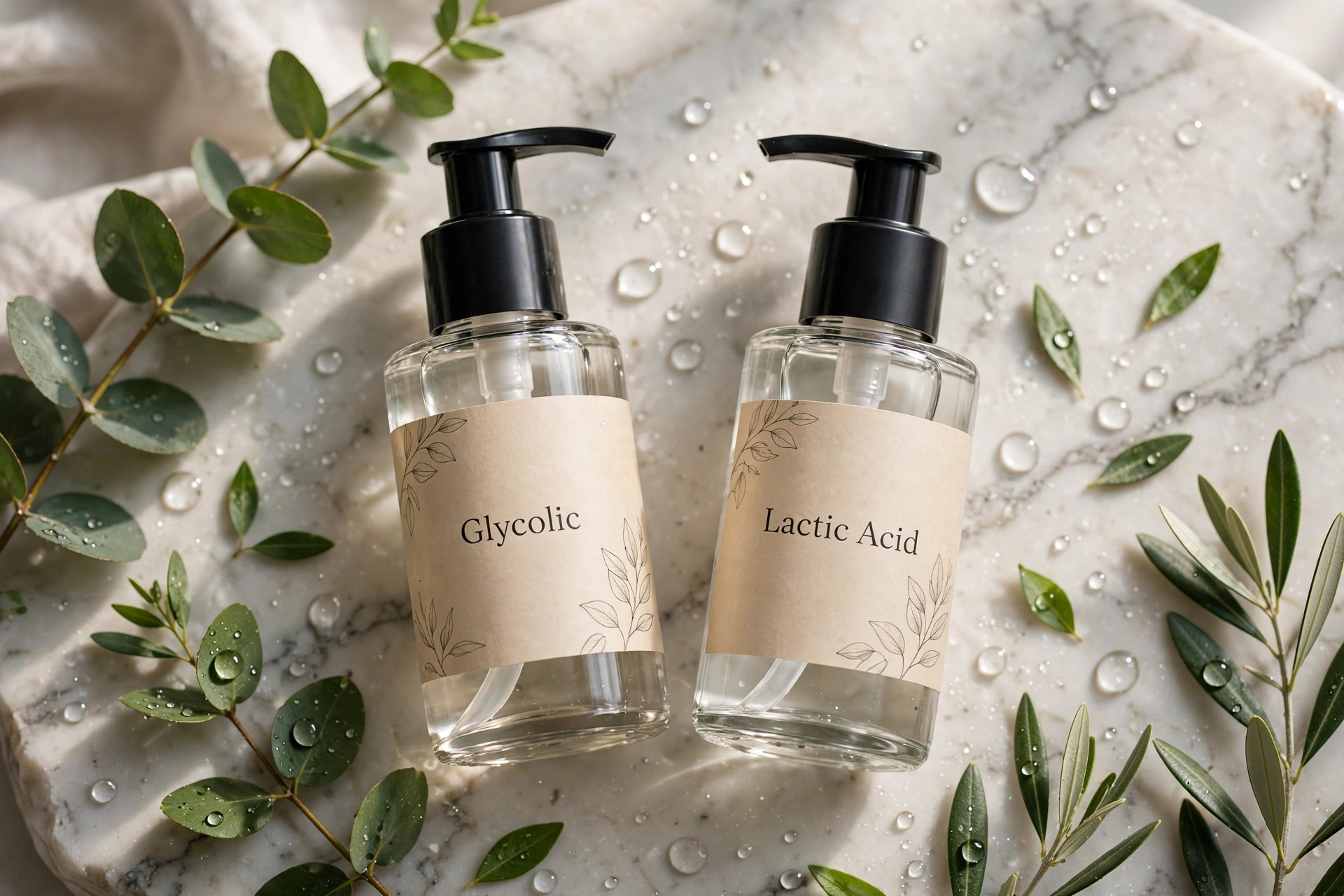
Glycolic acid vs lactic acid — which AHA is right for your skin? Our UK guide compares strength, skin types, best percentages and top UK products.
Read More arrow_forwardCalculate your Body Mass Index (BMI) in seconds. BMI is a quick screening number…
Use now arrow_forwardFind your daily calorie needs based on your age, sex, height, weight and activit…
Use now arrow_forwardFind how much water you should drink each day, in litres and glasses, based on y…
Use now arrow_forward