Best Pregnancy Safe Moisturiser for Dry Skin UK: 7 Gentle Picks
Seven gentle, pregnancy-safe moisturisers for dry skin, with UK prices, ingredients to avoid, and a calm daily routine.
Read More arrow_forward7 gentle fragrance-free sunscreens for sensitive skin in the UK, with mineral picks, prices, and advice on choosing SPF without stinging or white cast.
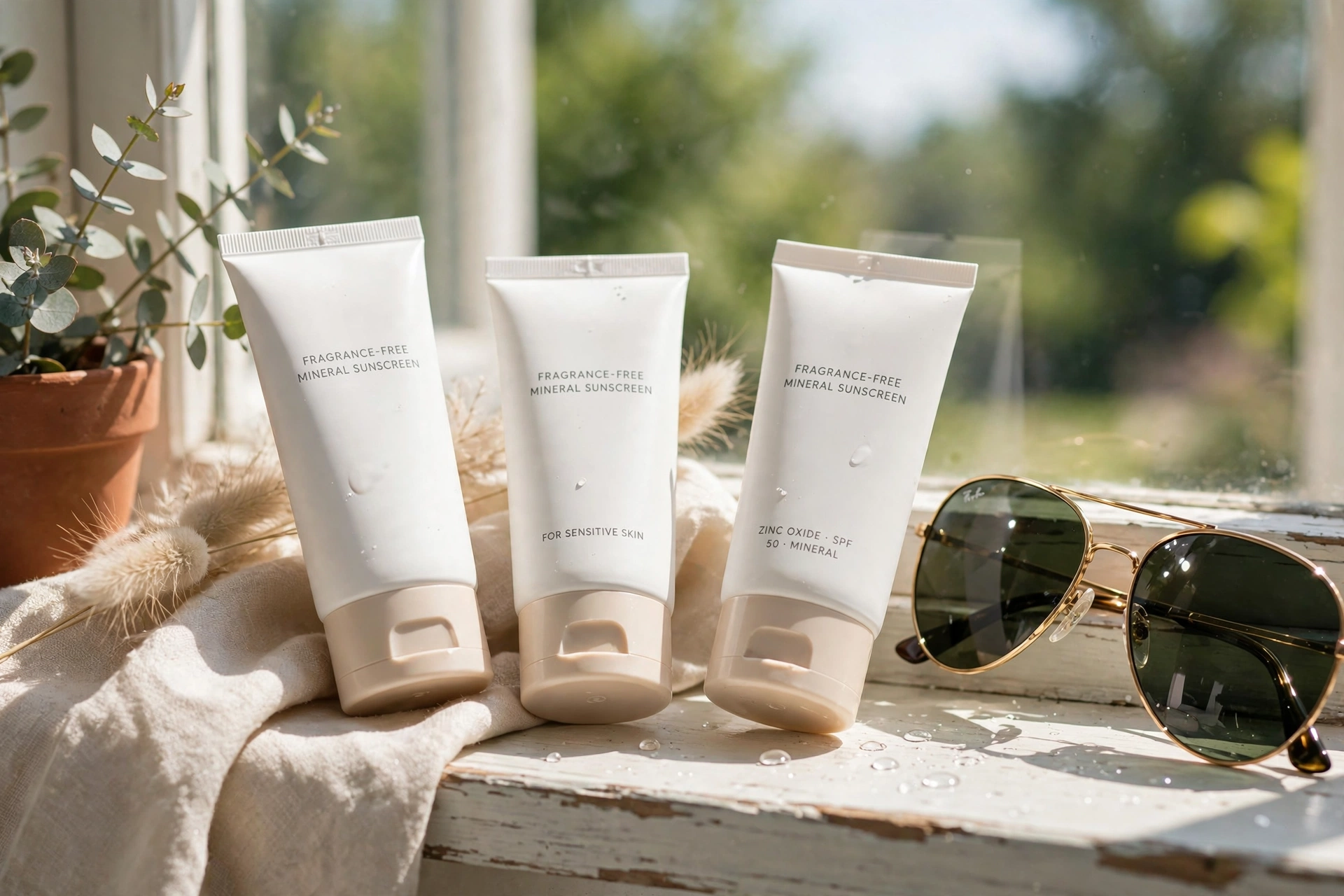
Finding sunscreen that does not sting, itch or trigger redness can feel harder than finding a moisturiser that works. Many sunscreens contain fragrance, drying alcohol or chemical filters that sensitive skin simply cannot tolerate, and a product that is fine on the body may be unbearable on the face. This guide solves that problem directly. It explains how to choose the best fragrance free sunscreen for sensitive skin uk, compares mineral and chemical options honestly, and recommends seven gentle, fragrance-free picks you can actually buy in the UK, with prices, textures and who each one suits best.
Sensitive skin is not a medical diagnosis, but it describes a very real experience: skin that reacts quickly to products, weather, heat and friction with stinging, redness, dryness or spots. Sunscreen is essential for everyone, and especially important if you have rosacea, eczema, acne-prone skin, or you use treatments such as retinoids or azelaic acid that increase sun sensitivity. The challenge is to get reliable SPF 30 or SPF 50 protection without the irritation. Fragrance-free mineral formulas are often the safest starting point, but they are not the only option, and the best choice depends on your skin type, your budget and whether you wear makeup.
UK rules also help you here. Sunscreens sold in the UK must meet strict safety and labelling rules, and SPF and UVA ratings are standardised, so you can compare products with more confidence than in some other markets. Look for SPF 30 as a minimum for daily use, SPF 50 for long outdoor days, holidays or if you are using sun-sensitising treatments, and a UVA rating of four or five stars or a circled UVA symbol. Broad-spectrum protection matters more than chasing SPF 100, which offers only a small extra benefit and can encourage people to reapply less often.
## How to Choose the Best Fragrance Free Sunscreen for Sensitive Skin UK
Start with the filter type. Mineral sunscreens use zinc oxide, titanium dioxide, or both. They sit on the surface of the skin and scatter UV light, and they are generally the least irritating option for sensitive, rosacea-prone or eczema-prone skin. Their main drawback used to be a white cast, especially on deeper skin tones, but newer tinted and micronised formulas are much better. If you have dark skin and worry about white cast, read our guide to the [best sunscreen for dark skin with no white cast](https://www.glowmagzine.com/blog/best-sunscreen-dark-skin-no-white-cast-uk/) alongside this one, because several of the picks there are also fragrance-free.
Chemical sunscreens use filters such as avobenzone, octocrylene or bemotrizinol that absorb UV light. They tend to feel lighter, leave no white cast, and sit beautifully under makeup. Some people with sensitive skin tolerate modern chemical filters perfectly well, while others find them stinging, especially around the eyes. If you have reacted to chemical sunscreens before, start with mineral. If mineral formulas feel too heavy for you, try a fragrance-free hybrid or a modern chemical sunscreen with newer, gentler filters, and patch test it on the jawline first.
Next, check the full ingredients list, not just the front of the tube. Fragrance-free should mean no parfum, no perfume, and no fragrant essential oils such as lavender, citrus or peppermint oil. Alcohol denat high up the list can be drying, although not all alcohols are irritating; fatty alcohols such as cetyl alcohol are actually moisturisers. Also watch for preservatives and fragranced plant extracts that can irritate reactive skin. A short, simple ingredients list is usually a good sign, although a longer list is not automatically bad if the ingredients are soothing and well chosen.
Texture and finish matter for daily use, because the best sunscreen is the one you will wear every day. Oily skin often prefers a light gel-cream or fluid. Dry skin usually prefers a cream with added glycerin, ceramides or squalane. Combination skin may prefer a fluid in summer and a cream in winter. If you wear makeup, choose a sunscreen that dries down without pilling and does not make foundation slide. Apply two finger-lengths of product for the face and neck, allow it to settle for a few minutes, and reapply every two hours outdoors, after swimming, sweating or towelling off.
Finally, think about where you will buy it and whether you can repurchase easily. A sunscreen that is only available from one overseas website is hard to stick with. All the picks below are available from UK retailers such as Boots, Superdrug, Cult Beauty or the brand's UK website, so you can test textures in store where possible and reorder without import delays. Prices given are typical UK retail prices at the time of writing and may vary with offers.
## The 7 Best Fragrance Free Sunscreen for Sensitive Skin UK Picks
### 1. La Roche-Posay Anthelios UVMune 400 Invisible Fluid SPF50+
This is the sunscreen dermatologists recommend most often for sensitive skin in the UK, and for good reason. The Invisible Fluid is fragrance-free, very high protection, and remarkably light for an SPF50+ product. It uses modern chemical filters, including Mexoryl 400, for excellent UVA protection, and it dries down without a white cast on most skin tones. It works well under makeup and does not pill over a simple moisturiser.
It suits normal, combination and oily sensitive skin particularly well, and people who hate the heavy feel of mineral creams often love this texture. It costs around £19 to £21 for 50ml at Boots and Superdrug, although it is frequently on offer. The main caution is that a small number of people with very reactive skin or eye sensitivity still prefer mineral, so patch test around the eyes first. If you tolerate it, this is an excellent everyday default.
### 2. CeraVe Hydrating Mineral Sunscreen SPF30 or SPF50
CeraVe is a pharmacy favourite for sensitive skin because its formulas include ceramides and niacinamide alongside sun protection. Its mineral sunscreens are fragrance-free, non-comedogenic, and designed to support the skin barrier rather than strip it. The SPF30 face version is lighter and easier to wear daily, while the SPF50 version offers stronger protection for holidays and long outdoor days.
Texture is a true cream, so dry and normal sensitive skin tends to like it most. It can leave a slight white cast on deeper skin tones, so blend carefully and consider the tinted version if available. Prices are typically £14 to £17 for 50ml at Boots. If you already use CeraVe moisturisers, this is a natural next step, and it pairs well with a simple routine for barrier health, as explained in our guide on [how to repair a damaged skin barrier](https://www.glowmagzine.com/blog/how-to-repair-damaged-skin-barrier-uk/).
### 3. Eucerin Oil Control Sun Gel-Creme SPF50+
Eucerin's fragrance-free Sun Oil Control range is made for oily, acne-prone and sensitive skin that still needs high protection. The gel-creme texture is light, mattifying without being drying, and it absorbs quickly, which makes it a strong choice if heavier sunscreens make you break out or look shiny by midday. It is also non-comedogenic, so it is less likely to clog pores.
This pick suits oily and combination sensitive skin, teenagers and adults with acne-prone skin, and anyone who wants SPF50+ without a greasy finish. Expect to pay around £13 to £16 for 50ml at Boots and Superdrug. If your skin is very dry, this may feel too mattifying in winter, in which case a cream formula from this list will suit you better.
### 4. Avene Very High Protection Mineral Fluid SPF50+
Avene is a French pharmacy brand with a long history in sensitive skincare, and its mineral fluid is one of the gentlest high-protection options available in the UK. It is fragrance-free, uses mineral filters, and includes the brand's thermal spring water, which many people with reactive skin find soothing. The fluid texture spreads easily and is less thick than many mineral creams.
It suits rosacea-prone, eczema-prone and generally reactive skin, including skin that stings with chemical filters. The finish is slightly dewy rather than matte, which dry and normal skin usually enjoys. Prices are around £18 to £22 for 40ml at Boots. If you have rosacea, combine this with the advice in our [winter skincare routine for sensitive skin](https://www.glowmagzine.com/blog/winter-skincare-routine-for-sensitive-skin-uk/), which explains how sunscreen fits into a calm cold-weather plan.
### 5. Bondi Sands Fragrance Free Sunscreen Face SPF50+
Bondi Sands is best known for tanning, but its fragrance-free face sunscreen is a genuine budget winner for sensitive skin. It is fragrance-free, SPF50+, and designed for daily facial use without the heavy, greasy feel that budget sunscreens sometimes have. It is widely available at Boots and Superdrug, which makes it easy to repurchase and easy to try without a large investment.
Texture is a light cream that works for normal to combination skin and sits reasonably well under makeup. It costs around £7 to £9 for 75ml, making it one of the best value fragrance-free options in the UK. The trade-off is that very reactive skin may still prefer a pharmacy mineral formula, so patch test first if your skin is extremely sensitive. For most sensitive skin, however, this is an excellent affordable daily sunscreen.
### 6. Ultra Violette Lean Screen SPF50+
Ultra Violette is an Australian brand now widely stocked at Cult Beauty and other UK retailers, and Lean Screen is its mineral sunscreen for sensitive skin. It is fragrance-free, uses zinc oxide, and has a soft matte finish that many people prefer to the dewy finish of other mineral products. It also contains skin-soothing ingredients and is designed to work as a makeup primer.
It suits normal, combination and oily sensitive skin, and people who want a mineral sunscreen that does not look or feel like a traditional sun cream. The price is higher, around £34 for 50ml at Cult Beauty, so it is a premium pick rather than a budget staple. If you love a matte, primer-like finish and you have reacted to chemical filters, this is worth the investment. If budget is the priority, the pharmacy picks above give similar protection for less.
### 7. Nivea Sun Sensitive Protect Face SPF50
Nivea Sun Sensitive is another affordable pharmacy option that is easy to overlook but very reliable for sensitive skin. The face version is fragrance-free, SPF50, and formulated without perfume or colourants. It is a cream texture that spreads easily, does not sting most eyes, and is widely available at Boots, Superdrug and supermarkets across the UK.
It suits dry, normal and sensitive skin, and families who want one gentle face sunscreen that everyone can share. Prices are typically £6 to £9 for 50ml, which makes it one of the cheapest fragrance-free SPF50 face products in the UK. It can feel slightly richer than a fluid, so oily skin may prefer the Eucerin gel-creme above, but for dry sensitive skin in winter it is an excellent, low-risk choice.
## Mineral Versus Chemical: Which Is Really Better for Sensitive Skin?
There is no single winner, only a better starting point for your skin. Mineral sunscreens are usually better tolerated by rosacea-prone, eczema-prone and very reactive skin, because zinc oxide and titanium dioxide are less likely to cause stinging or allergic reactions. They also start working immediately on application, whereas chemical sunscreens need around twenty minutes to become fully effective. Their disadvantages are texture and white cast, although modern formulas have improved greatly.
Chemical sunscreens win on cosmetic elegance. They are lighter, invisible on deeper skin tones, and easier to layer under makeup. Modern filters such as bemotrizinol, Mexoryl and Uvinul are more stable and less irritating than older filters, and many fragrance-free chemical sunscreens are perfectly suitable for sensitive skin. Their disadvantages are a higher chance of eye stinging and a small risk of reaction in very reactive individuals.
A practical approach is to start with mineral if you have rosacea, eczema, or a history of reactions, and start with a fragrance-free modern chemical fluid if your main problem is texture, white cast or makeup compatibility. Patch test any new sunscreen on the jawline and around one eye for three days before full-face use. If it stings, switch filter type rather than giving up on sunscreen altogether. Protection matters too much to skip.
## How to Apply Sunscreen Without Irritating Sensitive Skin
Application technique can make as much difference as the product itself. Apply sunscreen as the last step of your morning routine, after moisturiser and before makeup. Use two finger-lengths for the face and neck, which is roughly a teaspoon for the face alone. Most people apply far too little, which dramatically reduces the protection they actually get, even with SPF50 on the label.
Dot the product around the face and spread gently with fingertips, rather than rubbing vigorously. Allow it to dry for a few minutes before applying makeup, and avoid pulling or tugging around the eyes. If sunscreen stings your eyes, try a mineral formula, apply a slightly smaller amount very close to the lash line, or use a separate eye-area product. Sunglasses and a hat are also part of sun protection, not extras, especially for sensitive eyes and rosacea-prone cheeks.
Reapplication is where many routines fail. Outdoors, reapply every two hours, and immediately after swimming, heavy sweating or towelling. A cushion compact, spray or powder sunscreen can help over makeup, but a liquid reapplication is more reliable when you are not wearing makeup. In UK winter, one morning application is often enough for a mostly indoor day, but reapply if you spend lunch outdoors, go for a long walk, or sit near a bright window for hours.
For winter-specific advice, our guide to the best winter skincare routine for rosacea-prone skin explains how to layer sunscreen over a richer moisturiser without pilling, and our guide to the [best vitamin C serum for sensitive skin](https://www.glowmagzine.com/blog/best-vitamin-c-serum-for-sensitive-skin-uk/) covers morning antioxidant use under sunscreen. If you use vitamin C, niacinamide or azelaic acid, sunscreen becomes even more important, because those ingredients can increase sun sensitivity or are used to treat sun-related pigmentation.
## Common Mistakes That Make Sensitive Skin React to Sunscreen
The most common mistake is choosing a fragranced sunscreen because it smells pleasant or looks premium. Fragrance is one of the most frequent causes of cosmetic reactions, and it has no protective benefit. Always choose fragrance-free for the face if your skin is sensitive, even if the scented version is on offer. The same applies to essential oils marketed as natural; lavender, citrus and tea tree oils can all irritate sensitive skin.
Another mistake is applying sunscreen over a strong active product that is already irritating the skin, then blaming the sunscreen. If you have just started retinol, a strong acid or a new vitamin C serum, your skin may be more reactive to everything. Pause new actives, return to a simple routine, and reintroduce sunscreen testing when skin is calm. Our ingredient guide on niacinamide and vitamin C together explains how to layer actives without increasing sensitivity.
Using too little product, skipping the neck and ears, and forgetting to reapply are also common. So is using an old sunscreen that has been open for years or stored in a hot car. Check the period-after-opening symbol, usually twelve months, and replace sunscreens that smell unusual, have separated, or are past expiry. Sun protection is not the place to save money by using a degraded product.
For trustworthy background, the [British Association of Dermatologists guidance on sunscreen](https://www.bad.org.uk/) explains SPF, UVA ratings and application amounts, and [NHS advice on sunscreen and sun safety](https://www.nhs.uk/live-well/seasonal-health/sunscreen-and-sun-safety/) covers how to choose and use sunscreen in the UK. If you have a skin condition, a history of skin cancer, or you take medication that increases sun sensitivity, ask your GP or dermatologist for personalised advice.
## Frequently Asked Questions
### What SPF should sensitive skin use every day in the UK?
SPF30 is the minimum for daily use, and SPF50 is better if you spend time outdoors, have fair skin, use retinoids or acids, or have rosacea or pigmentation concerns. The difference between SPF30 and SPF50 in lab conditions is smaller than many people expect, but in real life, where most people under-apply, SPF50 gives a useful safety margin.
### Are mineral sunscreens always better for sensitive skin?
Usually, but not always. Mineral filters are less likely to sting or cause allergic reactions, so they are the safest starting point for rosacea, eczema and very reactive skin. Some people still prefer a modern fragrance-free chemical sunscreen for texture or white cast reasons, and that is fine if patch testing shows you tolerate it well.
### Why does sunscreen sting my eyes?
Eye stinging is common with chemical filters and with fragranced formulas, and it can also happen if product migrates with sweat or tears. Try a mineral sunscreen, avoid applying product directly on the eyelids, wear sunglasses outdoors, and blot rather than rub if sweating. If eye stinging is severe or persistent, see your GP or an eye specialist.
### Can I use fragrance-free body sunscreen on my face?
You can in an emergency, but face formulas are usually lighter, less greasy and less likely to clog pores or sting eyes. Body sunscreens may also contain fragrance even when a face version is fragrance-free, so check the label. For daily use, a dedicated face sunscreen from this list is more comfortable and more likely to be worn consistently.
### Does fragrance-free mean it has no smell at all?
Not always. Fragrance-free means no added fragrance chemicals, but the raw ingredients may still have a faint natural smell. That faint smell is different from added perfume and is usually well tolerated. If a product smells strongly of flowers, citrus or herbs, it is not truly fragrance-free, even if the marketing suggests it is natural.
### How do I avoid white cast on dark skin?
Choose a tinted mineral sunscreen, a modern chemical fluid, or a micronised zinc formula designed to be sheer. Apply a thin, even layer and blend fully, and test in daylight before buying a full size where possible. Our dark-skin sunscreen guide compares several sheer options that also work for sensitive skin.
### Should I wear sunscreen in winter if I have sensitive skin?
Yes. UV radiation is present all year in the UK, and winter sun, reflected light and UVA through windows can still damage skin and trigger rosacea or pigmentation. A daily SPF30 or SPF50, even under a richer winter moisturiser, is one of the simplest protective habits for sensitive skin.
### What should I do if every sunscreen irritates my skin?
Stop trying new sunscreens for a week, return to a simple cleanser and moisturiser routine, and then patch test one mineral, fragrance-free product on the jawline for several days. If reactions continue, see your GP or dermatologist, who can check for contact allergy, rosacea, eczema or another condition, and recommend a specific product or refer you for patch testing.
## Key Takeaways
- Fragrance-free is non-negotiable for sensitive facial skin: avoid parfum, perfume and fragrant essential oils, even in natural products.
- Mineral sunscreens are the safest starting point for rosacea, eczema and very reactive skin, while modern fragrance-free chemical fluids suit people who prioritise invisible texture.
- Use SPF30 minimum, SPF50 for outdoor days and sun-sensitising treatments, with four or five star UVA protection, and apply two finger-lengths for face and neck.
- Budget winners include Bondi Sands Fragrance Free and Nivea Sun Sensitive, while La Roche-Posay Anthelios Invisible Fluid is the best all-round daily pick for most sensitive skin.
- Patch test every new sunscreen on the jawline for three days, reapply every two hours outdoors, and replace expired or separated products.
- Sunglasses, hats and shade are part of sun protection, especially for sensitive eyes and rosacea-prone cheeks.
## Conclusion
The best fragrance free sunscreen for sensitive skin uk is not the most expensive product or the one with the highest SPF number. It is the fragrance-free formula, mineral or modern chemical, that you tolerate comfortably, that suits your skin type and budget, and that you will actually wear every single day. Start with a mineral pharmacy pick if your skin is very reactive, try a light fluid if texture is your main barrier, and patch test before committing to a full face. With one of the seven gentle picks in this guide, plus correct application and reapplication, you can get reliable UK sun protection without stinging, redness or white cast, in summer and in winter alike.
Seven gentle, pregnancy-safe moisturisers for dry skin, with UK prices, ingredients to avoid, and a calm daily routine.
Read More arrow_forward
Seven soothing winter hand creams for dry, cracked UK hands — rich, protective picks, typical prices, and expert application tips.
Read More arrow_forward
Seven budget vitamin C serums for dark spots in the UK, plus how to choose strength, avoid irritation, and get brighter, more even skin.
Read More arrow_forward
Find a tinted sunscreen that evens tone without settling into fine lines, with UK shade, finish and hydration advice for mature skin.
Read More arrow_forward
The best k-beauty dupes for luxury skincare UK: 7 smart swaps that save money without losing glow — serums, creams and SPF, with UK stockists.
Read More arrow_forwardCalculate your Body Mass Index (BMI) in seconds. BMI is a quick screening number…
Use now arrow_forwardFind your daily calorie needs based on your age, sex, height, weight and activit…
Use now arrow_forwardFind how much water you should drink each day, in litres and glasses, based on y…
Use now arrow_forward