Best Pregnancy Safe Moisturiser for Dry Skin UK: 7 Gentle Picks
Seven gentle, pregnancy-safe moisturisers for dry skin, with UK prices, ingredients to avoid, and a calm daily routine.
Read More arrow_forwardBest hair oil for dry damaged hair UK? These 7 repair picks rescue brittle, bleached and heat-damaged hair — with UK prices and how to use each one.
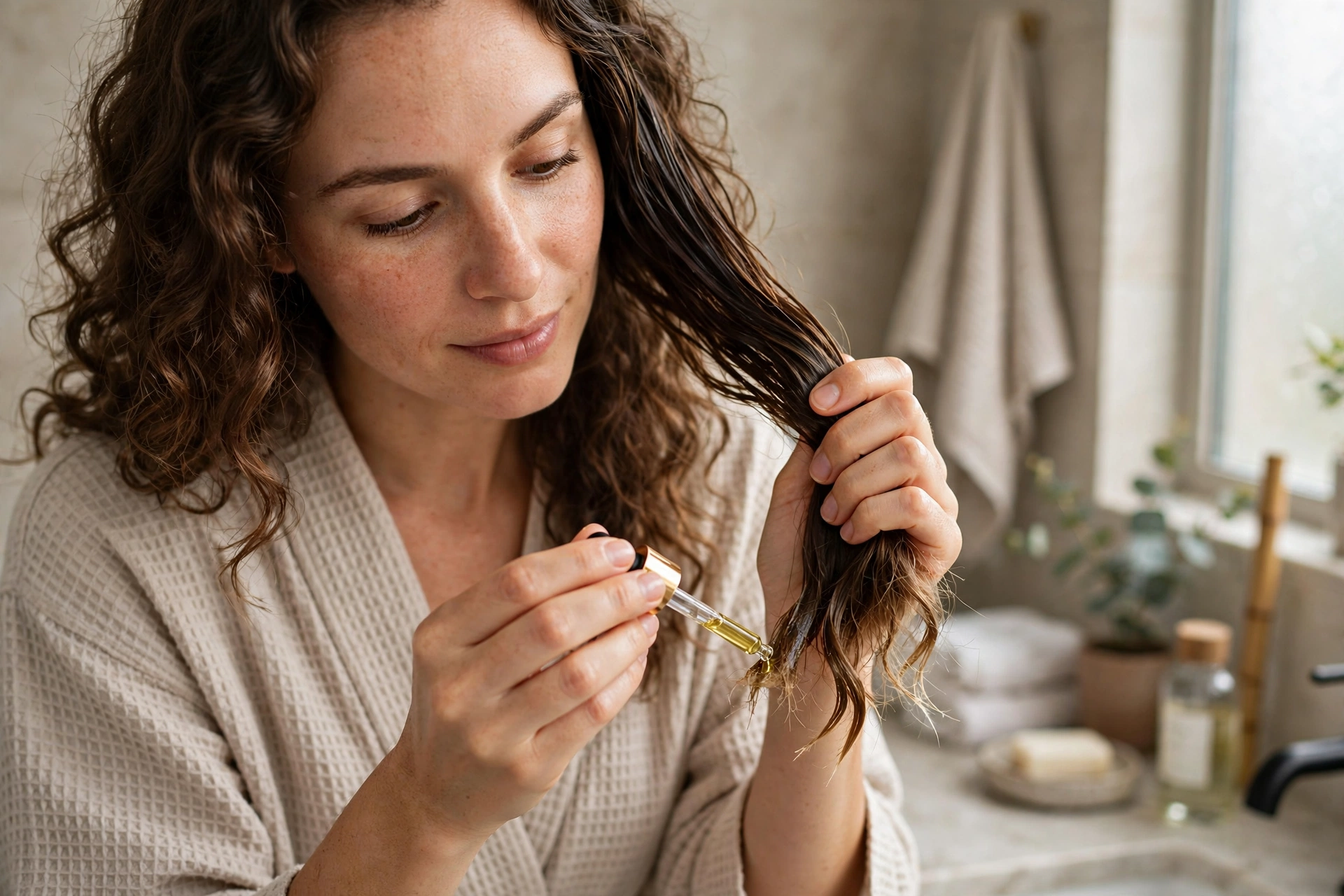
If your hair snaps when you brush it, feels like straw at the ends, or frizzes the moment you step out into damp British air, you are probably searching for the best hair oil for dry damaged hair uk — and you are not alone. Years of bleach, heat styling, hard water, and cold UK winters can strip the hair's natural lipids, leaving the cuticle rough, porous, and prone to breakage. The right hair oil can genuinely help: oils smooth the cuticle, reduce friction between strands, seal in moisture, and make hair look shinier and feel softer almost immediately, while some penetrating oils can also reduce protein loss during washing. But not every oil suits every hair type, and the wrong choice — too heavy for fine hair, or used incorrectly — can leave hair limp and greasy rather than repaired. This guide cuts through the hype with seven repair picks that work for different budgets and hair types, all widely available in the UK at Boots, Superdrug, or Cult Beauty, plus exactly how to use them for real results. This article is for general information only; if you have scalp conditions such as psoriasis, eczema, or sudden unexplained hair loss, speak to your GP or a dermatologist rather than relying on cosmetic products alone.
## Best Hair Oil for Dry Damaged Hair UK: How We Chose These 7 Picks
We chose these seven oils based on the type of damage they target, their evidence base, their suitability for UK shoppers, and real-world usability. Penetrating oils such as coconut and olive oil can enter the hair shaft and reduce protein loss, while sealing oils such as argan and jojoba sit on the surface to smooth the cuticle and lock in moisture — damaged hair usually benefits from a mix of both approaches. We also weighed texture: a heavy castor or coconut oil can overwhelm fine hair, while a lightweight argan or camellia oil may not be enough for very thick, coarse, or Afro-textured hair. Price mattered too, because a repair routine only works if you can afford to keep using it; the picks below range from around £5 at the high street to around £30 for premium formulas, with honest notes on where each one is worth the money and where a cheaper alternative does the same job. Finally, every pick is genuinely available in the UK — no imports, no inflated reseller prices, and no discontinued cult products you cannot actually buy. Whether your damage comes from bleach, daily straightening, colouring, or simply years of wear and tear, at least one of these seven should fit your hair and your budget.
## The 7 Best Hair Oils for Dry Damaged Hair
### 1. Argan Oil — The All-Rounder
Argan oil is the safest starting point for most people with dry, damaged hair, and it is the reason so many UK repair ranges are built around it. Rich in vitamin E and fatty acids, it smooths the cuticle, tames frizz, and adds shine without the heaviness of coconut oil, so it suits fine to medium hair as well as thicker textures. Use two to three drops on damp ends after washing, or a slightly larger amount as a pre-wash treatment on very dry lengths. High-street argan oils at Boots and Superdrug typically cost £5–£15, while salon and premium brands at Cult Beauty range from £20–£35. Look for 100% pure argan oil or a formula where argan is the first ingredient, and avoid products bulked out with silicones if you prefer a truly nourishing oil. Argan is also a good choice for coloured hair, since it does not strip colour and helps bleached lengths feel less brittle between salon visits.
### 2. Coconut Oil — The Deep Repair Treatment
Coconut oil is the only common oil with strong evidence for penetrating the hair shaft and reducing protein loss during washing, which makes it excellent as a pre-wash treatment for severely damaged or bleached hair. Apply it generously to dry lengths an hour before shampooing — or overnight for very damaged hair — then wash out thoroughly with shampoo, twice if needed. It is widely available in UK supermarkets and at Boots for around £4–£10, making it the cheapest genuinely effective option on this list. The catch is that coconut oil can feel heavy and, for some people, can make hair feel dry or stiff with repeated use, particularly on fine or low-porosity hair. If that happens, switch to using it only as an occasional pre-wash mask rather than a daily leave-in. It is also solid at typical UK room temperatures in winter, so warm a small amount between your palms until it melts before applying.
### 3. Olaplex No.7 Bonding Oil — The Bleach-Damage Specialist
If your damage comes mainly from bleach or chemical processing, Olaplex No.7 is the premium pick most hairdressers reach for. It contains the brand's patented bond-building technology alongside lightweight oils, so it works on the internal bonds that bleach breaks, not just the surface. It is very concentrated — a couple of drops is enough — and it doubles as a heat protectant up to 230°C, which is useful if you still style with heat. In the UK it typically costs around £26–£30 at Boots, Superdrug, and Cult Beauty, so it is an investment, but the bottle lasts months because so little is needed per use. Use it on damp or dry hair as a finishing oil, focusing on the mid-lengths and ends. For severely bleached hair, pairing it with a bond-building wash-out treatment gives better results than any oil alone.
### 4. Kérastase Elixir Ultime — The Luxury Finishing Oil
Kérastase Elixir Ultime is the salon classic for dry, dull hair that needs instant polish. It blends argan, camellia, and maize oils into a lightweight, fast-absorbing formula that leaves hair glossy without greasiness, and it smells like a high-end salon. It is best as a finishing oil on dry hair — one to two pumps smoothed over the ends — rather than as a heavy pre-wash treatment. Expect to pay around £30–£45 in the UK at salons, Boots, and Cult Beauty, so it suits people who want a single premium product rather than a multi-step routine. It works particularly well on medium to thick hair and on hair that frizzes in humidity, which is a frequent complaint during damp UK autumns. If the price puts you off, a pure argan oil gives you much of the same smoothing effect for a fraction of the cost.
### 5. Castor Oil — The Thick-Hair Rescuer
Castor oil is thick, sticky, and rich in ricinoleic acid, which makes it a favourite for very thick, coarse, curly, or Afro-textured hair that drinks up lighter oils without noticing them. It is best used as a pre-wash scalp and lengths treatment or mixed with a lighter oil such as jojoba to make it easier to spread and wash out. Jamaican black castor oil is the most popular variant in the UK and typically costs £6–£12 at Boots, Superdrug, and beauty supply stores. Because it is so heavy, it is not a good leave-in choice for fine hair — it will weigh it down and can be difficult to wash out fully. Used once a week as a mask, though, it can noticeably improve the softness and manageability of very dry, coarse hair. Claims that castor oil grows hair faster are not proven, so buy it for conditioning and manageability, not for growth promises.
### 6. Jojoba Oil — The Lightweight Balancer
Jojoba oil is technically a liquid wax whose structure closely resembles the skin's own sebum, which is why it absorbs well and rarely feels greasy. That makes it ideal for fine hair, oily scalps with dry ends, and anyone who has been put off oils by heavy, limp results in the past. Use a few drops on damp ends, or massage a small amount into a dry, itchy scalp before washing. Pure jojoba oil typically costs £6–£15 in the UK at Boots and health stores. It is also a good carrier oil for mixing: if castor oil is too thick for you on its own, a 50/50 blend with jojoba gives you the richness without the stickiness. For damaged hair, jojoba works best as a daily smoothing and sealing step rather than as a deep-repair mask.
### 7. Camellia Oil — The Lightweight Shine Oil
Camellia oil, long used in Japanese hair care, is one of the lightest oils available, absorbing almost instantly and leaving a silky, non-greasy shine. It suits fine and medium hair, and it is an excellent choice for people who want shine and frizz control without any weight. It also works well on hair that is dry mainly at the ends rather than throughout the lengths. In the UK, camellia oil is available from Cult Beauty and specialist retailers, typically priced £15–£30. Apply one to two drops to dry ends as a finishing step, or use it to smooth flyaways before going out. While it will not rebuild severely bleached hair on its own, it is a beautiful daily maintenance oil once deeper repair treatments have done the heavy lifting.
## Comparison Table: Which Oil Suits Your Hair?
| Oil | Best for | Texture | Typical UK price | Where to buy |
|---|---|---|---|---|
| Argan oil | Most hair types, everyday repair | Light–medium | £5–£35 | Boots, Superdrug, Cult Beauty |
| Coconut oil | Severe damage, pre-wash treatment | Heavy | £4–£10 | Supermarkets, Boots |
| Olaplex No.7 | Bleached, chemically damaged hair | Very light | £26–£30 | Boots, Superdrug, Cult Beauty |
| Kérastase Elixir Ultime | Dull, frizzy, medium–thick hair | Light | £30–£45 | Salons, Boots, Cult Beauty |
| Castor oil | Very thick, coarse, curly hair | Very heavy | £6–£12 | Boots, Superdrug |
| Jojoba oil | Fine hair, oily scalp with dry ends | Very light | £6–£15 | Boots, health stores |
| Camellia oil | Fine–medium hair, shine and flyaways | Ultra-light | £15–£30 | Cult Beauty, specialist retailers |
## How to Use Hair Oil for Dry Damaged Hair: The Right Way
How you use hair oil matters at least as much as which one you choose. For a pre-wash treatment, apply oil generously to dry lengths and ends, leave it for at least 30 minutes — or overnight for very damaged hair, much like an overnight [night cream for dry skin](https://www.glowmagzine.com/blog/best-night-cream-for-dry-skin-uk/) seals in moisture while you sleep — then shampoo thoroughly, twice if necessary, and condition as normal. For a leave-in treatment, apply two to four drops to damp hair after washing, focusing on the mid-lengths and ends and keeping oil away from the roots unless your scalp is genuinely dry. For a finishing oil, use one to two drops on dry hair to smooth frizz and add shine. The most common mistake is using too much: start with less than you think you need, because you can always add another drop, but removing excess oil means washing your hair again. Another mistake is applying oil to the roots when the problem is really at the ends; roots rarely need oil unless the scalp is dry, and oiling them can leave hair looking flat. Finally, remember that oil seals in moisture but does not replace it — on very dry hair, apply oil over damp hair or over a leave-in conditioner, so there is actually moisture to seal in. The same barrier logic applies to skin: just as a damaged skin barrier needs moisture sealed in gently, damaged hair needs hydration first and oil second, which is why our guide on [how to repair a damaged skin barrier](https://www.glowmagzine.com/blog/how-to-repair-damaged-skin-barrier-uk/) is a useful parallel read for understanding repair routines.
## Best Hair Oil for Dry Damaged Hair UK: Fine vs Thick Hair
Fine hair and thick hair need almost opposite approaches, and choosing for your texture is the fastest way to good results. Fine, dry, damaged hair does best with ultra-light oils — camellia, jojoba, or a lightweight argan formula — used in tiny amounts on damp ends only, never on the roots. Heavy oils such as coconut and castor will flatten fine hair and can make it look greasy even when the ends still feel dry. Medium hair is the most flexible and can use argan daily, with a coconut pre-wash mask once a week for deeper repair. Thick, coarse, or curly hair can handle richer oils and usually needs more product: castor blends, coconut masks, and generous argan application all work well, and oiling before washing is often more effective than a tiny leave-in amount. Afro-textured hair, which is naturally drier because scalp oils travel less easily down coiled strands, typically benefits from regular oiling with heavier blends and protective styling. If you are unsure about your hair's porosity, try the water test: a strand that sinks quickly is usually high porosity and will drink up oil, while a strand that floats is low porosity and needs lighter oils and heat (such as a warm towel over a mask) to help absorption.
## UK Shopping Tips: Getting Value and Avoiding Fakes
Buy from authorised UK retailers — Boots, Superdrug, Cult Beauty, salon suppliers, and the brands' own UK websites — rather than unknown marketplace sellers, because premium oils such as Olaplex and Kérastase are frequently counterfeited. Check that the product is labelled for the UK market and that the seller is listed as an authorised stockist where the brand publishes one. Watch for value traps: a £30 oil that lasts six months because you use two drops at a time is better value than a £8 bottle you finish in three weeks. Look out for Boots and Superdrug promotions, which regularly discount hair repair ranges, and for Cult Beauty sets that bundle a full-size oil with a travel size. If you have a sensitive scalp, choose fragrance-free or lightly fragranced pure oils over heavily perfumed blends, and patch-test a new oil on a small section before using it all over. Store oils away from direct sunlight and radiators, since heat and light degrade them over time, and replace any oil that starts to smell rancid. Cold weather also matters: just as skin needs a richer routine in winter, hair often needs more frequent oiling from November to February, and our [winter skincare routine for sensitive skin](https://www.glowmagzine.com/blog/winter-skincare-routine-for-sensitive-skin-uk/) explains the seasonal logic that applies to hair as well as skin.
## Practical Tips for Repairing Dry Damaged Hair
- Cut back on heat: if you must use straighteners or curlers, keep them below 180°C and always use a heat protectant.
- Switch to a wide-tooth comb on wet hair, and never brush aggressively when hair is wet and at its weakest.
- Sleep on a silk or satin pillowcase to reduce friction and breakage overnight.
- Get regular trims every eight to twelve weeks; no oil can repair split ends, it can only make them look smoother temporarily.
- Wash less often if you can — two to three times a week suits most damaged hair — and use lukewarm water, not hot.
- Use a deep conditioning mask once a week alongside your oil routine for the best results.
- Protect hair from chlorine and sea salt by wetting it with clean water and applying a little oil before swimming.
- Be patient: hair grows roughly 1 cm a month, so fully replacing damaged lengths takes time, and consistent care beats any single miracle product.
- If breakage is sudden, severe, or accompanied by scalp symptoms, see your GP or a dermatologist — [DermNet](https://dermnetnz.org/) and the [British Association of Dermatologists](https://www.bad.org.uk/) both offer reliable patient information on hair and scalp conditions.
## Frequently Asked Questions
### What is the best hair oil for dry damaged hair UK for bleached hair?
For bleached hair, Olaplex No.7 is the strongest specialist pick because it targets the internal bonds bleach breaks, while coconut oil as a weekly pre-wash mask helps reduce further protein loss. Use the bond-building oil as a daily finisher and the coconut mask once a week, and keep heat styling to a minimum while the hair recovers. If budget is tight, a pure argan oil plus a weekly coconut mask gives you much of the benefit for far less money.
### Should I apply hair oil to wet or dry hair?
Both work, but for different purposes. Apply oil to damp hair after washing when you want to seal in moisture and reduce frizz, and apply it to dry hair when you want shine, flyaway control, or a finishing polish. Pre-wash masks go on dry hair before shampooing. The key rule is to keep leave-in oil on the mid-lengths and ends, not the roots, unless your scalp is dry. Experiment with both methods for a week each and see which leaves your hair softer without greasiness.
### How often should I oil dry damaged hair?
Most people with dry, damaged hair benefit from a small amount of leave-in or finishing oil two to four times a week, plus one deeper pre-wash oil mask per week. Very damaged or very thick hair can handle more frequent oiling, while fine hair should stick to smaller amounts less often. If your hair starts to feel limp, coated, or greasy at the roots, you are over-oiling — clarify with a gentle shampoo and scale back. Consistency matters more than quantity.
### Can hair oil repair split ends?
No oil can permanently repair split ends, because once the hair fibre has split, it cannot fuse back together. What oils can do is smooth the cuticle around the split so it looks and feels better, reduce further breakage by lowering friction, and protect the lengths while you grow the damage out. The only real fix for split ends is a trim, so combine regular trims every eight to twelve weeks with oiling to keep new damage at bay.
### Is coconut oil good for dry damaged hair, or does it make it worse?
Coconut oil is genuinely helpful for many people with damaged hair, especially as a pre-wash treatment, because it penetrates the shaft and reduces protein loss. However, a minority of people — particularly those with fine or low-porosity hair — find repeated coconut oil use leaves hair feeling dry or stiff, possibly because of protein retention. If that happens to you, stop using it as a leave-in, switch to argan or jojoba, and keep coconut only for occasional pre-wash masks, or drop it altogether.
### Can I use hair oil every day?
Yes, you can use a lightweight oil daily, provided you use a small amount and focus on the ends. Daily use suits people with thick, coarse, or very dry hair, and those living in hard-water areas where hair dries out quickly. For fine hair, daily oiling can build up and flatten the hair, so two to three times a week is usually enough. If you oil daily, clarify your hair with a gentle clarifying shampoo every couple of weeks to prevent build-up.
### Which hair oil is best for dry damaged hair UK on a budget?
On a budget, pure argan oil from Boots or Superdrug (typically £5–£10) is the best all-rounder, and supermarket coconut oil (£4–£10) is the best deep-treatment mask. Together they cost under £20 and cover daily smoothing plus weekly deep repair. Spend more only if you have specific needs — Olaplex No.7 for bleached hair, or castor oil blends for very thick, coarse hair — rather than paying premium prices for a basic smoothing oil.
## Key Takeaways
- The best hair oil for dry damaged hair UK depends on your hair type: light oils for fine hair, richer oils for thick or coarse hair.
- Argan oil is the best all-rounder; coconut oil is the best cheap deep treatment; Olaplex No.7 is the best specialist for bleached hair.
- Apply oil to damp ends to seal in moisture, to dry ends for shine, and generously before washing for deep repair.
- Use a pea-sized amount of leave-in oil — more product usually means greasy hair, not faster repair.
- No oil can fix split ends permanently; regular trims plus oiling is the realistic combination.
- Buy from authorised UK retailers (Boots, Superdrug, Cult Beauty) to avoid counterfeits.
- Pair oiling with less heat, gentler brushing, and a weekly mask for the best long-term results.
## Conclusion
Finding the best hair oil for dry damaged hair UK is less about chasing a single miracle product and more about matching the right oil to your hair type and using it correctly. Start with argan if you want a safe all-rounder, add a weekly coconut mask if your hair is severely damaged, and invest in a bond-building oil like Olaplex No.7 if bleach is the main culprit. Keep amounts small, focus on the ends, protect your hair from heat, and give the routine at least a month before judging it — hair repair is a slow process, but the improvement in softness, shine, and manageability is usually noticeable within a few weeks. Buy from trusted UK retailers, watch for seasonal promotions at Boots and Superdrug, and remember that consistent, gentle care will do more for your hair than any expensive product used sporadically. If breakage is sudden or severe, or your scalp is irritated, get professional advice rather than relying on cosmetics alone — healthy hair starts with a healthy scalp.
Seven gentle, pregnancy-safe moisturisers for dry skin, with UK prices, ingredients to avoid, and a calm daily routine.
Read More arrow_forward
Seven soothing winter hand creams for dry, cracked UK hands — rich, protective picks, typical prices, and expert application tips.
Read More arrow_forward
Seven budget vitamin C serums for dark spots in the UK, plus how to choose strength, avoid irritation, and get brighter, more even skin.
Read More arrow_forward
Find a tinted sunscreen that evens tone without settling into fine lines, with UK shade, finish and hydration advice for mature skin.
Read More arrow_forward
The best k-beauty dupes for luxury skincare UK: 7 smart swaps that save money without losing glow — serums, creams and SPF, with UK stockists.
Read More arrow_forwardCalculate your Body Mass Index (BMI) in seconds. BMI is a quick screening number…
Use now arrow_forwardFind your daily calorie needs based on your age, sex, height, weight and activit…
Use now arrow_forwardFind how much water you should drink each day, in litres and glasses, based on y…
Use now arrow_forward