Ferulic Acid and Vitamin C Together UK: The Antioxidant Guide
Yes — ferulic acid and vitamin C together UK is dermatology's dream team. Here's how to layer them for brighter, better-protected skin.
Read More arrow_forwardCan you use hyaluronic acid and retinol together? Yes — here is the UK layering guide with routines, products and prices.
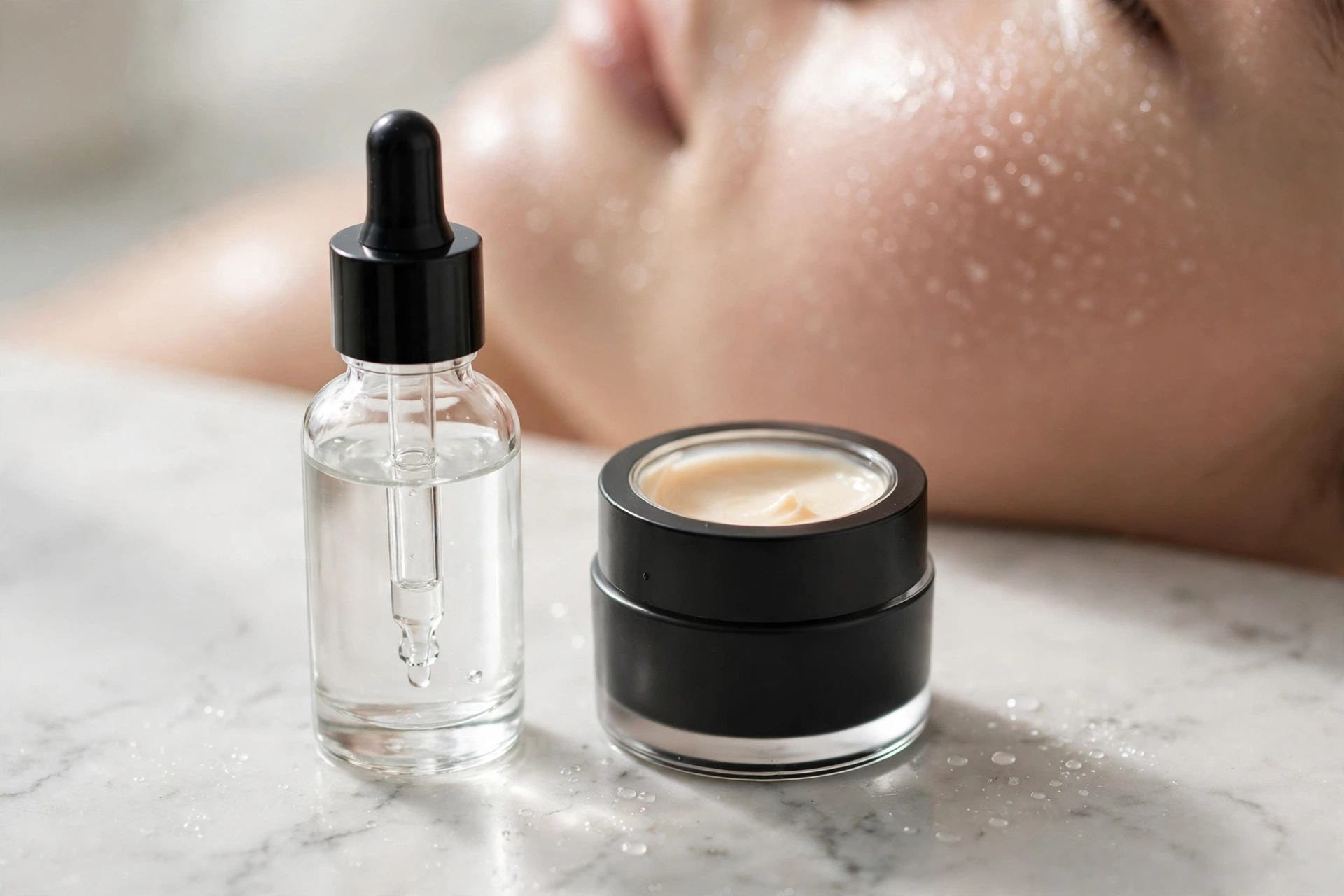
If you are searching for whether you can use hyaluronic acid and retinol together in the UK, the short answer is yes — this is one of the most effective pairings in modern skincare. Hyaluronic acid (HA) is a humectant that draws water into the skin and keeps it there, while retinol is the most evidence-backed anti-ageing ingredient available, proven to speed up cell turnover and boost collagen. The problem most people run into is not the ingredients themselves, but the order and timing of application. Get it wrong and you can end up with stinging, flaking and redness; get it right and you get the full anti-ageing power of retinol with none of the classic dryness. This guide walks you through exactly how to layer the two, what a proper AM and PM routine looks like, which UK products to buy (with £ prices from Boots, Superdrug, Cult Beauty and Lookfantastic), the common mistakes to avoid, and who should skip this combination altogether.
Absolutely — and dermatologists routinely recommend it. Hyaluronic acid does not cancel out retinol, and retinol does not make hyaluronic acid useless. They work through completely different mechanisms: hyaluronic acid is a hydrating molecule that can hold up to 1,000 times its own weight in water, while retinol is a vitamin A derivative that binds to retinoid receptors in the skin and accelerates cell renewal. Because they do not interact chemically, there is no risk of the two deactivating each other the way, say, certain acids can destabilise retinol.
In fact, pairing them solves retinol's biggest drawback: dryness. One of the most common reasons people in the UK abandon retinol after a few weeks is the flaking, tightness and sensitivity known as "retinisation" — the adjustment period your skin goes through in the first 4–12 weeks. Buffering your retinol routine with hyaluronic acid keeps your skin barrier hydrated while the retinoid does its work underneath, which means fewer people quit before they see results.
The British Association of Dermatologists notes that retinoids remain the gold standard for improving signs of photoageing, and that dryness and irritation are the most common side effects — effects that good hydration habits can meaningfully reduce. You can read more on the British Association of Dermatologists patient resources for general guidance on retinoid use. If you have previously tried retinol and given up because your skin felt like sandpaper, this is the pairing that may change your mind.
To understand why this combination is so powerful, it helps to look at what each ingredient actually does in the skin.
Retinol penetrates the skin and converts to retinoic acid, the active form that increases collagen production, speeds cell turnover, fades hyperpigmentation and helps clear clogged pores. Published clinical research, including studies indexed on PubMed on retinoic acid and collagen synthesis, has demonstrated improvements in fine lines, texture and pigmentation with consistent retinoid use. It is genuinely the most studied anti-ageing ingredient in skincare.
Hyaluronic acid is a glycosaminoglycan naturally present in the skin that declines with age. Applied topically, it pulls moisture from the environment (and from deeper skin layers) into the stratum corneum, plumping the surface, smoothing fine dehydration lines and improving the skin's overall bounce. It does not repair wrinkles the way retinol does — but it creates the ideal hydrated environment for retinol to work without collateral damage.
Together, the logic is simple:
Ingredient | What it does | What it does NOT do
Hyaluronic acid | Hydrates, plumps, supports barrier | Doesn't treat wrinkles or pigmentation
Retinol | Boosts collagen, speeds turnover, fades dark spots | Doesn't hydrate — can dry skin out
The combination | Anti-ageing results with hydrated, calm skin | —
Think of it as a relay team: hyaluronic acid keeps the track in good condition, and retinol runs the race. People who use both consistently report that their skin looks smoother faster, because the plumping effect of HA makes retinol's textural improvements visible sooner.
This is where most layering guides go vague, so here is the precise order that UK dermatologists and skincare formulators recommend for an evening routine:
Apply hyaluronic acid to damp skin, never bone-dry skin. HA is a humectant — it needs water to grab onto. On dry skin in a centrally-heated British winter, it can pull moisture out of your skin instead of from the air, leaving you drier. The fix is simple: after cleansing, leave your face slightly damp (or mist with water), then press the HA serum in. This single step transforms how effective the serum is.
Cleanse — a gentle non-foaming cleanser (avoid harsh surfactants on retinol nights).
Damp skin — pat face so it stays slightly moist, or use a thermal water mist.
Hyaluronic acid serum — apply to damp skin, press gently, wait 60 seconds.
Retinol — a pea-sized amount for the whole face, spread evenly. Wait 1–2 minutes.
Moisturiser — a barrier-supporting cream with ceramides or squalane to seal everything in.
SPF next morning — non-negotiable; retinol increases sun sensitivity, and UK sunscreens must meet EU-level UVA protection standards (look for the UVA circle logo or a star rating).
Why this order? The lightest, most water-based product goes first so it can penetrate, and the heavier occlusive moisturiser goes last to lock everything in. Putting HA before retinol also slightly buffers the retinoid's penetration, which beginners appreciate.
Glow Magzine tip: If you are brand new to retinol, flip steps 3–5 into the "sandwich method" described below — it makes the first month dramatically more comfortable.
For more on managing dryness while using actives, see our guide on how to repair a damaged skin barrier, which covers the ceramide-rich moisturisers that work best as your retinol-night seal.
Short answer: hyaluronic acid yes, retinol no — retinol belongs in your PM routine only. Retinol degrades in sunlight and makes skin more photosensitive, so daytime use wastes the product and raises your risk of sunburn and hyperpigmentation. The NHS advises protecting skin from the sun when using retinoid-based treatments, and UK sunscreen rules are strict: products sold here must be tested to EU standards, and dermatologists recommend SPF 30+ with 4–5 star UVA protection for daily use. You can find the NHS's general guidance on protecting your skin from sun damage.
Your morning routine should therefore look like this:
Step | Product | Purpose
1. Cleanse | Gentle cleanser or just water | Remove overnight residue
2. Hyaluronic acid serum | Applied to damp skin | Daytime hydration
3. Moisturiser | Lightweight lotion | Seal in hydration
4. SPF 30+ | Broad-spectrum with UVA stars | Protect retinised skin
Notice there is no retinol in the morning. Using hyaluronic acid twice daily is perfectly fine — most people benefit from it AM and PM, because hydration is a round-the-clock need, especially during a UK winter with indoor heating.
The sandwich method is a layering technique where retinol is "sandwiched" between two hydrating layers. It is the single best trick for beginners who want to use hyaluronic acid and retinol together without the dreaded peeling phase:
Cleanse and leave skin damp.
Apply hyaluronic acid serum (first hydration layer).
Apply a thin layer of moisturiser and wait a minute.
Apply retinol over the moisturiser.
Seal with a final thin layer of moisturiser if your skin is very dry.
The moisturiser layers slow retinol's penetration slightly, which reduces irritation without meaningfully reducing results — studies show buffered application still delivers retinoid benefits, just with a gentler onboarding curve. Most people can transition from the sandwich method to direct application (HA → retinol → moisturiser) after 4–6 weeks.
This method pairs beautifully with retinol and niacinamide layered correctly, another buffered beginner routine that reduces redness while delivering anti-ageing results.
Start slow. The classic mistake is using retinol every night from day one, then wondering why your face is peeling by Friday. Follow a build-up schedule like this:
Weeks | Retinol frequency | HA usage
Weeks 1–2 | 2 nights per week (e.g. Mon, Thu) | Every night, AM + PM
Weeks 3–4 | 3 nights per week (Mon, Wed, Fri) | Every night, AM + PM
Weeks 5–8 | Every other night | Every night, AM + PM
Week 9+ | Nightly if tolerated | Every night, AM + PM
A few build-up rules:
Use the sandwich method for the first month, then try direct layering.
Start with a low strength — 0.25%–0.3% retinol or a retinal product before jumping to 0.5% or 1%.
Pea-sized amount for the entire face. More product does not mean faster results; it means more irritation.
Skip actives on retinol nights — no AHAs/BHAs, no benzoyl peroxide, no high-strength vitamin C on the same evening. Curious about acid combinations? Read can you mix AHA BHA with retinol for the full compatibility picture.
Give it 12 weeks. Retinol results are not instant. Collagen remodelling takes roughly three months, so judge the pairing after a full skin cycle or two, not after a fortnight.
Even with the right products, small errors cause most irritation. Here are the ones UK shoppers report most:
1. Applying HA to dry skin. As covered above, this is mistake number one. Damp skin is the rule — every single time.
2. Using retinol in the morning. Sunlight degrades retinol and your skin is more vulnerable to UV damage. Retinol is a PM-only ingredient, full stop.
3. Mixing retinol with strong acids the same night. AHA/BHA exfoliants plus retinol is an irritation cocktail for most people. Alternate nights instead.
4. Starting with too high a strength. A 1% retinol on virgin skin is a recipe for a fortnight of flaking. Begin at 0.3% and work up.
5. Skipping moisturiser. HA needs sealing — without a moisturiser on top, the hydration evaporates and you are back to square one.
6. No sunscreen the next day. Retinised skin burns faster. In the UK, people underestimate winter sun; UV is present year-round, and reflected light off wet pavements counts.
7. Using too much product. The pea rule exists for a reason. If you are buffering with the sandwich method, a thin layer is plenty.
8. Quitting at week three. The purge-and-flake phase peaks around weeks 2–4. If you can push through with hydration support, most people see the turn the corner by week 6–8.
If you are choosing between retinoids and gentler alternatives, our comparison of bakuchiol vs retinol helps you decide which anti-ageing path suits sensitive skin.
For most adults, hyaluronic acid and retinol together is safe and beneficial. But there are groups who should skip or modify it:
Pregnant or breastfeeding women. Retinoids are not recommended during pregnancy — this is the one hard contraindication. The NHS advises avoiding vitamin A derivatives while pregnant. Hyaluronic acid alone, however, is considered safe, so keep the HA and shelve the retinol until after breastfeeding.
People with active eczema flare-ups, rosacea flares or broken skin. Retinol on a compromised barrier will sting and worsen inflammation. Repair the barrier first (see our skin barrier repair guide), then reintroduce retinol slowly.
Very sensitive skin that reacts to everything. Try bakuchiol or retinal (one conversion step closer to retinoic acid, often better tolerated) before classic retinol.
Those already on prescription tretinoin. If a dermatologist has prescribed tretinoin, do not layer over-the-counter retinol on top — follow your prescriber's routine. HA underneath prescription retinoids is generally fine and often recommended.
Teenagers. Unless a dermatologist advises otherwise, teens do not need retinol for anti-ageing. Focus on sunscreen, gentle cleansing and hydration.
When in doubt, patch-test the combination on your jawline for a few nights before going full-face, and speak to a pharmacist or dermatologist if you have a skin condition.
Here are reliable, genuinely available pairings you can buy in the UK right now, with approximate £ prices at the time of writing. All are stocked at major UK retailers.
The Ordinary Hyaluronic Acid 2% + B5 — ~£7.90 at Boots, Superdrug and Cult Beauty. The UK's best-selling HA serum; multi-weight HA plus vitamin B5. Apply to damp skin.
The Ordinary Retinol 0.5% in Squalane — ~£7.50 at Boots and Cult Beauty. Squalane base makes it gentler than alcohol-based retinols. Start with the 0.2% version (~£5.90) if you are a complete beginner.
Seal with CeraVe Moisturising Cream — ~£9.50 at Boots and Superdrug. Ceramides + hyaluronic acid in the moisturiser itself doubles down on barrier support.
CeraVe Hydrating Hyaluronic Acid Serum — ~£18 at Boots and Superdrug. Fragrance-free, with three essential ceramides.
La Roche-Posay Redermic R Retinol Cream — ~£38 at Boots and Lookfantastic. A well-tolerated retinol formulated for sensitive skin, available widely across UK pharmacies. You can find it on the official La Roche-Posay UK site and at most Boots stores.
Seal with La Roche-Posay Cicaplast Baume B5+ — ~£16 at Boots. A cult barrier-repair balm that is ideal for retinol nights.
Medik8 Hydr8 B5 Serum — ~£39 at Cult Beauty and Lookfantastic. A British brand (formulated in the UK) with multi-weight HA and vitamin B5.
Medik8 Crystal Retinal 3 or 6 — ~£39–£49 at Cult Beauty. Retinal (retinaldehyde) works faster than retinol with less irritation, and Medik8's stabilised formula is a UK favourite.
Budget | HA serum | Retinol | Approx. total
Under £20 | The Ordinary HA 2% + B5 (£7.90) | The Ordinary Retinol 0.2% (£5.90) | ~£14 + moisturiser
Mid-range | CeraVe HA Serum (£18) | La Roche-Posay Redermic R (~£38) | ~£56 + moisturiser
Premium | Medik8 Hydr8 B5 (£39) | Medik8 Crystal Retinal (~£45) | ~£84 + moisturiser
Prices fluctuate with Boots and Superdrug promotions, so check current offers — both retailers run regular 3-for-2 skincare deals.
You can, but layering is better. Mixing dilutes both products unpredictably and you lose control over the order of penetration. Apply HA to damp skin first, let it settle for a minute, then apply retinol. The 60-second wait is worth it.
Before. Hyaluronic acid is a lightweight, water-based serum and goes first on damp skin; retinol follows. This order also slightly buffers the retinol, which reduces irritation for beginners. Moisturiser always goes last to seal everything in.
Hyaluronic acid — yes, twice daily if you like. Retinol — build up to nightly use over 8+ weeks rather than starting there. Jumping straight to nightly retinol is the fastest route to peeling and redness.
No. HA does not deactivate retinol or block its absorption in any meaningful way; it may slow penetration very slightly, which is actually beneficial for tolerability. You still get the collagen-boosting, cell-turnover benefits of the retinoid.
Yes — it is one of the better combinations for oily, acne-prone skin. Retinol helps keep pores clear and regulates cell turnover, while HA provides oil-free hydration (look for gel or lightweight serum textures rather than heavy creams). Just keep the rest of the routine simple and non-comedogenic.
Use caution. The eye area is thin and sensitive; many people apply retinol around the orbital bone but not on the eyelids themselves. An HA serum is fine around the eyes, but for the retinol step, either skip the immediate eye area or use a dedicated eye retinol product at a lower strength.
Hydration and plumping from HA are visible within days. Retinol's structural benefits — smoother texture, faded dark spots, softened fine lines — typically take 8–12 weeks of consistent use. Take a photo on day one and compare at week 12; the difference is often clearer than the mirror suggests.
Yes, but separate them by time of day: vitamin C in the morning (it boosts sunscreen's protection), retinol at night, HA both times. Layering all three in one routine is unnecessary and increases irritation risk. For the full breakdown of the retinol–vitamin C question, see retinol and vitamin C together UK.
Yes, you can use hyaluronic acid and retinol together — they are one of skincare's best-supported pairings.
Order matters: cleanser → hyaluronic acid on damp skin → retinol → moisturiser. Retinol is PM-only; HA can be used AM and PM.
Beginners should start slow: 2 nights a week, build to nightly over 8 weeks, and use the sandwich method (HA → moisturiser → retinol → moisturiser) for the first month.
Never skip sunscreen the morning after retinol — UK rules require proper UVA protection, so use SPF 30+ with 4–5 UVA stars daily.
Avoid the combo if you are pregnant or breastfeeding, or if your barrier is currently damaged — repair first, then reintroduce.
Great UK pairings exist at every budget: The Ordinary (~£14), La Roche-Posay/CeraVe (mid-range), Medik8 (premium) — all available at Boots, Superdrug, Cult Beauty or Lookfantastic.
Learning to use hyaluronic acid and retinol together is less about buying the perfect products and more about respecting the order, the damp-skin rule and the build-up schedule. Get those three things right and you unlock retinol's proven anti-ageing power — smoother texture, fewer fine lines, more even tone — without the dryness that makes so many people quit. Start with an affordable UK pairing, follow the week-by-week schedule, wear your SPF every morning, and give it the full 12 weeks. Your future skin will thank you.
Have a question about this routine or a product swap for your skin type? Drop it in the comments — we read every one.
Yes — ferulic acid and vitamin C together UK is dermatology's dream team. Here's how to layer them for brighter, better-protected skin.
Read More arrow_forward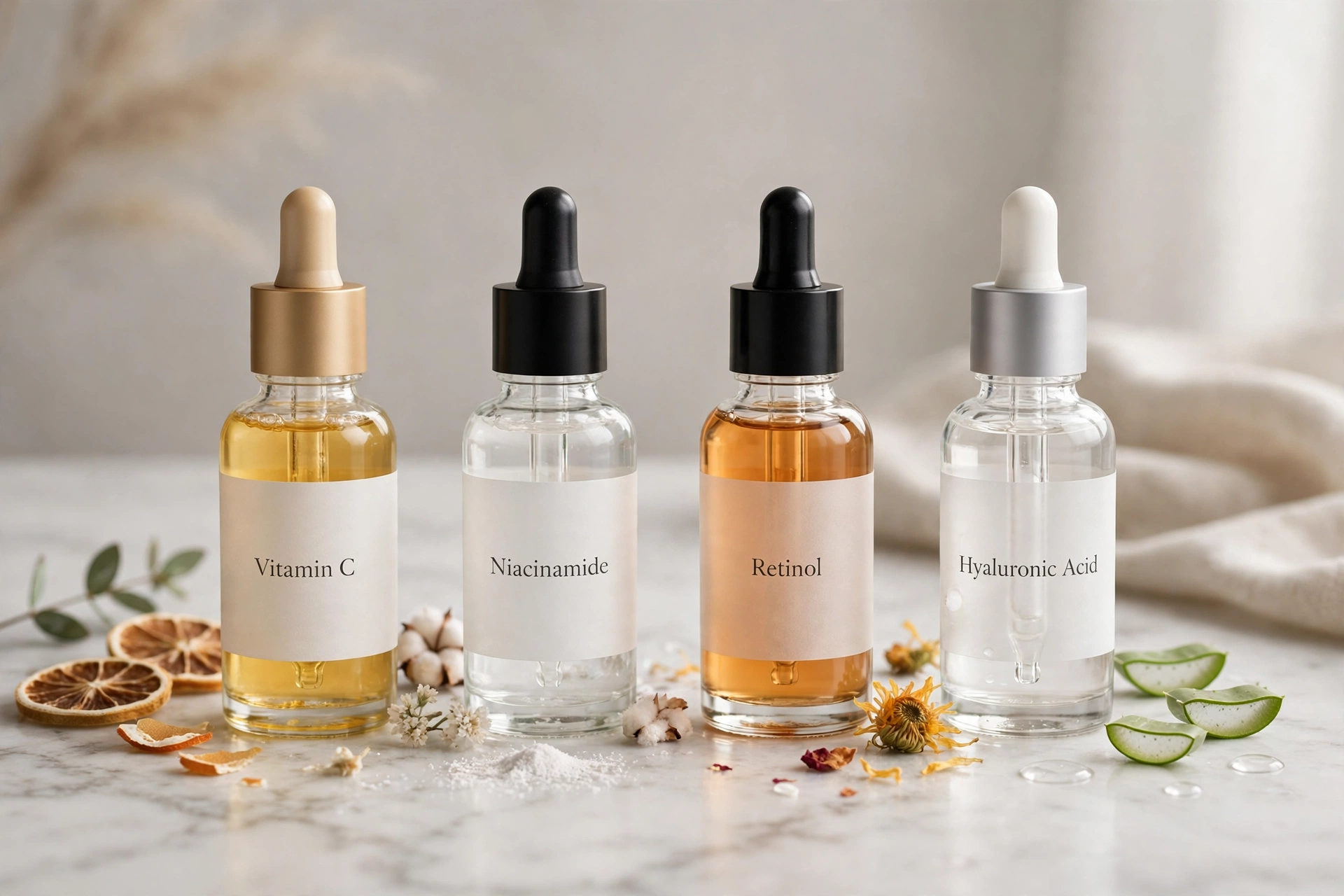
The UK guide to skincare ingredient combinations: which actives mix, which clash, exact layering order, wait times and UK product picks.
Read More arrow_forwardCalculate your Body Mass Index (BMI) in seconds. BMI is a quick screening number…
Use now arrow_forwardFind your daily calorie needs based on your age, sex, height, weight and activit…
Use now arrow_forwardFind how much water you should drink each day, in litres and glasses, based on y…
Use now arrow_forward