
Ferulic Acid and Vitamin C Together UK: The Antioxidant Guide
Yes — ferulic acid and vitamin C together UK is dermatology's dream team. Here's how to layer them for brighter, better-protected skin.
Read More arrow_forwardThe UK guide to skincare ingredient combinations: which actives mix, which clash, exact layering order, wait times and UK product picks.
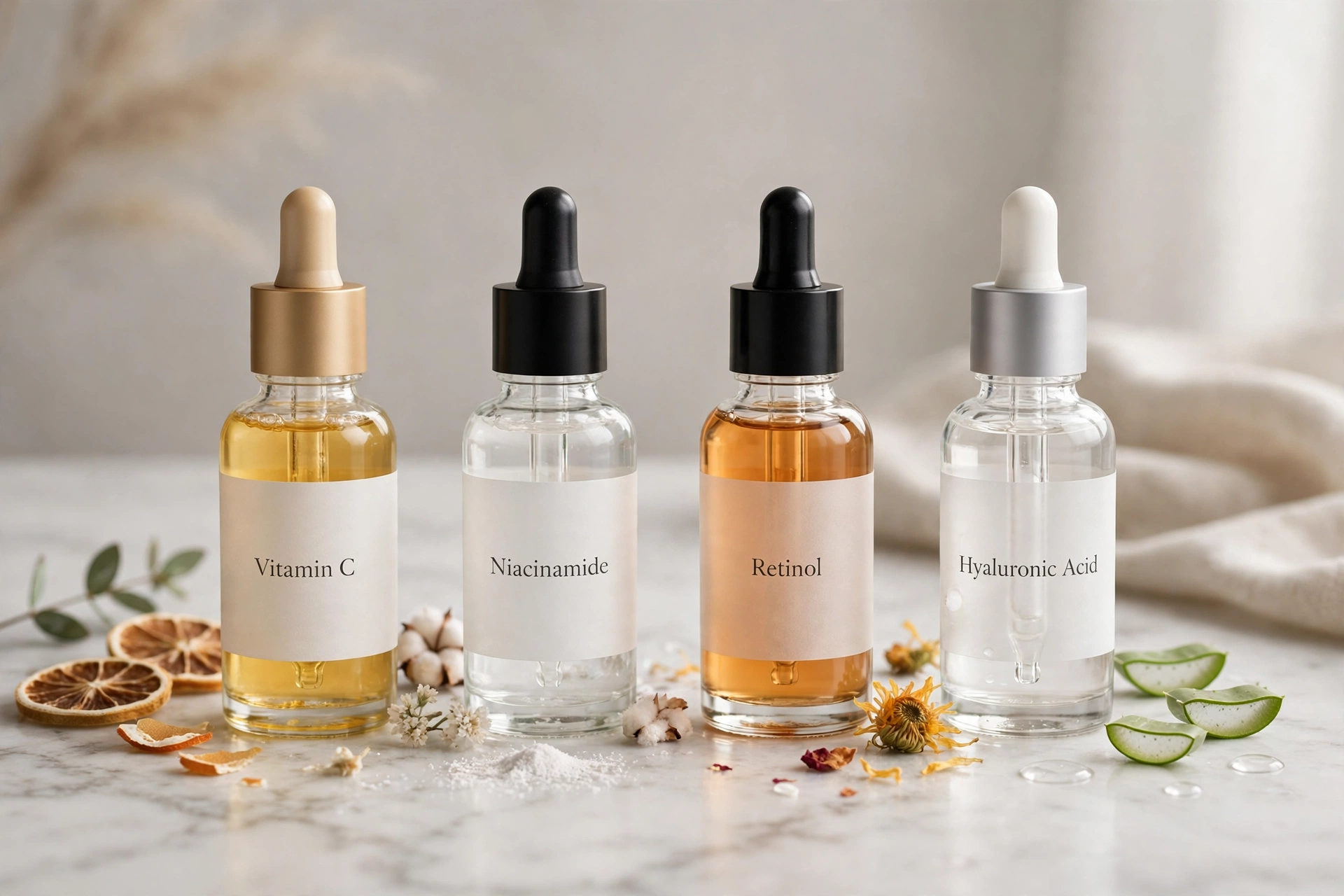
If you have ever stood in the skincare aisle at Boots staring at a basket full of serums and wondered whether your vitamin C can go on top of your niacinamide, or whether your retinol will declare war on your AHA exfoliant, this guide is for you. Understanding skincare ingredient combinations UK shoppers can actually use — with the products stocked on our high streets, the prices in pounds, and the realities of British weather — is the difference between glowing skin and an irritated, sensitised barrier.
The internet is full of conflicting advice. One influencer says niacinamide and vitamin C cancel each other out (they don't — that myth was debunked years ago). Another tells you to layer five acids in one routine (please don't). Dermatologists, meanwhile, quietly mix and match actives every day — because most ingredients can be combined safely once you know the rules of pH, texture, timing and concentration.
This is the definitive UK hub guide to ingredient interactions: the golden rules of layering, a master compatibility table covering every major pairing, deep dives into the combinations everyone asks about, sample AM and PM routines, a never-mix list, and honest UK product recommendations from Boots, Superdrug and Cult Beauty. Bookmark it — and use it as the starting point for our detailed cluster guides on individual pairings, all linked throughout.
Skincare Ingredient Combinations UK: The Master Compatibility Table
Vitamin C, Vitamin E and Ferulic Acid: The Antioxidant Power Trio
Skincare Ingredient Combinations UK: Your Sample AM and PM Routines
Before we get to specific pairings, these five rules govern nearly every decision in this guide. Learn them once and you will rarely need to Google "can I mix X and Y" again.
Apply products from the thinnest, most watery texture to the thickest, richest one. Toners and watery serums go first, then gel serums, then lotions and creams, then oils, and sunscreen always goes last in the morning. This isn't just cosmetic fussiness — thinner formulas are designed to penetrate, and a heavy cream applied first will physically block a watery serum from reaching your skin.
Acids and L-ascorbic acid (pure vitamin C) work at a low, acidic pH (around 2.5–3.5). Niacinamide, peptides and most hydrating serums sit closer to your skin's natural pH of about 5.5. Apply the lower-pH product first so it can do its job before the higher-pH product buffers it. In practice: vitamin C or AHA/BHA first, wait, then niacinamide or peptides.
You don't need to wait 30 minutes between every step (a myth from the early skincare-forum days), but strong actives deserve a short pause. Give vitamin C, AHA/BHA exfoliants and retinol roughly 5–10 minutes before layering the next product — enough for the formula to absorb rather than sit on the surface and mingle with the next layer. Hydrating serums and moisturisers can follow each other almost immediately.
Your morning routine should defend: antioxidants (especially vitamin C) plus a broad-spectrum SPF 30 or higher — non-negotiable in the UK, even on grey days, because UVA penetrates cloud and glass. Your evening routine should repair: retinoids, exfoliating acids, peptides and richer barrier-supporting moisturisers. Splitting strong actives across AM and PM is the simplest way to use ingredients that would clash in the same routine.
When building a routine, introduce one new active ingredient every one to two weeks. If irritation appears, you'll know exactly which product caused it. This rule matters more than any compatibility table — even "safe" combinations can overwhelm skin that is adjusting to too many new things at once.
Here is the at-a-glance reference for the pairings UK shoppers ask about most. "Safe" means the ingredients work well together for most skin types; "use with care" means the combination works but needs the right order, timing or skin tolerance; "never mix" means keep them in separate routines (or separate days) entirely.
Ingredient A | Ingredient B | Verdict | How to combine
Vitamin C (L-ascorbic acid) | Vitamin E + ferulic acid | ✅ Safe — gold standard | Layer together in the AM; ferulic acid stabilises C and doubles photoprotection
Niacinamide | Vitamin C | ✅ Safe | Apply vitamin C first (low pH), wait 5–10 min, then niacinamide — or split AM/PM
Retinol | Niacinamide | ✅ Safe | Niacinamide first, then retinol; niacinamide can reduce retinol irritation
Retinol | Hyaluronic acid | ✅ Safe | HA on damp skin first, then retinol; follow with moisturiser
Retinol | Vitamin C | ⚠️ Use with care | Best split: vitamin C in the AM, retinol in the PM
AHA/BHA | Retinol | ⚠️ Use with care | Alternate nights; never layer strong versions together as a beginner
Azelaic acid | Vitamin C | ✅ Safe | Vitamin C first, then azelaic acid; or azelaic acid AM, vitamin C PM
Tranexamic acid | Niacinamide | ✅ Safe | Layer in either order; a proven duo for dark spots and melasma-prone skin
Niacinamide | Salicylic acid | ✅ Safe | Salicylic acid first (low pH), then niacinamide; a staple oily-skin pairing
Peptides | Retinol | ✅ Safe (mostly) | Peptides first or in a separate routine; avoid copper peptides with strong acids or vitamin C
Ceramides | Everything | ✅ Safe | Apply in your moisturiser as the final active step, morning and night
Benzoyl peroxide | Retinol/tretinoin | ❌ Never mix (same routine) | BP oxidises retinoids — use BP in the AM, retinoid in the PM
Benzoyl peroxide | AHA/BHA (strong) | ❌ Never mix (same routine) | Extreme dryness and irritation risk; alternate days instead
Vitamin C (L-ascorbic acid) | Copper peptides | ❌ Never mix | Vitamin C oxidises copper peptides, deactivating both
Retinoids | Strong acids (same night) | ❌ Never mix (beginners) | Alternate nights until your skin is fully retinised
Now let's look at each major pairing in detail — what the science says, the exact order to apply, and which UK products make it easy.
If there is one combination with genuine landmark science behind it, this is it. A 2005 study published in the Journal of Investigative Dermatology found that adding 0.5% ferulic acid to a solution of 15% L-ascorbic acid (vitamin C) and 1% alpha-tocopherol (vitamin E) not only stabilised the notoriously fragile vitamin C — it doubled the formula's photoprotection of skin (Lin et al., 2005). This is why the C + E + ferulic trio became the gold standard morning antioxidant serum, and why it remains the single most evidence-backed combination in this entire guide.
Why it works: Vitamin C is a potent antioxidant but oxidises quickly in the bottle and on the skin. Vitamin E regenerates oxidised vitamin C, and ferulic acid stabilises both while adding its own antioxidant power. Together they neutralise free radicals from UV and pollution far more effectively than any of them alone.
How to use it: Apply to clean, dry skin every morning before moisturiser and sunscreen. This is a pre-mixed trio — you don't need to buy three separate products and layer them (in fact, buying a well-formulated combined serum is better, because the pH and stabilisation have been worked out for you).
UK product picks:
The budget hero: Geek & Gorgeous C-Glow (15% vitamin C with vitamin E and ferulic acid), around £12.50 — one of the best-value C serums available to UK shoppers online.
The high-street easy find: The Ordinary's vitamin C suspensions and ethylated ascorbic acid options, from around £6–£12 at Boots and Superdrug — though note The Ordinary doesn't currently sell a true C+E+ferulic combined serum, so pair their Ascorbic Acid 8% + Alpha Arbutin 2% (~£10) with a separate vitamin E-containing moisturiser.
The luxury benchmark: SkinCeuticals C E Ferulic, around £160 at Cult Beauty — the original formula from the research lineage. Superb, but the budget options get you 90% of the way there.
Who should avoid it: Very sensitive or rosacea-prone skin may find 15% L-ascorbic acid too stimulating — start with a gentler vitamin C derivative (like ascorbyl glucoside or ethylated L-ascorbic acid) instead. For a full breakdown of the ferulic pairing, see our dedicated guide to ferulic acid and vitamin C together, and for product comparisons, our roundup of the best vitamin C serums for glowing skin.
This is the pairing wrapped in the most persistent myth in skincare: that niacinamide and vitamin C "cancel each other out" or form niacin (which causes flushing) when combined. The truth is far less dramatic. The niacin concern comes from old chemistry experiments where niacinamide and ascorbic acid were heated together — conditions nothing like your bathroom shelf. At normal temperatures, in modern cosmetic formulations, the two are perfectly safe to combine, and multiple brands now sell them in the same bottle.
Why it works: They target different pathways. Vitamin C is an antioxidant that brightens by inhibiting melanin production and defending against UV damage. Niacinamide (vitamin B3) strengthens the skin barrier, regulates oil, minimises the look of pores and calms redness. Together they give you brightening plus barrier support — a combination especially useful for dull, uneven UK winter skin. For more on what niacinamide does on its own, see our niacinamide serum benefits guide.
How to use it: Remember Rule 2 — low pH first. Apply your vitamin C serum (typically pH 2.5–3.5), wait 5–10 minutes, then apply niacinamide. Alternatively, split them: vitamin C in the morning under sunscreen, niacinamide in the evening. Both approaches work; the split is gentler for sensitive skin.
UK product picks:
The Ordinary Niacinamide 10% + Zinc 1%, around £6.50 at Boots and Superdrug — the UK's best-selling niacinamide, and it layers beautifully over a morning vitamin C.
CeraVe PM Facial Moisturising Lotion, around £16 at Boots and Superdrug — contains niacinamide plus ceramides, ideal as your evening niacinamide step.
Who should avoid it: A small minority of people find high-strength niacinamide (10%+) causes flushing or mild irritation, particularly when layered over an acidic vitamin C. If that happens, drop to a 4–5% niacinamide formula or use the ingredients at opposite ends of the day. Our full myth-busting deep dive covers this in detail: can you use niacinamide and vitamin C together.
If retinol is the most effective anti-ageing ingredient you can buy without a prescription, niacinamide is its ideal partner — and one of the few ingredients that can actually make retinol easier to tolerate. Niacinamide strengthens the skin barrier and reduces transepidermal water loss, which directly counteracts the dryness and flaking (the "retinol uglies") that make so many people abandon retinoids in the first month.
Why it works: Retinol accelerates cell turnover and boosts collagen; niacinamide supports the barrier, calms inflammation and fades the post-inflammatory marks that retinol is often prescribed to treat. They don't compete — they complement.
How to use it: Apply niacinamide first (it's water-based and higher pH), then your retinol product. Or simplify: use niacinamide in the morning and retinol at night. Both orders are dermatologist-approved.
UK product picks:
Beginners: The Inkey List Retinol Serum (~£11.99, Boots/Superdrug) layered over The Ordinary Niacinamide 10% + Zinc 1% (~£6.50).
Step-up: Medik8 Crystal Retinal 3 (~£45, Cult Beauty) — retinaldehyde works faster than retinol with less irritation, and pairs beautifully with a niacinamide serum underneath.
The all-in-one: CeraVe Resurfacing Retinol Serum (~£20, Boots/Superdrug) already contains niacinamide alongside encapsulated retinol — the combination pre-mixed for you.
Read our complete walkthrough of retinol and niacinamide routine order for AM/PM schedules and strength progressions.
This is one of the simplest and safest combinations in skincare — and one of the most useful for UK skin dealing with central heating and cold winds half the year. Hyaluronic acid is a humectant: it draws water into the skin's upper layers, plumping fine dehydration lines and buffering the dryness that retinol can cause.
Why it works: They operate in completely different lanes. Hyaluronic acid hydrates; retinol renews. There is no pH conflict, no deactivation, no increased irritation — just hydration plus renewal.
How to use it: Apply hyaluronic acid to damp skin first (it needs water to grab onto — in the UK's hard-water areas, a splash of lukewarm water or a hydrating mist works), then apply retinol, then seal everything with moisturiser. The moisturiser step matters: without an occlusive layer on top, hyaluronic acid can actually pull moisture out of skin in very dry indoor air.
UK product picks:
The Ordinary Hyaluronic Acid 2% + B5, around £7.90 at Boots and Superdrug.
La Roche-Posay Hyalu B5 Serum, around £38 at Boots — pricier, but the B5 adds extra barrier support for retinoid users.
For the full routine order and damp-skin technique, see our guide to hyaluronic acid and retinol together.
These are arguably the two most powerful anti-ageing ingredients available over the counter — and the pair people most want to combine. The good news: you absolutely can use both. The catch: they prefer different conditions. L-ascorbic acid wants a low, acidic pH; retinol is most stable and least irritating at a more neutral pH. Layering them back-to-back can mean the vitamin C never gets its ideal pH, and the combined stimulation can irritate all but the hardiest skin.
The solution is timing, not avoidance: use vitamin C in the morning (where it doubles as daytime antioxidant defence under your SPF) and retinol at night (where it does its repair work undisturbed). This AM/PM split is what most dermatologists recommend, and it lets each ingredient perform at its best.
UK product picks:
AM: Geek & Gorgeous C-Glow (~£12.50) + your SPF.
PM: The Inkey List Retinol (~£11.99) or Medik8 Crystal Retinal (~£45+) from Cult Beauty.
Who should avoid combining: If your skin is currently sensitised, barrier-damaged or going through retinoid purging, pause the vitamin C until things settle — one strong active at a time (Rule 5). Our detailed guide walks through the retinol and vitamin C combination including what to do if you've already layered them and reacted.
AHAs (glycolic acid, lactic acid, mandelic acid) exfoliate the skin's surface; BHA (salicylic acid) exfoliates inside the pores. Retinol accelerates cell turnover from below. Used together carelessly — especially strong versions on the same night — they can over-exfoliate, leaving skin raw, shiny, stinging and vulnerable. Used strategically, they're a superb combination: acids clear the path so retinoids penetrate better, and many experienced users cycle them for faster results on texture, pores and pigmentation.
The safe approach for most people: alternate nights. Acids one evening, retinol the next, with rest nights of just hydration in between. A classic UK-friendly weekly rhythm: Monday acids, Tuesday rest, Wednesday retinol, Thursday rest, Friday acids, weekend rest or repeat based on tolerance.
If your skin is fully retinised (you've used retinol 3+ nights a week for several months with no irritation), some people successfully use a gentle acid in the morning and retinol at night — but this is advanced territory, and daily SPF becomes even more critical since both increase sun sensitivity.
UK product picks:
Paula's Choice Skin Perfecting 2% BHA Liquid Exfoliant, around £35 at Cult Beauty — the cult BHA, ideal for alternating with retinol.
The Ordinary Glycolic Acid 7% Toning Solution, around £10 at Boots and Superdrug — an affordable AHA for acid nights.
The Inkey List PHA Toner (~£12.99) — polyhydroxy acids are the gentlest acid family and the safest starting point for combining with retinoids.
Never do this: a high-strength AHA peel (20%+ glycolic) followed by tretinoin or strong retinol the same night — that is a recipe for a chemical burn, and it's the scenario behind most "retinol ruined my skin" stories. Full details, including the alternate-night schedules, are in our guide to mixing AHA/BHA with retinol.
Azelaic acid is one of skincare's quiet overachievers — and it's particularly relevant in the UK, where 15–20% azelaic acid is available over the counter (unlike some countries where it's prescription-only). It brightens pigmentation, calms rosacea-related redness, unclogs pores and has antibacterial properties, all while being remarkably gentle. Paired with vitamin C, you get two brightening agents working through different mechanisms: vitamin C as an antioxidant, azelaic acid as a tyrosinase inhibitor.
Why it works: No pH war, no deactivation, and azelaic acid's anti-inflammatory nature actually helps offset any tingle from vitamin C. This duo is excellent for melasma-prone skin, post-acne marks and the blotchy redness many people get in British winter.
How to use it: Vitamin C first (lower pH), wait a few minutes, then azelaic acid. Or split: vitamin C in the AM, azelaic acid in the PM — azelaic acid works beautifully as a night-time treatment under moisturiser.
UK product picks:
The Ordinary Azelaic Acid Suspension 10%, around £10 at Boots and Superdrug.
The Inkey List Azelaic Acid Serum, around £12.99 at Boots and Superdrug — a more elegant, less silicone-heavy texture than The Ordinary's.
Our dedicated article covers concentrations, rosacea use and timelines: azelaic acid and vitamin C together.
Tranexamic acid (TXA) started life as an oral medication for heavy bleeding, but dermatologists discovered that topically it interferes with the plasmin pathway that triggers melanin production — making it one of the most promising ingredients for melasma and stubborn dark spots, the kind of pigmentation that UK winters never quite fade. Combined with niacinamide, which blocks the transfer of melanin to skin cells, you get a two-pronged attack on hyperpigmentation.
Why it works: TXA reduces the signal that tells skin to make pigment; niacinamide blocks the delivery of that pigment to the surface. Different steps of the same pathway, no conflicts, and both are exceptionally well tolerated — this is one of the gentlest "strong" combinations in the guide.
How to use it: Layer in either order, morning or night. Many people use this duo twice daily for 8–12 weeks to fade melasma or post-inflammatory hyperpigmentation, always alongside diligent SPF (pigment returns fast without it — even in Manchester in November).
UK product picks:
The Inkey List Tranexamic Acid Night Treatment, around £16.99 at Boots and Superdrug — formulated with 2% TXA plus niacinamide and vitamin C already combined.
Naturium Tranexamic Topical Acid 5% (~£20 online) — harder to find on the high street but worth seeking out for stubborn marks.
Consistency matters more than strength here — see our full protocol in tranexamic acid and niacinamide together.
If your T-zone could fry an egg by midday, this is your pairing. Salicylic acid (BHA) is oil-soluble, so it travels into pores, dissolves the sebum plugs that become blackheads and breakouts, and calms inflammation. Niacinamide regulates sebum production over time, tightens the look of enlarged pores and strengthens the barrier that harsh anti-acne routines often destroy.
Why it works: Salicylic acid does the deep-cleaning; niacinamide does the long-term oil control and barrier repair. Together they address both the symptom (clogged pores today) and the cause (excess sebum and a weakened barrier over time). This pairing appears together in countless UK high-street formulations precisely because it's so reliable.
How to use it: Salicylic acid first (lower pH — a BHA toner or serum on clean skin), wait a few minutes, then niacinamide serum or a niacinamide-containing moisturiser. Two to three evenings a week is plenty for most people; daily BHA use is for genuinely oily, resilient skin only.
UK product picks:
CeraVe Blemish Control Cleanser (~£11, Boots/Superdrug) — 2% salicylic acid in a cleanser, the gentlest entry point.
La Roche-Posay Effaclar Duo+ (~£21, Boots/Superdrug) — niacinamide plus salicylic acid (as LHA) pre-combined, a UK pharmacy staple for blemish-prone skin.
The Ordinary Niacinamide 10% + Zinc 1% (~£6.50) layered over any BHA treatment.
Read the complete oily-skin protocol — including how often to use each — in our guide to niacinamide and salicylic acid together.
Peptides are short chains of amino acids that signal skin to do useful things — produce more collagen, relax the look of expression lines, repair the barrier. They're far gentler than retinoids, which makes them the classic "retinol alternative" for beginners, pregnant women (retinoids are not pregnancy-safe; peptides generally are considered fine, though always check with your GP or midwife) and anyone whose skin simply hates vitamin A.
Can you use them together? Yes — with one important exception. Most peptides (matrixyl, argireline, copper-free signal peptides) layer fine with retinol. Copper peptides are the exception: they can oxidise in the presence of strong acids and L-ascorbic acid, and layering them directly with potent retinoids can cause irritation and deactivate the copper complex. Keep copper peptides in a separate routine from vitamin C and strong acids.
Which should a beginner start with? If you're under 30 with no major concerns, peptides alone (plus sunscreen) are plenty. If you're targeting established fine lines, uneven texture or acne scarring, retinol will deliver more dramatic results — start low (0.25–0.3%), go slow, and let peptides handle the nights you're not using retinol. That's the ideal beginner rhythm: peptides on rest nights, retinol 2–3 nights a week, building up over months.
UK product picks:
The Ordinary "Buffet" Multi-Technology Peptide Serum, around £17.80 at Boots and Superdrug — the best-value peptide serum on the UK high street.
The Inkey List Collagen Peptide Serum, around £14.99 at Boots and Superdrug.
Our beginner decision guide compares results, timelines and costs head-to-head: peptides vs retinol for beginners.
Ceramides are the lipids that make up roughly 50% of your skin barrier — think of them as the mortar between your skin cells' bricks. Every active ingredient in this guide (retinol, acids, vitamin C, benzoyl peroxide) asks your barrier to work harder; ceramides are what you give back. There is no ingredient ceramides conflict with, no pH issue, no wait time needed. They are the universal peacemaker of skincare.
Why it matters for combinations: The number-one reason ingredient combinations "fail" isn't chemistry — it's barrier damage from too many actives without enough support. A ceramide-rich moisturiser as your final step is what lets you sustain retinol, acids and vitamin C long-term instead of cycling through irritation and recovery.
How to use it: As the last active step, morning and night, over all your serums. In the morning, sunscreen still goes on top of your ceramide moisturiser.
UK product picks:
CeraVe Moisturising Lotion (473ml, ~£16, Boots/Superdrug) — three essential ceramides plus hyaluronic acid; the UK's best-value barrier moisturiser by a mile.
CeraVe Moisturising Cream (454g tub, ~£17) — the richer version for dry skin and winter.
La Roche-Posay Cicaplast Baume B5+ (~£19, Boots) — ceramides plus panthenol; brilliant as a night-time barrier seal over retinoids.
If your barrier is already compromised — stinging, redness, products suddenly irritating that never did before — stop all actives and read our guide to repairing a damaged skin barrier before reintroducing any combination from this article.
Benzoyl peroxide (BP) is a powerhouse antibacterial for inflammatory acne — the NHS lists it among first-line acne treatments (nhs.uk). But it's also the most socially difficult ingredient in skincare: it oxidises other actives, bleaches towels and pillowcases, and dries skin aggressively. In the UK it's less ubiquitous than in the US — you'll find it as Acnecide 5% gel (around £10 at Boots, pharmacy counter) or on prescription — but the mixing rules are the same everywhere.
What benzoyl peroxide pairs well with:
Gentle hydrators and ceramides — non-negotiable partners to offset dryness.
Niacinamide — calms the irritation BP can cause.
Clindamycin (prescription) — the classic dermatologist pairing; BP prevents antibiotic resistance.
What to keep away from benzoyl peroxide:
Retinol/tretinoin in the same routine — BP oxidises and deactivates retinoids on contact. The standard dermatologist solution: BP in the morning, retinoid at night. They work brilliantly as a team across the AM/PM split; they just can't share a routine.
Strong AHAs/BHAs in the same routine — the combined dryness and irritation is brutal. Alternate days instead.
Vitamin C (L-ascorbic acid) — BP can oxidise it; keep them separated by at least one routine.
Practical UK tips: Apply BP to completely dry skin (damp skin increases penetration and irritation), start with short-contact therapy — apply for 10–15 minutes then rinse off — before working up to leave-on use, and switch to white pillowcases. The bleaching is real.
Theory is useful; a concrete routine is better. Here are two complete routines built entirely from the safe combinations in this guide, using products available at Boots, Superdrug and Cult Beauty. Adjust strengths to your skin's tolerance.
Cleanser — lukewarm water or a gentle cleanser (CeraVe Hydrating Cleanser, ~£11).
Vitamin C + E + ferulic serum — Geek & Gorgeous C-Glow (~£12.50). Wait 5 minutes.
Niacinamide — The Ordinary Niacinamide 10% + Zinc 1% (~£6.50). Optional if your vitamin C serum already contains niacinamide.
Moisturiser with ceramides — CeraVe Moisturising Lotion (~£16).
Sunscreen SPF 30+ — non-negotiable, every day, year-round. UK picks: Garnier Ambre Solaire Super UV (~£10, Boots/Superdrug) or La Roche-Posay Anthelios UVMune 400 (~£19, Boots). Look for the Boots star rating for UVA protection — 5 stars is the highest, and it's a UK-specific system you won't find on American sunscreens. Under UK cosmetics regulation, sunscreens must meet strict SPF testing standards, so any SPF 30+ from a reputable UK retailer is genuinely protective.
Double cleanse — oil/balm cleanser first, then your gentle cleanser.
Hyaluronic acid on damp skin — The Ordinary Hyaluronic Acid 2% + B5 (~£7.90).
Niacinamide — same as morning (buffer for the retinol to come).
Retinol — The Inkey List Retinol (~£11.99) or Medik8 Crystal Retinal (~£45, Cult Beauty). Pea-sized amount for the whole face. Wait 5–10 minutes.
Ceramide moisturiser — CeraVe Moisturising Cream (~£17) or La Roche-Posay Cicaplast Baume B5+ (~£19) if skin feels tight.
Swap the retinol night for this one to two evenings a week:
Double cleanse.
AHA or BHA — Paula's Choice 2% BHA (~£35, Cult Beauty) or The Ordinary Glycolic Acid 7% Toning Solution (~£10).
Tranexamic acid + niacinamide for dark spots, or azelaic acid for redness/blemishes.
Ceramide moisturiser.
Rest nights (no actives at all, just cleanse → hydrate → moisturise) are not laziness — they're when your barrier consolidates its gains.
A quick-reference summary of the combinations that genuinely don't belong in the same routine. Note the emphasis on same routine — most of these work beautifully when split across AM and PM or alternate days.
Never mix (same routine) | Why | Do this instead
Benzoyl peroxide + retinol/tretinoin | BP oxidises and deactivates retinoids | BP in the AM, retinoid in the PM
L-ascorbic acid + copper peptides | Vitamin C oxidises the copper complex, deactivating both | Copper peptides at night, vitamin C in the morning
Strong AHA/BHA + retinoid (beginners) | Over-exfoliation, barrier damage, chemical-burn risk | Alternate nights
Benzoyl peroxide + strong acids | Extreme dryness and irritation | Alternate days; buffer with ceramides
Multiple strong exfoliants at once (e.g. 30% AHA peel + BHA + retinol) | Barrier destruction | One exfoliating active per routine, maximum
Retinoid + waxing/facial hair removal (same week) | Skin tears and lifts | Stop retinoids 5–7 days before waxing
Two "never mix" myths worth retiring: niacinamide + vitamin C (debunked — safe, see above) and oil + water-based serums (not a chemical conflict at all, just apply water-based first per Rule 1).
Every combination in this guide assumes one thing: that your skin tolerates each ingredient individually first. A patch test takes two minutes and saves weeks of regret.
Test one product at a time. Apply a small amount behind the ear or along the jawline — areas that are discreet but reactive enough to warn you.
Wait 24–48 hours. True allergic reactions and significant irritation usually declare themselves within this window. (Purging from retinoids and acids is different — it appears as breakouts in your usual breakout zones over 2–6 weeks, not as all-over stinging.)
Introduce the combination only after each ingredient passes solo. Then use the new pairing 2–3 evenings a week before going more frequent.
Watch for the warning signs: persistent stinging, new redness that doesn't fade within an hour, flaking, tightness, or products that suddenly burn. These mean pull back — drop to rest nights and barrier repair, then reintroduce more slowly.
The British Association of Dermatologists publishes excellent patient information leaflets on topical treatments and patch testing — if you're ever unsure whether a reaction is irritation or allergy, their resources at bad.org.uk are the UK's most trustworthy starting point before you see your GP or a dermatologist.
You can, but you probably shouldn't as a matter of habit. L-ascorbic acid prefers a low pH and retinol prefers a neutral one, so layering them back-to-back compromises both and raises irritation risk. The dermatologist-approved approach is vitamin C in the morning and retinol at night — you get the full benefit of both with none of the conflict.
No — this is the most persistent myth in skincare and it isn't true under normal conditions. The concern dates to experiments where the two were heated together, which can produce niacin (the flushing compound). At bathroom temperatures in modern formulations, they're safe to combine. Apply vitamin C first, wait a few minutes, then niacinamide — or simply use one in the morning and one at night.
Five to ten minutes between strong actives (vitamin C, acids, retinol) is the practical sweet spot — long enough for absorption, short enough to be realistic. Hydrating serums, niacinamide and moisturisers can follow each other with barely a pause. You don't need the 30-minute waits old forum posts recommended.
Mostly yes — The Ordinary designs its range to be mixed, and its website even has a regimen builder. The exceptions follow this guide's rules: don't layer their strong acids (like the AHA 30% + BHA 2% Peeling Solution) with retinol on the same night, and give their vitamin C suspensions a few minutes before niacinamide. When in doubt, check the product page — The Ordinary lists conflicts explicitly.
The most evidence-backed trio is vitamin C (morning) + tranexamic acid with niacinamide (morning and/or night) + strict daily SPF 30+. Azelaic acid is an excellent alternative or addition, especially if redness accompanies the pigmentation. Expect 8–12 weeks of consistent use before judging results — pigment fades slowly.
Not in the same routine if you're a beginner — alternate nights instead. Both increase cell turnover and sun sensitivity, and combined they frequently cause over-exfoliation. Experienced, fully retinised users sometimes use a gentle BHA in the morning with retinol at night, but daily high-strength SPF becomes absolutely essential.
Up to a point. The landmark research used a specific 15% L-ascorbic acid / 1% vitamin E / 0.5% ferulic acid formula, and luxury serums like SkinCeuticals C E Ferulic (~£160) replicate it faithfully with elegant textures and proven stability. But budget options like Geek & Gorgeous C-Glow (~£12.50) use the same active trio at similar concentrations. You're paying for texture, packaging, stability testing and brand — not a different mechanism.
It depends on the product. Hyaluronic acid and other humectants go on damp skin (they need water to hold onto). Vitamin C, acids and retinol go on dry skin (damp skin increases penetration, which increases irritation with strong actives). Benzoyl peroxide especially should go on fully dry skin.
Be cautious. Retinoids (retinol, retinal, tretinoin) should be avoided in pregnancy — swap them for peptides or azelaic acid, which are considered safer options (confirm with your GP or midwife). Vitamin C, niacinamide, hyaluronic acid, ceramides and tranexamic acid are generally considered fine, but always check with your healthcare provider about any active ingredient during pregnancy.
The classic signs: products that never stung suddenly burn, persistent redness, tightness after cleansing, flaking, new sensitivity to temperature changes, and breakouts in unusual places. The fix is always the same — stop all actives immediately, switch to a gentle cleanser plus a ceramide moisturiser (and SPF in the day), and wait 1–2 weeks until skin feels normal before reintroducing one active at a time.
Learn the five golden rules — thinnest to thickest, low pH before high pH, short wait times, AM protection / PM repair, one new active at a time — and most "can I mix X and Y" questions answer themselves.
The safest power combinations: vitamin C + E + ferulic acid (mornings), niacinamide + retinol, hyaluronic acid + retinol, tranexamic acid + niacinamide, azelaic acid + vitamin C, and ceramides with literally everything.
Split, don't stack: retinol + vitamin C and acids + retinol work best across AM/PM or alternate nights rather than layered together.
Genuinely keep apart in the same routine: benzoyl peroxide + retinoids, L-ascorbic acid + copper peptides, and strong acids + retinoids (until your skin is fully retinised).
The niacinamide + vitamin C "conflict" is a myth — they're safe and effective together.
Ceramides are your insurance policy — a ceramide moisturiser as the final step is what makes every other combination sustainable long-term.
UK specifics matter: buy the Boots star rating for UVA, wear SPF 30+ every single day (yes, even in February), and take advantage of how accessible azelaic acid and pharmacy skincare are on the UK high street.
When in doubt, patch test — and introduce one active at a time, every one to two weeks.
Skincare ingredient combinations don't have to be a minefield. The vast majority of popular actives — vitamin C, niacinamide, retinol, hyaluronic acid, acids, azelaic acid, tranexamic acid, peptides, ceramides — combine safely once you respect pH order, texture order, sensible wait times and the simple wisdom of splitting strong actives across morning and night. The genuinely dangerous pairings are few, memorable and summarised in the never-mix table above.
Start with the golden rules, build the sample routines with UK high-street products, lean on ceramides as your barrier insurance, and expand into the detailed cluster guides linked throughout this article whenever you want to master a specific pairing. Your skin — and your Boots receipts — will thank you for the strategy.
This guide is for educational purposes and isn't a substitute for professional dermatological advice. If you have persistent acne, rosacea, melasma or eczema, or if a product causes a severe reaction, speak to your GP or a dermatologist — the British Association of Dermatologists ([bad.org.uk](https://www.bad.org.uk)) can help you find one.
Yes — ferulic acid and vitamin C together UK is dermatology's dream team. Here's how to layer them for brighter, better-protected skin.
Read More arrow_forward
Can you use hyaluronic acid and retinol together? Yes — here is the UK layering guide with routines, products and prices.
Read More arrow_forwardCalculate your Body Mass Index (BMI) in seconds. BMI is a quick screening number…
Use now arrow_forwardFind your daily calorie needs based on your age, sex, height, weight and activit…
Use now arrow_forwardFind how much water you should drink each day, in litres and glasses, based on y…
Use now arrow_forward