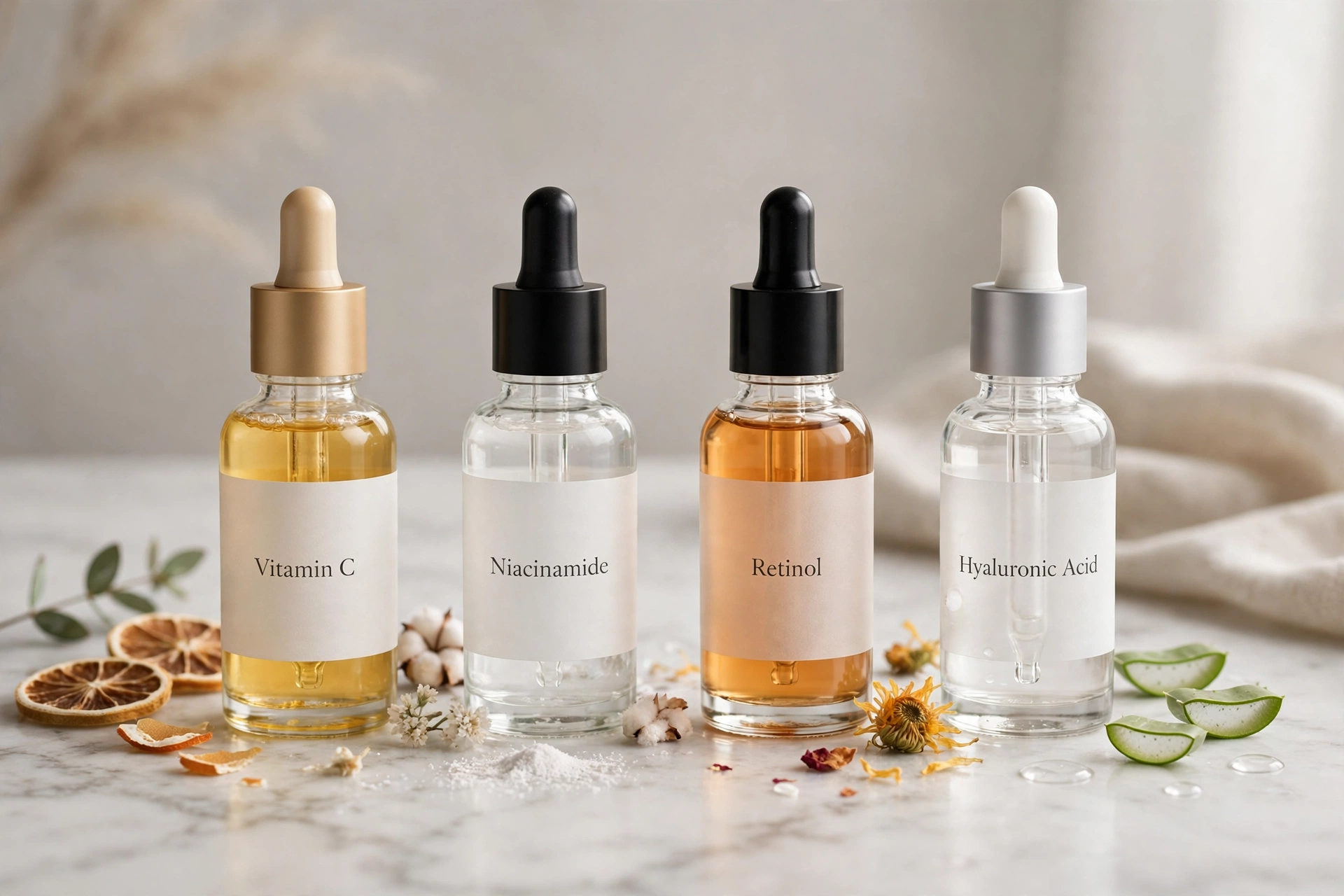
Skincare Ingredient Combinations UK: The Complete Guide to Layering and Mixing
The UK guide to skincare ingredient combinations: which actives mix, which clash, exact layering order, wait times and UK product picks.
Read More arrow_forwardYes — ferulic acid and vitamin C together UK is dermatology's dream team. Here's how to layer them for brighter, better-protected skin.
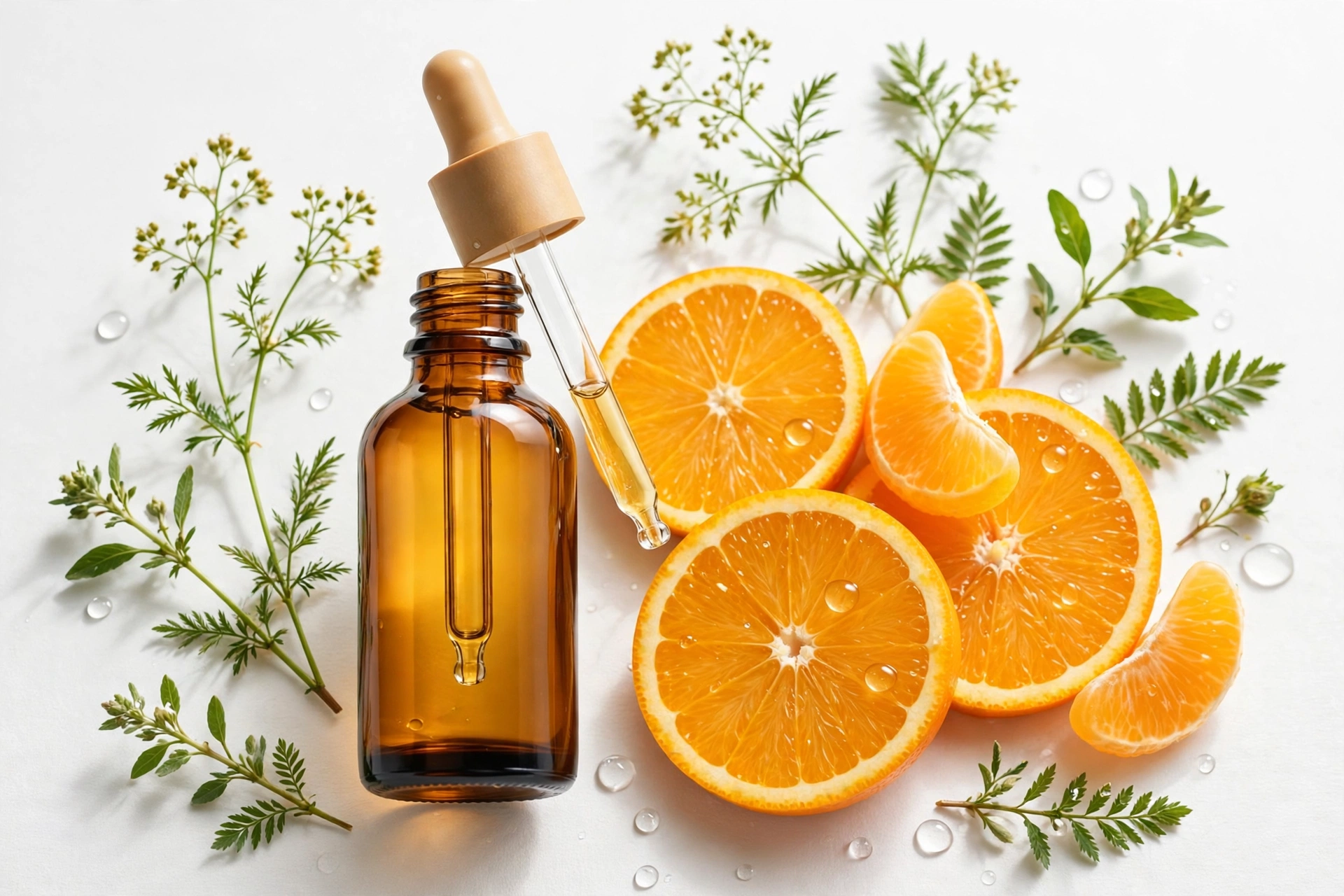
If you are using ferulic acid and vitamin C together UK skincare routines, you have already landed on one of the most researched and dermatologist-approved combinations in the entire beauty industry. This is not a trendy TikTok pairing that appeared overnight — it is backed by peer-reviewed science, including the landmark Duke University research that found ferulic acid doubles the photoprotection of a vitamin C and E solution, taking it from a useful antioxidant serum to genuine skin armour. Yet despite how famous this duo is, most people in the UK are using it wrong: layering it at the wrong time, pairing it with clashing ingredients, or buying products that do not contain the clinically studied percentages at all. This guide fixes all of that. You will learn exactly what ferulic acid does, why it supercharges vitamin C, the ideal formula percentages to look for on UK shelves, how to layer the two in your morning routine, the best ferulic and vitamin C products available at Boots, Superdrug, Cult Beauty and Lookfantastic — with real £ prices — and who should steer clear of this particular pairing altogether.
Ferulic acid is a plant-based antioxidant found naturally in the cell walls of rice bran, oats, wheat, coffee and many fruits. It has powerful free-radical-scavenging ability on its own, neutralising the unstable molecules that damage collagen, cause hyperpigmentation and accelerate visible ageing. But ferulic acid's true fame comes from its supporting role. When added to a solution of vitamin C (L-ascorbic acid) and vitamin E (alpha tocopherol), ferulic acid stabilises both vitamins — which are notoriously prone to oxidation — and dramatically increases their photoprotective power. The famous 2005 study from Duke University, published in the Journal of Investigative Dermatology, found that adding 0.5% ferulic acid to a 15% L-ascorbic acid and 1% alpha tocopherol solution doubled its ability to protect human skin from UV-induced damage. Photoprotection is not the same as sunscreen — the serum does not block UV rays the way an SPF filter does — but it significantly reduces the free-radical damage and inflammation that UV exposure triggers in the skin. Think of ferulic acid as the bodyguard that keeps vitamin C and vitamin E stable and working at full strength, so your skin gets far more protection than vitamin C could deliver alone.
For UK shoppers, ferulic acid is no longer a niche ingredient confined to expensive dermatologist brands. Affordable options containing the right percentages are now stocked at high-street retailers, which means you no longer need to spend £100+ to get the clinically validated formula. The key is knowing which percentages matter and which products actually deliver them — more on that in the product section below.
Yes — ferulic acid and vitamin C are not merely compatible, they are scientifically designed to work together. This is one of the rare ingredient pairings where "together" is better than "separate." Ferulic acid's pH and chemistry complement L-ascorbic acid perfectly; the two do not cancel each other out, irritate by conflict, or reduce each other's absorption. In fact, when they are combined in a single formula, ferulic acid protects vitamin C from oxidising in the bottle, keeping the serum fresher and more potent for longer. Many of the most celebrated antioxidant serums in the world — including the industry-standard CE Ferulic formula that inspired hundreds of dupes — are built around this exact trio: vitamin C, vitamin E and ferulic acid.
There is, however, an important distinction between using them together in one product and layering two separate products. Both approaches work, but a single well-formulated serum is more foolproof: the percentages are calibrated, the pH is optimised for L-ascorbic acid absorption, and you avoid the risk of pilling or conflicting textures from stacking two actives. If you prefer to layer — perhaps you already own a vitamin C serum you love and want to add ferulic acid — it works fine, provided you apply them in the right order and give each layer a moment to absorb. If you are still building your vitamin C routine from scratch, you may find our best vitamin C serums for glowing skin guide useful for comparing formulas before adding ferulic acid into the mix.
To understand why ferulic acid and vitamin C together UK routines are so effective, it helps to understand how each ingredient works alone — and what changes when they team up.
L-ascorbic acid, the pure and most studied form of vitamin C, is a potent antioxidant that neutralises free radicals, inhibits melanin production (which fades dark spots and evens skin tone), and stimulates collagen synthesis. The catch is that L-ascorbic acid is highly unstable. It oxidises when exposed to light, air and heat — which is why pure vitamin C serums often turn dark orange or brown and lose their potency within weeks or months of opening. Oxidised vitamin C is not just less effective; it can actually generate free radicals itself, working against your goals.
Ferulic acid performs two critical functions in the partnership. First, it is a stabiliser: adding it to a vitamin C and E solution keeps the vitamins intact for longer, extending the serum's shelf life and maintaining its potency bottle after bottle. Second, it is a photoprotection multiplier. The Duke University study demonstrated that the vitamin C + vitamin E + ferulic acid combination provided eight times the skin's natural photoprotection, compared with only four times for the vitamin C and E solution without ferulic acid. In other words, ferulic acid doubled the measurable sun-damage protection of the formula. The researchers attributed this to ferulic acid's ability to remain in the skin and continue scavenging free radicals long after application — it is absorbed quickly and stays active, forming a reservoir of antioxidant protection in the skin's upper layers.
The clinically validated "gold standard" formula is:
15% L-ascorbic acid (pure vitamin C) — high enough to be effective, low enough to be tolerable for most skin types
1% alpha tocopherol (vitamin E) — regenerates oxidised vitamin C back into its active form, creating a recycling loop
0.5–1% ferulic acid — stabilises the solution and doubles photoprotection
This is the formula to look for on UK product labels. Some brands use 20% vitamin C, but studies show that 15% delivers near-maximum collagen stimulation with less irritation risk. When shopping, check that the label lists all three ingredients — a serum advertising "vitamin C" without ferulic acid will not give you the doubled photoprotection benefit, and a serum listing ferulic acid at the very end of a long ingredient list may contain too little to matter.
UK shoppers have excellent options at every price point. Below are the standouts, from budget-friendly dupes to premium formulas — all stocked by Boots, Superdrug, Cult Beauty or Lookfantastic as of autumn 2026 (prices can vary, so check for seasonal offers).
Product | Price (approx.) | Where to buy | Why it stands out
The Ordinary Resveratrol 3% + Ferulic Acid 3% | From £10 | Boots, Superdrug | Ultra-affordable dedicated ferulic acid — layer over your own vitamin C serum
Mad Hippie Vitamin C Serum (sodium ascorbyl phosphate + ferulic acid + vitamin E) | ~£30 | Lookfantastic | Gentle vitamin C derivative — great for beginners
Geek & Gorgeous C-Glow (15% vitamin C + vitamin E + ferulic acid) | ~£13 | Direct / Cult Beauty | Cult favourite; the true gold-standard formula at a drugstore price
Product | Price (approx.) | Where to buy | Why it stands out
Drunk Elephant C-Firma Fresh Day Serum (15% L-ascorbic acid, 0.5% ferulic acid, 1% vitamin E) | ~£70 | Cult Beauty, Boots | The benchmark CE-ferulic serum; "Fresh" packaging keeps vitamin C potent
Paula's Choice C15 Super Booster (15% stabilised vitamin C + vitamin E + ferulic acid) | ~£52 | Cult Beauty, Lookfantastic | Featherlight texture; layers beautifully under moisturiser
Timeless 20% Vitamin C + E + Ferulic Acid | ~£25–£30 | Direct / Amazon UK | One of the closest formula matches to the original at a fraction of the price
Product | Price (approx.) | Where to buy | Why it stands out
SkinCeuticals C E Ferulic (15% L-ascorbic acid, 1% vitamin E, 0.5% ferulic acid) | ~£150 | Cult Beauty, Lookfantastic | The original, backed by the most published research; the reference standard dermatologists cite
Medik8 C-Tetra (tetrahexyldecyl ascorbate + vitamin E) | ~£45 | Cult Beauty, Boots | Uses a stable vitamin C derivative — an option if pure L-ascorbic acid irritates
A note on the Geek & Gorgeous C-Glow at ~£13: it is widely regarded as the best-value true CE-ferulic serum in the UK, closely matching the studied percentages. If budget is your priority, start there. If you want the most researched formula money can buy, SkinCeuticals C E Ferulic remains the gold standard that every dupe is measured against.
If you are using a single combined serum (the easiest route), the "layering" question is already answered for you — the formula is pre-balanced. Apply it to clean, dry skin and move on. But if you own separate ferulic acid and vitamin C products, follow this order:
Cleanse with a gentle cleanser (no need for double cleansing in the morning unless your skin is very oily).
Apply the vitamin C product first — L-ascorbic acid works best at a low pH and should go directly on bare skin for maximum absorption. Use 3–4 drops for the whole face.
Wait 30–60 seconds to let it absorb. The skin should feel dry to the touch, not tacky.
Apply the ferulic acid product if separate — though most dedicated ferulic acid serums (like The Ordinary's Resveratrol + Ferulic Acid) also work well applied after.
Moisturiser next to seal everything in.
Sunscreen last — always. Antioxidants enhance sunscreen; they never replace it.
One common question is whether you can use ferulic acid and vitamin C at night too. You can, but the science strongly favours morning use: the photoprotection benefit is designed to shield your skin during the day's UV exposure. If you want an antioxidant at night as well, consider pairing vitamin C with niacinamide for enhanced barrier benefits instead — and read our dedicated guide on whether you can use niacinamide and vitamin C together in the UK before combining them.
Here is the full morning routine in order, with timings:
Step 1 — Cleanser: a gentle, non-stripping cleanser (30 seconds, lukewarm water).
Step 2 — Antioxidant serum: your vitamin C + ferulic acid (+ vitamin E) serum, 3–4 drops, pressed into dry skin. Wait about 1 minute.
Step 3 — Moisturiser: a lightweight moisturiser suited to your skin type. In colder months, you may want something richer — see our winter skincare routine for dry skin for seasonal swaps.
Step 4 — Sunscreen: a broad-spectrum SPF 30 minimum (SPF 50 is better for UK summer and holidays). Apply the two-finger rule amount and wait 15 minutes before sun exposure or makeup. Our best sunscreens 2026: mineral vs chemical comparison will help you pick one that layers well over serums without pilling.
Keep this routine strictly to the morning. In the evening, you can use gentler hydrating products or, if your skin tolerates it, a retinoid — but vitamin C and retinoids are best kept in separate routines, as explained in our guide to using retinol and vitamin C together in the UK.
This is the question UK users ask most, and the answer is reassuringly simple: apply your sunscreen immediately after your moisturiser, with no special waiting period required for the antioxidant serum itself. The vitamin C + ferulic acid serum needs roughly 60 seconds to absorb into the skin — once it feels dry, move on to moisturiser, then sunscreen straight away. You do not need to wait 10 or 20 minutes between the serum and sunscreen. The only wait that matters is the standard 15 minutes after applying sunscreen before going out into direct sun, which allows the UV filters to form an even protective film.
One UK-specific point worth knowing: the NHS advises that sunscreen should be applied generously and reapplied regularly during sun exposure — see the NHS guidance on sunscreen and sun safety for the official recommendations. Antioxidant serums complement sunscreen; they are never a substitute for it, even on cloudy British days when up to 80% of UV radiation still reaches your skin. The British Association of Dermatologists also publishes patient information on sunscreen use that is worth reading if you are unsure about quantities or reapplication.
Patience is essential with antioxidants — they work at the cellular level, and visible changes take time. Here is a realistic timeline:
2–3 weeks: skin looks slightly brighter and more even; makeup may sit more smoothly. This is the antioxidant "glow" phase.
4–8 weeks: dark spots and post-inflammatory marks begin to fade noticeably; fine lines look softer as collagen support kicks in.
8–12 weeks: full brightening and firming benefits become apparent; clinical studies on the CE-ferulic formula typically measure significant improvement in photodamage markers at the 12-week mark.
6+ months: cumulative photoprotection pays off — fewer new dark spots form, and skin shows measurably less UV-related damage than it would without the routine.
Consistency matters more than the price of your serum. A £13 serum used every single morning will outperform a £150 serum used twice a week. If you miss a day, do not double up the next morning — just resume your normal routine.
Using an oxidised serum. If your L-ascorbic acid serum has turned dark orange or brown, it has oxidised and lost potency. Toss it. Store serums in a cool, dark place (not a steamy bathroom shelf) and choose airless or opaque packaging when possible.
Skipping sunscreen. The entire photoprotection story depends on sunscreen being the final step. Ferulic acid plus vitamin C without SPF is like wearing a seatbelt in a car with no brakes — the protection is incomplete.
Mixing with benzoyl peroxide. Benzoyl peroxide oxidises vitamin C on contact, rendering it useless. If you use benzoyl peroxide for acne, keep it in your evening routine and vitamin C strictly in the morning.
Layering over damp skin. L-ascorbic acid absorbs best on dry skin. Pat your face dry after cleansing and wait a few seconds before applying.
Using too much product. Three to four drops is enough for the face. Over-applying increases irritation risk without improving results and wastes an expensive serum.
Combining with strong exfoliating acids in the same routine. AHA/BHA acids and L-ascorbic acid can both irritate at low pH. If you exfoliate, do it in the evening and keep your mornings for antioxidants.
Expecting overnight miracles. Anyone promising dramatic results in days is selling something. The research timeline is weeks to months — set your expectations accordingly and take monthly photos to track progress objectively.
Ferulic acid and vitamin C together suit most skin types, but pure L-ascorbic acid at 15% can be too intense for some. Consider gentler alternatives if you have rosacea, eczema-prone skin, a compromised skin barrier, or a history of reacting to strong actives.
Try a vitamin C derivative instead. Sodium ascorbyl phosphate (SAP), ascorbyl glucoside, or tetrahexyldecyl ascorbate (THD ascorbate) are far gentler than L-ascorbic acid while still offering brightening and antioxidant benefits. Mad Hippie Vitamin C Serum (~£30 at Lookfantastic) and Medik8 C-Tetra (~£45 at Cult Beauty) are excellent UK-available examples.
Start with a lower percentage. Some brands offer 8–10% L-ascorbic acid formulas that let sensitive skin build tolerance gradually.
Patch test first. Apply a small amount behind your ear or along your jawline for 3–5 days before full-face use.
Keep ferulic acid itself. Good news: ferulic acid is generally well tolerated even by sensitive skin, and many gentle formulas include it alongside milder vitamin C derivatives. You do not have to give up the pairing — just swap the vitamin C form.
See a dermatologist if you experience persistent stinging, redness or breakouts after two weeks of use. A UK dermatologist can recommend prescription-strength alternatives or identify an underlying sensitivity.
Yes — daily morning use is exactly how the clinical research tested this combination. The photoprotection benefit builds with consistent daily application. Once-daily use in the morning is sufficient; there is no evidence that twice-daily application improves results enough to justify the extra irritation risk.
If they are in the same serum, the question is moot — the formula is pre-balanced. If you have separate products, apply the vitamin C (L-ascorbic acid) serum first on bare skin, wait about a minute, then apply the ferulic acid product. Vitamin C needs direct skin contact at low pH for optimal absorption.
Keep them in separate routines: vitamin C + ferulic acid in the morning, retinol in the evening. Using all three at once increases irritation without added benefit, since the antioxidant duo's main job is daytime photoprotection while retinol works overnight on cell turnover. See our detailed guide on retinol and vitamin C together in the UK for the full breakdown.
Absolutely not. The Duke University research measured supplemental photoprotection on top of the skin's baseline defences — it is an enhancement, not a replacement. You still need a broad-spectrum SPF 30+ (ideally SPF 50) every morning as the final step. Think of antioxidants as your backup team and sunscreen as your first line of defence.
Store it in a cool, dark place away from heat and humidity — a bedroom drawer is better than a steamy bathroom. Keep the cap tightly closed, minimise air exposure, and check the colour regularly: a fresh L-ascorbic acid serum is clear to pale straw-yellow, while dark orange or brown signals oxidation. Most serums last 2–3 months after opening when stored properly. The landmark ferulic acid research is published on PubMed (J Invest Dermatol, 2005) if you want to read the original study.
Yes, ferulic acid and niacinamide are compatible. The old myth that niacinamide and vitamin C cannot be combined has been largely debunked for modern formulations, though very sensitive skin may still prefer to separate them. If you want to use all three, a common UK routine is vitamin C + ferulic acid in the morning and niacinamide in the evening.
Look for 0.5% to 1% ferulic acid, paired with 15% L-ascorbic acid and 1% vitamin E — the percentages used in the published research. Ferulic acid listed far down the ingredient list (after fragrance or preservatives) likely indicates a token amount too low to deliver the studied benefits.
Ferulic acid itself has no known pregnancy contraindications, and topical vitamin C is generally considered safe during pregnancy. However, always check with your GP or midwife before starting new active skincare while pregnant or breastfeeding, especially if the formula contains additional actives.
Ferulic acid and vitamin C are one of skincare's most evidence-backed pairings — ferulic acid stabilises vitamin C and doubles its photoprotection, according to Duke University research.
The clinically validated formula is 15% L-ascorbic acid + 1% vitamin E + 0.5–1% ferulic acid — look for these percentages on UK labels.
Use the duo every morning on clean, dry skin, followed by moisturiser and broad-spectrum SPF 30+ — antioxidants enhance sunscreen but never replace it.
Excellent UK options exist from ~£13 (Geek & Gorgeous C-Glow) to ~£150 (SkinCeuticals C E Ferulic) at Boots, Superdrug, Cult Beauty and Lookfantastic.
Expect visible brightening in 2–4 weeks and full results in 8–12 weeks — consistency beats price.
Sensitive skin? Swap L-ascorbic acid for a gentler derivative like sodium ascorbyl phosphate or THD ascorbate, but keep the ferulic acid.
Never combine with benzoyl peroxide in the same routine, and keep strong exfoliating acids to the evening.
Using ferulic acid and vitamin C together UK routines is one of the smartest, simplest upgrades you can make to your morning skincare. The science is unusually clear for the beauty world: a single well-formulated serum, used every morning under sunscreen, delivers brighter, more even-toned skin and measurably better protection against the UV damage that causes most visible ageing. You do not need the most expensive option — the £13 cult favourite delivers the same studied percentages as the £150 original. What you need is the right formula, the right order, sunscreen every single day, and the patience to let the antioxidants do their work over weeks and months. Start with one of the UK-available picks above, take a "before" photo today, and check back in twelve weeks — your future skin will thank you.
The UK guide to skincare ingredient combinations: which actives mix, which clash, exact layering order, wait times and UK product picks.
Read More arrow_forward
Can you use hyaluronic acid and retinol together? Yes — here is the UK layering guide with routines, products and prices.
Read More arrow_forwardCalculate your Body Mass Index (BMI) in seconds. BMI is a quick screening number…
Use now arrow_forwardFind your daily calorie needs based on your age, sex, height, weight and activit…
Use now arrow_forwardFind how much water you should drink each day, in litres and glasses, based on y…
Use now arrow_forward