Skincare for Teenagers UK: A Safe Routine for Acne-Prone Teen Skin
If you are a teenager in the UK battling breakouts — or a parent watching your child lose confidence over their skin — this guide to skincare for teenagers uk is for you. Spots, blackheads, oily foreheads and the odd painful cyst are incredibly common between the ages of 13 and 19, and they are not a sign that anyone is "dirty" or doing something wrong. They are largely a hormone story, and a simple, consistent, gentle routine beats an expensive 12-step regime every single time. In this guide we walk through why teen skin breaks out, a safe four-step routine that costs less than £30 from Boots or Superdrug, the ingredients that are safe for teen skin (and the ones to skip), the TikTok trends dermatologists wish teenagers would avoid, and — importantly — when to speak to a GP or pharmacist rather than trying to fix things alone.
Why Teen Skin Breaks Out: The Hormone Story (Not Your Fault)
Puberty, oil and blocked pores
During puberty, rising levels of androgens (hormones present in all genders) signal the sebaceous glands — the tiny oil factories attached to each hair follicle — to produce more sebum. This is completely normal biology. The problem starts when that extra oil mixes with dead skin cells and blocks the pore opening. Blocked pores create the perfect oxygen-free environment for Cutibacterium acnes, a bacterium that already lives harmlessly on everyone's skin, to overgrow. The immune system responds with inflammation, and you get redness, swelling and pus — in other words, a spot.
This is why breakouts tend to cluster on the forehead, nose, chin and upper back: those areas have the highest density of sebaceous glands. Genetics plays a big role too. If your parents had teenage acne, there is a good chance you will too — and equally, nothing you "did wrong" caused it.
UK-specific triggers: school stress, masks and cold weather
UK teenagers face a particular cocktail of triggers. Exam pressure and disrupted sleep raise cortisol, which can nudge oil production higher. The damp, cold British autumn and winter can leave skin feeling tight, tempting teens to skip moisturiser or over-wash — both of which can make acne worse (more on that below). Busy school canteens and packed commutes on the bus or Tube mean touching the face with unwashed hands all day. And let us be honest: the UK weather means long sleeves and scarves against the chin, which can trap oil and sweat around the jawline — a common site for teenage breakouts.
Diet myths: gently debunked
You have probably heard that chocolate, crisps or chips cause spots. Here is the reassuring truth: there is no strong evidence that any single food causes acne in the way most people imagine. Some research suggests that very high-glycaemic diets (lots of sugary drinks, sweets and white-bread-heavy meals) may be associated with more breakouts in some people, and skimmed milk has shown a weak association in a few studies — but the evidence is far from conclusive, and restrictive diets can do more harm than good for growing teenagers. A balanced diet, plenty of water and regular sleep matter far more than cutting out your favourite snacks. Do not let anyone — including a skincare influencer — make you feel guilty about eating normally.
The 4-Step Core Routine for Teen Skin
Here is the whole philosophy of this guide in one sentence: cleanse gently, treat targeted spots, moisturise lightly, protect with SPF. That is it. Four steps. Done consistently, this outperforms any complicated routine, and it keeps the skin barrier — the protective outer layer of your skin — intact. For more on why the barrier matters, see our guide to how to repair a damaged skin barrier.
Step 1: A gentle cleanser (not a harsh face wash)
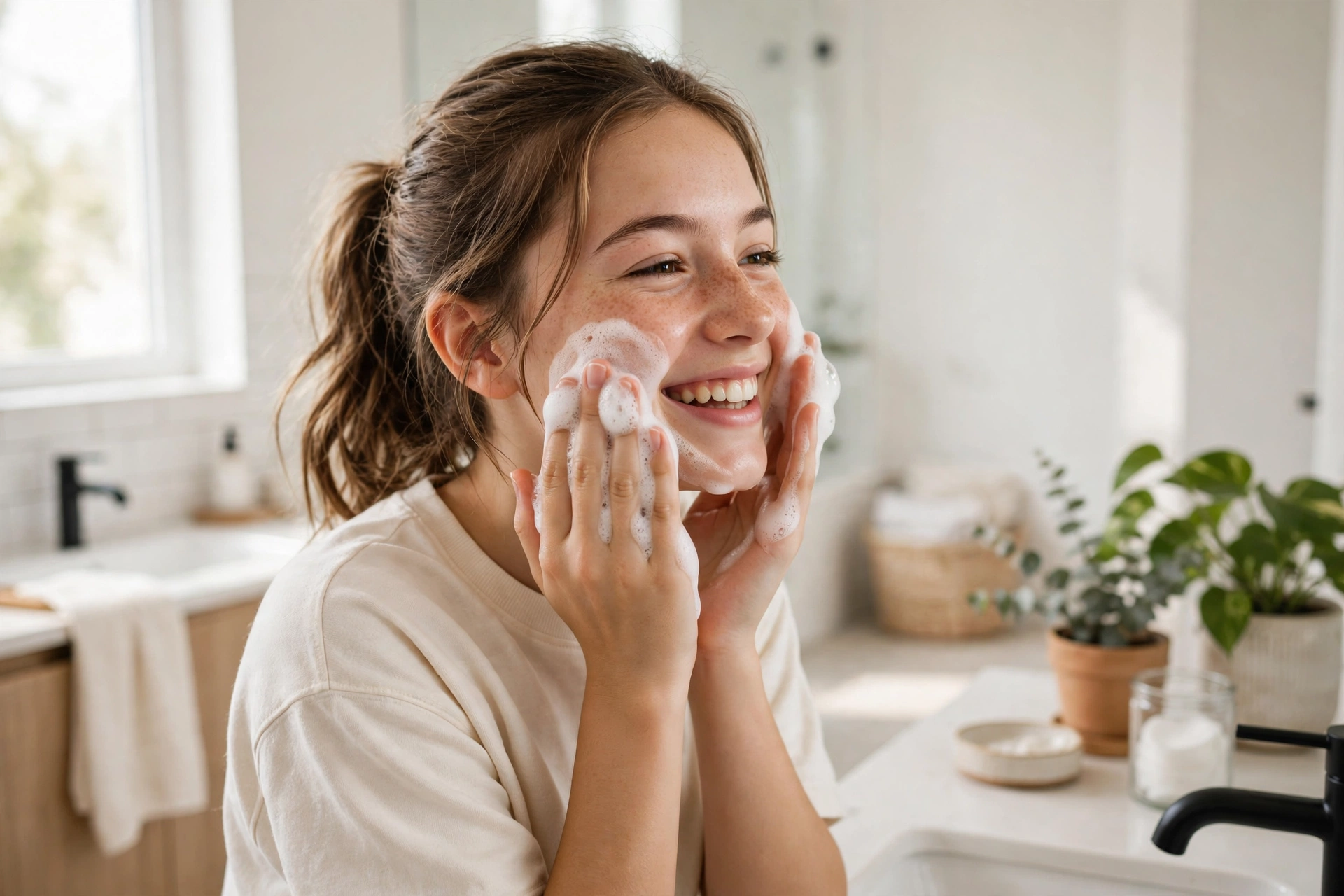
Teenage skin needs cleaning, not stripping. A gentle, fragrance-free cleanser removes excess oil, sweat and sunscreen without leaving the skin squeaky-tight (that "squeaky" feeling actually means your barrier has been damaged). Wash with lukewarm water, use your fingertips — not a flannel, brush or scrub — and massage for about 30 to 60 seconds before rinsing. Cleanse twice a day, morning and evening, plus after heavy sport. No more: overwashing signals the glands to produce even more oil to compensate.
Step 2: A targeted spot treatment (optional but useful)
If breakouts are mild, a targeted treatment containing a low percentage of salicylic acid or benzoyl peroxide can be dabbed directly onto individual spots. Apply it after cleansing and before moisturiser, and only on the spots themselves rather than all over the face. A pea-sized amount per area is plenty. Our salicylic acid for acne guide explains how this ingredient unclogs pores in detail.
Step 3: A lightweight, oil-free moisturiser
This is the step teenagers most often skip — and the step they most need. Oily skin is not hydrated skin. Without moisturiser, the barrier weakens, water evaporates, and the skin compensates by producing more oil: a vicious cycle. Choose an oil-free, non-comedogenic (won't block pores) moisturiser. Gel or light lotion textures suit teen skin best, and a moisturiser with niacinamide can help regulate oil and calm redness — see our niacinamide serum benefits guide for the full picture.
Step 4: Sunscreen every morning (yes, even in cloudy Britain)
SPF is non-negotiable, and it is especially important if you are using any spot treatment, because many of them make skin more sensitive to sunlight. The UK's cloudy weather is deceptive — up to 80% of UV rays pass through cloud. Choose a lightweight SPF 30 or higher, labelled non-comedogenic. If standard sunscreens feel greasy, a gel or fluid formula usually works better for teen skin; our roundup of the best sunscreens covers mineral vs chemical options.
Your AM and PM Routine at a Glance
Here is the full routine in table form. Stick it on the bathroom mirror until it becomes habit.
Step | Morning (AM) | Evening (PM)
1 | Gentle cleanser, lukewarm water | Gentle cleanser (consider double cleansing only if wearing heavy makeup or thick sunscreen)
2 | Spot treatment on active spots (optional) | Spot treatment on active spots (optional)
3 | Lightweight oil-free moisturiser | Lightweight oil-free moisturiser
4 | SPF 30+ sunscreen | Nothing extra — let skin rest overnight
That is the entire routine. If your skin is happy on this for six to eight weeks, you do not need to add anything. Consistency beats novelty: switching products every week is one of the most common reasons teen routines fail, because every new product can trigger a fresh round of irritation.
Affordable UK Product Picks (All Under the High Street Roof)
Every product below is widely available at Boots, Superdrug or both, costs £15 or less, and is suitable for teenage skin. Prices are approximate as of October 2026 and do vary between retailers and offers.
Gentle cleansers
Simple Water Boost Micellar Gel Wash (~£6, 150ml): fragrance-free, gel texture, rinses clean without tightness. An excellent starter cleanser and a safe pick for sensitive skin — and is a safe pick for sensitive skin.
CeraVe Hydrating Cleanser (~£11.50, 236ml): contains ceramides and hyaluronic acid to support the barrier while cleansing. Very popular with UK dermatologists for teen skin.
La Roche-Posay Effaclar Purifying Foaming Gel (~£10.50, 200ml): designed for oily, blemish-prone skin; effective without being stripping. A great option for very oily T-zones.
Spot treatments
The Ordinary Salicylic Acid 2% Solution (~£6.50, 30ml): a low-percentage BHA that unclogs pores. Dab onto spots only, not the whole face. Start two to three evenings a week and build up if tolerated.
Acnecide 5% Benzoyl Peroxide Gel (~£9, available at Boots/Superdrug pharmacies): a pharmacy staple that kills acne bacteria. Can bleach towels and pillowcases, so use a white pillowcase while using it. Start with short-contact use (apply for 30–60 minutes, then rinse) to test tolerance.
Moisturisers
Simple Water Boost Gel Cream (~£7, 50ml): lightweight, oil-free, fragrance-free. Ideal for oily teen skin.
CeraVe Moisturising Lotion (~£13, 236ml): light lotion with ceramides and niacinamide. Works for face and body — good value for money.
La Roche-Posay Effaclar Duo+ (~£16.50, 40ml — often on offer under £15): a moisturiser-treatment hybrid with niacinamide and salicylic acid. Many UK teens and parents swear by it, but introduce it slowly as it is more active than a basic moisturiser.
Sunscreens
Garnier Ambre Solaire Super UV Face Fluid SPF 50+ (~£8, widely available): lightweight, non-greasy, sits well under school-day routines.
La Roche-Posay Anthelios UVMune 400 Invisible Fluid SPF 50+ (~£14 on offer): the dermatologist favourite in the UK; very high protection, fluid texture that suits oily skin.
A parent-friendly budget note: a full starter routine (Simple cleanser + Acnecide or The Ordinary treatment + Simple moisturiser + Garnier SPF) comes to roughly £25–£30 and lasts two to three months. Teen skincare does not need to be expensive to be effective.
What NOT to Do: TikTok Trends and Habits to Avoid
TikTok trends dermatologists warn against
Social media is full of dramatic "hacks" that can genuinely damage young skin. Please avoid all of these:
Lemon juice or apple cider vinegar on spots: both are acids with unpredictable pH. They can cause chemical burns, irritation and dark marks (post-inflammatory hyperpigmentation) that last far longer than the spot would have.
Toothpaste on spots: toothpaste contains detergents, menthol and whitening agents designed for teeth, not skin. It dries spots out aggressively and frequently causes red, peeling, irritated patches.
Undiluted essential oils (tea tree included): tea tree oil has some evidence behind it for acne, but only when properly diluted (around 5% in a carrier). Applying it neat is a common cause of contact dermatitis in teenagers.
Over-exfoliating and "skin cycling" extremes: daily scrubs, strong glycolic peels and stacking multiple acids destroy the barrier. A damaged barrier looks red, stings, and breaks out more — not less.
Sunscreen contouring or skipping SPF to "tan spots away": UV exposure darkens post-acne marks and increases long-term skin damage risk. Spots always look worse after the tan fades.
Hydrocolloid "miracle" stacking with actives: pimple patches are fine on their own, but layering strong actives underneath them increases absorption and irritation risk.
Habits that make breakouts worse
Picking and squeezing: the number-one habit to break. Squeezing pushes bacteria deeper, increases inflammation and dramatically raises the risk of scarring. If you absolutely cannot leave a spot alone, a hydrocolloid patch is the safer option.
Harsh physical scrubs: apricot scrubs, rough exfoliating gloves and baking-soda pastes create micro-tears in the skin. Chemical exfoliants at low percentages are gentler and more effective.
Over-washing: more than twice a day (plus post-sport) strips the barrier and triggers rebound oiliness. Your skin is not dirty; it is hormonal.
Sharing makeup, towels and pillowcases: bacteria transfer is real. Keep pillowcases changed twice a week and never share products that touch the face.
Falling asleep in makeup: if you wear makeup, remove it properly every evening. On heavy makeup days, a gentle double cleanse is worth the extra minute — a gentle double cleanse is worth the extra minute.
Ingredients: Safe for Teens vs Skip for Now
Safe for teen skin (at low strengths)
Salicylic acid (0.5–2%): an oil-soluble exfoliant that gets inside pores and dissolves the plugs that become blackheads and spots. Best as a targeted treatment or in a cleanser, not layered all over the face daily.
Niacinamide (2–5%): a form of vitamin B3 that helps regulate sebum, calms redness and supports the barrier. Very well tolerated by teen skin and found in many gentle moisturisers.
Benzoyl peroxide (2.5–5%): kills acne-causing bacteria and is one of the best-evidenced over-the-counter acne treatments. Start low, expect some dryness at first, and protect fabrics from bleaching.
Azelaic acid (10%, over the counter): calms redness and helps with both spots and the dark marks they leave behind. A good option for sensitive teen skin that cannot tolerate stronger actives.
Gentle hydrators (hyaluronic acid, glycerin, ceramides): keep the barrier healthy so everything else works better.
Skip until adulthood (or use only under professional guidance)
High-strength retinoids (tretinoin, adapalene 0.3%, strong retinol serums): effective for acne, but the irritation, purging and sun sensitivity they cause need professional supervision. Prescription retinoids should only be used when prescribed by a GP or dermatologist — never borrowed from an adult's cabinet or bought from an unverified online seller.
Strong chemical peels (high-percentage AHA/BHA peels, "peeling solutions"): designed for adult skin concerns; far too aggressive for teen skin and a frequent cause of barrier damage.
High-percentage vitamin C serums (15–20% L-ascorbic acid): can sting and irritate young skin; the brightening benefits are not a teen priority.
Essential oils applied neat, rubbing alcohol and witch hazel toners with high alcohol content: all excessively drying and irritating.
The rule of thumb: if a product promises dramatic overnight transformation or is marketed with before-and-after photos that look too good to be true, it is almost certainly too harsh for teenage skin.
Diet, Sleep and Pillowcase Habits That Actually Help
Skincare products do about half the work; daily habits do the rest. None of these cost anything:
Sleep 8–10 hours: teenagers need more sleep than adults, and chronic short sleep raises stress hormones linked to breakouts. Screens off an hour before bed genuinely helps.
Change pillowcases twice a week: oil, sweat and bacteria build up fast. Silk or satin pillowcases are a nice-to-have, not a necessity — clean cotton is perfectly fine.
Keep hair off the face: heavy fringes, unwashed hats and greasy hair products along the hairline ("pomade acne") are a real trigger. Wash hair regularly and keep styling products away from the forehead.
Clean your phone screen: phones press against the cheek for hours and collect bacteria. A quick daily wipe with a microfibre cloth or alcohol-free screen wipe helps.
Manage stress without guilt: exams, friendships and social media pressure are genuinely stressful, and stress can worsen acne. Exercise, daylight and talking to someone you trust help more than any serum.
Eat and drink normally: balanced meals, water through the day, and no extreme restriction. If you suspect a specific food link, keep a simple two-week diary and discuss it with your GP rather than cutting out whole food groups.
When to See a GP or Pharmacist: The NHS Route
Most teen acne improves with a gentle routine and patience. But some situations deserve professional help — and in the UK, that help is free and straightforward.
See your GP if:
Acne is painful, with deep, tender lumps or cysts under the skin.
Breakouts are leaving scars or dark marks that are not fading.
Over-the-counter products have made no difference after 8–12 weeks of consistent use.
Acne is spreading to the chest, shoulders or back and affecting daily life.
Spots are significantly affecting mood, confidence or school life — this matters as much as the physical symptoms, and GPs take it seriously.
What the GP can do: UK GPs can prescribe topical treatments (such as prescription retinoids or combination gels), and for moderate to severe cases, oral options including antibiotics or, where appropriate, referral to an NHS dermatologist. Girls with persistent hormonal acne may be offered the combined contraceptive pill as a treatment option — a decision for the teen, parent and GP together.
Your pharmacist is an underused ally: high-street pharmacists at Boots and Superdrug can advise on over-the-counter acne treatments, how to use benzoyl peroxide safely, and when a GP appointment is the right next step — no appointment needed.
Authoritative reading: the NHS acne guide covers symptoms, causes and treatments clearly, and the British Association of Dermatologists publishes patient information leaflets on acne written for the UK public. If a product or influencer claim sounds too good to be true, check it against these sources first.
One important reassurance for parents: seeking help early for scarring or severe acne is not vanity. Acne scars can be permanent, and early treatment prevents them. A GP appointment is never an overreaction.
Frequently Asked Questions
How long before I see results from a new routine?
Give any routine a full 8–12 weeks before judging it. Skin cells turn over roughly every 28 days (slower in some teens), so improvements are gradual. Mild initial dryness or a small "purge" with new active ingredients can happen in the first two to three weeks — but if irritation is severe, spreading or painful, stop the new product and simplify back to cleanser, moisturiser and SPF.
Should teenagers use anti-ageing products?
No. Retinol-heavy serums, firming creams and strong exfoliating peels are designed for adult concerns like wrinkles and sun damage, which teenagers do not have. Using them young risks irritation, barrier damage and sensitised skin with zero benefit. The best "anti-ageing" product a teenager can use is daily sunscreen.
Is it okay to wear makeup with acne?
Yes — makeup does not cause acne as long as it is non-comedogenic and removed properly every evening. Look for labels like "non-comedogenic" and "oil-free". Mineral-based foundations tend to be well tolerated. What matters most is the removal step: never sleep in makeup, and change makeup sponges and brushes regularly.
My spots are mostly on my forehead — is it my fringe?
Very possibly. Hair products, sweat and the constant contact of a fringe against the forehead are classic triggers for forehead breakouts. Try pinning hair back for two weeks as an experiment, keep styling products away from the hairline, and wash hats and headbands regularly.
Can boys follow the same routine?
Absolutely. This routine is for all genders. Teenage boys often have oilier skin and may shave around breakouts — if so, use a sharp clean razor, shave with the grain, and never shave directly over inflamed spots or cysts.
What if my parents think skincare is a waste of money?
Show them the budget breakdown above: a full starter routine costs around £25–£30 and lasts months — less than many spend on a single takeaway. Framing it as basic hygiene and confidence rather than beauty often helps. And if acne is severe or scarring, a free GP appointment is the most cost-effective step of all.
Are "natural" or DIY remedies safer than shop products?
Not necessarily. Lemon juice, baking soda and undiluted essential oils are "natural" and can still burn or irritate skin badly. Shop-bought products from established brands have been safety-tested, list their ingredients and concentrations, and are regulated in the UK. "Natural" is a marketing word, not a safety guarantee.
When should I stop a product immediately?
Stop and simplify if you experience burning that does not fade within a few minutes, spreading redness, swelling, blistering, or a rash beyond the area where the product was applied. These can signal an allergic reaction or chemical irritation. If symptoms are severe or involve the eyes or lips, seek advice from a pharmacist or GP promptly.
Key Takeaways
Teenage acne is driven by hormones, not poor hygiene — and it is extremely common and treatable.
A simple 4-step routine (gentle cleanser, spot treatment, lightweight moisturiser, SPF 30+) beats complicated regimes.
Keep it affordable: a full UK high-street starter routine costs around £25–£30 from Boots or Superdrug.
Safe teen ingredients at low strengths: salicylic acid, niacinamide, benzoyl peroxide, azelaic acid. Skip high-strength retinoids and strong peels unless prescribed.
Avoid TikTok trends like lemon juice, toothpaste and undiluted essential oils — they cause real damage.
Never pick or squeeze spots; change pillowcases twice weekly; clean your phone screen; get enough sleep.
See a GP for painful, scarring or persistent acne — NHS treatment is free and effective, and early help prevents permanent scars.
Conclusion
Good skincare for teenagers uk is not about expensive products, 12-step routines or chasing viral trends — it is about a gentle, consistent, affordable routine that respects young skin and the science of how it works. Start with the four steps in this guide, give them two to three months, and resist the urge to keep adding new products. Be kind to your skin and to yourself: breakouts are a normal part of growing up, they do not define you, and with the right routine — plus professional help when needed — they are very manageable. Parents: your support matters enormously here. Keep the conversation open, keep the routine simple, and do not hesitate to book that GP appointment if acne is leaving marks, causing pain or denting confidence. Clearer, calmer skin is absolutely within reach.
For related reading, explore our guide on [fungal acne routines for the UK](https://www.glowmagzine.com/blog/fungal-acne-malassezia-routine-uk/).