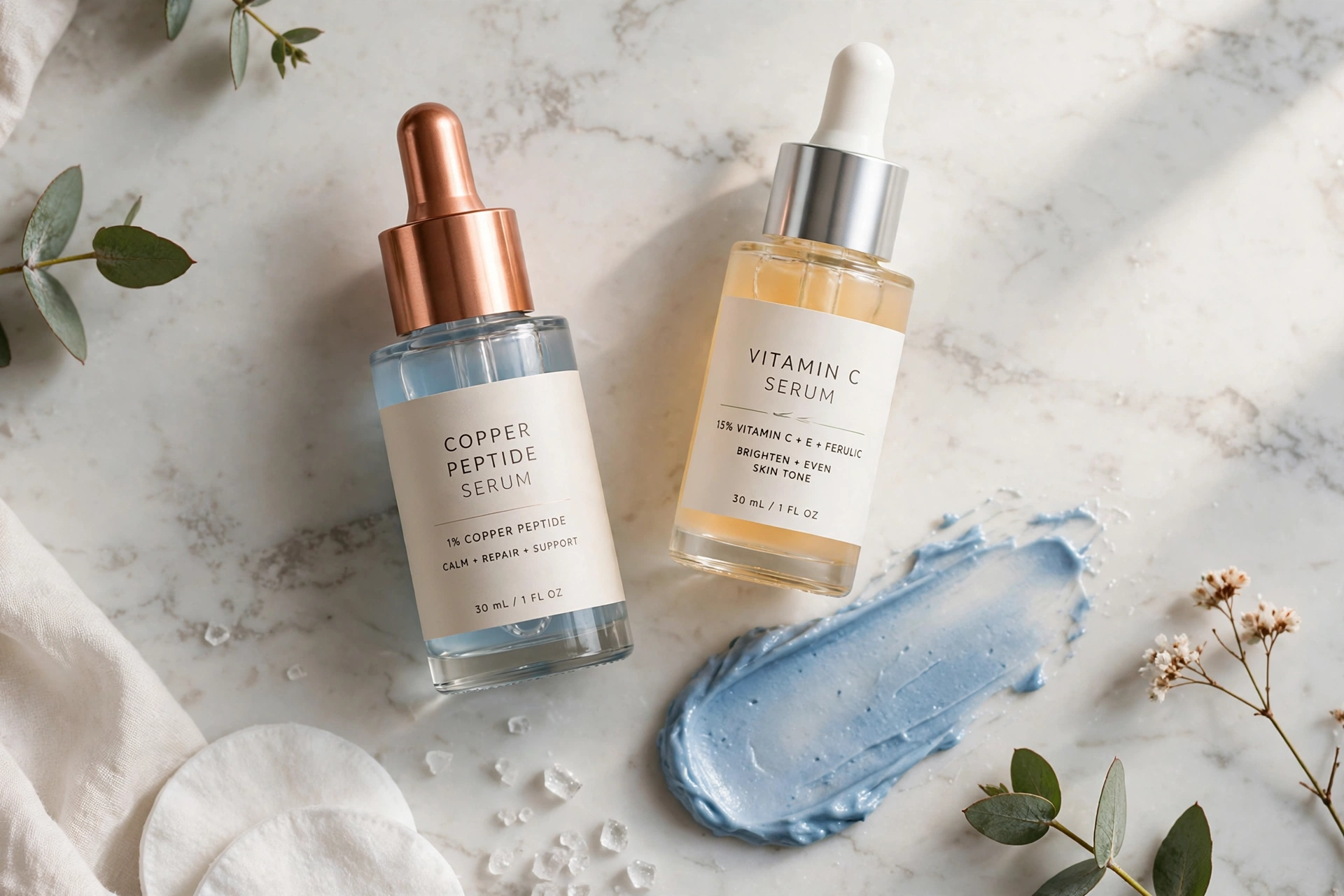
Can You Use Copper Peptides and Vitamin C Together UK? A Firming Guide
Can copper peptides and vitamin C be layered safely? A UK firming guide on order, routines, and who should skip the mix.
Read More arrow_forwardCan you use bakuchiol and retinol together UK? Yes — this gentle pairing guide explains layering order, routines and who should avoid it.
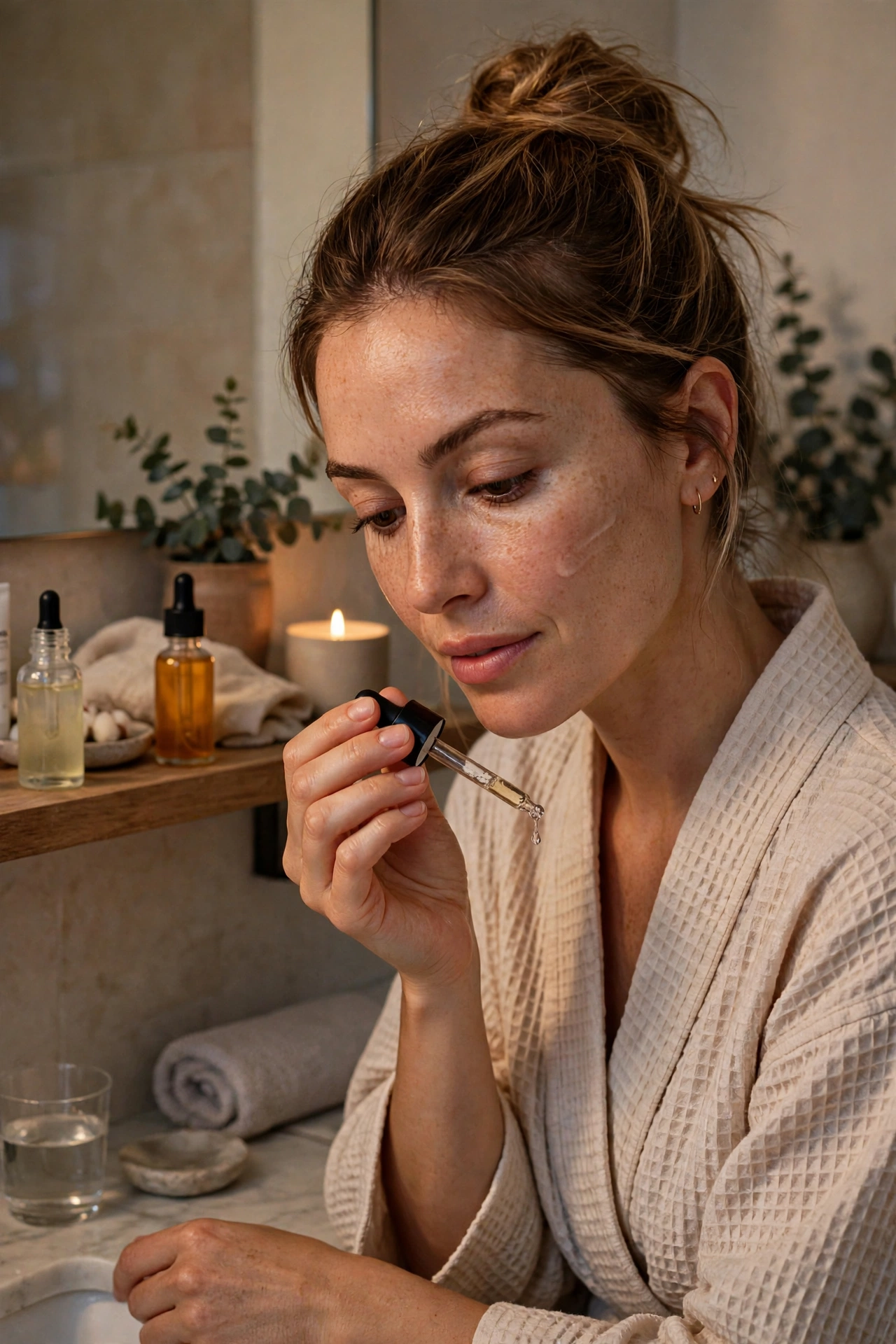
If you have ever stood in the skincare aisle at Boots wondering whether two of the most talked-about anti-ageing ingredients can share the same routine, you are not alone. The question "can you use bakuchiol and retinol together uk" comes up constantly in UK skincare groups, and for good reason: both ingredients promise smoother, firmer, more even-looking skin, yet retinol has a reputation for irritation while bakuchiol is marketed as the gentle plant-based alternative. The good news is that, for most people, the answer is yes — bakuchiol and retinol can be used together, and in fact they complement each other rather well. Bakuchiol is known for its calming, antioxidant properties, which can help buffer some of the dryness and sensitivity that retinol sometimes causes, especially during the first few weeks of use. That said, pairing them successfully is not simply a case of layering everything at once. The order you apply them, the strengths you choose, how often you use them, and your skin type all matter. This guide walks you through exactly how to combine bakuchiol and retinol safely, with a realistic UK routine, typical high-street prices, and clear advice on who should be cautious. This article is for general information only and is not medical advice; if you have a diagnosed skin condition, are pregnant, or are using prescription skin treatments, speak to your GP or dermatologist before changing your routine.
## Can You Use Bakuchiol and Retinol Together UK? The Short Answer
Yes, you can use bakuchiol and retinol together, and dermatologists generally consider the combination safe for most skin types. Unlike some ingredient pairings that genuinely clash — for example, strong exfoliating acids layered directly over retinoids can be too much for sensitive skin — bakuchiol does not deactivate retinol, nor does retinol cancel out bakuchiol. Research into bakuchiol, including a well-known 2019 randomised study comparing 0.5% bakuchiol with 0.5% retinol over 24 weeks, found that bakuchiol delivered comparable improvements in fine lines and pigmentation with significantly less scaling and stinging. That finding is why the pairing has become so popular: bakuchiol brings its own anti-ageing and antioxidant benefits while helping skin tolerate retinol better. In practice, most UK skincare fans use the two in one of three ways: applying bakuchiol in the morning and retinol at night, layering bakuchiol underneath a low-strength retinol in the evening, or choosing a single product that already combines both ingredients at balanced concentrations. All three approaches work, and the best one for you depends on how sensitive your skin is and how experienced you are with retinol. If you are brand new to retinol, start slowly, keep the rest of your routine simple, and let your skin adjust before you add anything else active. Patience is genuinely the secret ingredient here; the results from both bakuchiol and retinol build over weeks and months, not days.
## What Bakuchiol Actually Does for Your Skin
Bakuchiol is a plant-derived compound extracted from the seeds and leaves of the babchi plant (Psoralea corylifolia), which has a long history of use in Ayurvedic skincare. It shot to fame as a "natural retinol alternative" because laboratory and clinical studies showed it stimulates collagen production and improves signs of photoageing in ways that resemble retinol, but without the same degree of irritation. For UK shoppers, bakuchiol serums and moisturisers are now widely available at Boots, Superdrug and Cult Beauty, typically priced between £8 and £35 depending on the brand and formulation. Bakuchiol is an antioxidant, so it helps defend skin against environmental stress from pollution and UV exposure — both relevant for city living in the UK — and it has mild anti-inflammatory properties that can calm redness. It is also generally considered suitable for sensitive skin and for people who cannot tolerate retinoids, although it is not a like-for-like replacement for prescription-strength retinoids when treating medical conditions such as acne. One practical advantage of bakuchiol is that it is stable in daylight, so unlike retinol it can comfortably be used in a morning routine, provided you still wear sunscreen. If you want to understand how bakuchiol fits into the wider world of ingredient layering, our [ingredient combinations guide](https://www.glowmagzine.com/blog/skincare-ingredient-combinations-guide-uk/) explains which pairings work well together and which to keep apart.
### How Bakuchiol Differs from Retinol
The key difference is potency and mechanism. Retinol is a form of vitamin A that speeds up skin cell turnover and boosts collagen, which is why it is so effective for fine lines, uneven texture and breakouts — but also why it can cause peeling, dryness and sensitivity, especially at the start. Bakuchiol works through different pathways and does not increase cell turnover in the same aggressive way, so it tends to be much gentler. Think of retinol as the heavy lifter and bakuchiol as the supportive partner: retinol drives the visible change, while bakuchiol soothes, hydrates and adds its own modest firming benefit. This is also why combining them makes sense rather than choosing one or the other. For beginners who are nervous about retinol, starting with bakuchiol alone for a few weeks is a sensible way to build a routine habit before introducing a low-strength retinol. Our guide to [retinol for beginners over 50](https://www.glowmagzine.com/blog/best-retinol-for-beginners-over-50-uk/) covers gentle starting strengths and realistic timelines for mature skin.
## What Retinol Does — and Why It Can Irritate
Retinol remains the gold-standard over-the-counter anti-ageing ingredient, with decades of evidence behind it. Once absorbed, it converts in the skin to retinoic acid, which accelerates cell renewal, unclogs pores, fades dark spots and stimulates collagen. The trade-off is the adjustment period often called "retinisation": during the first two to six weeks, many people experience dryness, flaking, mild redness or purging, where underlying congestion surfaces more quickly. UK winters make this worse, because cold air and central heating already strip moisture from the skin barrier. That is precisely where bakuchiol earns its place in the routine. Used alongside retinol, bakuchiol's soothing and moisturising qualities can reduce the sting and flakiness that cause so many people to abandon retinol too early. It does not, however, make retinol irritation-proof. If you jump straight to a high-strength retinol every night, add exfoliating acids on top, and skip moisturiser, no amount of bakuchiol will rescue your skin barrier. The golden rules stay the same: start low, go slow, moisturise generously, and wear a broad-spectrum SPF every morning, since retinol can make skin more sensitive to sunlight. The [British Association of Dermatologists](https://www.bad.org.uk/) offers reliable patient information on retinoids and sensitive skin, and the [NHS](https://www.nhs.uk/conditions/) pages are a good first stop if irritation becomes persistent or severe.
## How to Use Bakuchiol and Retinol Together UK: Step-by-Step Routine
The safest way to combine the two is to separate them by time of day when you are starting out, then layer them together in the evening once your skin is comfortable. A simple, proven structure looks like this. In the morning, cleanse gently, apply a bakuchiol serum or moisturiser, follow with a hydrating serum or moisturiser if needed, and finish with SPF 30 or higher — non-negotiable when you use retinol at night. In the evening, cleanse, wait until your skin is fully dry, apply a pea-sized amount of retinol to the whole face (avoiding the immediate eye area and lip corners), and then layer a bakuchiol moisturiser or a plain, fragrance-free moisturiser over the top. This "sandwich" style approach cushions the retinol and is one of the best tricks for sensitive skin. If your skin is already comfortable with retinol, you can layer bakuchiol serum first and retinol second in the same evening routine, but keep the total number of active products low. Use retinol two to three nights per week at first, building to alternate nights and then nightly only if your skin stays calm. On non-retinol nights, bakuchiol can be used alone or with a hydrating mask. Always introduce one new product at a time and give it at least two weeks before judging the results, so you can tell which product is responsible if irritation appears. If you are also interested in other gentle pairings, our guide to the [retinol and niacinamide routine order](https://www.glowmagzine.com/blog/retinol-and-niacinamide-routine-order-uk/) explains another combination that suits sensitive skin very well.
### Morning Routine (AM)
- Gentle, low-foaming cleanser, lukewarm water only — hot water strips the barrier.
- Bakuchiol serum or moisturiser, applied to face and neck.
- Hyaluronic acid serum or a simple moisturiser if your skin feels tight.
- Broad-spectrum SPF 30–50 as the final step, every single day, even when it is cloudy in the UK.
### Evening Routine (PM)
- Double cleanse if you wore makeup or SPF, finishing with a gentle cleanser.
- On retinol nights: wait for skin to dry completely, apply a pea-sized amount of retinol, then follow with bakuchiol or a plain moisturiser.
- On rest nights: bakuchiol plus a richer night cream, especially in winter.
- Keep exfoliating acids (AHA/BHA) to separate nights, not layered directly over retinol.
## Bakuchiol vs Retinol: Comparison Table
| Feature | Bakuchiol | Retinol |
|---|---|---|
| Origin | Plant-derived (babchi plant) | Vitamin A derivative |
| Main benefits | Firms, smooths, antioxidant protection | Speeds cell turnover, boosts collagen, unclogs pores |
| Irritation risk | Low | Moderate, especially at first |
| Best time to use | Morning or evening | Evening only |
| Sun sensitivity | Does not increase it | Can increase it — SPF essential |
| Typical UK price range | £8–£35 | £10–£60 (high-street and pharmacy brands) |
| Where to buy in the UK | Boots, Superdrug, Cult Beauty | Boots, Superdrug, Cult Beauty, pharmacies |
| Suitable for sensitive skin | Usually yes | Yes, if introduced slowly at low strength |
| Use in pregnancy | Often marketed as gentler, but ask your GP or midwife first | Avoid — retinoids are not recommended in pregnancy |
## Can You Use Bakuchiol and Retinol Together UK Every Night?
Once your skin has adjusted, many people do use both every night without problems, but nightly use is a goal to build towards, not a starting point. A realistic timeline is two to three retinol nights per week for the first month, alternate nights in month two if your skin is calm, and nightly only from month three onwards — with bakuchiol used daily throughout. If you notice persistent flaking, stinging when you apply plain moisturiser, or redness that does not settle within a day, that is your skin telling you to scale back. Drop retinol to twice a week, lean on bakuchiol and a barrier-repair moisturiser for a week, and then try again more slowly. Winter is a common trigger for setbacks in the UK, so many people deliberately reduce retinol frequency from November to February and rely more heavily on bakuchiol and rich moisturisers during the coldest months. Our [winter skincare routine for sensitive skin](https://www.glowmagzine.com/blog/winter-skincare-routine-for-sensitive-skin-uk/) has a full cold-weather plan that pairs well with this approach. Remember that more is not better with retinol: a pea-sized amount is enough for the whole face, and using twice as much will not double your results — it will usually just double the irritation.
## Who Should Avoid This Pairing?
Most people can use bakuchiol and retinol together, but there are important exceptions. If you are pregnant, trying to conceive, or breastfeeding, avoid retinol and all retinoids entirely and discuss any skincare changes, including bakuchiol, with your GP or midwife. If you use prescription retinoids such as tretinoin, adapalene, or isotretinoin, do not add over-the-counter retinol or bakuchiol without checking with the prescribing clinician, because you may already be at your skin's tolerance limit. People with eczema, rosacea, or perioral dermatitis should be especially cautious: introduce bakuchiol alone first, patch-test behind the ear or along the jawline, and only consider a very low-strength retinol if your skin stays calm for several weeks. Anyone who has recently had a chemical peel, laser treatment, or microneedling should wait until the skin has fully healed and the treating practitioner says it is safe to resume actives. Finally, if you are taking medication that increases sun sensitivity, be extra rigorous with SPF and consider keeping retinol to fewer nights per week. When in doubt, a pharmacist at Boots or Superdrug can advise on over-the-counter strengths, and a dermatologist can tailor the routine to your skin condition. This article offers general information only, not a substitute for professional medical advice.
## Shopping Guide: Bakuchiol and Retinol in the UK
You do not need to spend a fortune to build this routine. At Boots and Superdrug, bakuchiol serums from high-street brands typically cost between £8 and £20, while premium or dermatologist-backed formulas at Cult Beauty usually fall in the £25–£45 range. Entry-level retinol serums start around £10–£15 at the high street, with mid-range options at £20–£35 and luxury formulas going higher. A sensible starter kit is one bakuchiol product, one low-strength retinol (0.1%–0.3% or a gentle encapsulated formula), a fragrance-free moisturiser, and a broad-spectrum SPF — four products, not ten. Look for retinol products that also contain ceramides, squalane, or niacinamide, because those supporting ingredients help protect the barrier. Check the packaging for the concentration and for whether the formula is encapsulated or time-release, both of which tend to be gentler. In the UK, also check that sunscreen products meet UK and EU standards and carry a UVA star rating alongside the SPF number. Avoid buying retinoids from unfamiliar overseas sellers online, where concentrations and authenticity cannot be verified. If you are building a wider routine, a good rich night cream for dry skin is a sensible companion for the moisturiser layer that sits over retinol.
## Practical Tips for Getting the Best Results
- Patch-test every new product for a few days before using it all over your face.
- Apply retinol to completely dry skin; damp skin absorbs it faster and can sting more.
- Use the "pea-sized" rule for retinol and resist the urge to add more.
- Never skip SPF the morning after a retinol night — UK UV levels still damage skin on cloudy days.
- Keep your routine boring for the first six weeks: cleanser, bakuchiol, retinol, moisturiser, SPF. That is enough.
- Store retinol away from heat and light, and close the cap promptly, because it degrades with air exposure.
- Track progress with photos in the same lighting once a month rather than judging daily in the mirror.
- If your skin barrier feels damaged — tight, stingy, flaky — pause retinol, use bakuchiol and a plain barrier cream for a week, and read our guide on [how to repair a damaged skin barrier](https://www.glowmagzine.com/blog/how-to-repair-damaged-skin-barrier-uk/) before restarting.
- Do not mix retinol with strong vitamin C or exfoliating acids in the same application until your skin is fully used to retinol.
- Be patient: visible improvements from retinol typically take eight to twelve weeks of consistent use.
## Frequently Asked Questions
### Can you use bakuchiol and retinol together UK if you have sensitive skin?
Yes, and this pairing is actually one of the better options for sensitive skin, because bakuchiol's calming properties can soften retinol's drying effects. Start with bakuchiol alone for two weeks, then add a low-strength retinol just twice a week, layered under a plain moisturiser. If you have eczema or rosacea, patch-test carefully and speak to your GP or dermatologist first, since even gentle actives can flare some conditions. Keep the rest of your routine fragrance-free and simple while you adjust.
### Should bakuchiol go on before or after retinol?
If you layer them in the same routine, apply bakuchiol first and retinol second, or apply retinol first and follow with a bakuchiol moisturiser — both orders are used successfully. The more important rule is to keep the total routine gentle: use one active layer at a time, let each layer absorb for a minute or two, and finish with moisturiser. Beginners usually find it easiest to separate them instead, using bakuchiol in the morning and retinol at night, which removes any guesswork about layering order entirely.
### Can I use bakuchiol every day while using retinol?
Yes, bakuchiol is gentle enough for daily use, morning and evening, even on the nights you use retinol. It is retinol frequency that needs to be built up gradually, not bakuchiol. Many people use bakuchiol every morning as their daily antioxidant step and add retinol two to four evenings per week. If your skin ever feels overloaded, drop the retinol frequency first and keep the bakuchiol, since it is the gentler partner in the pair.
### Does bakuchiol make retinol less effective?
No, there is no good evidence that bakuchiol reduces retinol's effectiveness. Bakuchiol does not deactivate retinoids, and the two work through different mechanisms, so their benefits are complementary rather than competitive. Some early research even suggests the combination may be better tolerated, which helps people stick with retinol long enough to see results — and consistency is the single biggest factor in whether retinol works for you.
### Can you use bakuchiol and retinol together UK in summer?
Yes, but sun protection becomes even more important. Retinol can make skin more sensitive to UV, so use a broad-spectrum SPF 30–50 daily, reapply when outdoors for long periods, and consider keeping retinol to alternate nights during heatwaves or holidays in strong sun. Bakuchiol itself is photostable and fine for morning use in summer, which makes it a useful daytime partner while retinol does its work overnight.
### Is bakuchiol safe during pregnancy as a retinol alternative?
Bakuchiol is widely marketed as a gentler alternative, but robust safety data in pregnancy is limited, and guidance varies. Retinoids should definitely be avoided in pregnancy, but you should still ask your GP or midwife before using bakuchiol or any new active while pregnant or breastfeeding. A simple routine of gentle cleanser, moisturiser and SPF is the safest default during pregnancy, and you can return to retinol afterwards with professional advice.
### How long until I see results from bakuchiol and retinol together?
Most people notice smoother texture and a healthier glow within four to six weeks, while improvements in fine lines, dark spots and firmness typically take eight to twelve weeks of consistent use. Bakuchiol's own clinical evidence was measured over 24 weeks, so think in months, not days. Take monthly photos in consistent lighting to track progress, and remember that missing the occasional night will not undo your results — long-term consistency matters far more than perfection.
## Key Takeaways
- Yes, bakuchiol and retinol can be used together safely by most people, and bakuchiol can help skin tolerate retinol better.
- Beginners should separate them at first: bakuchiol in the morning, retinol two to three nights per week in the evening.
- Once skin adjusts, layering bakuchiol under retinol or under a moisturiser over retinol both work well.
- Always use SPF every morning when retinol is part of your routine, even on cloudy UK days.
- Avoid retinol entirely in pregnancy, and check with a clinician if you use prescription retinoids or have eczema or rosacea.
- Start low, go slow, moisturise generously, and judge results over eight to twelve weeks, not days.
- High-street UK options from Boots and Superdrug make this an affordable routine, typically £8–£35 for bakuchiol and £10–£35 for starter retinol.
## Conclusion
Bakuchiol and retinol are a genuinely complementary pair rather than a clash waiting to happen. Bakuchiol brings gentle firming and antioxidant support with very little irritation risk, while retinol delivers the proven cell-turnover and collagen benefits that make it the benchmark anti-ageing ingredient. Used thoughtfully — bakuchiol daily, retinol built up slowly, plenty of moisturiser, and SPF every morning — the combination gives UK skincare fans a realistic path to smoother, firmer skin without the peeling and redness that cause so many retinol routines to fail early. Keep your routine simple, listen to your skin barrier, and give the pair at least two to three months before deciding how well it works for you. If irritation persists, or you have a diagnosed skin condition, a quick conversation with your GP, pharmacist, or dermatologist is always worth it. For general skincare guidance you can also consult [DermNet](https://dermnetnz.org/) for dermatologist-reviewed ingredient information. Your skin will thank you for the patience.
Can copper peptides and vitamin C be layered safely? A UK firming guide on order, routines, and who should skip the mix.
Read More arrow_forward
A gentle UK guide to pairing bakuchiol with vitamin C: layering order, AM/PM routines, who should avoid it, and how to get glow without irritation.
Read More arrow_forward
A calm-skin UK guide to pairing panthenol with retinol: layering order, AM/PM routines, who should avoid it, and how to keep irritation low.
Read More arrow_forward
Discover how urea and salicylic acid work together for smoother, softer skin, plus UK layering tips, strengths, and routines for dry or bumpy skin.
Read More arrow_forward
Learn whether glycolic and salicylic acid can be combined in the UK, including alternation schedules, safe layering and the best Boots and Superdrug picks.
Read More arrow_forwardCalculate your Body Mass Index (BMI) in seconds. BMI is a quick screening number…
Use now arrow_forwardFind your daily calorie needs based on your age, sex, height, weight and activit…
Use now arrow_forwardFind how much water you should drink each day, in litres and glasses, based on y…
Use now arrow_forward