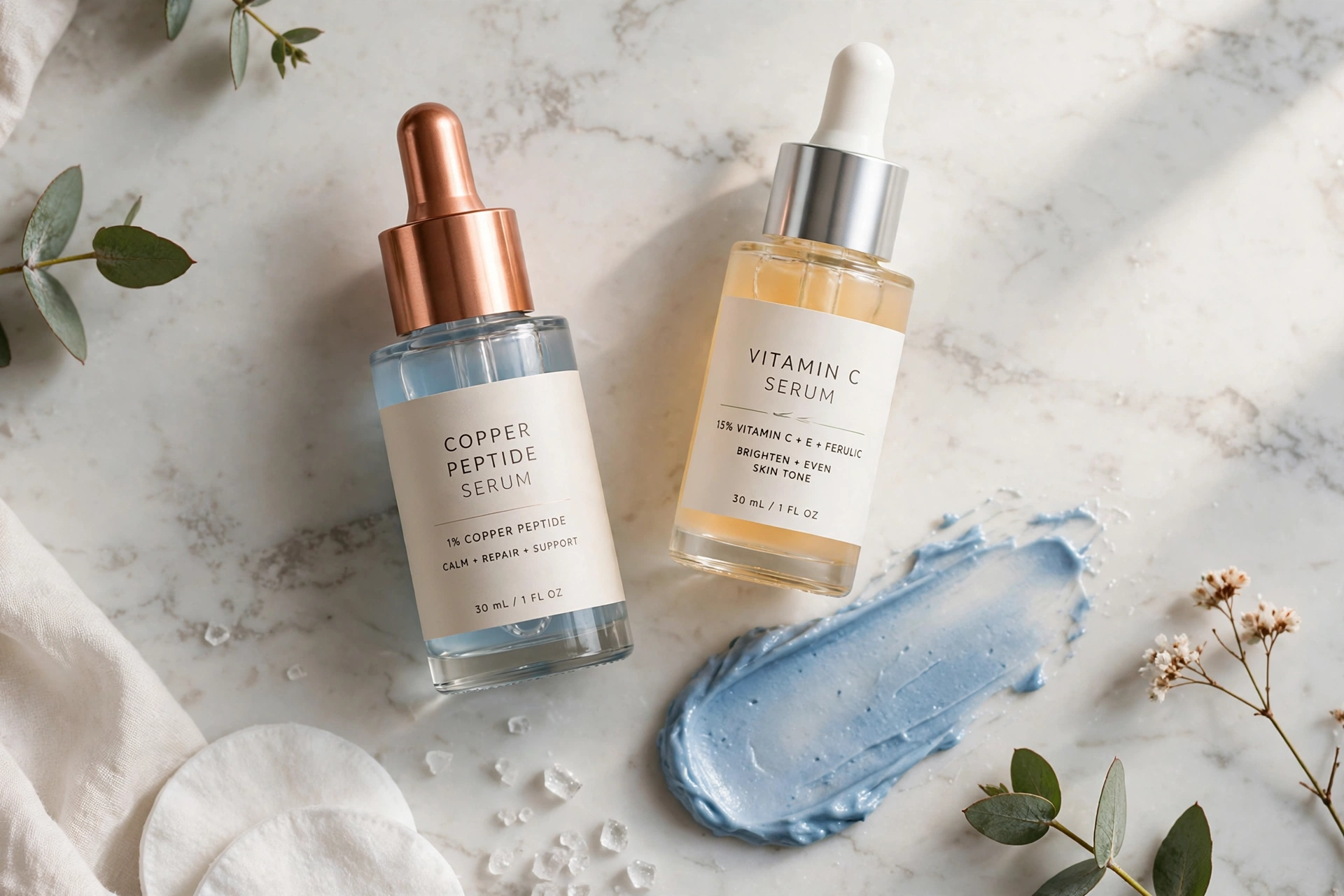
Can You Use Copper Peptides and Vitamin C Together UK? A Firming Guide
Can copper peptides and vitamin C be layered safely? A UK firming guide on order, routines, and who should skip the mix.
Read More arrow_forwardA calm-skin UK guide to pairing panthenol with retinol: layering order, AM/PM routines, who should avoid it, and how to keep irritation low.
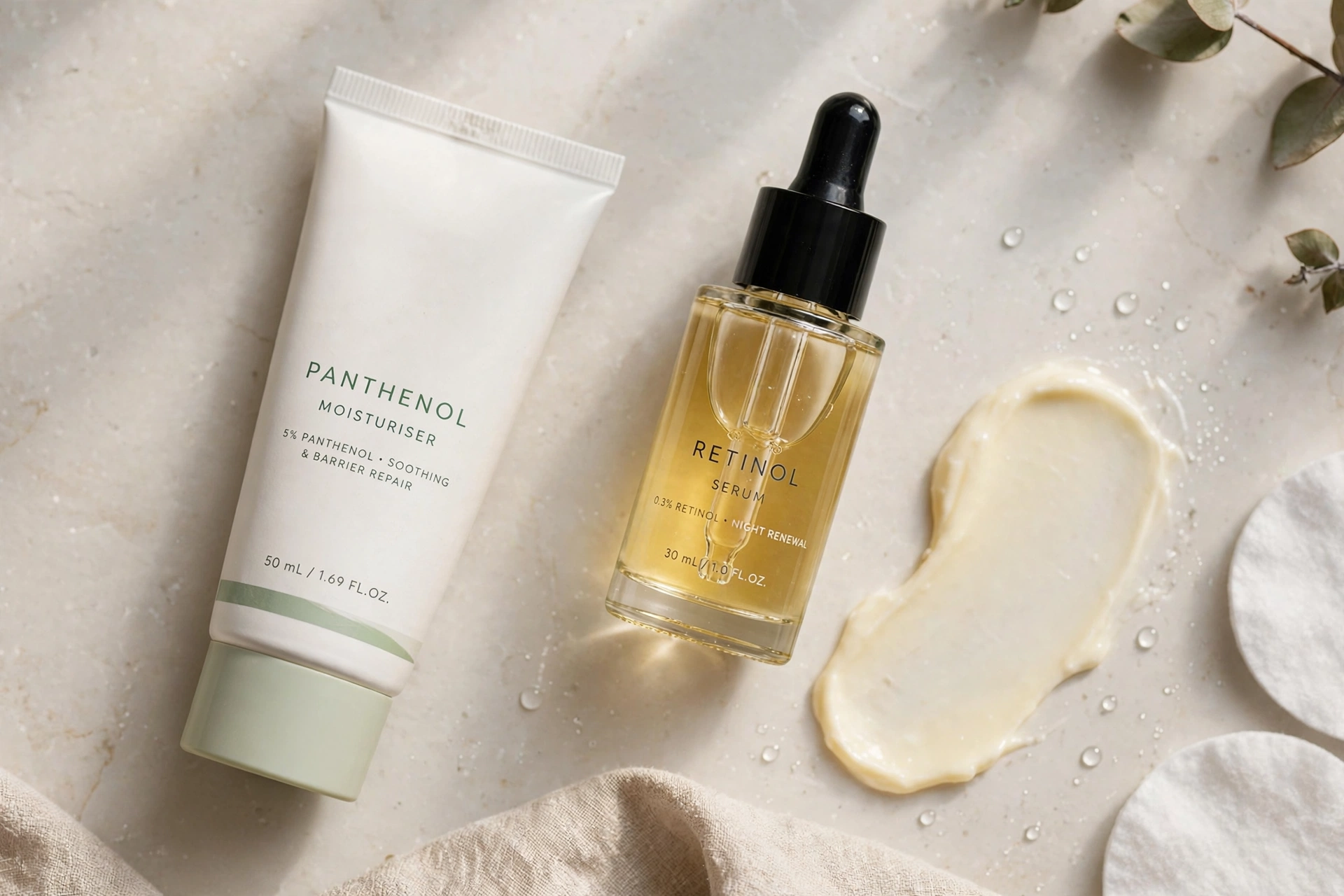
If you have ever wondered can you use panthenol and retinol together uk, the reassuring answer is yes, and this is one of the most forgiving ingredient pairings in modern skincare. Panthenol, also known as pro-vitamin B5, is a humectant and skin-soothing ingredient that helps the skin hold on to water and recover from dryness. Retinol, by contrast, is a powerful vitamin A derivative that speeds up cell turnover, smooths texture and softens fine lines, but it can also leave skin dry, flaky and sensitive, especially in the first few weeks. Used together in the right order and at the right frequency, panthenol acts like a cushion for retinol: it supports the skin barrier while retinol does the deeper renewal work underneath. For UK readers, where cold wind, central heating and hard water can already stress the skin for much of the year, that cushioning effect matters even more, and it is one of the reasons this pairing suits British routines so well.
This guide explains exactly how to combine the two without guesswork. You will learn what each ingredient does on its own, whether they can be layered in the same routine, the order to apply them in the morning and evening, who should be cautious, and how to shop for them at UK retailers such as Boots, Superdrug and Cult Beauty. Typical prices are given only as broad ranges, because formulations and sizes vary widely, and a higher price does not automatically mean a better result. Where skin conditions or persistent irritation are concerned, this guide offers general information only, and you should see a GP or dermatologist if symptoms do not settle or if you have a diagnosed skin condition that needs medical care.
## What Panthenol Actually Does for Skin
Panthenol is the alcohol form of pantothenic acid, or vitamin B5, and it converts to pantothenic acid once it is absorbed into the skin. It is best known as a humectant, which means it attracts water to the outer layers of the skin and helps keep them hydrated. Unlike heavier occlusive ingredients that simply sit on top of the skin, panthenol also supports the skin's own barrier function, which is the protective layer that keeps moisture in and irritants out. When that barrier is healthy, skin tends to look calmer, feel softer and react less to active ingredients such as retinol.
In practical terms, panthenol is associated with reduced feelings of tightness, less visible flaking and faster-looking recovery after irritation. It appears in a wide range of UK products, from lightweight serums and mists to richer creams and ointments, and it is generally well tolerated by sensitive, dry and combination skin types. Concentrations in everyday skincare typically range from around one to five percent, although you do not need to chase the highest percentage to get a benefit. A well-formulated moisturiser or serum that lists panthenol among its early or middle ingredients is usually enough, especially when the rest of the formula is fragrance-free and gentle.
Panthenol is also versatile in how it can be used. It works in the morning under sunscreen, in the evening under or over a treatment product, and as a standalone soothing step when skin feels stressed after sun, wind or over-exfoliation. Because it is water-soluble and lightweight, it rarely pills under makeup or sunscreen when applied in a thin layer and given a minute or two to absorb. For readers repairing a damaged barrier, panthenol is often one of the first ingredients dermatologists and skincare writers suggest, precisely because it hydrates without adding fragrance, essential oils or strong acids that could make sensitivity worse. If you want a deeper look at barrier repair, our guide to [how to repair a damaged skin barrier](https://www.glowmagzine.com/blog/how-to-repair-damaged-skin-barrier-uk/) explains the full routine step by step.
### Who Benefits Most From Panthenol
Dry and dehydrated skin benefits most obviously, because panthenol helps the surface hold water for longer. Sensitive and reactive skin also tends to tolerate it well, and people using strong actives such as retinol, benzoyl peroxide or exfoliating acids often find that adding panthenol reduces stinging and peeling. Mature skin, which can become drier and thinner over time, may also appreciate its softening effect, and it is a useful ingredient during the UK winter, when cold air outside and dry heated air inside pull moisture from the skin. Even oily skin can use panthenol in a light serum or gel-cream format, since it hydrates without the heavy, greasy feel of a thick balm.
## What Retinol Does and Why It Can Irritate
Retinol is one of the most researched ingredients in skincare. Once applied, it converts in the skin through a series of steps into retinoic acid, the active form that influences how skin cells behave. That process encourages faster cell turnover, which means dull, dead cells on the surface are shed more quickly and fresher cells come through sooner. Over weeks and months, consistent retinol use is associated with smoother texture, more even-looking tone, softened fine lines and clearer-looking pores. It is also widely used for adult blemish-prone skin, although results take patience and consistency matters far more than strength.
The trade-off is that the same renewal process can temporarily disrupt the skin barrier. In the first two to six weeks, many people notice dryness, light peeling, redness or a feeling of sensitivity, sometimes called the retinisation period. This is usually a sign that the skin is adjusting rather than a sign of damage, but it can be uncomfortable, and pushing through with daily use of a strong formula often makes it worse. UK weather can amplify the problem: winter wind, low humidity and indoor heating all dry the skin further, so a retinol routine that felt fine in summer may suddenly feel harsh in November or January. Starting slowly, using a pea-sized amount, buffering with a moisturiser and wearing daily sunscreen are the classic ways to keep this adjustment period manageable.
Retinol also comes with practical rules that are worth knowing before you start. It is best used in the evening, because sunlight can degrade it and because skin does much of its repair work overnight. Daily broad-spectrum sunscreen is essential while using retinol, and UK guidance is clear that sunscreen should be worn year-round, not only in summer, since ultraviolet light reaches the skin even on cloudy days. Retinol is generally not recommended during pregnancy or breastfeeding, and anyone using prescription retinoids should check with their GP or dermatologist before adding an over-the-counter retinol product. For authoritative background on skin health, the British Association of Dermatologists at [bad.org.uk](https://www.bad.org.uk/) and the dermatology reference site [dermnetnz.org](https://dermnetnz.org/) are useful, reliable starting points.
### Choosing a Retinol Strength in the UK
If you are new to retinol, a low-strength product used two or three evenings a week is a sensible starting point, moving up in frequency only when skin feels comfortable for at least two weeks at the current level. Typical UK high-street and online prices for a basic retinol serum or cream often fall in a broad range of roughly £10 to £35, while premium or prescription-adjacent formulas can cost more, but price alone does not predict tolerance or results. Look for formulas in opaque, airtight packaging, since retinol breaks down in light and air, and favour fragrance-free options if your skin is sensitive. Encapsulated or slow-release retinol formulas can also be gentler, because they deliver the active more gradually through the night.
## Can You Use Panthenol and Retinol Together UK?
Yes, you can use panthenol and retinol in the same routine, and for most people this is actually a smarter way to use retinol than using retinol alone. There is no known chemical conflict between the two ingredients: panthenol does not deactivate retinol, and retinol does not cancel out panthenol's hydrating effect. Instead, they work on different parts of the same goal. Retinol drives renewal and long-term improvement in texture and tone, while panthenol supports hydration and barrier comfort in the short term, which helps you stay consistent with retinol long enough to see those long-term benefits. Many UK dermatologists and skincare formulators now design products that combine the two for exactly this reason, and many people also layer a separate panthenol product around their retinol step.
The key is not whether to combine them, but how. Applying retinol to already irritated, over-exfoliated skin will still cause problems, even with panthenol in the routine. Likewise, piling on multiple strong actives at once — retinol plus a strong acid plus a scrub, for example — can overwhelm the barrier faster than panthenol can repair it. The safest approach is to keep the rest of the routine simple while retinol is adjusting: a gentle cleanser, panthenol-containing hydration, retinol on its scheduled evenings, a plain moisturiser and daily sunscreen. Once skin is comfortable, you can consider adding other actives on alternate nights, but there is no need to rush. If you are building a wider ingredient routine, our overview of [skincare ingredient combinations](https://www.glowmagzine.com/blog/skincare-ingredient-combinations-guide-uk/) shows which pairings work well together and which are better kept apart.
### Order of Application: How to Layer Them Correctly
The general layering rule is thinnest to thickest, and that works well here. After cleansing in the evening, apply any lightweight panthenol serum first if you are using the sandwich method described below, or apply retinol first if you prefer the classic method and then follow with a panthenol-rich moisturiser. Both orders are valid, and the best choice depends on how sensitive your skin feels. For beginners or anyone experiencing peeling, the sandwich method is usually the gentlest: apply a thin layer of panthenol moisturiser, wait a few minutes, apply a pea-sized amount of retinol, wait again, then apply another thin layer of panthenol moisturiser. This buffers the retinol without blocking it entirely, and many people find it dramatically reduces stinging.
If your skin already tolerates retinol well, you can simplify. Apply retinol to clean, dry skin, wait two to three minutes, then apply your panthenol moisturiser over the top. Waiting between layers matters, because applying a cream immediately over a still-wet serum can spread the retinol into the eye area or hairline, where skin is thinner and more easily irritated. Avoid applying retinol right up to the eyes, the corners of the nose and the corners of the mouth, and wash your hands after application. In the morning, there is no need to reapply retinol; simply cleanse gently, apply panthenol hydration if desired, follow with moisturiser and finish with a broad-spectrum sunscreen of at least SPF 30, as recommended in UK sun-protection guidance.
### AM/PM Routine: A Simple Template
A workable evening routine looks like this: gentle cleanser, optional panthenol serum or light moisturiser layer, pea-sized retinol on retinol nights only, then a panthenol-rich moisturiser to seal in comfort. On non-retinol nights, you can still use panthenol freely, and this is a good time to focus on barrier support with a plain, fragrance-free cream. A workable morning routine is even simpler: gentle cleanse or water rinse, panthenol serum or moisturiser, and sunscreen as the final step. Vitamin C or other daytime actives can be used in the morning if your skin tolerates them, but keep mornings calm while you are still adjusting to retinol, and introduce only one new active at a time so you can tell what is helping and what is irritating.
Frequency is where most people go wrong, so build up slowly. Start with retinol two evenings a week, with at least one rest night in between, and use panthenol every day. After two to three comfortable weeks, move to three evenings a week, then to alternate nights if skin remains calm. Daily retinol is a reasonable long-term goal for some people, but it is not required for good results, and many people maintain excellent results on three to four nights a week for years. If peeling or redness returns when you increase frequency, step back to the previous frequency for another two weeks before trying again. Consistency at a comfortable frequency always beats an ambitious schedule that you keep abandoning because of irritation.
### Who Should Avoid This Pairing
Most healthy adult skin can use this pairing, but some situations call for caution or a pause. If you have active eczema flare-ups, broken or cracked skin, a sunburn, or a recent skin procedure such as a peel or laser treatment, wait until the skin has fully healed before restarting retinol, and ask the clinician who treated you for timing advice. People who are pregnant, trying to conceive or breastfeeding should avoid retinol and discuss any skincare concerns with their GP or midwife rather than relying on general guides. Anyone using prescription retinoids, strong topical steroids or other prescribed skin treatments should check with their prescriber before adding over-the-counter retinol, since combining treatments can increase irritation or interfere with the prescribed plan.
You should also pause and seek advice if you develop persistent redness, swelling, blistering, weeping or a rash that spreads, or if irritation does not improve after two weeks of reducing frequency and increasing panthenol support. These symptoms can occasionally signal contact irritation, an allergy to another ingredient in the formula, or an underlying condition that needs assessment. The NHS skin-conditions pages at [nhs.uk](https://www.nhs.uk/conditions/) explain when to seek care and what to expect from a GP referral, and you should see a GP or dermatologist if you are unsure rather than continuing to push through discomfort. A patch test on the jawline or inner arm for a few nights before full-face use is a sensible precaution for anyone with a history of reactive skin.
## Practical Tips for Calm, Consistent Results
Small habits make a large difference with this pairing. First, keep the pea-sized rule for retinol: more product does not mean faster results, it usually means more peeling. Second, let each layer dry for a couple of minutes before adding the next, and avoid rubbing vigorously, which can spread retinol into sensitive areas. Third, simplify the rest of your routine while adjusting: one gentle cleanser, one panthenol product, one moisturiser and one sunscreen is a complete routine, and you do not need a ten-step regimen to get results. Fourth, protect the barrier in UK winter by avoiding very hot water, harsh foaming cleansers and rough face cloths, all of which strip moisture and make retinol irritation more likely.
Fifth, store retinol correctly: keep it away from heat and direct light, close the cap tightly, and check expiry dates, since oxidised retinol is both less effective and more irritating. Sixth, be patient with the timeline. Hydration and comfort from panthenol can improve within days, but visible retinol benefits in texture and tone typically take eight to twelve weeks of consistent use, and fine-line softening can take several months. Taking a monthly photo in the same light can help you judge progress honestly, rather than relying on daily mirror checks. Finally, remember that sunscreen is not optional while using retinol. In the UK, choose a broad-spectrum product you genuinely enjoy wearing, reapply when outdoors for long periods, and wear it even on grey days, since ultraviolet A rays pass through cloud and glass more than many people realise. For seasonal adjustments, our guide to the [best winter skincare routine for rosacea-prone skin](https://www.glowmagzine.com/blog/best-winter-skincare-routine-for-rosacea-prone-skin-uk/) has useful cold-weather barrier tips that apply well beyond rosacea.
## Can You Use Panthenol and Retinol Together UK Every Night?
Once your skin has adjusted, using panthenol every night is entirely reasonable, and using retinol every night becomes possible for some people, though it is not a requirement. Panthenol has no build-up period and no known downside to daily use, so it can anchor both your morning and evening routines year-round. Retinol is different: daily use is an endpoint to work towards, not a starting point, and the right frequency is the highest frequency your skin tolerates without ongoing dryness, peeling or sensitivity. If alternate nights keep your skin calm and steadily improving, that is a successful routine, and increasing to nightly use purely for the sake of it may add irritation without adding visible benefit.
Watch for signs that nightly use is too much. Mild, occasional flaking that settles with moisturiser is common during adjustment, but persistent redness, burning when applying plain products, or makeup that will not sit smoothly for days at a time suggests you should drop back a night or two per week. Seasonal changes also matter: many UK users find they can use retinol more often in summer and need to reduce frequency in winter, when cold air and heating dry the skin. That is normal, not a failure, and adjusting frequency with the seasons is a sign of a thoughtful routine. If you take a break from retinol for a holiday, illness or a skin flare, restart at your previous comfortable frequency rather than jumping straight back to nightly use, and give skin a week or two to readjust.
Long-term, the pairing tends to reward patience. Panthenol keeps the barrier resilient, which means fewer forced breaks from retinol, and fewer breaks mean more consistent renewal over months. Some people eventually settle on a rhythm such as retinol four nights a week with panthenol every night, plus a richer panthenol cream on rest nights. Others prefer a simpler pattern of retinol three nights a week all year round. Both are valid, and the best pattern is the one you can maintain without dread or discomfort. Keep notes for the first two months if it helps: which nights you used retinol, how skin felt the next morning, and any products you changed, so you can spot patterns rather than guessing.
## Panthenol and Retinol Compared
| Feature | Panthenol (Pro-Vitamin B5) | Retinol (Vitamin A Derivative) |
|---|---|---|
| Main job | Hydrates and soothes, supports the skin barrier | Speeds cell turnover, smooths texture and tone |
| Best time to use | Morning and evening, daily | Evening only, on scheduled nights |
| Typical UK price range | Around £8 to £30 for serums and creams | Around £10 to £35 for basic serums and creams |
| How quickly it works | Comfort and hydration within days | Visible texture change in 8 to 12 weeks |
| Main side effects | Rare; occasional mild sensitivity to a formula | Dryness, peeling and redness during adjustment |
| Suits which skin types | Most types, including sensitive and dry | Most adult skin, with caution if very sensitive |
| Sunscreen needed | Always good practice, especially outdoors | Essential every morning while using it |
| Use during pregnancy | Generally considered low concern, check with GP if unsure | Avoid; discuss alternatives with GP or dermatologist |
Shopping in the UK is straightforward: Boots and Superdrug both stock a wide range of fragrance-free panthenol moisturisers and entry-level retinol products on the high street, which makes it easy to compare textures in person, while Cult Beauty offers a broader range of specialist and premium formulas online. Typical high-street prices for a plain panthenol cream often sit in the lower part of the range above, while serums and combination formulas sit higher. There is no need to buy both ingredients from the same brand, and mixing a high-street panthenol moisturiser with an online retinol serum is perfectly fine, provided both formulas are gentle and fragrance-free if your skin is reactive. Avoid buying retinol from unverified sellers or unusually cheap imports, since storage conditions and authenticity matter for an ingredient that degrades in light and heat.
## Key Takeaways
- Panthenol and retinol work well together: panthenol hydrates and supports the barrier while retinol renews texture and tone.
- There is no chemical conflict between them, so the pairing is safe for most healthy adult skin when introduced gradually.
- Layer thinnest to thickest, or use the sandwich method with panthenol before and after retinol if your skin is sensitive.
- Start retinol two evenings a week, use panthenol daily, and increase frequency only after two comfortable weeks.
- Always wear broad-spectrum sunscreen in the morning while using retinol, year-round in the UK.
- Pause retinol and seek GP or dermatologist advice if irritation is persistent, spreading or severe, or if you are pregnant or using prescription skin treatments.
## Frequently Asked Questions
### Can I apply panthenol before retinol?
Yes, applying a thin panthenol layer before retinol is known as buffering or the sandwich method, and it is one of the gentlest ways to start. It slightly slows how quickly retinol reaches the skin, which often reduces stinging and peeling. You can also apply panthenol after retinol, or both before and after, depending on how sensitive your skin feels.
### Will panthenol make retinol less effective?
Panthenol does not deactivate retinol, so it does not cancel out its benefits in any meaningful way. Buffering may slow absorption slightly on the night you use it, but that trade-off is worthwhile if it helps you use retinol consistently. Consistent use at a comfortable frequency delivers better long-term results than stronger, unbuffered use that you keep stopping because of irritation.
### How long should I wait between retinol and moisturiser?
Waiting two to three minutes after applying retinol is usually enough for the layer to settle before you apply moisturiser. This short pause helps prevent the retinol spreading into the eye area or hairline, where skin is thinner. If you are using the sandwich method, allow a similar pause after the first moisturiser layer before applying retinol.
### Can I use panthenol with retinol if I have eczema-prone skin?
Many people with eczema-prone skin tolerate panthenol well, since it is hydrating and generally gentle, but retinol needs more caution during flare-ups. Avoid retinol on broken, cracked or actively inflamed skin, and restart only when the flare has settled. Our guide to the [best moisturiser for eczema-prone skin](https://www.glowmagzine.com/blog/best-moisturiser-for-eczema-prone-skin-uk/) covers barrier-friendly options, and you should see a GP or dermatologist if flares are frequent or severe.
### Should I use retinol in the morning as well?
No, retinol is best kept to the evening, because sunlight can degrade it and because skin repair peaks overnight. Morning is the time for gentle hydration, antioxidant support if you use it, and sunscreen. If you want a daytime active, a gentle vitamin C serum can suit many people, and our guide to the [best vitamin C serum for sensitive skin](https://www.glowmagzine.com/blog/best-vitamin-c-serum-for-sensitive-skin-uk/) explains how to choose one without adding irritation.
### What should I do if my skin starts peeling?
Light peeling in the first few weeks is common, so reduce retinol to two evenings a week, increase panthenol and plain moisturiser, and pause other strong actives until skin calms. Avoid scrubs, harsh exfoliants and very hot water while peeling, since these strip the barrier further. If peeling is severe, painful or accompanied by swelling or a spreading rash, stop retinol and seek GP or dermatologist advice.
### Can I combine retinol and panthenol with exfoliating acids?
You can, but not all on the same night when you are still adjusting to retinol, since combining strong actives increases irritation risk. A common pattern is retinol on some evenings, a gentle exfoliating acid on a different evening, and panthenol every day to support recovery. Introduce only one change at a time, and drop back if skin becomes persistently red or sore.
### Do I still need sunscreen in UK winter while using retinol?
Yes, daily broad-spectrum sunscreen matters all year in the UK, even on cloudy winter days, because ultraviolet A rays penetrate cloud and contribute to skin ageing and sensitivity. Retinol can also make skin more sensitive to sunlight, so skipping sunscreen undermines the very improvements retinol is meant to deliver. Choose an SPF 30 or higher product you enjoy wearing, and reapply when you spend extended time outdoors.
## Conclusion
Panthenol and retinol are a genuinely complementary pair, and for UK skin dealing with cold weather, heating and hard water, they may be one of the most practical combinations available. Panthenol keeps the barrier hydrated and comfortable, which makes it easier to use retinol consistently, and consistent retinol use is what delivers smoother texture, more even tone and softened fine lines over time. Keep the routine simple, start slowly, layer thinnest to thickest or use the sandwich method if you are sensitive, and never skip sunscreen in the morning. Shop from trusted UK retailers, favour fragrance-free formulas while your skin adjusts, and give the pairing at least eight to twelve weeks before judging results. If irritation persists, if you have a diagnosed skin condition, or if you are pregnant or using prescription treatments, pause and see a GP or dermatologist for personalised advice. Done patiently, this calm-skin pairing lets you enjoy the benefits of retinol without the discomfort that causes so many people to give up too soon.
Can copper peptides and vitamin C be layered safely? A UK firming guide on order, routines, and who should skip the mix.
Read More arrow_forward
A gentle UK guide to pairing bakuchiol with vitamin C: layering order, AM/PM routines, who should avoid it, and how to get glow without irritation.
Read More arrow_forward
Discover how urea and salicylic acid work together for smoother, softer skin, plus UK layering tips, strengths, and routines for dry or bumpy skin.
Read More arrow_forward
Can you use bakuchiol and retinol together UK? Yes — this gentle pairing guide explains layering order, routines and who should avoid it.
Read More arrow_forward
Learn whether glycolic and salicylic acid can be combined in the UK, including alternation schedules, safe layering and the best Boots and Superdrug picks.
Read More arrow_forwardCalculate your Body Mass Index (BMI) in seconds. BMI is a quick screening number…
Use now arrow_forwardFind your daily calorie needs based on your age, sex, height, weight and activit…
Use now arrow_forwardFind how much water you should drink each day, in litres and glasses, based on y…
Use now arrow_forward