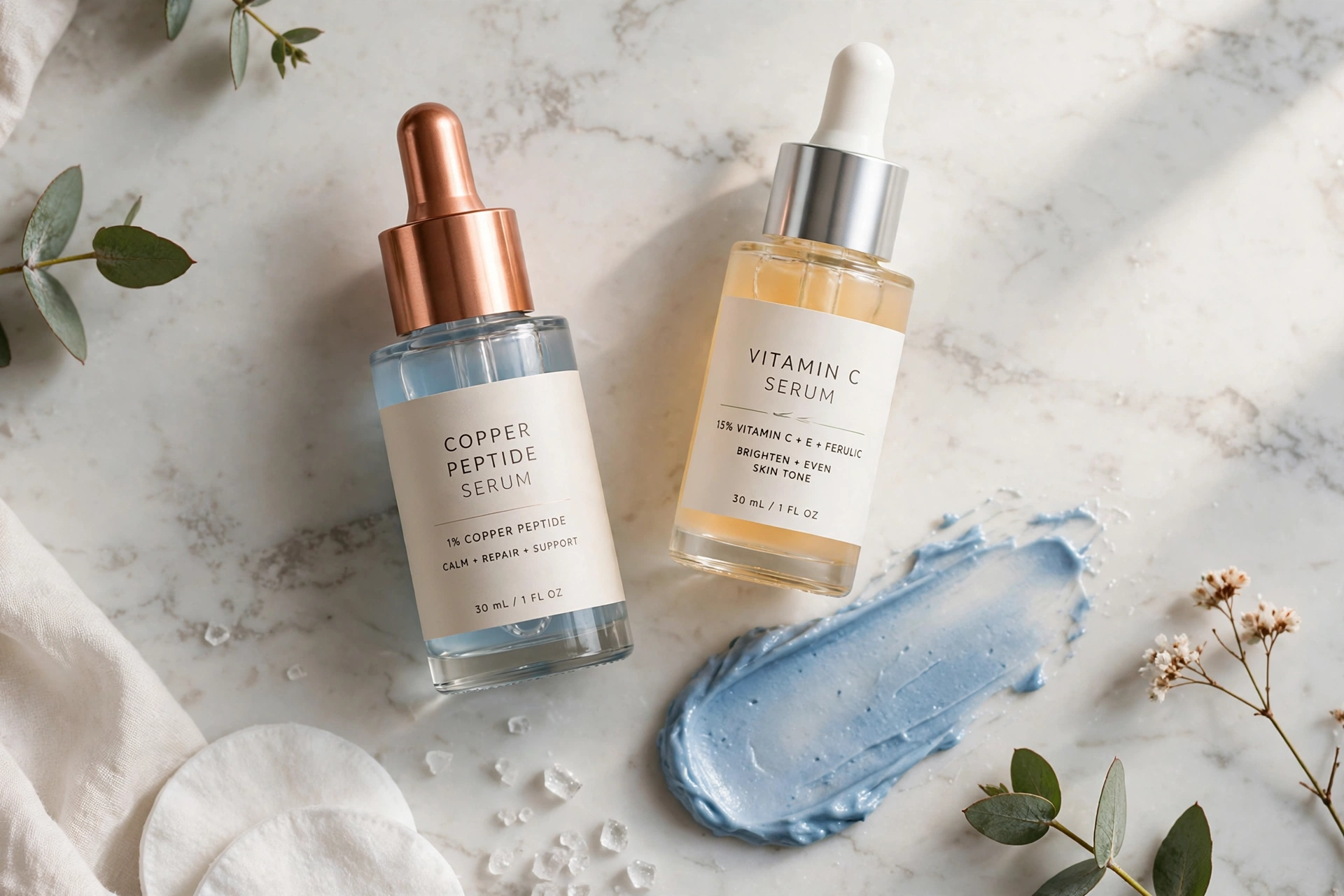
Can You Use Copper Peptides and Vitamin C Together UK? A Firming Guide
Can copper peptides and vitamin C be layered safely? A UK firming guide on order, routines, and who should skip the mix.
Read More arrow_forwardA gentle UK guide to pairing bakuchiol with vitamin C: layering order, AM/PM routines, who should avoid it, and how to get glow without irritation.
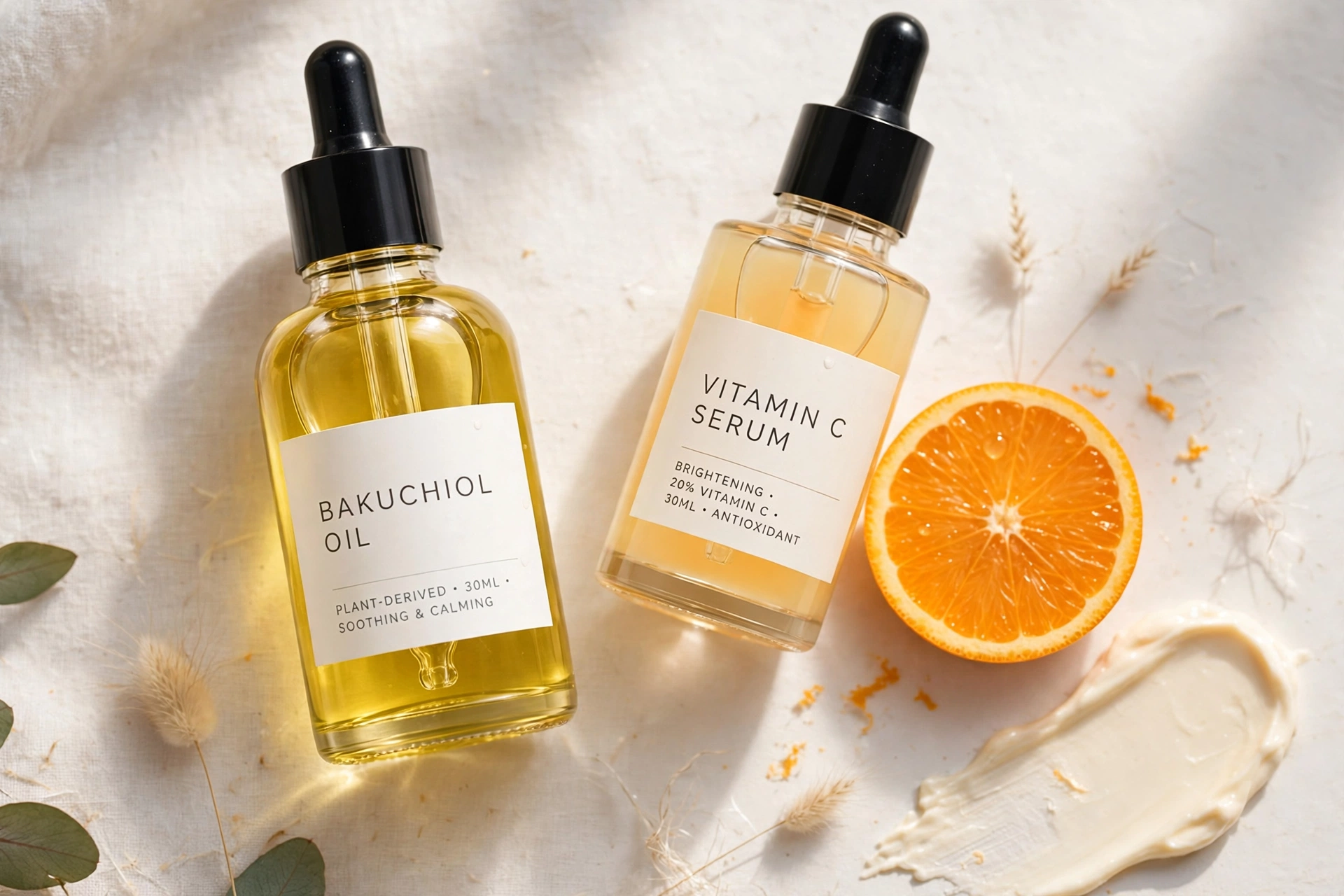
If you are asking can you use bakuchiol and vitamin c together uk, the good news is that this is one of the gentlest glow-boosting combinations in skincare, and it suits a great many UK skin types. Bakuchiol is a plant-derived ingredient, sourced from the babchi plant, that is often described as a gentler alternative to retinol because it supports smoother texture and more even-looking tone with far less dryness and peeling. Vitamin C is a well-known antioxidant that brightens dull skin, supports collagen and helps defend against environmental damage from pollution and sunlight. Used together, they target dullness from two directions at once: vitamin C brightens and protects during the day, while bakuchiol smooths and refines, morning or evening, without the harsh adjustment period that puts many people off retinol.
This guide walks through the pairing in full UK context. You will learn what each ingredient does, whether they can be mixed in the same routine, the order to layer them, a simple morning and evening template, who should take care, and how to shop for them at Boots, Superdrug and Cult Beauty. Prices are given only as broad typical ranges, since sizes and formulations vary, and a higher price does not guarantee better tolerance or faster results. This is general information, not medical advice, and if you have a diagnosed skin condition or persistent irritation, you should see a GP or dermatologist for advice tailored to your skin.
## What Bakuchiol Actually Does for Skin
Bakuchiol gained attention after research suggested it could deliver retinol-like improvements in fine lines and texture with fewer side effects, and it has since become a staple for people who find retinol too drying or irritating. It works through different pathways from retinol, but the visible goals overlap: smoother-feeling skin, softer-looking fine lines, and a more even tone over time. Unlike retinol, bakuchiol does not typically cause a pronounced adjustment period of peeling and redness, which makes it appealing for sensitive skin, for beginners, and for anyone who wants a daily smoothing ingredient without planning rest nights around irritation.
Another advantage is flexibility. Bakuchiol is generally considered suitable for both morning and evening use, and it is often included in serums, oils and moisturisers at concentrations around half a percent to two percent. It pairs well with hydrating ingredients such as glycerin, squalane and panthenol, and it does not carry the same pregnancy-related cautions as retinol, although anyone who is pregnant or breastfeeding should still check new products with their GP or midwife rather than assuming any ingredient is automatically suitable. Bakuchiol is also a useful option during UK winter, when skin is already stressed by cold air and central heating, because it supports texture without stripping moisture. For readers interested in how gentle actives fit into a wider routine, our overview of [skincare ingredient combinations](https://www.glowmagzine.com/blog/skincare-ingredient-combinations-guide-uk/) places bakuchiol alongside other popular pairings.
### Who Benefits Most From Bakuchiol
Sensitive and reactive skin is the clearest beneficiary, since bakuchiol offers visible smoothing with a lower irritation risk than retinol. Beginners who want to start an anti-ageing routine without a difficult adjustment phase also do well with it, as do people with dry or mature skin who need texture improvement without added dryness. Those who have tried retinol and stopped because of peeling often find bakuchiol a sustainable middle ground: results may build more gradually, but consistency is easier to maintain, and consistency is what produces visible change. Oily and combination skin can use bakuchiol in a lightweight serum, while drier skin may prefer it in an oil or cream format.
## What Vitamin C Does and Why Formulation Matters
Vitamin C, usually listed as ascorbic acid or a gentler derivative such as ethyl ascorbic acid or sodium ascorbyl phosphate, is one of the most popular brightening ingredients in the UK. Its main roles are antioxidant protection, brightening of dull or uneven tone, and support for collagen, the protein that keeps skin firm and resilient. Many people notice a fresher, more awake look within a few weeks of regular morning use, and over months vitamin C can help soften the appearance of dark marks left after blemishes, as well as general sun-related dullness. It is also valued for giving skin a healthy glow that does not rely on shimmer or makeup.
Formulation matters more with vitamin C than with many other ingredients. Pure ascorbic acid is potent but can be unstable in light and air, and it can sting, especially at higher strengths or lower pH levels. Derivatives are usually gentler and more stable, which makes them a better choice for sensitive skin, even though they may work more gradually. Typical UK serums range from around five to twenty percent for ascorbic acid, but a higher percentage is not always better, and sensitive skin often does best starting at the lower end or with a derivative formula. Look for opaque, airtight packaging, store the product away from heat and light, and be aware that a serum that has turned dark orange or brown may have oxidised and lost potency. Typical UK prices for a vitamin C serum often fall in a broad range of roughly £10 to £40, with high-street options at the lower end and specialist formulas higher.
Vitamin C is almost always best used in the morning, because its antioxidant action complements sunscreen during the day, helping to defend skin against pollution and ultraviolet damage. That does not mean it replaces sunscreen: vitamin C supports protection, but a broad-spectrum sunscreen of at least SPF 30 remains essential in the UK year-round, including on cloudy days. For reliable background on skin health and when to seek care, the British Association of Dermatologists at [bad.org.uk](https://www.bad.org.uk/) and the dermatology reference site [dermnetnz.org](https://dermnetnz.org/) are both authoritative places to start.
### Choosing a Vitamin C Formula in the UK
If your skin is sensitive, choose a derivative-based formula or a low-strength ascorbic acid serum, and patch test on the jawline for several days before full-face use. If your skin is resilient and your main goal is brightening dark marks, a mid-strength ascorbic acid formula used each morning may suit you better. Fragrance-free formulas are preferable for reactive skin, since fragrance is a common cause of irritation that is often mistaken for a reaction to the active ingredient itself. Avoid combining a strong vitamin C serum with strong exfoliating acids on the same morning while you are still adjusting, and introduce only one new active at a time so you can identify what your skin likes.
## Can You Use Bakuchiol and Vitamin C Together UK?
Yes, you can use bakuchiol and vitamin C in the same routine, and this pairing is generally considered low-risk for most skin types. There is no known chemical conflict between them: bakuchiol does not deactivate vitamin C, and vitamin C does not reduce bakuchiol's smoothing effect. In fact, they complement each other well, because vitamin C focuses on brightness and antioxidant defence, while bakuchiol focuses on texture and tone over time. Many UK brands now combine them in a single serum, and many people also layer separate products, either in the same morning routine or split across morning and evening.
The main caution is not the pairing itself, but the strength and pH of the vitamin C formula you choose. A strong, low-pH ascorbic acid serum can sting on its own, and layering it with any other active on the same morning can make that stinging more noticeable, especially for sensitive skin. If that happens, it is usually the vitamin C strength, or the combination of several actives at once, rather than bakuchiol causing the problem. The solution is simple: choose a gentler vitamin C formula, separate the two ingredients across morning and evening for a while, or use them on alternate mornings until skin feels comfortable. Keeping the rest of the routine gentle, with a plain cleanser, a simple moisturiser and daily sunscreen, also helps you judge the pairing fairly.
### Order of Application: How to Layer Them Correctly
The standard rule is thinnest to thickest, and vitamin C usually comes first in the morning because most vitamin C serums are lightweight and water-based. After gentle cleansing, apply your vitamin C serum to clean skin and wait two to three minutes for it to absorb. Then apply your bakuchiol product, whether that is a serum, oil or moisturiser, followed by your regular moisturiser if needed and sunscreen as the final step. Waiting between layers matters, because applying a cream over a still-wet serum can cause pilling and can spread product into the eye area, where skin is thinner and more easily irritated.
If you prefer to keep mornings minimal, you can split the pair: vitamin C in the morning and bakuchiol in the evening. This is often the best starting point for sensitive skin, since it lets you see how each ingredient behaves on its own. An evening bakuchiol step also works well on nights when you are not using stronger treatments, and it pairs nicely with a hydrating, fragrance-free moisturiser. Whichever split you choose, avoid applying either product right up to the eyes or into the corners of the nose and mouth, wash your hands after application, and keep the routine consistent for at least six to eight weeks before judging brightness and texture changes.
### AM/PM Routine: A Simple Template
A workable morning routine looks like this: gentle cleanser, vitamin C serum, bakuchiol serum or moisturiser if you are layering both in the morning, plain moisturiser if needed, then broad-spectrum sunscreen of at least SPF 30. A workable evening routine is even simpler: gentle cleanser, bakuchiol product, and a plain moisturiser to lock in comfort. On evenings when skin feels dry, especially in UK winter, you can add a richer cream over the bakuchiol layer, and our guide to [how to repair a damaged skin barrier](https://www.glowmagzine.com/blog/how-to-repair-damaged-skin-barrier-uk/) explains how to build those recovery nights. There is no need to use vitamin C twice a day: once each morning is enough, and overuse mainly increases the chance of irritation without adding brightness.
Frequency is forgiving with this pair. Bakuchiol can generally be used daily, morning and evening if desired, while vitamin C is typically used once each morning. If you are new to vitamin C, start with three or four mornings a week and build to daily use as tolerance allows, keeping bakuchiol daily throughout. If you notice stinging, redness or breakouts after increasing vitamin C frequency, step back to the previous frequency for two weeks and check whether another new product, rather than the pairing, is responsible. Patience matters: brightness from vitamin C often appears within four to six weeks, while texture improvements from bakuchiol typically build over eight to twelve weeks.
### Who Should Avoid This Pairing
Most healthy adult skin can use this pairing, but some situations need care. If you have active eczema flare-ups, broken skin, sunburn or a recent peel or laser treatment, pause active ingredients until skin has healed and follow the advice of the clinician who treated you. People with very reactive skin should patch test both products separately on the jawline for several days, since a reaction to fragrance or a preservative in one formula is sometimes mistaken for a reaction to the active ingredient. Anyone using prescription skin treatments should check with their prescriber before adding new actives, to avoid increasing irritation or interfering with the prescribed plan.
Seek GP or dermatologist advice if you develop persistent redness, swelling, blistering, weeping or a spreading rash, or if irritation does not settle after two weeks of reducing frequency and simplifying the routine. The NHS skin-conditions pages at [nhs.uk](https://www.nhs.uk/conditions/) explain when to seek care and what a GP referral involves, and you should see a GP or dermatologist if you are unsure rather than continuing through discomfort. People who are pregnant or breastfeeding should check any new active with their GP or midwife, even for ingredients generally considered gentle, since individual advice varies.
## Practical Tips for Calm, Consistent Results
A few habits will help this pairing deliver glow without irritation. First, start with a gentle vitamin C formula and build up frequency slowly, rather than beginning with the strongest serum you can find. Second, store vitamin C correctly: keep it in a cool, dark place, close the cap tightly, and replace it if it turns dark brown, since oxidised vitamin C is less effective and more likely to irritate. Third, let each layer absorb for two to three minutes before adding the next, and use a pea-sized amount or the amount directed on the product, since more product rarely means faster results.
Fourth, keep sunscreen non-negotiable. Vitamin C supports daytime defence, but it is not a substitute for sunscreen, and UK ultraviolet exposure continues through cloud and in winter. Choose a broad-spectrum SPF 30 or higher product you enjoy wearing, and reapply during extended outdoor time. Fifth, simplify the rest of the routine while you assess the pairing: a gentle cleanser, the two actives, a plain moisturiser and sunscreen is a complete routine, and adding scrubs, strong acids and multiple serums at the same time only makes it harder to tell what is working. Finally, judge results with monthly photos in consistent light rather than daily mirror checks, since brightness and texture change gradually. For cold-weather adjustments, our guide to the [best winter skincare routine for rosacea-prone skin](https://www.glowmagzine.com/blog/best-winter-skincare-routine-for-rosacea-prone-skin-uk/) offers barrier-friendly winter tips that suit sensitive skin generally.
## Can You Use Bakuchiol and Vitamin C Together UK Every Morning?
Yes, once your skin is comfortable, using both every morning is a reasonable long-term pattern for many people, and it is one of the simplest glow routines available. Vitamin C once each morning plus bakuchiol each morning, followed by moisturiser and sunscreen, gives you brightness, antioxidant support and gradual texture improvement in a single routine, without the rest nights and buffering steps that retinol requires. That simplicity is part of the appeal: a routine you actually enjoy is one you will maintain, and maintained routines outperform ambitious ones that are abandoned after a few weeks.
Daily use is still worth building towards rather than assuming from day one. Start vitamin C three or four mornings a week, keep bakuchiol daily, and move vitamin C to daily use after two comfortable weeks. If your skin is very sensitive, you may prefer to keep the split routine permanently — vitamin C in the morning, bakuchiol in the evening — and that is equally valid, since both ingredients work well on their own schedule. Seasonal changes can also guide frequency: some people use vitamin C daily in summer, when brightness and antioxidant support matter most, and slightly less often in winter, when skin is drier and more reactive. There is no penalty for adjusting with the seasons, and a flexible routine is usually a more sustainable one.
Long-term, the pairing rewards consistency rather than strength. A gentle vitamin C formula used every morning for six months will typically outperform a strong formula used sporadically because it stings. The same applies to bakuchiol: daily use at a moderate concentration, combined with good hydration and sunscreen, builds smoother texture steadily. If you take a break for travel, illness or a skin flare, restart at a comfortable frequency and rebuild over a week or two, rather than resuming daily use of both at full strength immediately.
## Bakuchiol and Vitamin C Compared
| Feature | Bakuchiol | Vitamin C |
|---|---|---|
| Main job | Smooths texture and softens fine lines gently | Brightens tone and provides antioxidant defence |
| Best time to use | Morning and/or evening, daily | Morning, once a day |
| Typical UK price range | Around £12 to £35 for serums and oils | Around £10 to £40 for serums |
| How quickly it works | Texture improvement in 8 to 12 weeks | Brightness often in 4 to 6 weeks |
| Main side effects | Uncommon; occasional mild sensitivity to a formula | Stinging or redness, mainly with strong ascorbic acid |
| Suits which skin types | Most types, including sensitive and dry | Most types, with gentler formulas for sensitive skin |
| Sunscreen needed | Always good practice, especially outdoors | Essential every morning; vitamin C does not replace it |
| Stability notes | Generally stable in serums, oils and creams | Ascorbic acid oxidises in light and air; store carefully |
Shopping in the UK is easy for both ingredients. Boots and Superdrug stock entry-level vitamin C serums and an increasing range of bakuchiol products on the high street, which is useful for comparing textures and checking fragrance-free options in person. Cult Beauty offers a wider range of specialist formulas online, including derivative-based vitamin C serums that suit sensitive skin. Typical high-street vitamin C serums often sit in the lower part of the price range above, while bakuchiol oils and specialist serums sit in the middle to upper part. There is no need to buy both from the same brand, and combining a high-street vitamin C serum with an online bakuchiol product is perfectly fine. Buy from trusted retailers and avoid unverified sellers, since storage conditions affect vitamin C potency and product authenticity matters.
## Key Takeaways
- Bakuchiol and vitamin C work well together: vitamin C brightens and protects, while bakuchiol smooths texture gently.
- There is no chemical conflict between them, and the pairing suits most skin types, including sensitive skin.
- Layer thinnest to thickest, usually vitamin C first in the morning, or split them across morning and evening if preferred.
- Start vitamin C three to four mornings a week, use bakuchiol daily, and build to daily vitamin C as tolerance allows.
- Always wear broad-spectrum sunscreen in the morning; vitamin C supports defence but never replaces sunscreen.
- Pause and seek GP or dermatologist advice if irritation is persistent, spreading or severe, or if skin is broken or flaring.
## Frequently Asked Questions
### Can I mix bakuchiol and vitamin C in the same serum step?
You can layer them in the same morning routine, applying vitamin C first and bakuchiol second, with a short pause between layers. Some products already combine both ingredients in one formula, which is also fine. If layering two separate products causes pilling, allow more drying time between layers or split them across morning and evening.
### Will vitamin C irritate my sensitive skin?
Pure ascorbic acid at high strength can sting sensitive skin, but gentler derivative formulas are usually much better tolerated. Starting at a low strength or with a derivative, patch testing first, and building from three mornings a week to daily use all reduce irritation risk. Our guide to the [best vitamin C serum for sensitive skin](https://www.glowmagzine.com/blog/best-vitamin-c-serum-for-sensitive-skin-uk/) explains how to choose a gentle formula in more detail.
### Is bakuchiol safe to use every day?
Bakuchiol is generally well tolerated for daily use, morning and evening, and it does not usually require the rest nights associated with retinol. If you notice any sensitivity, reduce to once a day or every other day until skin settles, and check whether another new product is responsible. Daily use at a moderate concentration is more effective long-term than occasional use of a very strong formula.
### Can I use this pairing if I have eczema-prone skin?
Many people with eczema-prone skin tolerate bakuchiol well, but vitamin C needs more caution, especially during flare-ups. Avoid actives on broken, cracked or actively inflamed skin, and restart only when the flare has settled. Our guide to the [best moisturiser for eczema-prone skin](https://www.glowmagzine.com/blog/best-moisturiser-for-eczema-prone-skin-uk/) covers barrier-friendly moisturisers, and you should see a GP or dermatologist if flares are frequent or severe.
### Do I need to avoid sunlight while using vitamin C?
No, vitamin C is designed for daytime use, but it must be paired with broad-spectrum sunscreen, since it does not block ultraviolet light on its own. In the UK, wear SPF 30 or higher every morning, even on cloudy days, and reapply during extended outdoor time. This combination gives you antioxidant support plus genuine sun protection.
### Can I add retinol to this routine as well?
You can, but introduce it separately and on different evenings at first, rather than adding it to an already new morning routine. A common pattern is vitamin C and bakuchiol in the morning, with retinol on selected evenings and bakuchiol on rest nights. Introduce only one new active at a time, and step back if skin becomes persistently red or sore.
### How do I know if my vitamin C serum has gone off?
A fresh ascorbic acid serum is usually pale yellow or clear, while a dark orange or brown colour, a metallic smell, or increased stinging can signal oxidation. Oxidised vitamin C is less effective and more irritating, so replace the product and store the new one away from heat and light. Derivative formulas tend to stay stable for longer, which is one reason sensitive skin often prefers them.
### Should I use bakuchiol or retinol for anti-ageing?
Bakuchiol is the gentler starting point and suits sensitive skin, beginners, and anyone who struggled with retinol irritation. Retinol has a larger body of long-term research and may deliver faster visible change for resilient skin, but it requires a slower build-up and more buffering. Many people start with bakuchiol, then consider retinol later, or use bakuchiol daily with retinol on selected evenings once tolerance is established.
## Conclusion
Bakuchiol and vitamin C are a gentle, practical pairing for UK skin, offering brightness, antioxidant support and smoother texture without the difficult adjustment period of stronger actives. Vitamin C brightens and defends during the day, bakuchiol refines texture morning or evening, and together they form a glow routine that most skin types can maintain year-round. Keep the formula gentle, especially for vitamin C, layer thinnest to thickest or split the pair across morning and evening if your skin prefers it, and always finish mornings with broad-spectrum sunscreen. Shop from trusted UK retailers, favour fragrance-free options for sensitive skin, and give the pairing at least six to eight weeks before judging brightness and texture. If irritation persists, if skin is broken or flaring, or if you use prescription treatments, pause and see a GP or dermatologist for personalised advice. Done consistently, this gentle glow pairing is one of the easiest ways to keep skin looking fresh, even and healthy through every UK season.
Can copper peptides and vitamin C be layered safely? A UK firming guide on order, routines, and who should skip the mix.
Read More arrow_forward
A calm-skin UK guide to pairing panthenol with retinol: layering order, AM/PM routines, who should avoid it, and how to keep irritation low.
Read More arrow_forward
Discover how urea and salicylic acid work together for smoother, softer skin, plus UK layering tips, strengths, and routines for dry or bumpy skin.
Read More arrow_forward
Can you use bakuchiol and retinol together UK? Yes — this gentle pairing guide explains layering order, routines and who should avoid it.
Read More arrow_forward
Learn whether glycolic and salicylic acid can be combined in the UK, including alternation schedules, safe layering and the best Boots and Superdrug picks.
Read More arrow_forwardCalculate your Body Mass Index (BMI) in seconds. BMI is a quick screening number…
Use now arrow_forwardFind your daily calorie needs based on your age, sex, height, weight and activit…
Use now arrow_forwardFind how much water you should drink each day, in litres and glasses, based on y…
Use now arrow_forward