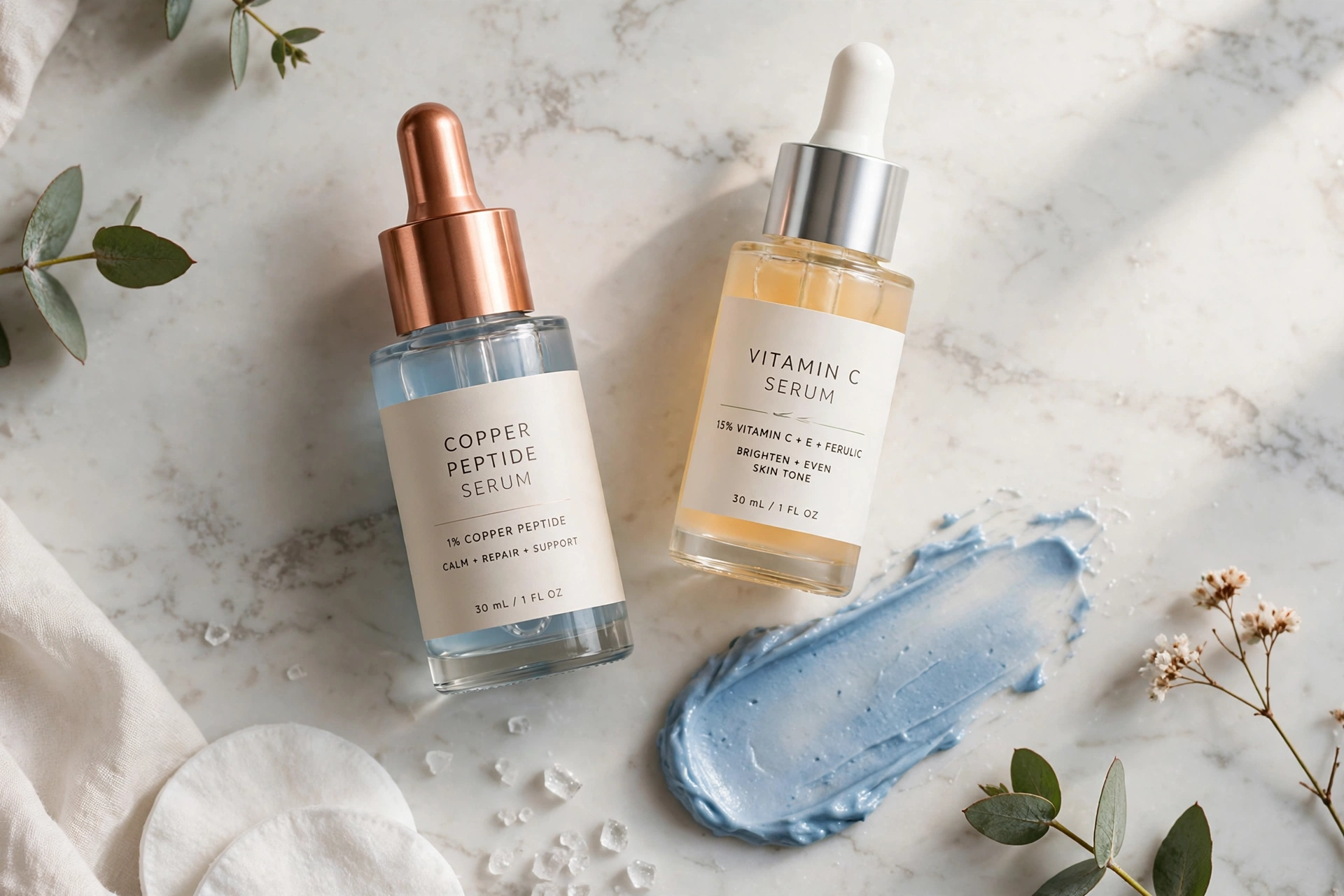
Can You Use Copper Peptides and Vitamin C Together UK? A Firming Guide
Can copper peptides and vitamin C be layered safely? A UK firming guide on order, routines, and who should skip the mix.
Read More arrow_forwardWondering can you use squalane and retinol together uk safely? This gentle guide explains the best order, beginner routine and UK shopping tips.

If you are building a gentle but effective evening routine, you have probably asked can you use squalane and retinol together uk without irritating your skin, and the reassuring answer is that most people can, provided the two ingredients are introduced slowly and layered in the right order. Squalane is a lightweight, skin-identical oil that supports the moisture barrier, while retinol is a proven vitamin A derivative that encourages cell turnover, smooths texture and softens the look of fine lines. Used apart they are both useful, but used together they can balance each other beautifully: retinol does the renewing work, and squalane cushions the skin so that work feels comfortable rather than harsh. This guide explains exactly how that balance works, who benefits most, how to build a beginner-friendly routine in the United Kingdom, and which mistakes to avoid when the weather turns cold and indoor heating starts to dry the skin out.
Retinol has earned its reputation over decades of dermatology research, yet it also has a reputation for peeling, redness and that uncomfortable tight feeling during the first few weeks. That adjustment period, often called retinisation, happens because the skin is turning over faster than it is used to, and the barrier can temporarily feel weaker while it adapts. Squalane steps in at precisely this point. It is not a heavy, pore-clogging oil in the traditional sense; it is a stable, non-comedogenic emollient that mimics the skin's own sebum, sinks in quickly and leaves a soft, non-greasy finish. For UK skin in autumn and winter, when wind, rain, central heating and shorter days already challenge hydration, that extra layer of comfort can be the difference between giving up on retinol and sticking with it long enough to see results.
Before you start pairing anything, it helps to understand what each ingredient actually does on its own. That clarity makes the application order obvious, helps you spot a reaction early, and stops you from adding too many new actives at once, which is the most common reason a routine fails. The sections below walk through the science in plain language, a practical evening routine you can follow tonight, shopping guidance for Boots, Superdrug and Cult Beauty, and answers to the questions UK readers ask most often about this combination.
## Can You Use Squalane and Retinol Together UK? Yes, With the Right Order
The short answer is yes, and dermatologists commonly recommend pairing a retinoid with a barrier-supporting moisturiser or oil to improve tolerance. Squalane does not deactivate retinol, and retinol does not make squalane less hydrating. They work in different ways and at different layers of the routine, so they complement rather than compete with each other. The key is order and timing: retinol generally goes on clean, dry skin first so it can make proper contact, and squalane follows as a sealing, comforting layer that locks in moisture and reduces the feeling of dryness. If you reverse that order and put a thick oil layer down first, you may buffer the retinol so much that it works more slowly, which is not dangerous but can be frustrating if you are waiting for results.
### What squalane actually does for your skin
Squalane is a hydrogenated form of squalene, a lipid your skin produces naturally, although production declines with age. In skincare it is prized because it is exceptionally well tolerated, even by sensitive and acne-prone skin, and because it absorbs without leaving a heavy film. It helps to soften rough patches, reduce transepidermal water loss, and give the skin a smoother surface for makeup the next morning. Unlike richer plant oils, squalane is odourless, lightweight and unlikely to feel sticky, which makes it a good choice for combination skin as well as dry skin. Think of it as a comfort blanket for the barrier: it does not change how your skin behaves in the long term the way retinol does, but it makes the short term much more comfortable while retinol gets to work.
### What retinol actually does for your skin
Retinol is converted in the skin into retinoic acid, the active form that signals skin cells to turn over more efficiently. Over weeks and months, that process can smooth rough texture, fade the look of post-blemish marks, unclog pores and soften fine lines. It is one of the few over-the-counter ingredients with a strong evidence base, which is why it appears in so many UK pharmacy and beauty ranges. The trade-off is that faster turnover can initially cause dryness, flaking and sensitivity, especially if you start too strong, use it too often, or combine it with exfoliating acids on the same night. That is why a buffer such as squalane is so valuable: it does not stop the turnover, but it supports the barrier while turnover increases, so the skin looks fresher rather than stressed.
### Why order matters more than brand
Many readers worry about finding the perfect product, but with this pairing, technique matters more than the label on the bottle. Apply retinol to clean, completely dry skin, wait a few minutes for it to settle, and then press a few drops of squalane over the top, or mix squalane into your usual night moisturiser. If your skin is very sensitive, you can use the sandwich method: a light moisturiser first, then retinol, then squalane or moisturiser again. This slows absorption slightly and is an excellent option for the first month. What you should avoid is applying retinol to damp skin, which can increase penetration and irritation, or layering it under a very heavy occlusive on the same night you are also using a strong exfoliant. Keep the routine simple, consistent and gentle, and let the ingredients do their work over time.
## Why This Pairing Works So Well for UK Skin
British weather is a specific challenge for retinol users. Cold wind outside, dry heated air inside, and frequent changes between the two can leave the barrier feeling tight even before any active ingredient is added. Squalane helps to counter that daily stress by reinforcing the lipid layer that keeps moisture in and irritants out. Readers who follow a broader [ingredient combinations guide](https://www.glowmagzine.com/blog/skincare-ingredient-combinations-guide-uk/) often find that the most successful routines are not the ones with the most products, but the ones where every product has a clear job. Here, retinol renews and squalane protects, and that division of labour is easy to maintain night after night.
Another reason the pairing works is flexibility. Squalane can be used in several ways depending on your skin type and the season. Dry skin may enjoy two or three drops pressed over the whole face, while combination skin may prefer a single drop mixed into moisturiser, or squalane applied only to drier areas such as the cheeks and jawline. Oily skin can still benefit, because squalane is lightweight and does not add a greasy shine in the way heavier oils can, although a smaller amount is sensible. In summer you might need less, and in winter you might need more, and that adjustability means the same two bottles can carry you through the year without a complete routine overhaul.
The pairing also fits well into a realistic UK lifestyle. You do not need a ten-step routine or an expensive prescription product to benefit. A gentle cleanser, a beginner-strength retinol used a few nights a week, a simple moisturiser, squalane, and a daily sunscreen are enough for most people. Sunscreen deserves special emphasis: retinol can make skin more sensitive to sunlight, so a broad-spectrum SPF every morning is non-negotiable, even on cloudy British days. If you need a gentle option, our guide to the [best fragrance-free sunscreen for sensitive skin](https://www.glowmagzine.com/blog/best-fragrance-free-sunscreen-for-sensitive-skin-uk/) is a useful starting point, because fragrance is a common irritant when the barrier is already adjusting to retinol.
## Can You Use Squalane and Retinol Together UK Every Night?
Once your skin has adjusted, many people can use this pairing every night, but you should not start there. A gradual introduction is the safest path to nightly use, and it also gives you a clear way to tell whether any irritation is caused by retinol, by another product, or by the weather. Begin with retinol two nights a week, with squalane every night you use retinol and on the nights in between if your skin feels dry. After two to three weeks without significant peeling or stinging, increase to three or four nights a week. After another few weeks, you can try alternate nights and then nightly use if your skin remains calm. If flaking returns at any stage, step back to the previous frequency for a week or two rather than pushing through. Progress with retinol is measured in months, not days, so patience is part of the treatment.
### A beginner schedule that actually works
Week one and two are about observation. Use a pea-sized amount of retinol for the whole face, avoiding the immediate eye area and the corners of the nose and mouth, which are more prone to dryness. Follow with squalane or a plain moisturiser with squalane mixed in. On non-retinol nights, focus on hydration only: cleanser, moisturiser, squalane if needed, and nothing exfoliating. By week three, most people notice mild dryness or a little flaking around the chin or forehead, which is normal and usually settles with consistent squalane use. If you experience persistent redness, burning or swelling, pause retinol for several nights, use only gentle hydration, and restart at a lower frequency when the skin feels calm again. You can find more detail on calming a stressed barrier in our guide on [how to repair a damaged skin barrier](https://www.glowmagzine.com/blog/how-to-repair-damaged-skin-barrier-uk/).
### Signs your skin is adjusting well
Healthy adjustment looks like slightly smoother texture, a softer feel in the morning, and perhaps a small amount of dryness that resolves with moisturiser. Makeup may sit better, and pores may look a little less visible after six to eight weeks. Unhealthy irritation looks different: ongoing burning, visible redness that does not fade overnight, raw patches, or breakouts that are painful and widespread. Mild purging, where existing congestion comes to the surface more quickly, can happen in the first month, but it should be limited and temporary. If you are unsure whether what you are seeing is normal, it is sensible to check reliable dermatology information from sources such as the [British Association of Dermatologists](https://www.bad.org.uk/) or to speak to your GP or a dermatologist, especially if you have eczema, rosacea or another diagnosed skin condition.
### When nightly use is not the goal
Nightly use is not a badge of honour, and it is not necessary for everyone. Some people get excellent results using retinol three or four nights a week indefinitely, and that frequency may be the sweet spot if your skin is sensitive, if you live in a very cold part of the country, or if you also use other actives on alternate nights. The goal is consistent, comfortable use over months, not the highest possible frequency. Squalane makes that consistency easier because it removes the discomfort that causes most people to abandon retinol early. If your skin feels good on a three-nights-a-week schedule, there is no need to force nightly use simply because someone else does it.
## The Correct Application Order, Step by Step
A clear evening routine removes guesswork and helps you stay consistent. Start by cleansing with a gentle, non-foaming or low-foaming cleanser and lukewarm water, then pat the skin dry and wait until it feels completely dry to the touch. This waiting step matters more than people realise, because damp skin can absorb retinol more intensely and increase irritation. Apply a pea-sized amount of retinol, dotting it on the forehead, cheeks and chin and smoothing it outwards, avoiding the eyelids and lip area. Wait two to three minutes, then warm two to three drops of squalane between your palms and press it gently over your face and neck. If you prefer, you can mix the squalane into your night moisturiser and apply the mixture as one step. Finish there; there is no need for additional serums on a retinol night, especially in the first month.
In the morning, the routine is simpler and just as important. Cleanse gently or rinse with water, apply a hydrating serum or moisturiser if needed, and finish with a broad-spectrum sunscreen of at least SPF 30. Reapply if you spend extended time outdoors, and remember that UK ultraviolet levels can still be significant on bright spring and summer days, even when it does not feel hot. If your skin feels tight in the morning after a retinol night, add a drop of squalane to your morning moisturiser as well; there is no rule that squalane is only for evenings. The aim is a barrier that feels comfortable all day, not just immediately after your evening routine.
One practical tip for winter is to adjust the amount of squalane rather than the strength of your retinol. When central heating is on and the air is dry, an extra drop or a slightly richer night cream can prevent the flaking that makes people think retinol is not working. When the weather warms up, reduce the squalane again so the skin does not feel overloaded. This seasonal tweaking is a normal part of UK skincare and is far better than constantly switching products. Keep a simple note of what you used and how your skin felt each week, and patterns will quickly become obvious.
## Choosing Products in the UK Without Overspending
You do not need to spend a fortune to pair these ingredients well. In the UK, both squalane and beginner retinol products are widely available at Boots, Superdrug and Cult Beauty, as well as from pharmacy-led skincare brands online. Squalane is often sold as a single-ingredient oil, which makes comparison easy: look for a short ingredient list, a dropper bottle that keeps the product fresh, and a texture that absorbs without residue. Retinol products vary more, so pay attention to the stated strength and the supporting ingredients. A lower-strength retinol with soothing ingredients such as ceramides or niacinamide is usually a better starting point than a high-strength formula with no barrier support, especially if your skin is new to vitamin A.
Budget category table: Budget — Single-ingredient squalane oil and a low-strength retinol serum from a pharmacy range — Beginners, students, anyone testing tolerance. Mid-range — Retinol with ceramides or peptides plus a squalane blend or a dedicated barrier moisturiser — Regular users wanting comfort and visible results. Premium — Encapsulated or slow-release retinol with a richer squalane-based night treatment — Experienced users, very dry or mature skin.
Shopping in store has a real advantage: you can ask a pharmacist or skincare adviser about strengths, check whether a product is fragrance-free, and compare textures before buying. Online shopping offers a wider range and frequent promotions, but be cautious about imported products with unclear labelling or strengths that are far higher than UK high-street norms. Stick to reputable UK retailers, check the full ingredient list, and avoid products that promise overnight transformation, because that claim is almost always a sign of an irritatingly strong formula rather than a genuinely better one. For readers who are also considering ceramides alongside retinol, our guide on [ceramides and retinol together](https://www.glowmagzine.com/blog/can-you-use-ceramides-and-retinol-together-uk/) explains how those ingredients compare with squalane as a buffer.
### Reading labels like a dermatologist would
A good retinol label will state the percentage or the form of retinoid clearly, and a good squalane label will list squalane as the main ingredient without a long list of added fragrance or essential oils. Fragrance is not automatically harmful, but when you are introducing retinol, removing unnecessary irritants makes it much easier to identify the cause if your skin reacts. Also check the packaging: airless pumps and opaque bottles protect retinol from light and air better than clear jars, which can degrade the active ingredient over time. Store retinol away from direct sunlight and heat, and replace it if it changes colour or smell significantly, because that can indicate it is no longer at full strength.
### Building a complete routine around the pair
Squalane and retinol are a strong evening combination, but they work best inside a simple, complete routine. Your morning routine should focus on gentle cleansing, hydration and sun protection. Your non-retinol evenings should focus on barrier repair and hydration, perhaps with a ceramide moisturiser or a hydrating serum. Exfoliating acids, vitamin C and other strong actives can still have a place, but they should be used on different nights from retinol, at least while you are building tolerance. This rotation approach keeps the skin calm while still giving it a range of benefits across the week, and it prevents the common mistake of applying everything at once and then wondering which product caused a reaction.
## Who Should Be Cautious With This Pairing
Most skin types can use squalane and retinol together, but some people need extra care. If you have rosacea, eczema, or perioral dermatitis, introduce retinol even more slowly, perhaps once a week at first, and consider discussing the plan with a dermatologist before starting. If you are pregnant, trying to conceive, or breastfeeding, retinoids are generally advised against, so this pairing should wait until after that period; squalane on its own, however, is widely considered a gentle hydrator, and your clinician can advise on suitable alternatives in the meantime. If you use prescription retinoids such as tretinoin, the same buffering principle applies, but you should follow your prescriber's guidance on frequency and complementary products rather than adding new products without checking.
People with very oily or acne-prone skin sometimes worry that any oil will worsen breakouts. Squalane is a reassuring exception because it is lightweight and non-comedogenic for most people, but it is still wise to start with a small amount and monitor your skin for two weeks before increasing it. If you notice new congestion, reduce the amount or apply squalane only to drier zones. Conversely, people with very dry or mature skin may find squalane alone is not quite enough in deep winter, in which case layering it under a richer cream, rather than replacing the cream, usually solves the problem without needing a new product.
### Medication and treatment interactions
If you are undergoing dermatology treatment, using medicated creams, or taking medication that affects the skin, check with your clinician before adding retinol. This is especially important if you use topical steroids, prescription acne treatments, or have recently had a chemical peel, laser treatment or microneedling. In those cases the skin may already be in a sensitive state, and even a gentle retinol routine could be too much until healing is complete. Reliable general information about skin conditions is available from the [NHS skin conditions pages](https://www.nhs.uk/conditions/), and detailed dermatology reference material can be found at [DermNet NZ](https://dermnetnz.org/), both of which are useful if you want to understand your skin better before changing your routine.
## Common Mistakes to Avoid
The most frequent mistake is starting with too high a strength, too often. Enthusiasm is understandable, especially when you have read impressive before-and-after stories, but retinol rewards patience far more than intensity. A second mistake is combining retinol with a strong exfoliating acid on the same night, which can overwhelm the barrier and cause peeling that sets progress back by weeks. A third mistake is skipping sunscreen, which not only increases sun sensitivity but also undermines the very improvements retinol is meant to deliver. A fourth mistake is applying retinol to damp skin or using far more than a pea-sized amount, both of which increase irritation without increasing benefit. Finally, many people give up too early: the first two to four weeks can feel unimpressive or slightly uncomfortable, yet visible improvements in texture and tone typically take eight to twelve weeks of consistent use.
Another subtle mistake is changing too many products at once. If you start squalane, retinol, a new cleanser and a new vitamin C serum in the same week and your skin reacts, you will have no idea which product is responsible. Introduce one new product at a time, leave at least a week between additions, and keep the rest of your routine stable. This disciplined approach feels slower, but it actually gets you to a working routine faster, because you avoid the cycle of reactions, pauses and restarts that comes from changing everything simultaneously. For winter-specific comfort, readers with reactive skin may also benefit from our guide to the [best winter skincare routine for rosacea-prone skin](https://www.glowmagzine.com/blog/best-winter-skincare-routine-for-rosacea-prone-skin-uk/), which covers barrier-first strategies that pair well with gentle retinoid use.
## Frequently Asked Questions
### Is squalane safe to use with retinol every night?
For most people, yes, once tolerance has been built gradually. Squalane itself is very well tolerated and can be used daily, morning and evening if your skin enjoys it. The limiting factor is retinol frequency, not squalane, so let your skin's comfort guide how often you use retinol, and use squalane as often as needed for hydration and comfort.
### Should squalane go before or after retinol?
In most cases, retinol goes first on clean, dry skin, and squalane follows as a sealing layer. This lets retinol make good contact with the skin while squalane reduces dryness afterwards. If your skin is very sensitive, the sandwich method, with moisturiser before and after retinol, is a gentler alternative that still allows the retinol to work.
### Can squalane make retinol less effective?
Squalane applied after retinol does not deactivate it, and any slight buffering effect is usually beneficial because it improves tolerance and therefore consistency. Applying a thick oil layer before retinol could slow absorption, which is why the recommended order is retinol first. Consistency over months matters far more than small differences in absorption on any single night.
### Is this pairing suitable for acne-prone skin?
Often, yes. Squalane is lightweight and generally non-comedogenic, and retinol can help with congestion and post-blemish marks over time. Start slowly, use a small amount of squalane, and monitor for new breakouts for a fortnight. If congestion increases, reduce the squalane amount or limit it to drier areas, and keep the rest of the routine simple and non-irritating.
### Can I use squalane with retinol if I have sensitive skin?
Sensitive skin can often tolerate this pairing better than retinol alone, precisely because squalane cushions the barrier. Begin with retinol once or twice a week, use the sandwich method if needed, choose fragrance-free formulas, and avoid exfoliating acids on retinol nights. If redness or stinging persists, pause and seek advice from a pharmacist, GP or dermatologist.
### Do I still need moisturiser if I use squalane?
Many people use both, because they do different jobs. Squalane is an emollient that softens and seals, while a moisturiser may also contain humectants that draw water into the skin and ceramides that support the barrier structure. In summer, squalane mixed into a light moisturiser may be enough, while in winter, layering squalane under or over a richer cream often feels more comfortable.
### How long until I see results from this combination?
Comfort often improves within the first week or two, because squalane eases dryness quickly. Visible changes from retinol, such as smoother texture and softer fine lines, usually take eight to twelve weeks of consistent use, with continued improvement over several months. Take a photo in similar lighting once a month if you want an honest record of progress, rather than relying on daily mirror checks.
### Can I use vitamin C or exfoliating acids as well?
Yes, but not all on the same night, especially while building retinol tolerance. A common rotation is vitamin C in the morning, retinol in the evening on alternate nights, and a gentle exfoliant once a week on a non-retinol night. Keep the routine simple, introduce one active at a time, and prioritise barrier comfort over using every trending ingredient at once.
## Key Takeaways
- Squalane and retinol work well together because retinol renews the skin while squalane supports comfort and the moisture barrier.
- Apply retinol first to clean, dry skin, then follow with squalane or a squalane-enriched moisturiser.
- Start slowly, with retinol two nights a week, and increase frequency only when the skin stays calm.
- Use a broad-spectrum sunscreen every morning, since retinol can increase sun sensitivity.
- Keep other strong actives on different nights, introduce products one at a time, and adjust squalane amounts seasonally for UK weather.
- Nightly retinol is not mandatory; a comfortable three-to-four-nights-a-week routine can deliver excellent results.
## Conclusion
Pairing squalane with retinol is one of the simplest and most effective ways to make a proven anti-ageing ingredient feel comfortable for everyday UK life. The combination respects the skin barrier, adapts easily to cold winters and heated homes, and is available at every budget level from Boots, Superdrug and Cult Beauty. Start slowly, follow the correct order, protect your skin with sunscreen each morning, and give the routine at least two to three months before judging the results. With patience and a barrier-first mindset, this gentle pairing can deliver smoother texture, a more even tone and a routine you actually enjoy using, which is ultimately the routine that works best. If your skin has a diagnosed condition or you use prescription treatments, check with a clinician first, and otherwise enjoy building a calmer, more resilient evening routine one night at a time.
Can copper peptides and vitamin C be layered safely? A UK firming guide on order, routines, and who should skip the mix.
Read More arrow_forward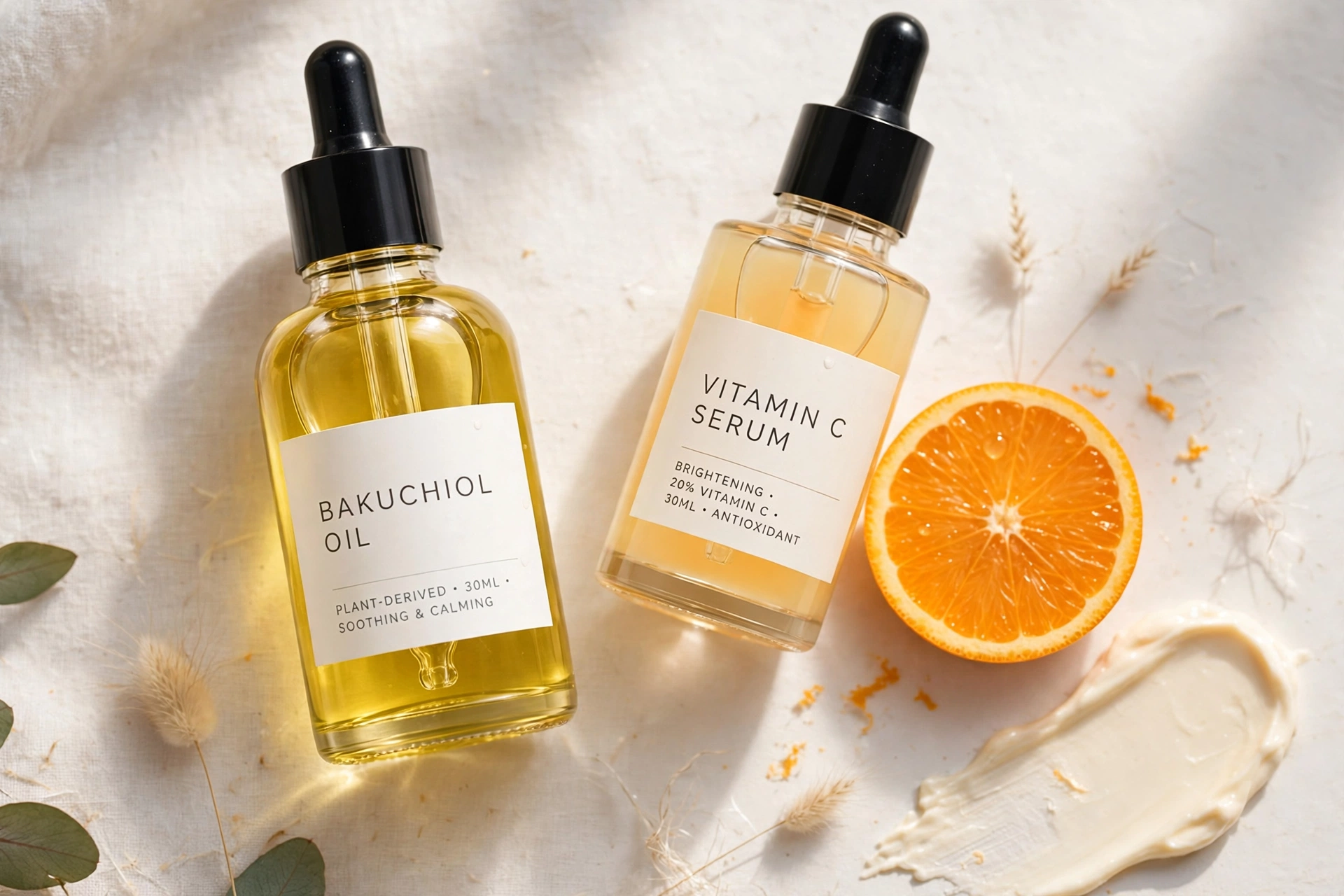
A gentle UK guide to pairing bakuchiol with vitamin C: layering order, AM/PM routines, who should avoid it, and how to get glow without irritation.
Read More arrow_forward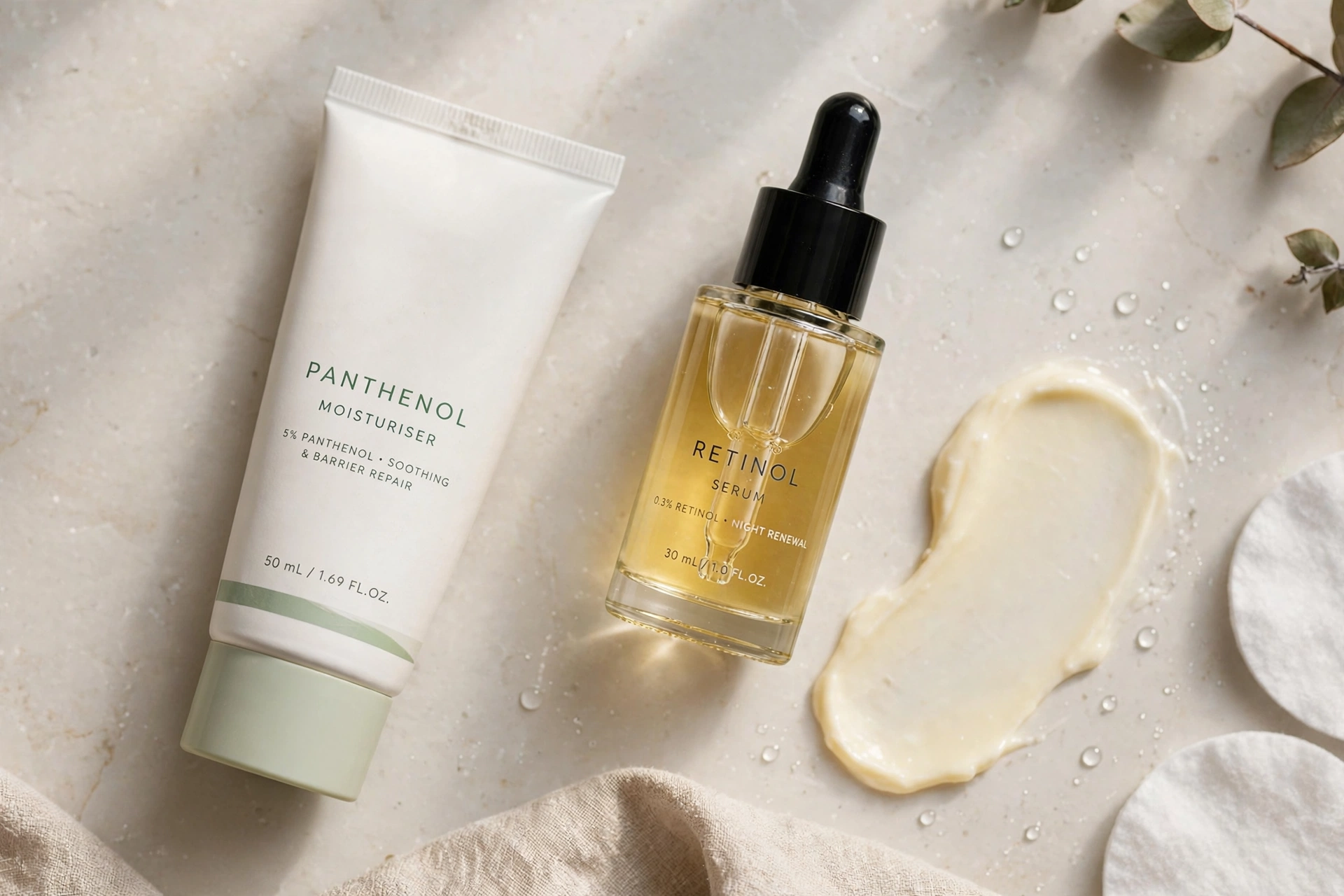
A calm-skin UK guide to pairing panthenol with retinol: layering order, AM/PM routines, who should avoid it, and how to keep irritation low.
Read More arrow_forward
Discover how urea and salicylic acid work together for smoother, softer skin, plus UK layering tips, strengths, and routines for dry or bumpy skin.
Read More arrow_forward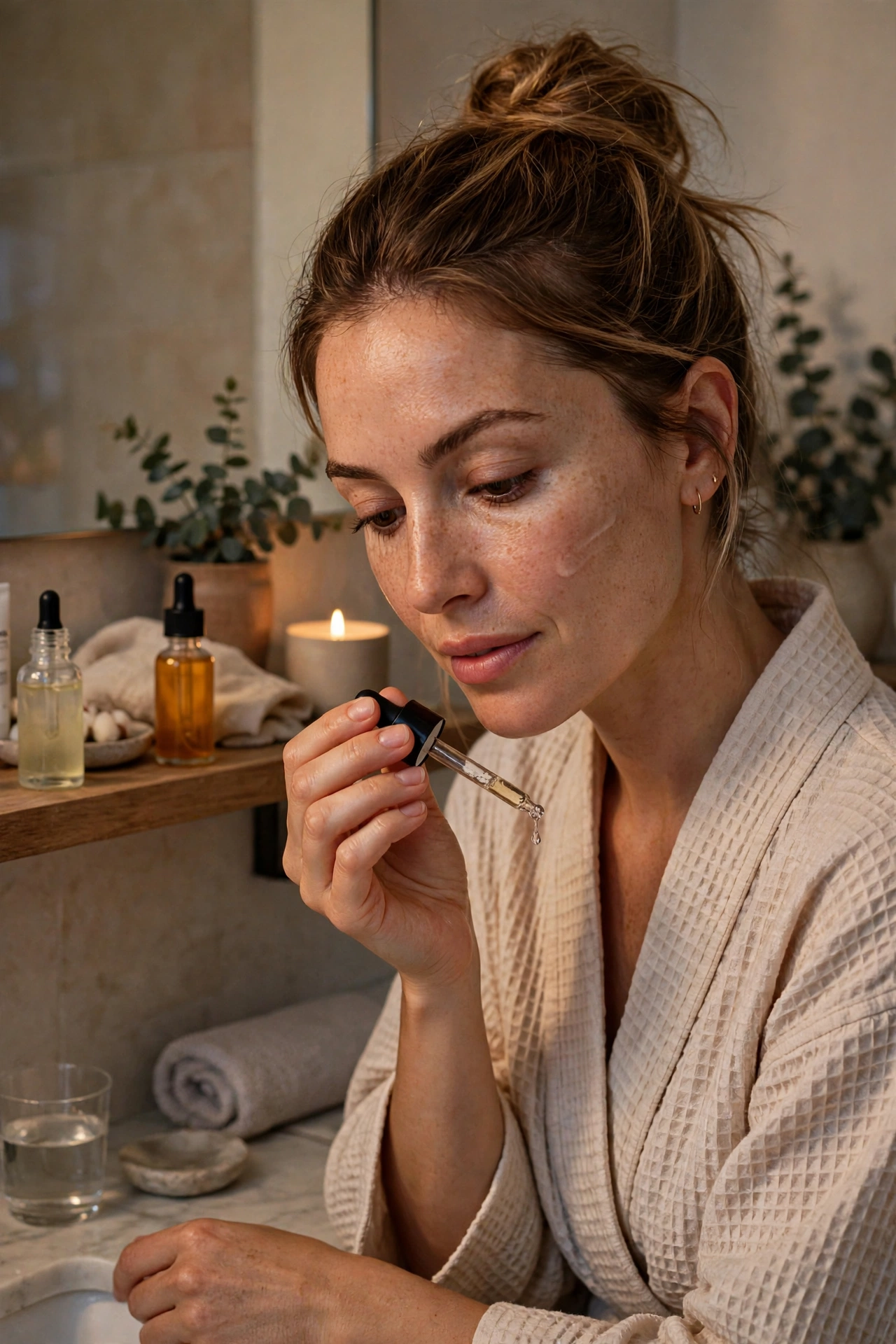
Can you use bakuchiol and retinol together UK? Yes — this gentle pairing guide explains layering order, routines and who should avoid it.
Read More arrow_forwardCalculate your Body Mass Index (BMI) in seconds. BMI is a quick screening number…
Use now arrow_forwardFind your daily calorie needs based on your age, sex, height, weight and activit…
Use now arrow_forwardFind how much water you should drink each day, in litres and glasses, based on y…
Use now arrow_forward