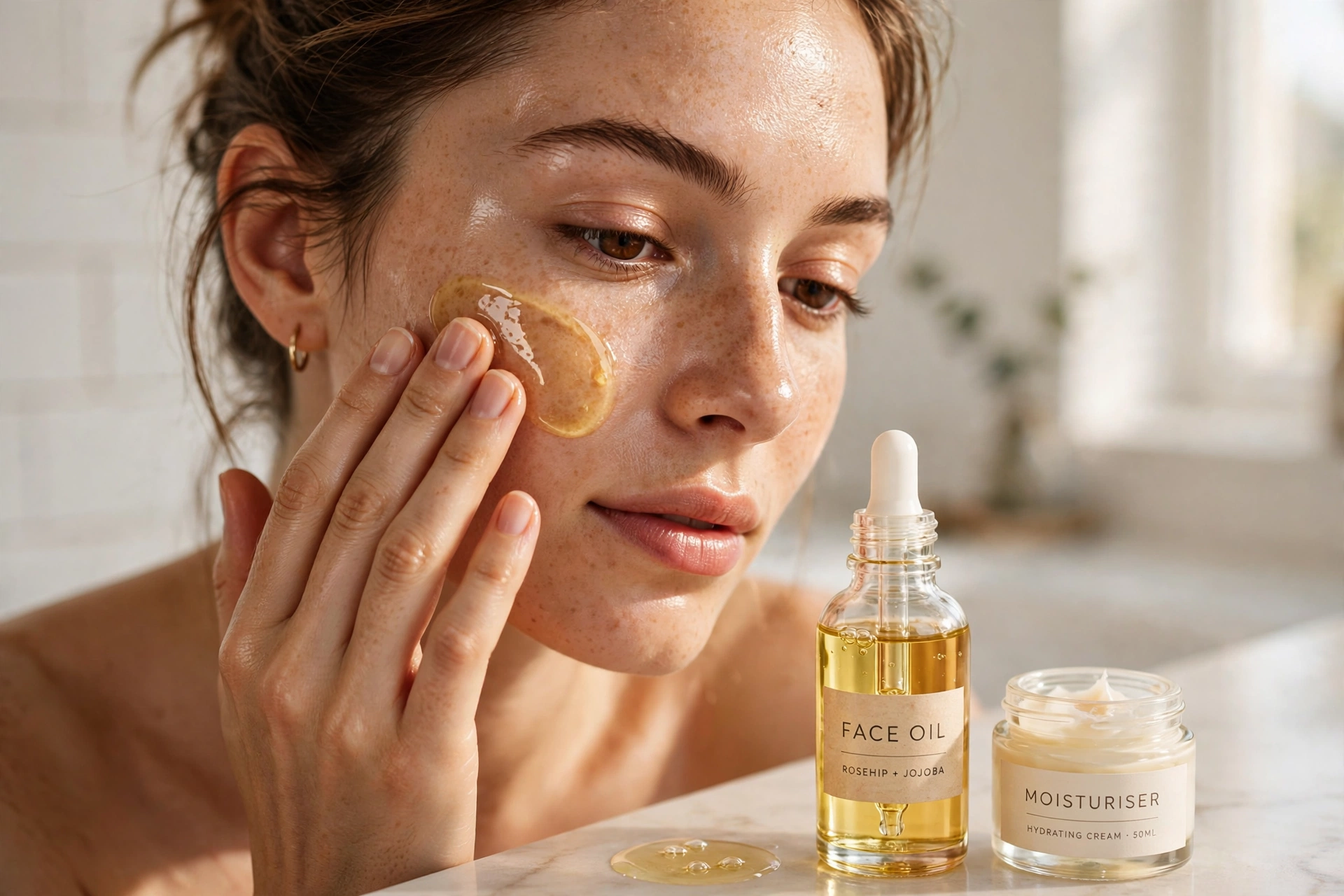
Best Face Oil for Dry Skin UK: 7 Nourishing Picks
Best face oil for dry skin UK — 7 nourishing picks from Boots, Superdrug and Cult Beauty, plus how to choose, layer and apply face oils for softer, calmer skin.
Read More arrow_forwardSeven balanced cleansers for oily T-zones and dry cheeks, with UK prices, honest pros and cons, and expert tips for choosing the right formula.

Finding the best cleanser for combination skin uk shoppers can rely on is harder than it sounds. Your forehead, nose and chin may shine by midday while your cheeks feel tight, dry or even flaky, and a cleanser that controls oil in one zone can strip moisture from another. Pick the wrong formula and you can end up with more breakouts on your T-zone and more irritation on your cheeks at the same time. Pick the right one and your whole routine works better, because every serum and moisturiser you apply afterwards performs best on clean, balanced skin.
This guide cuts through the confusion. We explain what combination skin really is, how gel, cream, foam and micellar cleansers differ, which ingredients help and which ones to avoid, and how to use your cleanser morning and night. Then we compare seven balanced, widely available picks with honest pros and cons and current UK prices, so you can choose with confidence whether you shop at Boots, Superdrug or Cult Beauty.
Combination skin means different areas of your face behave differently. The T-zone — forehead, nose and chin — tends to produce more oil and is more prone to enlarged pores, blackheads and breakouts. The cheeks and jawline, by contrast, are often normal or dry, and they can feel tight, look dull or react to harsh products. This split personality is completely normal. Most people have combination skin to some degree, and it can change with the seasons, with hormones, with stress and with age.
Several factors drive the pattern. Oil glands are naturally more concentrated in the T-zone, so that area produces more sebum. The cheeks have fewer oil glands and a thinner barrier, so they lose moisture more easily. In winter, cold air and central heating can make the dry areas worse, while in summer, heat and humidity can make the T-zone oilier. Hormonal shifts can also tip the balance, which is why many people notice their skin changing in their thirties and forties. If breakouts around your jawline seem tied to your cycle, our guide on how to treat hormonal acne in your 30s explains the pattern in more detail.
The goal of cleansing combination skin is balance, not extremes. You want to remove excess oil, sunscreen, makeup and daily grime from the T-zone without stripping the natural lipids that protect your cheeks. A good cleanser leaves your skin feeling clean and comfortable, never squeaky, tight or greasy. If your face feels tight within a few minutes of washing, your cleanser is too harsh. If it still looks shiny straight after washing, it may not be cleansing effectively enough for your oilier areas.
The UK market adds its own wrinkles to the search. Many popular cleansers recommended by American creators are not sold here, are sold at inflated import prices, or come in different formulations for the UK market. Prices vary sharply between retailers, and a product that costs £10 at one shop can cost £16 at another. Shopping from Boots, Superdrug and Cult Beauty keeps things simple: these retailers stock the genuine UK formulations, run regular offers, and make it easy to return a product that does not suit you.
British weather matters too. The UK climate is cool and damp for much of the year, with hard water in many areas, and both factors can affect how a cleanser behaves on your skin. Hard water can leave residue that makes skin feel dry, while cold wind can weaken the skin barrier in winter. A balanced, low-irritation cleanser that supports the barrier is therefore a better bet for UK skin than a strong, stripping formula designed for a hot, humid climate.
Getting the cleanser right also saves you money across your whole routine. When your cleanser is balanced, you do not need heavy compensating products afterwards, and your moisturiser and sunscreen apply more evenly. It is the single most-used product in most routines, morning and night, so it deserves more thought than any other step. The seven picks below were chosen specifically for UK availability, balanced formulas and fair prices.
Not all cleansers work the same way, and the format often matters as much as the ingredient list. For combination skin, the best approach is usually a gentle gel or a light cream cleanser, but each type has its place.
Gel cleansers are lightweight, water-based formulas that rinse clean without leaving residue. They are usually the best starting point for combination skin because they remove oil and impurities from the T-zone effectively while remaining gentle enough for normal or dry cheeks. Look for gel cleansers labelled soap-free or low-pH, and avoid those with high levels of fragrance or harsh sulphates. A gel cleanser is often the most versatile choice if you want one product that works all year round.
Cream and milk cleansers are richer and more emollient, and they suit the drier areas of combination skin. They dissolve makeup and sunscreen well and leave the skin feeling soft rather than tight. The trade-off is that very rich cream cleansers can feel heavy on an oily T-zone, especially in warm weather. They work best in winter, or as a first cleanse in the evening before a lighter second cleanse. If your cheeks are noticeably dry, a cream cleanser in the colder months can make a real difference.
Foaming cleansers create a lather that lifts oil and dirt away, and they can feel satisfyingly thorough on oily skin. The problem is that many foaming formulas rely on strong surfactants that strip the skin barrier, leaving cheeks tight and reactive. That does not mean all foams are bad: modern foaming cleansers made with gentle surfactants and added ceramides or glycerin can work well for combination skin. Check the ingredient list, and if your skin feels squeaky after use, switch to something gentler. Our roundup of the best salicylic acid cleansers in the UK includes several gentle foaming options that pair cleansing power with barrier-friendly ingredients.
Micellar water is a no-rinse option made of tiny cleansing molecules suspended in water, and it is useful as a first step to remove makeup or as a very gentle morning cleanse. It is not usually enough on its own in the evening, especially if you wear sunscreen or makeup. Cleansing balms, meanwhile, melt into an oil that dissolves sunscreen and long-wear makeup, and they suit combination skin well as a first cleanse when followed by a gentle gel or cream cleanser. Used together, a balm followed by a water-based cleanser is the classic double cleanse, and it is one of the most effective ways to clean thoroughly without over-stripping.
The ingredient list tells you more about a cleanser than the marketing on the front of the bottle. For combination skin, the best formulas combine gentle cleansing agents with ingredients that support hydration and the skin barrier. Look for glycerin and hyaluronic acid, which draw moisture into the skin and help it stay hydrated after rinsing. Ceramides are lipids that form part of the skin barrier itself, and cleansers that contain them help to protect the barrier rather than damage it. Niacinamide is a versatile ingredient that can help regulate oil and calm redness, making it particularly useful for combination skin. Panthenol, also known as pro-vitamin B5, soothes and hydrates, and it pairs well with stronger active ingredients in the rest of your routine; if you use retinol at night, it is worth reading about whether you can use panthenol and retinol together before layering products. Gentle exfoliating acids such as salicylic acid can help keep the T-zone clear, but in a cleanser they should be present at low levels and used no more than once a day.
Ingredients to avoid, or at least to use with caution, include high concentrations of sodium lauryl sulphate and other harsh surfactants that strip natural oils. Strong fragrance and essential oils can irritate the drier areas of combination skin, and they offer no cleansing benefit. Very high levels of drying alcohols, such as denatured alcohol listed near the top of the ingredient list, can weaken the barrier over time. Physical scrubs with rough particles are best avoided in a daily cleanser, as they can cause micro-tears and irritation. The British Association of Dermatologists provides patient information on common skin conditions and sensible skincare, and it is a reliable starting point if you are unsure whether a symptom needs medical attention.
It is also worth remembering that cleansers stay on the skin for a very short time, usually under a minute. Expensive active ingredients in a cleanser have limited time to work, so do not pay a premium for a cleanser on the strength of an exotic active alone. Spend your money on a gentle, well-formulated base, and save the stronger actives for leave-on products such as serums and moisturisers.
The table below gives a quick overview of all seven cleansers. Each one is widely available in the UK, suits combination skin, and has been chosen for a balanced formula rather than an extreme one. Prices are typical high-street prices and may vary with offers.
Product
Skin benefit
Price
Where to buy
CeraVe Foaming Facial Cleanser
Removes oil without stripping; ceramides support the barrier
£12.50
Boots
La Roche-Posay Toleriane Dermo-Cleanser
Very gentle milky formula for dry, reactive cheeks
£14.50
Boots
The Ordinary Squalane Cleanser
Balmy texture melts makeup; squalane hydrates dry areas
£8.50
Boots
Paula's Choice RESIST Perfectly Balanced Foaming Cleanser
Light foam that balances oil and dryness
£26.00
Cult Beauty
Bioderma Sébium Gel Moussant
Purifying gel for oily T-zones and blemish-prone skin
£13.50
Boots
Avene Cleanance Cleansing Gel
Soap-free gel that mattifies without over-drying
£15.50
Boots
Neutrogena Hydro Boost Gelée Milk Cleanser
Hydrating gelée-milk texture with hyaluronic acid
£9.99
Superdrug
CeraVe Foaming Facial Cleanser is one of the most recommended cleansers for combination skin, and for good reason. It uses gentle surfactants to remove excess oil and impurities, and it contains three essential ceramides plus niacinamide and hyaluronic acid to help protect the skin barrier and keep it hydrated. It foams lightly, rinses clean, and suits both morning and evening use.
Pros: excellent value for a large bottle; contains ceramides and niacinamide; widely available at Boots and often on offer; fragrance-free and non-comedogenic.
Cons: the foam is light rather than rich, so it may not feel thorough enough if you wear heavy makeup; the bottle pump can be stiff at first.
This milky, soap-free cleanser is designed for sensitive and intolerant skin, which makes it a strong choice when the dry areas of combination skin are also reactive. It removes makeup and impurities without foaming, and it can be rinsed off or gently wiped away with cotton wool. Glycerin keeps the skin comfortable, and the formula is free from fragrance, soap and parabens.
Pros: extremely gentle, even on reactive cheeks; works well in winter when skin is drier; can be used without water, which is useful when travelling.
Cons: does not foam, so it may feel too light for very oily T-zones in summer; it is a better first cleanse than a deep cleanse after heavy sunscreen.
The Ordinary Squalane Cleanser is a balm-like formula that melts into an oil on contact with the skin, dissolving makeup, sunscreen and daily grime. Squalane is a lightweight, skin-identical moisturiser that hydrates without feeling greasy, which is exactly what combination skin needs. It rinses off cleanly with warm water and leaves the skin soft rather than tight.
Pros: the lowest price in this roundup; excellent at removing sunscreen and makeup; hydrating without heaviness; compact tube is good for travel.
Cons: the balm texture may feel too rich for very oily skin in hot weather; you need to massage it in properly or it can leave a slight film.
Paula's Choice is a brand built on evidence-based formulas, and this foaming cleanser is designed specifically for combination skin. It creates a light foam that removes oil and impurities while conditioning agents keep the skin from feeling stripped. It is fragrance-free and suitable for daily use, morning and night.
Pros: specifically formulated for combination skin; rinses clean with no residue; fragrance-free; a little goes a long way.
Cons: the highest price in this roundup; only available at specialist retailers such as Cult Beauty rather than on the high street; the foam is subtle, which some people find less satisfying.
Bioderma Sébium Gel Moussant is a purifying foaming gel aimed at combination to oily skin, and it is one of the best options if your T-zone is prone to blackheads and breakouts. It uses gentle cleansing agents to remove excess sebum without harsh scrubbing, and it helps to keep pores clear. It is soap-free and rinses clean.
Pros: very effective on oily T-zones and blemish-prone areas; soap-free and gentle for a purifying gel; good value and widely stocked at Boots.
Cons: can feel slightly drying on the cheeks in winter, so you may want a richer cleanser in the colder months; it is not the best choice if your skin is mainly dry.
Avene Cleanance Cleansing Gel is a soap-free gel that uses gentle surfactants and the brand's thermal spring water to cleanse and calm the skin. It is designed for oily, blemish-prone skin, and it mattifies the T-zone without leaving the skin feeling stripped. It is a good middle ground if you want something stronger than a milky cleanser but gentler than a harsh foaming wash.
Pros: soap-free and well tolerated; mattifies the T-zone effectively; suitable for blemish-prone combination skin; a little product goes a long way.
Cons: the gel can feel slightly tight on very dry cheeks; the price is higher than some high-street alternatives; fragrance is minimal but present.
Neutrogena Hydro Boost Gelée Milk Cleanser combines a lightweight gelée texture with a milky finish, and it contains hyaluronic acid to help the skin retain moisture. It removes makeup and impurities while leaving the skin feeling hydrated, which makes it a good option for combination skin that leans dry in places. It is widely available at Superdrug and often included in multi-buy offers.
Pros: hydrating formula with hyaluronic acid; affordable and easy to find at Superdrug; gentle enough for daily use; works well under makeup.
Cons: not the strongest cleanser for very oily skin or heavy makeup, so you may need a double cleanse in the evening; the texture is unusual and may not suit everyone.
Start by identifying your dominant concern. If your T-zone is very oily and prone to breakouts, lean towards a gentle gel or foaming cleanser with salicylic acid or niacinamide. If your cheeks are dry, tight or reactive, lean towards a cream or milky cleanser with ceramides and glycerin. If both are true, which is common, choose a balanced gel cleanser as your everyday option and keep a richer cream cleanser for winter or for evenings when your skin feels dry.
Consider the season. Many people with combination skin need two cleansers: a lighter gel in summer and a richer cream in winter. This is not a luxury; it reflects the fact that your skin genuinely changes with temperature and humidity. Buying a smaller size of each and switching between them is often better than forcing one product to work all year.
Patch test any new cleanser. Use it on a small area, such as along the jawline, for a few days before using it on your whole face. This is especially important if your skin is reactive, or if you are also using active ingredients such as retinol or exfoliating acids. If you have a skin condition such as rosacea or eczema, it is worth choosing a fragrance-free formula and reading our guide to a fragrance-free face wash for rosacea-prone skin before you buy. The NHS also has clear, practical advice on looking after your skin and when to seek help from a pharmacist or GP.
Finally, give a new cleanser at least two weeks before judging it. Skin needs time to adjust, and a product that feels unusual on day one may work well once your skin settles. If you develop persistent redness, stinging, or new breakouts that do not settle within a couple of weeks, stop using the product and try a gentler formula.
How you use a cleanser matters as much as which one you choose. Over-washing and using water that is too hot are two of the most common mistakes, and both can damage the skin barrier over time.
In the morning, your skin mainly needs a light refresh. If your skin feels comfortable, a gentle rinse with lukewarm water followed by moisturiser and sunscreen is sometimes enough, but most people with combination skin benefit from a quick, gentle cleanse to remove overnight oil and sweat. Use a small amount of a gel or milky cleanser, massage it in for about thirty seconds, and rinse with lukewarm water. Pat your face dry with a clean towel rather than rubbing it, and apply moisturiser while your skin is still slightly damp. Finish with sunscreen, which is essential every day, even in cloudy British weather.
In the evening, cleansing needs to be more thorough because you are removing sunscreen, makeup, pollution and a full day of oil. This is where a double cleanse works well for combination skin. Start with a balm or oil cleanser, such as The Ordinary Squalane Cleanser, to dissolve sunscreen and makeup. Follow with your regular gel or cream cleanser to clean the skin itself. Massage each step in gently for thirty to sixty seconds, rinse with lukewarm water, and pat dry. Then apply your evening treatments, such as a hydrating serum or retinol, followed by moisturiser. If you use retinol, take care with how you layer it with other products and check whether panthenol and retinol can be used together before combining them.
The most common mistake is over-cleansing. Washing your face three or four times a day, or scrubbing hard to remove oil, strips the skin barrier and can actually make the T-zone produce more oil to compensate. Twice a day is enough for most people, with a gentle rinse in between if needed.
Using water that is too hot is another frequent error. Hot water strips natural oils and can leave the skin red and irritated. Lukewarm water is always the better choice, in both summer and winter. Similarly, harsh physical exfoliants and cleansing brushes used daily can damage the barrier, especially on the drier areas of combination skin. If your skin feels tight, red or flaky after washing, your cleanser is too strong or you are washing too often, and your barrier may need repair. Our guide on how to repair a damaged skin barrier walks through the steps to restore it gently.
Other mistakes include using a cleanser that is wrong for your skin type, such as a heavy cream cleanser on very oily skin or a strong foaming wash on dry, reactive cheeks, and skipping moisturiser after cleansing. Cleansing always removes some moisture, so moisturiser is not optional, even for the oily areas. Finally, do not judge a cleanser by how tight your skin feels afterwards. That tight feeling is a sign of damage, not cleanliness. Clean skin should feel comfortable and soft.
The best cleanser for combination skin is a gentle, balanced formula that removes oil from the T-zone without stripping moisture from the cheeks. A low-pH gel cleanser with ceramides, glycerin or niacinamide is a good starting point for most people. The right choice depends on whether your skin leans oilier or drier, and on the season, so you may need a lighter gel in summer and a richer cream in winter.
A gel cleanser is usually the best everyday choice for combination skin because it cleans the oily T-zone effectively while remaining gentle on drier cheeks. A cream cleanser is better in winter or when your cheeks feel dry and tight. Many people keep both and switch between them as the seasons change, which is a practical and affordable approach.
Yes, you can use a foaming cleanser on combination skin, provided the formula is gentle and free from harsh sulphates. Modern foaming cleansers made with mild surfactants and added ceramides or glycerin can work well. Avoid foams that leave your skin feeling squeaky or tight, as that is a sign the formula is too stripping for your skin.
Twice a day is enough for most people with combination skin: once in the morning and once in the evening. Washing more often can strip the skin barrier and trigger extra oil production in the T-zone. If you exercise or sweat heavily, a gentle rinse with lukewarm water between washes is usually sufficient.
Double cleansing is helpful in the evening if you wear sunscreen or makeup, because the first step dissolves those products and the second step cleans the skin itself. Start with a balm or oil cleanser, then follow with a gentle gel or cream cleanser. In the morning, a single gentle cleanse is usually enough.
A cleanser can help to keep pores clear and reduce the build-up that leads to blackheads, especially if it contains a gentle exfoliating ingredient such as salicylic acid. However, a cleanser alone will not remove established blackheads, because it stays on the skin for a very short time. For stubborn blackheads, a leave-on salicylic acid treatment used a few times a week is more effective.
Micellar water is a good gentle option for a morning cleanse or for removing light makeup, but it is not usually enough on its own in the evening, especially if you wear sunscreen or long-wear makeup. For a thorough evening cleanse, follow micellar water with a gel or cream cleanser, or use a balm cleanser as your first step instead.
Avoid cleansers with harsh sulphates, high levels of drying alcohol, strong fragrance and rough physical scrubs, as these can irritate the drier areas and damage the skin barrier. Be cautious with very strong foaming formulas that leave your skin feeling tight or squeaky. If you have sensitive or reactive skin, choose a fragrance-free formula and patch test it before full use.
Combination skin has an oily T-zone and normal or dry cheeks, so it needs a balanced cleanser, not an extreme one.
A gentle gel cleanser is the best everyday starting point, with a cream cleanser as a winter or evening alternative.
Look for glycerin, hyaluronic acid, ceramides, niacinamide and panthenol, and avoid harsh sulphates, drying alcohols and strong fragrance.
CeraVe Foaming Facial Cleanser at £12.50 from Boots offers the best value, while Paula's Choice at £26.00 from Cult Beauty is the premium pick.
Double cleanse in the evening if you wear sunscreen or makeup, using a balm first and a gel or cream cleanser second.
Wash twice a day with lukewarm water, and never judge a cleanser by how tight your skin feels afterwards.
Give a new cleanser at least two weeks before deciding whether it suits your skin.
Buy from Boots, Superdrug or Cult Beauty for genuine UK formulations, fair prices and easy returns.
The best cleanser for combination skin uk shoppers can buy is not the most expensive one or the one with the longest ingredient list. It is the balanced, gentle formula that cleans your oily T-zone without stripping your drier cheeks, and that you can use happily twice a day, every day. For most people, that means a low-pH gel cleanser with ceramides, glycerin or niacinamide, such as the CeraVe Foaming Facial Cleanser at £12.50 from Boots, with a richer cream cleanser kept for winter or for evenings when your skin feels dry.
Choose based on your dominant concern and the season, patch test before committing, and give your new cleanser two weeks to prove itself. Get this step right and the rest of your routine becomes easier: your moisturiser absorbs better, your sunscreen sits more evenly, and your skin stays comfortable through the British weather. If your barrier feels damaged or your skin is persistently reactive, the American Academy of Dermatology offers reliable guidance on gentle skincare and when to see a dermatologist.
Best face oil for dry skin UK — 7 nourishing picks from Boots, Superdrug and Cult Beauty, plus how to choose, layer and apply face oils for softer, calmer skin.
Read More arrow_forward
The best fungal acne safe moisturiser uk guide — 7 gentle, UK-available picks, plus how to spot fungal acne and which ingredients to avoid.
Read More arrow_forward
The best sunscreen for rosacea prone skin UK — 7 gentle, fragrance-free picks that calm rather than sting, with a comparison table and prices.
Read More arrow_forward
Find the best fragrance free face wash for rosacea prone skin uk: gentle cleansers, what to avoid, and how to cleanse without triggering flushing.
Read More arrow_forward
Find the best winter body lotion for extremely dry skin uk with 7 soothing, UK-available picks for tight, flaky winter skin.
Read More arrow_forwardCalculate your Body Mass Index (BMI) in seconds. BMI is a quick screening number…
Use now arrow_forwardFind your daily calorie needs based on your age, sex, height, weight and activit…
Use now arrow_forwardFind how much water you should drink each day, in litres and glasses, based on y…
Use now arrow_forward