
Best Sunscreen for Rosacea Prone Skin UK: 7 Calm, No-Sting Picks
The best sunscreen for rosacea prone skin UK — 7 gentle, fragrance-free picks that calm rather than sting, with a comparison table and prices.
Read More arrow_forwardBest face oil for dry skin UK — 7 nourishing picks from Boots, Superdrug and Cult Beauty, plus how to choose, layer and apply face oils for softer, calmer skin.
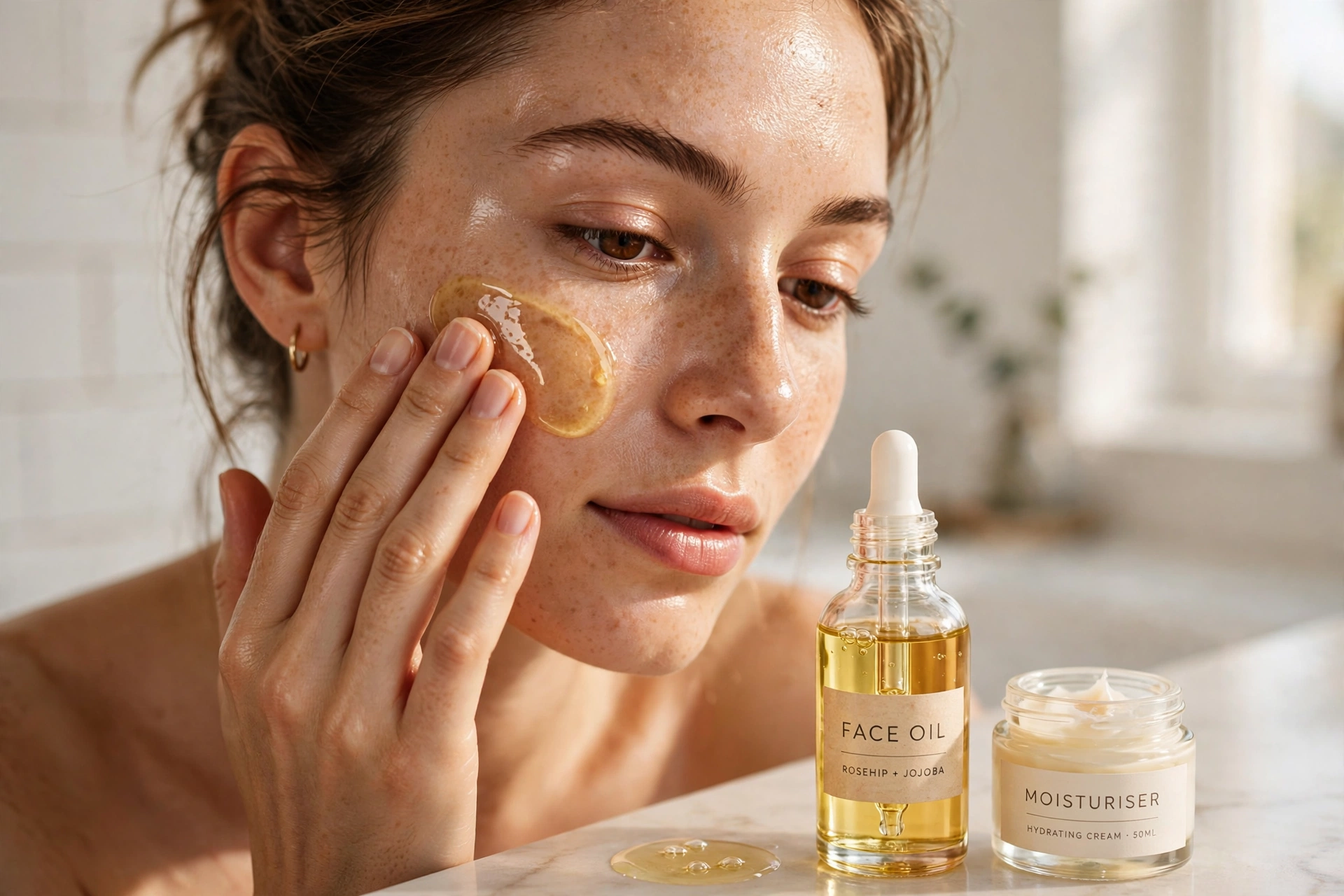
If you have ever smoothed on a rich moisturiser only to feel tight, flaky skin again by lunchtime, you are not alone — and finding the best face oil for dry skin uk shoppers can actually buy on the high street could be the missing step in your routine. Face oils work differently from creams. Instead of adding water to the skin, they seal in the moisture you already have and patch up the gaps in your skin barrier that let water escape. For genuinely dry skin, that sealing step can make the difference between a routine that works for an hour and a routine that keeps your skin comfortable all day.
Dry skin is not simply skin that needs more cream. It is skin whose barrier is not holding onto water properly, whether because of cold weather, central heating, hot showers, harsh cleansers or simply genetics. When the barrier is weakened, water evaporates from the skin faster than you can replace it, a process dermatologists call transepidermal water loss. A good face oil slows that loss dramatically, because oils are occlusive: they form a thin, breathable layer over the skin that locks moisture in. That is why so many people with dry skin find that adding one small bottle to their routine changes everything, even when they have already tried a dozen moisturisers.
This guide explains how face oils work, which ingredients actually help dry skin, and which seven products are worth your money in the UK right now, with real prices from Boots, Superdrug and Cult Beauty. You will also learn exactly how and when to apply face oil, whether you still need a moisturiser, and which oils and habits to avoid. Everything here is chosen for UK shoppers: the products are available on the high street or from UK retailers, the prices are in pounds, and the advice takes account of British weather, which is rarely kind to dry skin.
The simplest way to understand face oils is to think of your skin barrier as a brick wall. The skin cells are the bricks, and the natural lipids — ceramides, cholesterol and fatty acids — are the mortar holding them together. In dry skin, that mortar is depleted, so gaps open up and water escapes. Moisturisers mostly add water and humectants such as glycerin and hyaluronic acid, which is useful, but without something to seal that water in, much of it evaporates within an hour or two. A face oil supplies the lipids your barrier is missing and sits on top of the skin as a seal, so the hydration underneath actually stays put.
This is also why face oils feel so different from heavy creams. A well-chosen oil absorbs into the upper layers of the skin rather than sitting greasily on the surface, and it leaves skin looking supple and slightly dewy rather than shiny. Many dry-skinned people find that once they add an oil, they can use a lighter moisturiser underneath, because the oil is doing the heavy sealing work. Others keep their rich cream and add two or three drops of oil on top as a final step, which is often the best approach in the depths of a British winter, when cold wind and indoor heating attack the skin from both sides.
It is worth clearing up a common worry: face oils do not make dry skin oilier, and they do not clog pores when you choose the right ones. Dry skin and oily skin are different problems, and a dry skin type is usually short of oil, not producing too much of it. The oils that suit dry skin — squalane, rosehip, jojoba and marula — are non-comedogenic, which means they are not known for blocking pores. Problems usually come from heavy, strongly fragranced oils, or from using far too much product. Three to four drops is enough for the whole face; a full pipette is almost always too much, and it is the most common reason people decide that face oils are not for them.
There is also good evidence that some plant oils actively support barrier repair rather than simply sitting on top of the skin. Rosehip oil, for example, is rich in linoleic acid and vitamin A precursors, and squalane closely mimics the skin's own natural sebum, which is why it absorbs so easily. If your barrier is compromised, our guide to hhow to repair a damaged skin barrier explains the full routine, and a face oil fits naturally into the sealing step of that repair process. Used consistently, the right oil can reduce flaking, calm tightness and make makeup sit far better, because foundation clings to dry patches far less when the skin underneath is properly sealed and smooth.
The benefits of a good face oil go beyond simple moisture sealing, and they tend to build up over a few weeks of consistent use. First, oils reduce water loss, which is the single most important job for dry skin. Studies of skin barrier function consistently show that occlusive ingredients cut transepidermal water loss, and even a thin layer of oil makes a measurable difference. That is why skin often feels more comfortable within minutes of applying an oil, and why the effect lasts through the day rather than fading after an hour.
Second, many face oils deliver fatty acids that dry skin is genuinely short of. Linoleic acid, oleic acid and alpha-linolenic acid all play roles in keeping the barrier flexible and resilient. Rosehip and evening primrose oils are particularly rich in these, while jojoba oil is technically a wax ester that closely resembles human sebum, which is why it feels so natural on the skin. Squalane, meanwhile, is a lightweight, stable oil that suits almost everyone, including people whose skin reacts to richer plant oils. Choosing an oil with the right fatty acid profile for your skin matters more than choosing the most expensive bottle on the shelf.
Third, face oils can calm the irritation that so often comes with dryness. Dry skin itches, flakes and stings, and that irritation can make you reach for harsh exfoliants or strong actives that only make things worse. A gentle, fragrance-free oil soothes that cycle: it cushions the skin, reduces the tight feeling, and gives the barrier time to recover. Some oils, such as rosehip and sea buckthorn, also contain natural antioxidants that help defend the skin against environmental damage from wind, cold and pollution — all of which are daily realities for UK skin in the winter months.
Finally, face oils improve how your skin looks, not just how it feels. Dry skin often looks dull and grey, because rough, flaky surface cells scatter light instead of reflecting it. A thin layer of oil smooths that surface, so light reflects more evenly and the skin looks healthier and more radiant. This is not a cosmetic trick; it is a sign that the surface of the skin is properly hydrated and intact. For that reason, many people find that a face oil is the single most visible improvement they can make to a dry-skin routine, and it costs far less than a drawer full of serums.
Choosing a face oil starts with your skin, not with the prettiest bottle. If your skin is dry but not particularly sensitive, you have the widest choice, and almost any of the oils in this guide will work well. If your skin is dry and reactive, or prone to redness, look for simple formulas with one or two oils and no added fragrance, essential oils or alcohol. Fragrance is the most common irritant in face oils, and it is also the most unnecessary ingredient, so a fragrance-free formula is usually the safest starting point for anyone with sensitive skin.
The ingredient list tells you almost everything you need to know. Squalane is the safest all-rounder: it is lightweight, stable, non-comedogenic and suits nearly every skin type, including skin that is both dry and breakout-prone. Rosehip oil is the best choice if dullness and fine lines bother you as much as dryness, because it brings vitamin A precursors and a high linoleic acid content. Jojoba oil is the closest match to your skin's own sebum, so it absorbs quickly and rarely causes problems. Marula oil is richer and more luxurious, with a high oleic acid content that makes it ideal for very dry, mature skin. Argan oil sits somewhere in the middle, and it is a good choice if your skin is dry but you dislike heavy textures.
Texture matters too, and it is worth thinking about when you will use the oil. A light oil such as squalane works well in the morning under makeup, because it absorbs fast and does not leave a shine. A richer oil such as marula or a rosehip blend is better saved for the evening, when you can apply a few extra drops and let them work overnight. Some people use two oils — a light one by day and a rich one by night — which is a perfectly sensible approach, and it is usually cheaper than buying one very expensive product and trying to make it do everything.
Price is not a reliable guide to quality with face oils. Some of the best options in the UK cost under £10, while some luxury oils cost ten times as much for a very similar formula. What you are paying for at the higher end is usually the brand, the packaging and the sourcing story, not a dramatically better oil. Check the size of the bottle as well as the price: a 30ml bottle used at three drops a day should last two to three months, so even a £30 oil works out at roughly 30 to 50 pence per day. That makes face oil one of the most cost-effective steps in a dry-skin routine, and it is worth spending a little more on a formula you genuinely enjoy using, because the oil only works if you actually reach for it every day.
One more practical point: look for dark glass bottles with a dropper or pump, and store your oil somewhere cool and dark. Plant oils oxidise when exposed to light, heat and air, and an oxidised oil can irritate the skin and lose its benefits. If an oil starts to smell sharp or rancid, or if it changes colour significantly, it is time to replace it. Most face oils keep well for six to twelve months after opening if they are stored properly, and buying a smaller bottle more often is better than buying a large bottle that sits half-used for a year.
These seven picks cover every budget and every level of dryness, from a light everyday squalane to a rich evening treatment oil. All of them are available from Boots, Superdrug or Cult Beauty in the UK, and all of them are fragrance-free or very lightly fragranced unless stated otherwise. Prices were checked against UK retailers and may vary slightly with offers, so it is always worth checking for a promotion before you buy.
This is the best starting point for anyone new to face oils, and it is one of the cheapest effective options in the UK. Squalane is a stable, lightweight oil that absorbs almost instantly, leaves no greasy residue and suits every skin type, including skin that is dry and breakout-prone. It is fragrance-free, it works well under makeup, and it mixes easily into your existing moisturiser if you prefer that to applying it on its own. At usually under £8 for 30ml at Boots and Cult Beauty, it is also the easiest oil to recommend without hesitation. The only downside is that it is a single-ingredient oil, so it does not bring the extra antioxidants and vitamins that a plant oil blend offers — but for pure barrier sealing and comfort, it is hard to beat.
Rosehip oil is a classic dry-skin remedy, and this is one of the most affordable good-quality versions available on the UK high street. It is cold-pressed, rich in linoleic acid and naturally high in vitamin A precursors, which makes it a good choice if your dry skin also looks dull or shows early fine lines. It has a slightly richer texture than squalane and a faint natural scent, and it works particularly well as an evening oil, applied after your moisturiser or mixed into it. Available at Boots and Cult Beauty, it is a strong option for anyone who wants a plant oil with real skin benefits at a very reasonable price. If your skin is also showing signs of ageing, our skincare routine for women over 50 explains how a rosehip oil fits into a fuller routine.
CeraVe is a pharmacy favourite for good reason, and this gel oil is one of the cleverest dry-skin products on the market. It combines squalane with ceramides, the lipids your skin barrier is made of, in a lightweight gel-oil texture that feels far less heavy than a traditional oil. It absorbs quickly, layers well under makeup and is fragrance-free, which makes it a safe choice for sensitive and reactive skin. At around £20 from Boots, it costs more than a basic squalane, but you are paying for a formula that actively supports barrier repair rather than simply sealing the skin. It is an excellent choice if your dryness comes with sensitivity, redness or a barrier that feels damaged.
This is the luxury pick on the list, and it earns its place because it is genuinely pleasant to use. It blends squalane with evening primrose oil and lavender oil, and it has a silky, dry-oil texture that absorbs beautifully overnight. It is designed as a night treatment, and it is at its best when your skin is very dry, tired or stressed — after a long flight, a cold snap, or a week of poor sleep. The lavender fragrance means it is not the best choice for very sensitive skin, but for most dry skin types it is a lovely evening step. Available at Boots and Cult Beauty, it is expensive, but a little goes a long way, and a 30ml bottle usually lasts three to four months.
Pai is a British brand built around sensitive skin, and this is one of the best rosehip oils you can buy in the UK. It is certified organic, cold-pressed and blended with vitamin E, and it is noticeably richer and more nourishing than budget rosehip oils. It suits very dry, mature and sensitive skin particularly well, and it is a good choice if you want a single oil that does the work of both a treatment and a seal. At around £24, it sits in the middle of the price range, and it is worth it if your skin is dry enough to need a genuinely rich oil. It also works well on dry patches elsewhere, such as around the nose or on the neck, which makes it a versatile bottle to keep on the shelf.
Marula oil is one of the richest face oils available, and this is the best-known version in the UK. It is cold-pressed, unrefined and very high in oleic acid, which makes it deeply nourishing for very dry and mature skin. It has a silky texture that absorbs better than you would expect from such a rich oil, and it leaves skin looking plump and well-rested by morning. At around £64 from Cult Beauty and Boots, it is the most expensive pick on this list, and it is honestly more than most people need — but if your skin is extremely dry, or if you want one luxury oil for winter evenings, it is a genuinely effective product. A cheaper alternative with a similar feel is The Ordinary's marula oil, usually under £10, which is worth trying first if you are unsure whether a rich oil suits you.
La Roche-Posay is a pharmacy staple in the UK, and this gentle oil is designed for skin that is dry, sensitive and easily irritated. It is fragrance-free, non-comedogenic and formulated to be as inoffensive as possible, which makes it a safe choice if other oils have stung or caused redness. It is lighter than marula or rosehip, so it works well in the morning as well as at night, and it layers neatly under sunscreen without pilling. Available at Boots and Superdrug for around £17.50, it is a sensible mid-price option for anyone whose dryness comes with sensitivity. If your skin also struggles in winter, our round-up of thewbest winter body lotion for extremely dry skin covers the same problem for the rest of your body.
Application order matters, because face oil is a seal, and a seal only works if it goes on last. The general rule is to apply products from thinnest to thickest: cleanser, toner or essence, serum, moisturiser, then face oil, then sunscreen in the morning. The oil goes after your moisturiser because it locks in everything underneath it. If you apply the oil first, it can block your serum and moisturiser from absorbing properly, which wastes the products underneath and leaves your skin less hydrated than it should be.
There is one exception to this rule, and it is worth knowing. If your skin is extremely dry, you can apply a few drops of oil before your moisturiser as well as after it — a technique sometimes called the oil sandwich. The first layer of oil softens the skin and helps the moisturiser spread and absorb, and the second layer seals everything in. This is particularly useful in winter, or after a long flight, when the skin needs extra help. Start with the standard order first, and only add the extra layer if your skin still feels tight by midday.
How much you use matters as much as when you use it. Three to four drops warmed between your palms is enough for the whole face and neck. Press the oil gently into the skin rather than rubbing it in, and pay extra attention to the driest areas — usually the cheeks, the sides of the nose and the jawline. If your skin still looks shiny after five minutes, you have used too much; blot the excess with a tissue rather than washing it off, and use one drop less next time. Most people find that their skin absorbs the oil fully within a few minutes, leaving a soft, healthy-looking finish rather than a greasy one.
Timing is flexible, but most people get the best results using face oil twice a day in winter and once a day, in the evening, in summer. Morning use helps makeup sit better and protects the skin against cold and wind during the day, while evening use gives the oil hours of uninterrupted contact with the skin overnight. If you use active ingredients such as retinol or vitamin C, the oil goes on after them, and it can actually help buffer any dryness those actives cause. Our guide to can you use azelaic acid and vitamin C together explains how to layer brightening actives with a moisturising routine, and a face oil fits into the same layering logic.
This is one of the most common questions about face oils, and the answer is that they do different jobs, so most dry-skinned people benefit from both. A moisturiser adds water and water-attracting ingredients to the skin, while a face oil adds lipids and seals that water in. Using only a moisturiser on very dry skin is like filling a bath with the plug out: the hydration goes in, but it does not stay. Using only an oil is also incomplete, because oil on its own does not add much water to the skin — it mainly stops water from leaving. Together, they cover both halves of the problem.
That said, you do not necessarily need a heavy cream and a rich oil. Many people with moderately dry skin find that a light moisturiser plus two or three drops of oil works better than a very heavy cream on its own, because the combination feels lighter, absorbs better and looks better under makeup. Others prefer a rich cream in the morning and an oil at night, which is a sensible split that gives you the benefits of both without overloading your skin at any one time. There is no single right answer, and the best combination is the one you will actually use consistently.
If you had to choose just one, the choice depends on your skin. If your skin feels tight and dehydrated but not flaky, a good moisturiser with humectants such as glycerin and hyaluronic acid may be enough on its own. If your skin is flaky, rough or visibly dry, an oil will usually make a bigger difference, because the problem is a damaged barrier that is losing water faster than any cream can replace it. In practice, most people with genuinely dry skin end up using both, and the cost is modest: a good moisturiser and a bottle of squalane together cost less than many single luxury creams.
It is also worth remembering that your needs change with the seasons. In summer, you may find that a light moisturiser is enough, and you only reach for the oil on dry or windy days. In winter, when central heating and cold air strip moisture from the skin, you may need both morning and night. Listen to your skin rather than following a fixed routine all year round, and adjust the amount of oil you use as the weather changes. That flexibility is one of the best things about face oils: you can add a drop more on a cold day and skip it entirely on a humid one.
Not every oil suits dry skin, and a few common mistakes can make dryness worse rather than better. The first is choosing an oil with added fragrance or essential oils. Fragrance is one of the most common causes of irritation in skincare, and dry, compromised skin is far more vulnerable to it than healthy skin. If a face oil smells strongly of flowers, citrus or herbs, that scent is coming from ingredients that can sensitise your skin over time. Fragrance-free is the safest choice, and it is worth checking the ingredient list even on products marketed as natural or gentle.
The second mistake is using the wrong type of oil. Coconut oil is often recommended online for dry skin, but it is highly comedogenic, which means it can block pores and trigger breakouts, especially on the face. Olive oil, another common home remedy, can actually damage the skin barrier when used on its own, because its high oleic acid content disrupts the barrier's structure. Both are fine in cooking; neither belongs in a serious dry-skin routine. Stick to oils that are known to suit the face — squalane, rosehip, jojoba, marula and argan — and you will avoid most problems.
The third mistake is over-exfoliating in an attempt to remove flakes. Dry, flaky skin tempts you to scrub it smooth, but harsh physical scrubs and strong chemical exfoliants strip away the very barrier you are trying to repair. Gentle exfoliation once or twice a week is fine, and it does help an oil absorb better, but daily exfoliation will leave your skin drier and more irritated than before. If you use retinol, be particularly careful in winter, and our guide to how to stop retinol peeling in winter explains how to keep using it without damaging your barrier.
Other habits matter too. Hot showers feel wonderful in winter, but they strip natural oils from the skin, so keep the water lukewarm and keep showers short. Harsh foaming cleansers can do the same damage, so switch to a cream or gel cleanser that does not leave your skin feeling tight. The British Association of Dermatologists has helpful guidance on caring for dry and eczema-prone skin, which you can read on the British Association of Dermatologists website. The American Academy of Dermatology also publishes practical advice on dry skin care, including how to choose moisturisers and when to see a dermatologist. And if your dryness is severe, cracked or bleeding, the NHS website has clear information on when dry skin needs medical attention rather than a new product.
For most people, squalane is the best starting point, because it is lightweight, fragrance-free, non-comedogenic and costs usually under £10 at Boots. If your skin is very dry or mature, rosehip or marula oil will feel more nourishing. The best oil is the one that suits your skin type, your budget and your routine, so start with a simple, affordable option and only spend more if you need something richer.
Yes, you can use face oil every day, and most people with dry skin benefit from using it twice a day in winter and once a day in summer. Start with a few drops in the evening, and add a morning application if your skin still feels tight by midday. If your skin feels greasy or you notice breakouts, reduce the amount rather than stopping altogether.
Apply face oil after your moisturiser, because the oil seals in everything underneath it. The order is cleanser, serum, moisturiser, then face oil, then sunscreen in the morning. If your skin is extremely dry, you can also apply a few drops before your moisturiser as an extra layer, but the final layer of oil should always come last.
A well-chosen face oil should not clog your pores. Squalane, rosehip, jojoba and marula oils are all non-comedogenic, which means they are not known for blocking pores. Problems usually come from heavy oils such as coconut oil, or from using far too much product. Use three to four drops, choose a non-comedogenic formula, and patch test any new oil on your jawline first.
Yes, face oil works very well with retinol, and it can actually help reduce the dryness and flaking that retinol sometimes causes. Apply your retinol first, let it absorb, then apply your moisturiser and finish with a few drops of face oil. This layering method, sometimes called buffering, slows the retinol slightly but makes it far more comfortable to use regularly.
Neither is better on its own, because they do different jobs. A moisturiser adds water to the skin, while a face oil seals that water in and supplies the lipids your barrier is missing. Most people with genuinely dry skin benefit from using both together, and the combination usually works better than either product alone.
You should notice softer, more comfortable skin within a few days, because the sealing effect works immediately. Deeper improvements, such as less flaking, a stronger barrier and a healthier-looking glow, usually take three to four weeks of consistent use. Give any new oil at least a month before deciding whether it suits you.
Yes, face oil can work well under makeup, but use a light oil such as squalane and wait at least five minutes for it to absorb before applying foundation. Richer oils such as marula are better saved for the evening, because they can make makeup slide or look shiny. If your foundation pills over an oil, try mixing one drop into your moisturiser instead of applying it directly to the skin.
Face oils seal in moisture and supply the lipids a dry skin barrier is missing, which is why they work when creams alone do not.
Squalane is the best all-round starting point, while rosehip and marula suit very dry or mature skin.
Apply face oil after your moisturiser, using three to four drops pressed gently into the skin.
Use a light oil in the morning and a richer oil at night for the best results through the British winter.
A moisturiser and a face oil do different jobs, and most dry skin benefits from using both together.
Avoid fragranced oils, coconut oil and olive oil on the face, and do not over-exfoliate flaky skin.
Good UK options start at usually under £10 at Boots, Superdrug and Cult Beauty, so you do not need to spend a fortune.
Give any new oil three to four weeks of consistent use before judging whether it suits your skin.
Dry skin does not need a complicated routine or an expensive shelf full of products. It needs water, a way to hold onto that water, and a barrier that is given time to recover. A good face oil provides two of those three things in a single step, which is why it is often the product that finally makes a dry-skin routine work. Start with a simple, affordable oil such as squalane, use three to four drops after your moisturiser, and give it a few weeks before you judge the results.
If your skin is very dry, step up to a richer oil such as rosehip or marula in the evening, keep your showers lukewarm, and choose a gentle cleanser that does not strip your skin. The seven oils in this guide cover every budget and every level of dryness, and all of them are easy to buy on the UK high street. Pick one, use it consistently, and your skin should feel softer, calmer and more comfortable — whatever the British weather is doing outside.
The best sunscreen for rosacea prone skin UK — 7 gentle, fragrance-free picks that calm rather than sting, with a comparison table and prices.
Read More arrow_forward
The best fungal acne safe moisturiser uk guide — 7 gentle, UK-available picks, plus how to spot fungal acne and which ingredients to avoid.
Read More arrow_forward
Find the best pregnancy safe vitamin c serum uk with 7 gentle, UK-available picks for glow, dark spots and sensitive pregnancy skin.
Read More arrow_forward
Find the best winter body lotion for extremely dry skin uk with 7 soothing, UK-available picks for tight, flaky winter skin.
Read More arrow_forward
Find the best fragrance free face wash for rosacea prone skin uk: gentle cleansers, what to avoid, and how to cleanse without triggering flushing.
Read More arrow_forwardCalculate your Body Mass Index (BMI) in seconds. BMI is a quick screening number…
Use now arrow_forwardFind your daily calorie needs based on your age, sex, height, weight and activit…
Use now arrow_forwardFind how much water you should drink each day, in litres and glasses, based on y…
Use now arrow_forward