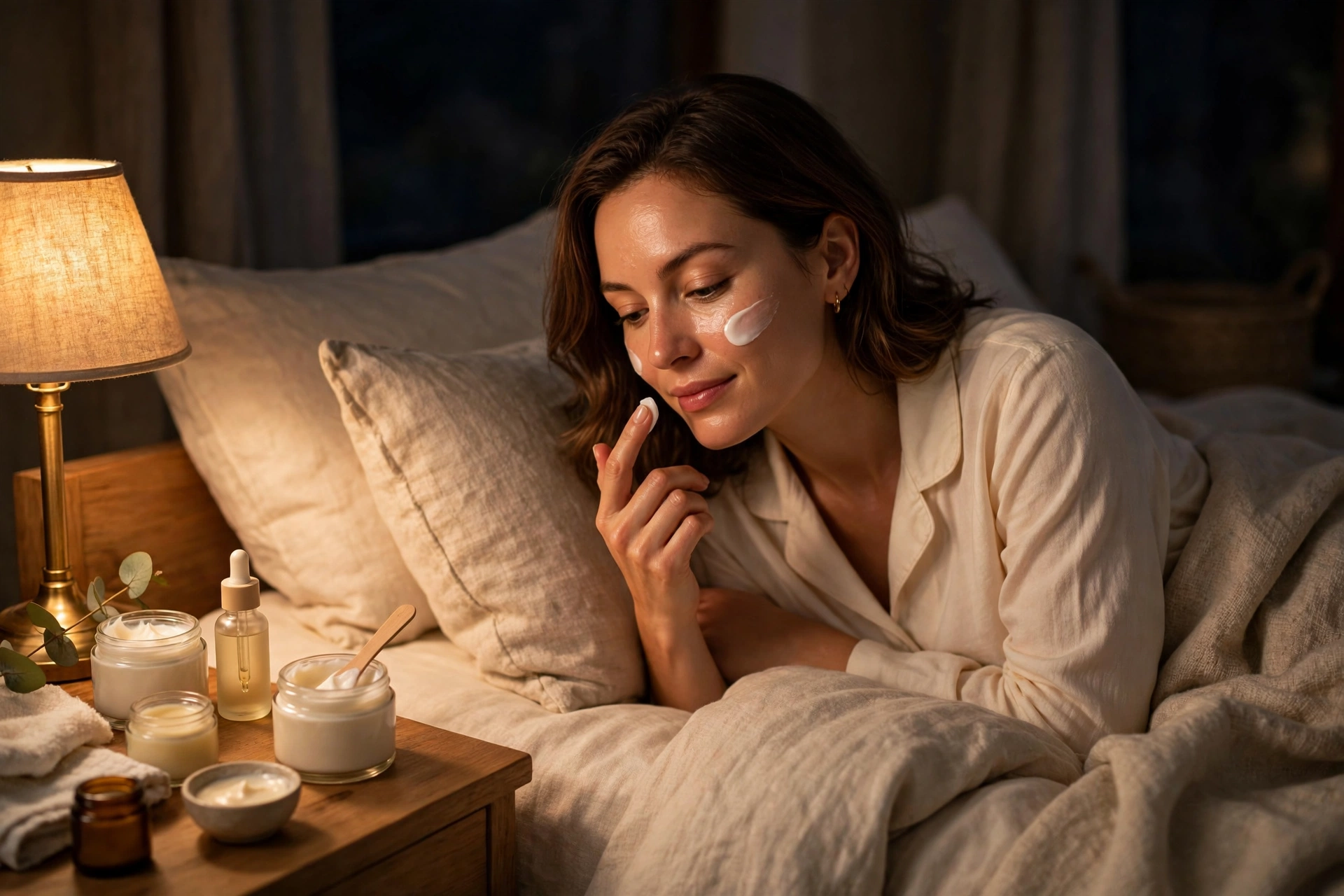
Slugging Skincare UK: The Overnight Barrier Method, Explained
If your skin has been feeling tight, flaky, or just plain miserable since the central heating went on, you're not alone — and you may already have the solution sitting in your bathroom cabinet. Slugging skincare UK routines are having a moment, and the premise is almost comically simple: after your normal evening skincare, you seal everything in with a thin layer of an occlusive product — usually good old petroleum jelly — and let it work while you sleep. The result? Skin that wakes up soft, dewy, and noticeably calmer. Here's the full breakdown: what slugging actually is, the science behind it, how to do it safely, the best products you can actually buy at Boots and Superdrug, and — just as importantly — who should not be slugging.
What Is Slugging? The K-Beauty Trend Explained
Slugging is a K-beauty (Korean beauty) inspired technique where the final step of your nighttime routine is a thick, occlusive layer that locks in all the hydration and skincare underneath. The name comes from the slightly glossy, slug-like sheen the occlusive leaves on your skin. It sounds strange, but the logic is sound: after you've layered your serums and moisturiser, an occlusive sits on top like cling film for your face, physically blocking moisture from evaporating overnight.
The trend started on Korean beauty forums and exploded on TikTok a few years ago, where creators with wildly different skin types tested it on camera. Dermatologists quickly weighed in — and to the surprise of many, most of them were broadly in favour. It's one of the rare viral skincare trends with genuine science behind it, provided you do it correctly.
Why Slugging Skincare UK Searches Spike Every Winter
In the UK, slugging becomes especially relevant from October through January. Central heating, cold winds, and low humidity create the perfect storm for transepidermal water loss (TEWL) — the process by which water evaporates from the skin's surface. When your barrier is compromised, TEWL increases, and skin becomes dry, flaky, sensitive, and reactive. An occlusive layer can reduce TEWL by up to 98% in the case of petroleum jelly, according to published dermatological research — that's why a jar of Vaseline costing a couple of pounds can outperform serums ten times its price for pure moisture retention.
The Science of Slugging: How Occlusives Protect Your Skin Barrier
To understand why slugging works, you need to understand what happens at the skin's surface. Your skin barrier — the stratum corneum — is essentially a "brick and mortar" structure: skin cells (the bricks) held together by lipids like ceramides, cholesterol, and fatty acids (the mortar). When the mortar cracks — through over-exfoliation, harsh actives, cold weather, or simply ageing — water escapes and irritants get in.
Skincare ingredients are generally divided into three moisturising categories:
Humectants (like hyaluronic acid and glycerin) draw water into the skin. But in a dry UK bedroom with the heating on, humectants applied alone can actually pull moisture out of your skin and into the dry air — a phenomenon our hyaluronic acid guide covers in detail.
Emollients (like squalane and fatty alcohols) soften and smooth the skin's surface.
Occlusives (like petroleum jelly, lanolin, and waxes) form a physical barrier that prevents water loss.
Slugging is simply the strategic use of occlusives as the final step. It doesn't add hydration itself — it traps the hydration you've already applied. That's a critical distinction: slugging over a bare face does almost nothing. Slugging over a well-hydrated face with humectants and a moisturiser underneath is transformative. For a deeper look at barrier damage and repair strategies, see our damaged skin barrier repair guide.
What Dermatologists Say About Slugging
Dermatologists generally agree that petroleum-based occlusives are among the most effective moisturisers available — and some of the safest. Petrolatum is non-comedogenic (it doesn't clog pores in the way people assume), hypoallergenic, and one of the few ingredients the British Association of Dermatologists routinely recommends for eczema-prone and post-procedure skin. The caveat they always add is about what goes underneath: slugging seals in everything, including irritants, so it must be done over a calm, well-chosen routine — never over strong actives.
How to Do Slugging Skincare UK Style: Step-by-Step Night Routine
Here's the exact method, adapted for UK skin in UK weather. Do this in the evening only — slugging during the day under sunscreen and makeup is a greasy disaster waiting to happen.
Step 1: Cleanse Thoroughly (But Gently)
Start with a proper cleanse. A double cleanse is ideal in the evening — an oil or balm cleanser to dissolve SPF and makeup, followed by a gentle water-based cleanser. Your skin must be completely clean before slugging, because an occlusive will seal in whatever's on the surface, including the day's pollution and residue.
Step 2: Apply Hydrating Serums to Damp Skin
While your skin is still slightly damp, apply your hydrating serums. This is the most important step of the whole routine: the occlusive layer only preserves moisture, so you need to give it something to preserve. Good options include:
A hyaluronic acid serum (applied to damp skin so it has water to bind)
A glycerin or beta-glucan hydrating serum
A niacinamide serum for barrier support
A ceramide-rich serum if your barrier is already compromised
Step 3: Layer Your Moisturiser
Follow with your regular moisturiser. This is your emollient layer — it smooths, nourishes, and gives the occlusive a base to sit on. Use whatever suits your skin type; there's no need to buy anything special for this step. Those with reactive skin should stick to a fragrance-free moisturiser to minimise the risk of trapping fragrance against the skin overnight.
Step 4: Apply the Occlusive — The Actual "Slug"
Take a pea-sized amount of your occlusive (petroleum jelly or equivalent), warm it between your fingertips, and press it gently over your entire face — or just the dry zones, if you prefer targeted slugging. You want a thin, even glaze, not a thick mask. Avoid the immediate eye area unless the product is specifically eye-safe, and avoid the lips only if the product isn't lip-safe (most occlusives double as excellent lip treatments).
Step 5: Protect Your Pillowcase
Practical UK advice: sleep on an old pillowcase or lay a clean towel over your pillow. The occlusive will transfer. A silk or satin pillowcase is actually ideal here — less absorbent than cotton, so more product stays on your face, and gentler on skin and hair.
Step 6: Morning Aftercare
In the morning, cleanse gently to remove the occlusive layer — lukewarm water and a mild cleanser is enough. You'll likely notice your skin looks plumper and feels softer. Follow with your normal morning routine: hydrating serum, moisturiser, and SPF. (Yes, SPF every day, even in a grey British November — UV damage doesn't take winter off.)
What to Slug Over — and What NEVER to Slug Over
This is the section that matters most, because getting it wrong is the main way slugging causes problems.
Safe to slug over:
Hydrating serums (hyaluronic acid, glycerin, beta-glucan)
Niacinamide serums
Ceramide moisturisers and barrier creams
Gentle, fragrance-free moisturisers
Centella / cica products
NEVER slug over these:
Retinoids (retinol, tretinoin, retinal) — slugging dramatically increases their penetration, which can cause severe irritation, peeling, and retinoid dermatitis. If you use a retinoid, either skip it on slugging nights or slug only on your retinoid "rest" nights.
Strong chemical exfoliants (high-strength AHA, BHA, glycolic acid peels) — same penetration problem; you risk a chemical burn–level reaction.
Benzoyl peroxide — sealing this in increases irritation and dryness enormously, and it can bleach your pillowcase.
Prescription treatments (steroid creams, antibiotic gels) unless your dermatologist specifically tells you to occlude them.
Vitamin C (L-ascorbic acid) at high concentrations — increased penetration means increased stinging and irritation risk; save it for the morning.
The rule of thumb: if an ingredient can irritate you on its own, slugging will make that irritation worse. Slug over calm, hydrating products only.
Best Slugging Products Available in the UK (With £ Prices)
You don't need an expensive product to slug — the whole point is that the cheapest option is also one of the most effective. Here's what's actually on UK shelves:
Product | Approx. UK Price | Where to Buy | Notes
Vaseline Original Petroleum Jelly (100ml) | ~£2.50 | Boots, Superdrug, Tesco, Sainsbury's | The classic. Pure petrolatum, the gold standard occlusive
CeraVe Healing Ointment (340g) | ~£16–£18 | Boots, Superdrug, Amazon UK | Petrolatum + ceramides + hyaluronic acid; a favourite among dermatologists
Weleda Skin Food (75ml) | ~£10–£12 | Boots, Holland & Barrett | Plant-oil and lanolin based; richer, with a herbal scent — patch test if sensitive
Aquaphor Healing Ointment | ~£12–£15 (imported) | Amazon UK, some pharmacies | Cult US favourite; harder to find on the UK high street
La Roche-Posay Cicaplast Baume B5+ (100ml) | ~£16–£19 | Boots, Superdrug, Lookfantastic | Not a pure occlusive — better as the layer under the slug, or for targeted slugging on irritated patches
Eucerin Aquaphor (available in some UK pharmacies) | ~£10–£14 | LloydsPharmacy, Amazon UK | Petrolatum-based with lanolin alcohol; excellent for very dry areas
Budget pick: Vaseline Original. At roughly £2.50, it's the most cost-effective slugging product on the planet, and its TEWL reduction is unmatched. The only real downside is the texture — it's thick and shiny, which is why some people prefer CeraVe Healing Ointment or a balm-style product.
Sensitive-skin pick: CeraVe Healing Ointment. It combines petrolatum with ceramides and hyaluronic acid, so you're getting barrier-repair ingredients alongside the occlusion. It's fragrance-free and widely recommended by dermatologists for compromised skin.
Natural-leaning pick: Weleda Skin Food. Based on plant oils, lanolin, and beeswax rather than petrolatum. It works well as an occlusive for many people, though if you're sensitive to fragrance or lanolin, patch test first.
Who Should Slug — and Who Should Skip It
Slugging Is Great For:
Dry and dehydrated skin — the core audience. If your skin drinks up moisturiser and still feels tight by midday, slugging will help.
Barrier-damaged skin — over-exfoliated, retinol-irritated, or weather-beaten skin recovers faster under occlusion. Pair this approach with our winter skincare routine for dry skin for a full cold-weather strategy.
Mature skin — skin over 50 produces fewer natural lipids, so the mortar in that brick-and-mortar wall is thinner. Slugging compensates beautifully.
Eczema-prone skin (on the body and, carefully, the face) — occlusives are a cornerstone of eczema management; the NHS eczema guidance emphasises regular emollient use, and slugging is essentially an intensive version of that principle.
Post-treatment skin — after mild professional treatments (with your practitioner's approval), occlusion speeds healing.
Who Should Skip Slugging:
Very oily skin — if your skin is already producing plenty of its own occlusion (sebum), adding petroleum jelly on top is unnecessary and uncomfortable.
Acne-prone skin — while petrolatum itself is non-comedogenic, slugging seals in everything underneath, including bacteria and excess oil. Many acne-prone people find it triggers breakouts. If you still want to try it, use a tiny amount on dry zones only and skip it during active breakouts.
Fungal-acne-prone skin (malassezia) — this is the big one. Malassezia yeast feeds on oils and lipids, and an occlusive layer creates the warm, moist, lipid-rich environment it loves. If you're prone to fungal acne — those uniform, itchy bumps on the forehead, chest, or back — slugging can cause a flare. Read our fungal acne routine guide before deciding.
Rosacea with heat sensitivity — some rosacea sufferers find the warmth trapped under an occlusive triggers flushing.
How Often Should You Slug?
For most people, 2–3 times per week is the sweet spot — enough to keep the barrier topped up without overdoing it. During the depths of a UK winter (December–January), when the heating is blasting and the air is dry, you can increase to every other night or even nightly if your skin is very dry and tolerating it well.
Signs you're slugging too often: small white bumps (milia) appearing, a feeling of congestion, or breakouts in areas where you don't normally get them. Scale back, and they'll usually resolve.
Can you slug every night? People with genuinely dry, non-acne-prone skin often do it nightly through winter with excellent results. But start at twice a week and build up — your skin will tell you what it needs.
Common Slugging Mistakes to Avoid
Slugging over dirty skin. Always cleanse first. Sealing in the day's grime is asking for congestion and breakouts.
Slugging over strong actives. Retinoids, strong acids, and benzoyl peroxide under an occlusive is the fastest route to an irritated, peeling face.
Using too much product. A pea-sized amount is enough for the whole face. More isn't better — it's just messier.
Slugging dry skin with nothing underneath. The occlusive needs hydration to trap. On a bare face, it's just grease.
Expecting it to treat acne, pigmentation, or wrinkles. Slugging is a moisture-retention technique, not a treatment. It makes skin look plumper and healthier (which softens the appearance of fine lines), but it doesn't fade dark spots or clear breakouts.
Giving up after one night. The real payoff is cumulative — most people see the biggest difference after 1–2 weeks of consistent slugging nights.
Slugging Skincare UK: Frequently Asked Questions
Does slugging clog pores?
Pure petrolatum is technically non-comedogenic — it doesn't penetrate into pores the way some oils do. However, it does trap everything beneath it, so if your skin isn't clean or you're acne-prone, you can still break out. The clogging risk comes from what's underneath, not the Vaseline itself.
Can I slug with oily skin?
It's generally not recommended as a full-face routine for very oily skin. If you want to experiment, try "targeted slugging" — apply the occlusive only to dry areas (like cheeks or around the mouth) and skip the oily T-zone. Our guide to moisturisers for oily skin has better-suited options for oil control.
Is slugging safe during pregnancy?
Plain petrolatum (Vaseline) is considered safe during pregnancy — it's inert and doesn't absorb into the bloodstream in any meaningful way. Just make sure you're slugging over pregnancy-safe products underneath (avoid retinoids entirely while pregnant, slugging or not).
Can I use Weleda Skin Food for slugging?
Yes — many people do, and it works well as an occlusive thanks to its lanolin, beeswax, and plant-oil base. Two caveats: it contains fragrance (from essential oils), so patch test if you're sensitive, and it's not quite as strong an occlusive as pure petrolatum. It's a good option if you prefer to avoid petroleum-derived products.
Will slugging help my skin barrier recover faster?
Yes — this is one of slugging's best-supported uses. By drastically reducing water loss, occlusion gives the barrier the stable, hydrated environment it needs to repair itself. Pair slugging nights with ceramide-rich products underneath for the fastest recovery.
Can I slug in the morning instead of at night?
You can, but you probably won't want to. A shiny occlusive layer under makeup pills, slides, and looks greasy within an hour. If your skin is extremely dry in the morning, use a rich moisturiser and SPF instead, and save the slug for bedtime.
Does slugging work for body skin too?
Absolutely — and it's arguably even more practical there. Slugging dry shins, elbows, hands, and feet (with socks over the top for feet) is a classic winter remedy. The same rules apply: hydrate first, then occlude.
How long before I see results from slugging?
Most people notice softer, plumper skin after the very first night. The deeper barrier-repair benefits — less flaking, less sensitivity, calmer redness — typically build over 1–2 weeks of regular slugging nights.
Key Takeaways
Slugging means sealing your night routine with a thin occlusive layer (like Vaseline) to block moisture loss while you sleep.
The science is solid: petrolatum can reduce transepidermal water loss by up to 98%, making it one of the most effective moisturisers available.
Always hydrate first — slugging traps moisture, it doesn't create it. Serums and moisturiser go underneath, on damp skin.
Never slug over retinoids, strong acids, or benzoyl peroxide — occlusion multiplies their penetration and irritation risk.
UK shoppers are spoilt for choice: Vaseline (~£2.50) is the unbeatable budget pick; CeraVe Healing Ointment (~£16–£18) adds ceramides; Weleda Skin Food (~£10–£12) is the natural-leaning option — all available at Boots and Superdrug.
Best for dry, dehydrated, mature, and barrier-damaged skin. Skip it if you're very oily, acne-prone, or susceptible to fungal acne (malassezia).
2–3 nights per week is ideal for most people; nightly is fine for very dry skin in midwinter.
Cleanse first, use a pea-sized amount, protect your pillowcase, and give it 1–2 weeks for the full effect.
Conclusion
Slugging is one of those rare trends that deserves the hype — at least for the right skin types. It's cheap, it's backed by dermatological science, and it's perfectly timed for a British winter, when central heating and cold winds are quietly wrecking everyone's moisture barrier. A £2.50 tub of Vaseline from Boots, applied correctly over a well-hydrated face two or three nights a week, can genuinely transform how your skin looks and feels by morning.
The key word is correctly: cleanse first, hydrate underneath, keep strong actives far away from slugging nights, and skip the trend entirely if you're oily, breakout-prone, or malassezia-sensitive. Do that, and slugging becomes less of a TikTok gimmick and more of what it actually is — a simple, effective, dermatologist-approved way to wake up with the kind of plump, calm, dewy skin that usually costs a lot more than a jar of petroleum jelly.
Sweet dreams — and happy slugging.