How to Get Rid of Sebaceous Filaments UK: A Smooth-Skin Guide
Learn how to get rid of sebaceous filaments UK gently, with salicylic acid, retinoids and a realistic routine — no squeezing or pore-strip damage.
Read More arrow_forwardLearn how to get rid of milia around eyes safely in the UK — gentle at-home care, professional removal costs, prevention and when to see a GP.
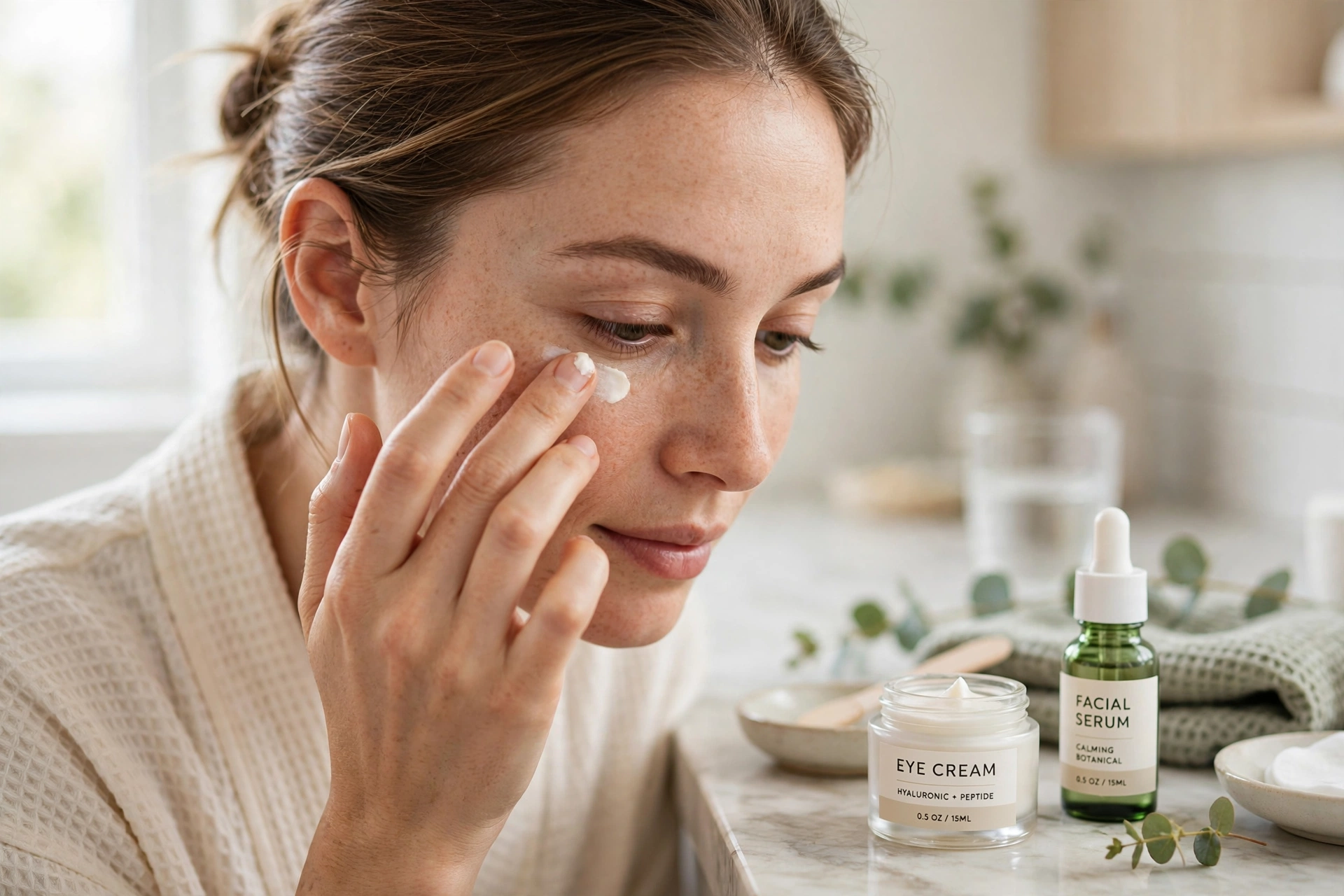
If you are searching for how to get rid of milia around eyes uk advice, you have probably noticed one or more tiny, hard white bumps sitting just under the skin around your eyes, most often along the lower eyelid, the upper cheekbone or the outer corner of the eye. They do not hurt, they do not usually itch, and they do not come to a head the way a spot does, yet they can linger for weeks or months and feel impossible to shift with normal cleansing or moisturising. The good news is that milia are harmless in most cases, they are very common, and there are safe ways to help them clear, both at home and with professional help in the UK.
The important thing to understand from the start is that the skin around your eyes is thinner and more delicate than the skin on the rest of your face, so the usual approach to bumps and breakouts does not apply here. Strong scrubs, harsh acids, picking and squeezing can all damage this area, cause redness and swelling, and in the worst cases leave a mark that lasts far longer than the milium itself. This guide explains what milia are, why they appear around the eyes, what you should never do, the gentle at-home options that are genuinely safe for the eye area, the professional removal options available in the UK with typical costs, and how to prevent new ones from forming.
The safest way to get rid of milia around the eyes is to start gently, be patient, and only move to stronger options if the gentle approach is not working after several weeks. Many milia clear on their own over time as the skin naturally renews itself, so the first step is often simply to stop doing anything that might be trapping skin cells and to switch to lighter products around the eyes. If a milium is still there after two or three months of gentle care, or if it is bothering you cosmetically, that is the point to consider a professional removal rather than trying a harsher home treatment.
A sensible home routine focuses on three things: gentle cleansing, very light exfoliation away from the lash line, and a lightweight eye product that does not sit heavily on the skin. A low-strength retinoid used a few nights a week can help speed up skin cell turnover, while a mild exfoliating product can help prevent dead skin from building up. Both need to be introduced slowly around the eyes, and you should stop if you notice stinging, redness or flaking. Sunscreen matters too, because sun damage can thicken the skin and make milia more likely to form, so a gentle SPF around the eyes during the day is part of the long-term fix, not just a summer habit.
It also helps to set realistic expectations. Milia are small cysts sitting under the surface of the skin, not spots filled with pus, so they do not respond to spot treatments, clay masks or squeezing. Products that promise overnight removal are best avoided, especially around the eyes. The treatments that work do so gradually, over weeks, by encouraging the skin to shed the trapped cells naturally. If you want a fast and certain result, professional extraction by a dermatologist or a trained clinician is the reliable route, and it is usually a quick appointment.
Milia are tiny white or yellowish cysts that form just beneath the surface of the skin when keratin, the protein that makes up the outer layer of skin, becomes trapped. Each one is usually only one or two millimetres across, feels firm and smooth to the touch, and looks like a small white seed sitting under the skin. They are most common around the eyes, on the cheeks and on the forehead, and they can appear at any age, from newborn babies through to older adults. In adults they tend to appear gradually and can stick around for a long time if nothing is done about them.
There are two broad types worth knowing about. Primary milia form on their own, without any obvious injury or skin condition, and are the type most people notice around the eyes. Secondary milia form after the skin has been damaged or irritated, for example after a burn, a blister, heavy sun exposure, or the long-term use of a very strong steroid cream. If your milia appeared after a skin injury or after using a prescription cream, mention that to your GP or dermatologist, because the underlying cause matters for treatment. For most people, though, milia around the eyes are primary milia, and they are a cosmetic concern rather than a medical one.
Milia are not contagious, they are not caused by poor hygiene, and they are not a sign that your skin is dirty. That is an important point, because it means scrubbing harder or cleansing more often will not help and can actually make things worse by irritating the delicate eye area. The skin around the eyes is thin, it has fewer oil glands than the rest of the face, and it is easily irritated, so it needs a gentler approach than the cheeks or forehead. Understanding that milia are trapped keratin rather than blocked oil is the key to choosing the right treatment, because it explains why normal spot treatments do nothing and why gentle exfoliation and cell turnover are the home options that make sense. Keeping the skin barrier healthy matters here as much as anywhere else, and our guide to how to repair a damaged skin barrier explains the simple steps that help the eye area recover when it has been over-treated or irritated.
Milia around the eyes usually form when dead skin cells are not shed properly and become trapped just below the surface. The skin renews itself constantly, shedding old cells and replacing them with new ones, but when that process slows down or when a heavy product sits on the surface and blocks normal shedding, keratin can collect into a small cyst. Around the eyes this happens more easily than elsewhere, because the skin is thin, products tend to gather in the fine lines and creases, and the area is often covered with rich creams that are heavier than the skin there actually needs.
Several everyday factors can contribute. Heavy, rich eye creams and oily moisturisers are one of the most common culprits, particularly thick creams designed for very dry skin that are applied right up to the lash line. Sun damage is another, because ultraviolet light thickens the outer layer of skin over time and slows down normal shedding, which is one reason milia are more common in people who have spent a lot of time in the sun without eye-area protection. Ageing also plays a part, as cell turnover naturally slows as we get older, and that is why milia often appear alongside other signs of mature skin. Skin damage from harsh treatments, over-exfoliation or a recent procedure can trigger secondary milia too, so if you have recently had a strong peel or laser treatment and milia have appeared, tell the practitioner who treated you.
Some people are simply more prone to milia than others, and that is not something you have done wrong. If you have dry skin, mature skin or skin that is prone to congestion, you may find milia appear more often. Certain skin conditions, including some blistering conditions, can also cause milia, which is another reason to get a proper diagnosis if you have a large number of bumps appearing suddenly or if they look unusual. For most people, though, the cause is a combination of slow cell turnover, sun exposure and products that are too heavy for the eye area, and all three of those are things you can change.
Milia are often confused with whiteheads and closed comedones, but they are different things and they need different treatment, so telling them apart matters. A whitehead is a type of spot: a pore blocked with oil and dead skin that has closed over, forming a soft white bump that can usually be treated with the usual spot-fighting ingredients and will often come to a head or clear within days. A closed comedone is similar, a small flesh-coloured or whitish bump caused by a blocked pore, which may feel slightly rough and can develop into a spot or clear with gentle exfoliation. Milia, by contrast, are hard, smooth, pure white or slightly yellow bumps that sit under the skin with no opening at all, and they do not change much from day to day.
The easiest way to tell them apart is by touch and by behaviour. Milia feel like a tiny hard bead under the skin and cannot be squeezed or popped, while whiteheads feel softer and may release their contents if they are ready. Closed comedones tend to appear in clusters on the forehead or chin, whereas milia favour the delicate skin around the eyes and on the upper cheeks. Milia also last much longer, often for weeks or months, while whiteheads and closed comedones usually change or clear within a week or two. If you are unsure which one you have, a pharmacist at Boots or Superdrug can often help, and a dermatologist can confirm the diagnosis quickly in person.
This distinction matters because the treatments are different. Products designed for whiteheads, such as strong spot treatments and drying lotions, do little for milia and can irritate the eye area. Gentle exfoliation and retinoids help all three to some extent, but milia respond much more slowly and often need professional extraction for a complete result. Trying to treat milia as if they were whiteheads is one of the most common mistakes people make, and it usually ends with irritated skin and milia that are still exactly where they were. Knowing what you are dealing with saves you time, money and unnecessary irritation.
The single most important rule with milia around the eyes is never to squeeze, pick or try to cut them out yourself. The skin around the eyes is thin, it sits close to the eye itself, and it bruises and scars easily. Squeezing a milium will not work anyway, because there is no opening for the contents to come out through, so all you achieve is damage to the surrounding skin, broken blood vessels, swelling and a risk of infection. In the worst cases, picking at the eye area can cause scarring or damage to the eyelid, and that is a far bigger problem than the tiny bump you started with.
Do not use harsh scrubs, strong peels or high-strength acids directly around the eyes either. Physical scrubs with rough particles can cause tiny tears in thin skin, and strong chemical exfoliants can cause redness, peeling and sensitivity that take weeks to settle. Avoid applying products right up to the lash line or on the eyelid itself unless the product is specifically designed for that area, and keep all exfoliating products at least a few millimetres away from the lashes. If a product stings when you apply it near the eyes, that is your skin telling you it is too strong for this area, and you should stop using it there.
Other things to avoid include heavy, greasy eye creams that sit on the skin and trap dead cells, waterproof makeup that needs harsh rubbing to remove, and sharing eye products with other people. Do not try home extraction with a needle, a pin or any sharp tool, however clean you think it is, because the risk of infection and scarring around the eye is simply not worth it. If you are tempted to try a home remedy you have seen online, such as applying toothpaste, lemon juice or a strong essential oil to the area, do not, because these can burn or severely irritate the delicate eye skin. Gentle, patient care is the only safe home approach, and anything that promises instant results around the eyes should be treated with suspicion.
The gentlest at-home option is to simplify what you put around your eyes. Switch to a lightweight, fragrance-free eye gel or a light lotion rather than a thick cream, and apply only a small amount, patting it gently around the orbital bone rather than rubbing it close to the lashes. Cleanse the eye area gently each evening, using a mild cleanser or micellar water to remove makeup and sunscreen without harsh rubbing, and always remove eye makeup fully before bed. These simple changes alone can prevent new milia from forming and give existing ones the best chance to clear naturally.
A low-strength retinoid can help speed up cell turnover, which is the process that eventually releases trapped keratin. In the UK, gentle retinol products are widely available at Boots, Superdrug and Cult Beauty, usually starting from around £10 to £15 for a basic formula. Use a pea-sized amount for the whole face, or a tiny dab around the eyes only, two or three nights a week to start, and build up slowly if your skin tolerates it. Do not apply retinol directly on the eyelid or right up to the lash line, and always use sunscreen during the day when you are using a retinoid, because it can make your skin more sensitive to sunlight. If your skin becomes red, flaky or sore, reduce how often you use it or stop for a week and let the skin recover. Understanding how ingredients work together helps here, and our skincare ingredient combinations guide explains which pairings are gentle enough for sensitive areas and which ones should be kept apart.
Gentle chemical exfoliation can also help, but it needs to be very mild around the eyes. A low-strength product containing a gentle acid, used once or twice a week on the skin around the eyes but not on the eyelid itself, can encourage shedding of dead skin cells. Look for mild formulas designed for sensitive skin, patch test on your cheek first, and stop if you notice any stinging that lasts more than a few seconds. Do not combine a retinoid and an exfoliating acid on the same night around the eyes when you are starting out, because that is too much for thin skin to cope with. Alternate them on different nights instead, and keep the rest of your routine simple and hydrating. Some people also find that a warm compress, a clean flannel soaked in warm water held gently against the closed eye for a few minutes, helps soften the skin, although this alone will not remove a milium.
If home care has not shifted your milia after a few months, or if you want them gone quickly and safely, professional removal is the most reliable option, and it is widely available across the UK. The most common method is extraction, where a dermatologist or trained clinician makes a tiny opening in the surface of the skin with a sterile needle or lancet and gently removes the trapped keratin. It is a quick procedure, usually taking only a few minutes per milium, and it is done under clean, clinical conditions, which is why it is so much safer than any attempt at home extraction. Most people feel only a brief scratch or a mild sting, and there is usually little or no downtime, although the area may be slightly red for a day or two.
Other professional options include gentle chemical peels designed for the eye area, which a clinician can apply at a strength that is safe for thin skin, and in some cases laser treatment or cryotherapy, where the milium is frozen off. These are less commonly needed for simple milia around the eyes and are usually reserved for larger or more stubborn cases, so a clinician will advise you on whether they are appropriate. The American Academy of Dermatology provides clear patient information on milia and other common skin concerns, and it is a useful place to read about what to expect from a dermatology appointment before you book one.
In the UK, you have two main routes to professional removal. The first is through the NHS, by speaking to your GP, who can refer you to a dermatologist if the milia are extensive, unusual or linked to another skin condition. NHS removal for purely cosmetic milia is not usually available, because it is classed as a cosmetic procedure, so many people go through the private route instead. The second route is a private dermatology clinic or a reputable skin clinic, where you can usually book directly without a referral. Private extraction typically costs from around £50 to £150 for a small number of milia, depending on the clinic, the location and how many bumps need removing, with London clinics often charging more than clinics elsewhere in the UK. Always check that the clinician is qualified, ask what the procedure involves, and make sure the clinic explains the aftercare and the small risk of temporary redness or marking before you agree to treatment.
Preventing new milia is mostly about choosing lighter products and protecting the eye area from sun damage. Look for an eye product labelled as a gel, a light lotion or a serum rather than a rich cream or balm, and check that it is fragrance-free and non-comedogenic, which means it is formulated not to block pores. Apply only a small amount, about the size of a grain of rice for both eyes, and pat it gently around the orbital bone with your ring finger, which naturally applies the least pressure. Avoid applying eye cream right up to the lash line, because the product will migrate slightly on its own and you do not need it sitting on the thinnest skin closest to the eye.
Sun protection is the other half of prevention. Ultraviolet light thickens the skin and slows cell turnover, both of which make milia more likely, so wearing a gentle sunscreen around the eyes every day is one of the most effective long-term habits you can build. Choose a fragrance-free SPF 30 or higher that is designed for sensitive skin and does not sting the eyes, and reapply if you are spending time outdoors. Sunglasses help too, because they reduce squinting and shield the thin eye-area skin from direct sun. Our round-up of the best sunscreen for rosacea-prone skin includes gentle, non-stinging formulas that work well around the eyes, even if your skin is reactive.
A few other habits help. Remove eye makeup gently every night with a mild cleanser or micellar water, rather than scrubbing with a wipe, and replace eye makeup regularly, because old mascara and eyeliner can harbour bacteria and irritate the area. Avoid heavy, oily makeup removers that leave a greasy film around the eyes, and do not layer several rich products on the eye area at once. As skin matures, cell turnover slows, so prevention becomes even more important, and our skincare routine for women over 50 covers how to adapt your routine, including the eye area, as your skin changes with age. If you notice milia appearing after starting a new eye cream, stop using that product for a few weeks and see if new ones stop forming, because that is often the clearest clue about the cause.
A simple routine is the best routine for milia-prone skin around the eyes, because every extra product is another chance for something heavy to sit on the surface and trap dead skin. In the morning, start by cleansing with a gentle, fragrance-free cleanser or simply rinsing with lukewarm water if your skin is dry. Pat the skin dry, then apply a lightweight eye gel if you use one, followed by your usual moisturiser, keeping both away from the immediate lash line. Finish with a gentle, broad-spectrum sunscreen of at least SPF 30, applied carefully around the eyes without getting it into the eyes themselves. A brightening serum can fit into a morning routine if you wish, and our guide to azelaic acid and vitamin C together explains a gentle pairing that suits many people, but keep any active serum away from the eyelid itself.
In the evening, remove makeup and sunscreen gently with a mild cleanser or micellar water, then cleanse again if you wore makeup during the day. Apply your retinoid on the nights you use it, using only a tiny amount around the eyes and keeping it away from the lash line, and follow with a light moisturiser once it has absorbed. On nights when you are not using a retinoid, you can simply moisturise and, if you wish, use a gentle exfoliating product once or twice a week on the skin around the eyes, but never on the same night as the retinoid when you are starting out. Keep the routine the same for at least six to eight weeks before judging whether it is working, because cell turnover is a slow process and milia will not disappear overnight.
Consistency matters more than the number of products you use. A routine with a gentle cleanser, a light eye product, a retinoid a few nights a week and daily sunscreen will do more for milia-prone skin than a shelf full of strong treatments used inconsistently. If your skin becomes irritated at any point, simplify further: drop the active products for a week, use only a gentle cleanser and moisturiser, and reintroduce one product at a time. That way you can tell which product your skin likes and which one it does not, and you avoid the cycle of over-treating and then having to repair the damage.
Most milia around the eyes are harmless and do not need medical attention, but there are situations where you should speak to your GP or ask for a dermatology referral. If you have a large number of milia appearing suddenly, if they are spreading rapidly, if they look unusual in colour or shape, or if they are painful, itchy, bleeding or changing, get them checked in person. The same applies if you have a skin condition that causes blistering, or if you have recently started a prescription cream and milia have appeared afterwards. A GP can confirm the diagnosis, rule out anything else, and refer you if needed. The NHS website has clear information about common skin conditions and when to seek medical advice, and it is a reliable starting point if you are unsure whether your symptoms need a doctor.
You should also seek advice if home care is making things worse rather than better. If the skin around your eyes becomes persistently red, swollen, flaky or sore after using a new product, stop using it and let the skin settle, and speak to a pharmacist or GP if it does not improve within a week or two. If you have eczema, rosacea or another skin condition affecting the eye area, check with your GP or dermatologist before adding a retinoid or an exfoliating product, because these can flare sensitive conditions. Children and babies with milia do not usually need treatment at all, as milia in babies almost always clear on their own, but mention them to your health visitor or GP if you are concerned.
The British Association of Dermatologists is a useful source of patient information on skin conditions and treatments in the UK, and you can read their guidance on the British Association of Dermatologists website if you want to understand more before your appointment. When you do see a clinician, it helps to take a note of what products you have been using around your eyes, how long the milia have been there, and whether anything seems to make them better or worse. That information helps the clinician give you the right advice, whether that is a simple change of products, a prescription option, or a referral for professional extraction.
Yes, many milia clear on their own over time as the skin naturally renews itself, although this can take several weeks or even a few months. Gentle care, light products and daily sunscreen can help the process along, but there is no way to force a milium to disappear overnight. If a milium is still there after three months, professional extraction is the quickest reliable option.
No, it is not safe to squeeze milia around the eyes, and it usually does not work anyway. Milia have no opening, so squeezing only damages the thin skin, risks infection and can leave scarring or broken blood vessels. Professional extraction uses a sterile tool and a tiny opening made by a trained clinician, which is why it is so much safer.
The fastest reliable way is professional extraction by a dermatologist or trained clinician, which usually takes only a few minutes per milium. Home treatments such as gentle retinoids and mild exfoliation can help over time, but they work gradually over weeks rather than days. Avoid any product or treatment that promises instant removal, especially around the eyes.
Yes, a low-strength retinol can help, because it speeds up skin cell turnover and encourages the trapped keratin to shed naturally. Use it only two or three nights a week to start, keep it away from the lash line, and always wear sunscreen during the day. Stop if your skin becomes red or sore, and check with a GP or dermatologist first if you have a skin condition affecting the eye area.
In most cases, no, milia around the eyes are simply a common and harmless skin finding. They are not caused by poor hygiene and they are not contagious. If a large number appear suddenly, or if they are linked to blistering or another skin condition, speak to your GP, because that is worth getting checked in person.
Yes, a heavy or oily eye cream can contribute to milia, particularly if it is applied thickly right up to the lash line. Rich creams can sit on the surface of the thin eye-area skin and trap dead skin cells underneath. Switching to a lightweight, fragrance-free eye gel and using only a small amount often helps prevent new milia from forming.
Private extraction in the UK typically costs from around £50 to £150 for a small number of milia, depending on the clinic and the location, with London clinics often charging more. NHS removal for purely cosmetic milia is not usually available, so most people pay privately. Always ask for the full price before treatment, including any follow-up appointment.
Yes, you can wear makeup, but choose lightweight, non-comedogenic formulas and remove them gently and fully every evening. Avoid heavy, waterproof eye makeup that needs harsh rubbing to remove, and replace eye makeup regularly. If you have just had professional extraction, follow the clinician's advice on when it is safe to wear makeup again.
Milia are tiny, hard white cysts of trapped keratin under the skin, not spots, and they cannot be squeezed out.
Never pick, squeeze or cut milia around the eyes, because the skin there is thin and scars easily.
Gentle home care means light products, a low-strength retinoid a few nights a week, and mild exfoliation away from the lash line.
Professional extraction by a dermatologist or trained clinician is the fastest and safest way to remove stubborn milia in the UK.
Private removal typically costs from around £50 to £150, while NHS removal for cosmetic milia is not usually available.
Choose a lightweight, fragrance-free eye gel over a heavy cream, and use only a rice-grain-sized amount for both eyes.
Daily sunscreen around the eyes helps prevent new milia by protecting the skin from sun damage.
Most milia clear on their own over weeks or months, so patience and consistent gentle care matter more than strong treatments.
Milia around the eyes are frustrating, but they are common, harmless in most cases, and very manageable once you understand what they are. The gentle approach is the right one: simplify your eye-area products, choose light formulas, introduce a low-strength retinoid slowly, protect the area with sunscreen every day, and give your skin time to renew itself. That alone will help many milia clear and will prevent new ones from forming.
If a milium lingers after a few months of gentle care, or if it bothers you enough that you want it gone, professional extraction in the UK is quick, safe and widely available, and it is the one option that gives a certain result. What you should never do is try to force the issue yourself around the eyes, because the damage from squeezing or harsh treatments lasts far longer than the bump itself. Treat the eye area kindly, stay patient, and let either time or a trained clinician do the work.
Learn how to get rid of sebaceous filaments UK gently, with salicylic acid, retinoids and a realistic routine — no squeezing or pore-strip damage.
Read More arrow_forward
Struggling with stubborn under-skin bumps? This UK guide explains what closed comedones are, what causes them and the routine that clears them.
Read More arrow_forward
Winter skincare for sensitive skin UK: routines, barrier repair and rosacea tips for cold weather, with UK product picks from Boots, Superdrug and Cult Beauty.
Read More arrow_forward
How to treat acne scars UK — at-home options, professional treatments, costs and timelines for fading marks and smoothing scars, explained step by step.
Read More arrow_forward
A simple skincare routine for women over 50 uk — gentle morning and evening steps for menopause skin, hydration, retinol and daily SPF.
Read More arrow_forwardCalculate your Body Mass Index (BMI) in seconds. BMI is a quick screening number…
Use now arrow_forwardFind your daily calorie needs based on your age, sex, height, weight and activit…
Use now arrow_forwardFind how much water you should drink each day, in litres and glasses, based on y…
Use now arrow_forward