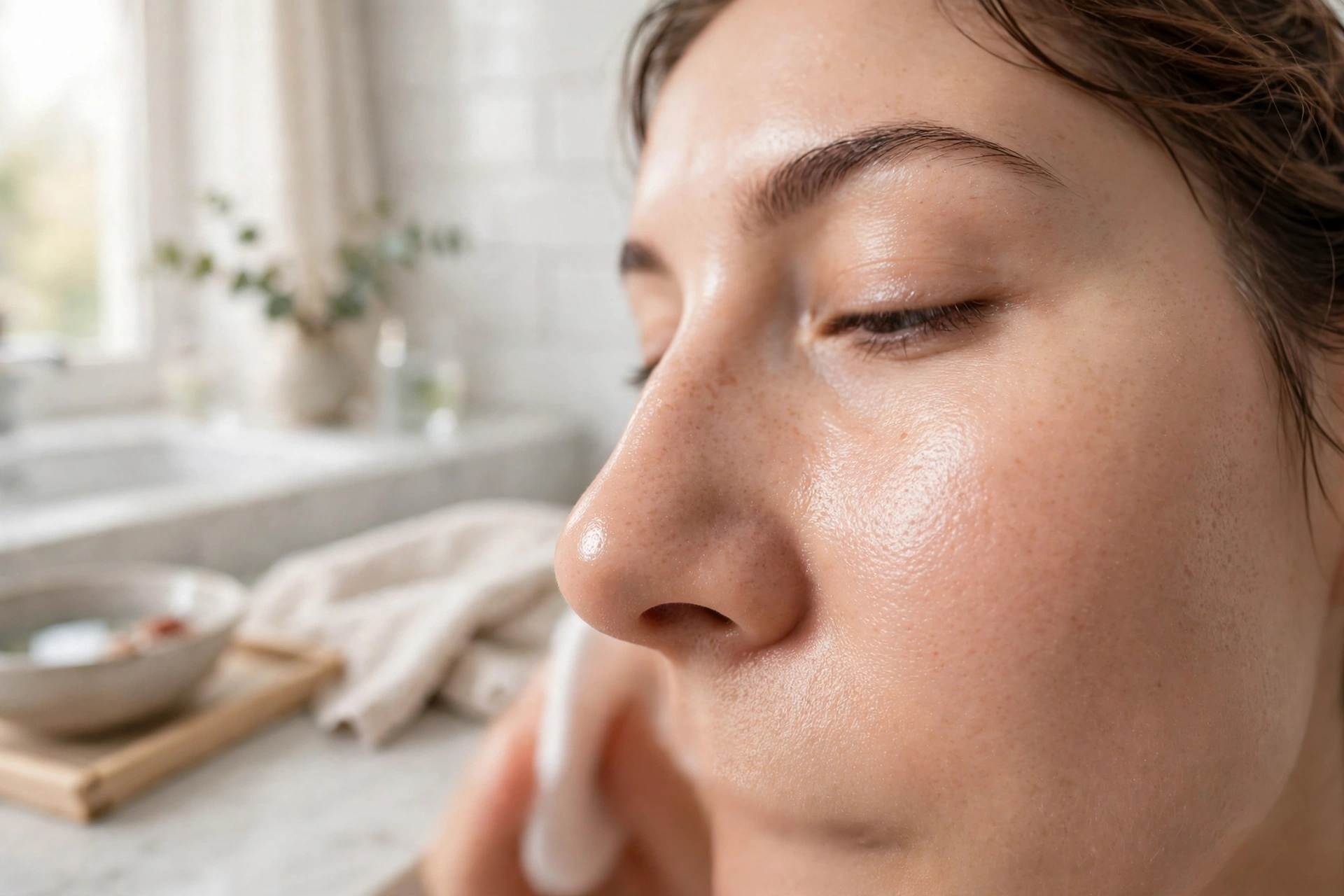
How to Get Rid of Sebaceous Filaments UK: A Smooth-Skin Guide
Learn how to get rid of sebaceous filaments UK gently, with salicylic acid, retinoids and a realistic routine — no squeezing or pore-strip damage.
Read More arrow_forwardHow to treat acne scars UK — at-home options, professional treatments, costs and timelines for fading marks and smoothing scars, explained step by step.

Acne scars can linger long after the spots themselves have gone, and they affect far more than your skin — they affect how you feel about your face every time you look in the mirror. If you are wondering how to treat acne scars uk clinics and dermatologists actually recommend, the honest answer is that the right treatment depends entirely on the type of scar you have, and that most scars improve a great deal with the right combination of patience, at-home skincare and, where needed, professional treatment. There is no single cream or procedure that fixes every scar, but there is a clear, proven path for every type, and this guide walks you through it step by step.
The first thing to understand is that not every mark left behind by acne is a true scar. Many of the marks people worry about are post-inflammatory hyperpigmentation — flat, dark or red marks on the surface of the skin that will fade on their own over time, and that respond well to brightening skincare. True scars, where the skin's structure has actually changed, need a different approach, and they take longer to improve. Knowing which one you are dealing with changes everything about your treatment plan, so this guide starts there, then covers the at-home options that genuinely work, the professional treatments available in the UK and what they cost, the things that do not work, and how to prevent new scars from forming in the first place.
Everything in this guide is written for UK readers. Product recommendations are available from Boots, Superdrug and Cult Beauty, professional treatment prices are based on what UK clinics typically charge, and the advice on seeing a GP or dermatologist follows how the NHS and private dermatology actually work in Britain. Acne scarring is common, it is treatable, and you do not have to simply live with it — but it does reward a realistic, informed approach over quick fixes and miracle claims.
Before you can treat a scar, you need to know what kind it is, because different scars respond to completely different treatments. Dermatologists generally divide acne scars into two broad groups: atrophic scars, where the skin has lost tissue and sits below the surrounding surface, and hypertrophic or keloid scars, where the skin has produced too much tissue and sits above the surface. Most people have a mixture, and the treatment plan needs to reflect that.
Atrophic scars are the most common, and they come in three main forms. Icepick scars are narrow, deep pits that look like tiny holes in the skin, usually on the cheeks. They are the hardest type to treat, because they extend deep into the skin, and they respond best to targeted professional treatments rather than creams. Boxcar scars are wider, with sharp, defined edges, like small rectangular dents in the skin. They are usually shallow to medium in depth, and they respond well to treatments that resurface the skin. Rolling scars are broad and shallow, with soft, sloping edges that give the skin an uneven, wavy appearance. They are caused by bands of scar tissue pulling the skin down from underneath, and they often improve when that tethering is released.
Hyperpigmentation is often confused with scarring, but it is not a scar at all. Post-inflammatory hyperpigmentation, often shortened to PIH, is a flat dark mark left behind after a spot heals, and it is particularly common in medium and darker skin tones. Post-inflammatory erythema, or PIE, is the red or pink version of the same thing, and it is more common in fair skin. Both are caused by inflammation rather than by tissue damage, and both fade with time and with brightening skincare. The key difference is texture: if the mark is flat and the skin feels smooth when you run a finger over it, it is almost certainly pigmentation, not a true scar. If you can feel a dent, a pit or a raised area, you are dealing with a structural scar.
Keloid and hypertrophic scars are less common on the face, but they do occur, particularly on the jawline, chest and back. Hypertrophic scars are raised, firm and stay within the boundary of the original spot. Keloid scars grow beyond the original spot and can keep growing over time. These scars need specialist treatment, and they should always be assessed by a dermatologist, because some treatments that help other scars can make keloids worse. If you have a raised scar that is growing, painful or itchy, do not try to treat it yourself — book a dermatologist appointment.
This distinction matters so much that it deserves its own section, because it is the single most common source of wasted money and disappointment in acne scar treatment. If your marks are flat and smooth, you do not need an expensive clinic procedure. You need sun protection, a good brightening routine, and patience. Pigmentation marks fade because the skin gradually sheds pigmented cells and replaces them with new ones, and that process takes time — usually three to six months for mild marks, and sometimes up to a year for deeper ones.
The most important product for fading pigmentation is not a brightening serum at all. It is sunscreen. UV exposure stimulates the pigment-producing cells in the skin, which means that every day you spend in the sun without protection, your marks get darker again, undoing weeks of progress. A broad-spectrum SPF 30 or higher, worn every day, is non-negotiable when you are trying to fade acne marks. In the UK, sunscreen is classed as a cosmetic rather than a drug, but the rules still require proper UVA protection, so look for the UVA star rating alongside the SPF number. Our round-up of the best sunscreen for rosacea-prone skin includes gentle, non-irritating options that work well on skin that is still recovering from breakouts.
Beyond sunscreen, the ingredients that genuinely help pigmentation are well established. Vitamin C brightens the skin and inhibits excess pigment production. Niacinamide reduces the transfer of pigment to the surface of the skin and supports the skin barrier at the same time. Azelaic acid calms inflammation and fades dark marks, and it is particularly useful for sensitive skin. Retinoids speed up cell turnover, which helps the skin shed pigmented cells faster. Our guide to can you use azelaic acid and vitamin C together explains how two of these brightening ingredients work as a pair, and our skincare ingredient combinations guide covers how to combine them safely with other actives.
True scars, by contrast, will not fade with brightening products alone, because the problem is structural, not pigment. A cream cannot fill in a dent or release a tethered band of scar tissue. That does not mean skincare is useless for true scars — retinoids can improve the appearance of shallow boxcar scars over time by stimulating collagen, and a healthy skin barrier makes any scar look better — but for meaningful improvement of atrophic scars, you will almost certainly need a professional treatment at some point. The at-home routine still matters, because it prepares the skin, protects your results and prevents new marks from forming while you wait.
A good at-home routine is the foundation of any scar treatment plan, and it is where most people should start. It will not erase deep scars on its own, but it will fade pigmentation, improve skin texture, and make any professional treatment you have later work better. It also costs far less than clinic treatments, and you can start today with products from the UK high street.
Retinoids are the most proven at-home option for improving scarred skin. They speed up cell turnover, stimulate collagen production and gradually smooth the skin's surface. In the UK, over-the-counter retinol products are widely available at Boots, Superdrug and Cult Beauty, usually from around £10 for The Ordinary Retinol 0.2% in Squalane up to around £40 or more for premium formulas. For stronger results, a GP can prescribe topical tretinoin, which is more effective than over-the-counter retinol but also more irritating. Start with a low strength, use it two or three nights a week, and build up slowly. If you are already using other exfoliating acids, our guide to can you mix AHA BHA with retinol explains how to combine them without damaging your barrier.
Vitamin C is the best brightening ingredient for fading pigmentation marks, and it also supports collagen production, which helps the skin's texture over time. Look for a stable formula with 10 to 15 percent vitamin C or a gentle derivative such as ascorbyl glucoside if your skin is sensitive. Good UK options include The Ordinary Ascorbyl Glucoside Solution, usually under £10, and the Inkey List 15% Vitamin C and EGF Serum, usually around £12. Use vitamin C in the morning, under sunscreen, where its antioxidant protection is most valuable.
Niacinamide is the gentlest option on this list, and it is a good choice if your skin is sensitive or if you are already using several actives. A 5 to 10 percent niacinamide serum reduces pigmentation, calms redness and strengthens the skin barrier, all without irritation. The Ordinary Niacinamide 10% + Zinc 1%, usually around £6 at Boots, is one of the most popular skincare products in the UK for good reason. It layers well with almost everything, and it is a sensible addition to any scar-fading routine.
Azelaic acid deserves a special mention, because it does two jobs at once: it fades pigmentation and it treats active acne, which means it prevents new scars while it fades old ones. The Ordinary Azelaic Acid Suspension 10%, usually under £10, is a good starting point, and prescription-strength 15 or 20 percent versions are available from a GP or dermatologist for more stubborn cases. Azelaic acid is also one of the safest brightening ingredients during pregnancy, which makes it a valuable option for people who cannot use retinoids.
Finally, gentle chemical exfoliation helps the skin shed pigmented cells faster and keeps the surface smooth. A mild AHA such as lactic acid or mandelic acid, used once or twice a week, is usually enough. Avoid harsh scrubs and strong peels at home — they irritate the skin, trigger more inflammation and can actually make pigmentation worse, particularly in darker skin tones. If your barrier feels damaged from too many actives, our guide to how to repair a damaged skin barrier explains how to strip your routine back and rebuild it safely.
When at-home skincare is not enough, professional treatments can deliver results that no cream can match. These are all available from dermatology clinics and reputable aesthetic clinics across the UK, and the prices below are typical ranges — always get a consultation and a written quote before committing to a course, because prices vary by clinic, by city and by the severity of your scarring.
Chemical peels are often the best first professional step, particularly for pigmentation and shallow boxcar scars. A peel uses a controlled acid solution to remove the outer layers of the skin, revealing fresher skin underneath and stimulating collagen production. Superficial peels, using glycolic or salicylic acid, cost roughly £80 to £150 per session in the UK and need little to no downtime. Medium-depth peels, usually using TCA, cost roughly £200 to £400 per session and need several days of recovery. Most people need a course of three to six peels, spaced a few weeks apart, for the best results. Peels are particularly effective for pigmentation and for overall skin texture, but they are less effective for deep icepick scars.
Microneedling is one of the most popular scar treatments in the UK, and it works by creating tiny controlled injuries in the skin that trigger collagen production. A dermaroller or a motorised microneedling pen is passed over the skin, and the healing response gradually fills in shallow scars and smooths the skin's texture. Professional microneedling typically costs £150 to £350 per session, and most people need three to six sessions. It works well for rolling and shallow boxcar scars, and it has the advantage of being suitable for all skin tones, which is not true of every scar treatment. Be wary of cheap at-home dermarollers — they are difficult to keep clean, they can damage the skin, and they do not reach the depth needed to stimulate real collagen production.
Laser resurfacing is the most powerful option, and also the most expensive. Ablative lasers, such as CO2 laser, remove the outer layers of skin and stimulate deep collagen remodelling, and they can produce dramatic improvements in boxcar and rolling scars. A full-face CO2 laser treatment in the UK typically costs £1,000 to £3,000, and it needs a week or more of downtime. Non-ablative fractional lasers, such as Fraxel, are gentler, with less downtime, and cost roughly £400 to £800 per session, with three to five sessions usually needed. Lasers carry a higher risk of pigmentation changes in medium and darker skin tones, so it is essential to choose a clinic with experience treating your skin tone, and to have a thorough consultation first.
Other options include subcision, a minor procedure in which a needle is used under the skin to release the tethered bands that cause rolling scars, typically costing £200 to £500 per session. Dermal fillers can be used to temporarily lift individual boxcar scars, costing roughly £200 to £400 per treatment, although the results last only six to twelve months. For icepick scars, a technique called TCA CROSS applies a tiny amount of strong acid directly into the scar, and it is one of the few treatments that genuinely helps this difficult scar type. The British Association of Dermatologists has useful information on acne scarring and its treatment, which you can read on the British Association of Dermatologists website. The American Academy of Dermatology also publishes clear guidance on which treatments suit which scar types, and DermNet New Zealand provides detailed, dermatologist-reviewed information on acne scarring and its management.
The skincare market is full of products that promise to erase acne scars, and most of them do not work. Knowing what to skip saves you money and, more importantly, stops you from damaging your skin further. The first thing to avoid is any product that claims to remove scars completely with a cream alone. No topical product can fill in a dent or rebuild lost tissue, and any cream that promises to do so is making a claim that no honest dermatologist would support. Creams can fade pigmentation and improve texture, but they cannot erase structural scars.
Home remedies are another common trap. Lemon juice, toothpaste, baking soda and apple cider vinegar are all frequently recommended online for acne scars, and all of them can damage the skin. Lemon juice is highly acidic and can cause chemical burns and severe pigmentation, particularly in sunlight. Baking soda disrupts the skin's natural pH and strips the barrier. Toothpaste contains ingredients designed for teeth, not skin, and it commonly causes irritation and contact dermatitis. None of these have any evidence behind them, and all of them risk making your scars worse. The NHS has clear, trustworthy information about acne and its treatment, and it is worth reading before trying any home remedy you found on social media.
Picking and squeezing spots is the single biggest cause of new scars, and it is also the hardest habit to break. When you squeeze a spot, you push bacteria and inflammation deeper into the skin, which increases the damage and makes a scar far more likely. The temptation is understandable, especially when a spot is painful or visible, but every dermatologist will tell you the same thing: hands off. If you struggle with picking, try covering spots with a hydrocolloid patch, which protects the spot, absorbs fluid and removes the temptation to touch it. Patches cost a few pounds from Boots and Superdrug, and they are one of the cheapest scar-prevention tools available.
Over-exfoliating is another common mistake. It feels logical to scrub away damaged skin, but harsh scrubs and daily strong acids strip the barrier, trigger inflammation and can worsen pigmentation, particularly in darker skin tones. Gentle exfoliation once or twice a week is enough. Similarly, using too many strong actives at once — retinol, vitamin C, AHA, BHA and azelaic acid all in the same routine — overwhelms the skin and causes irritation that leads to more marks, not fewer. Introduce one active at a time, give it a few weeks, and only add another when your skin is comfortable.
Finally, be cautious about cheap clinic deals and unqualified practitioners. Scar treatments such as lasers and deep peels are medical procedures, and they should only be carried out by qualified, experienced practitioners in a proper clinical setting. A bargain laser treatment from an unregulated clinic can cause burns, permanent pigmentation changes and worse scarring than you started with. Check that the clinic is registered, ask about the practitioner's qualifications and experience with your skin type, and be wary of any clinic that pressures you to book on the spot or pay for a large course upfront without a proper consultation.
Patience is the hardest part of treating acne scars, and it helps to have realistic expectations before you start. Pigmentation marks are the fastest to improve: with daily sunscreen and a good brightening routine, most people see noticeable fading within eight to twelve weeks, and the marks often clear substantially within three to six months. Deeper pigmentation, particularly in darker skin tones, can take six to twelve months to fade fully, and it will fade faster if you protect it rigorously from the sun.
Shallow scars improve more slowly. With consistent retinoid use, you may notice a subtle improvement in skin texture after three to four months, but meaningful change usually takes six months or more. This is because retinoids work by gradually stimulating collagen production, and collagen remodelling is a slow process. It is worth taking a photo in the same light once a month, because gradual improvements are very hard to notice in the mirror, and a photo record keeps you motivated when progress feels slow.
Professional treatments work faster, but they still need time. After microneedling, the skin looks better within a few weeks, but the collagen response continues for three to six months after each session, so the full result of a course is not visible until several months after the last treatment. After a chemical peel, the surface improves within a week or two, but the deeper collagen benefits build over the following months. After laser resurfacing, the skin needs a week or more to heal, and the final result is usually judged at three to six months. Any clinic that promises instant results is overselling: real scar improvement is measured in months, not days.
The most important thing is consistency. A simple routine used every day for six months will outperform an elaborate routine used for three weeks and then abandoned. Set a realistic timeline, protect your skin from the sun, avoid picking, and resist the urge to keep adding new products. If you have been consistent for six months and you are not seeing the improvement you hoped for, that is the right time to book a dermatologist consultation and discuss professional options, rather than buying yet another cream.
Treating old scars is only half the battle. If you are still getting spots, preventing new scars is just as important, and it is often easier than treating the ones you already have. The most effective prevention is treating the acne itself. The fewer spots you get, and the less inflamed they are, the fewer scars you will develop. If over-the-counter treatments are not controlling your acne, see your GP. The NHS offers effective acne treatments, including topical retinoids, benzoyl peroxide, antibiotics and, for severe cases, isotretinoin prescribed by a dermatologist. There is no need to struggle with untreated acne when effective help is available.
Do not pick, squeeze or scratch spots. This cannot be repeated often enough, because it is the single most preventable cause of scarring. When a spot appears, leave it alone, apply a targeted treatment, and cover it with a hydrocolloid patch if you are tempted to touch it. If a spot is large, painful or under the skin, a GP or dermatologist can treat it safely with a steroid injection or a proper extraction, which is far safer than trying to deal with it yourself.
Sun protection matters for prevention as well as for treatment. UV exposure darkens existing marks and increases inflammation, which makes new scars more likely to leave lasting pigmentation. Wear a broad-spectrum SPF 30 or higher every day, even in the British winter, and reapply if you spend time outdoors. Choose a sunscreen that suits acne-prone skin — a lightweight, non-comedogenic formula that does not feel heavy or greasy — so that you actually enjoy using it every day.
Finally, treat your skin gently. Harsh cleansers, abrasive scrubs and too many strong actives damage the barrier and increase inflammation, which makes scarring more likely. A simple routine — a gentle cleanser, a moisturiser, a targeted acne treatment and sunscreen — is more effective than a complicated one, and it is far less likely to cause the irritation that leads to new marks. If your skin is reactive or your barrier feels damaged, strip your routine back to the basics and rebuild it slowly, one product at a time.
Most acne scarring can be managed with over-the-counter skincare and patience, but there are situations where professional help is the right next step. If your acne is still active and you are developing new scars, see your GP first. They can prescribe stronger topical treatments, refer you to a dermatologist if needed, and discuss options such as isotretinoin for severe or scarring acne. Treating the acne is always the priority, because there is little point in treating scars while new ones are still forming.
See a dermatologist if your scars are deep, if you have a mixture of scar types, or if you have tried a good at-home routine for six months without the improvement you hoped for. A dermatologist can assess your scars properly, explain which treatments are likely to help your specific scar types, and carry out procedures such as subcision, TCA CROSS or laser resurfacing that are not available from a beautician or an aesthetic clinic. They can also advise on whether your skin tone affects which treatments are safe for you, which is particularly important for medium and darker skin.
Seek medical advice promptly if a scar is raised, growing, painful or itchy, as this may be a keloid scar that needs specialist assessment. Similarly, if you develop a scar that changes colour, bleeds, or does not heal, get it checked. These situations are uncommon, but they are worth taking seriously, and a GP can refer you quickly if needed.
It is also worth seeing a professional if scarring is affecting your mental health. Acne scars can have a real impact on confidence and self-esteem, and that impact is not trivial or vain. If you find yourself avoiding social situations, feeling low about your appearance, or spending a lot of time and money trying to hide your skin, talk to your GP. They can offer support, and in some cases a referral for talking therapy, alongside the practical treatment of your skin. You do not have to cope with that alone.
Pigmentation marks usually fade noticeably within eight to twelve weeks of consistent treatment with sunscreen and brightening ingredients, and they often clear substantially within three to six months. True structural scars take much longer, and they usually need professional treatment as well as skincare. Deep scars may improve over six to twelve months of treatment, and some will always remain visible to a degree, even after the best available treatment.
There is no single best treatment, because it depends on the scar type. Pigmentation responds well to sunscreen, vitamin C, niacinamide and azelaic acid. Shallow boxcar and rolling scars respond well to microneedling and chemical peels. Deep icepick scars need targeted treatments such as TCA CROSS. A dermatologist can assess your scars and recommend the most effective combination for your skin.
Most acne scars cannot be removed completely, but they can be improved dramatically. Pigmentation marks often fade entirely with time and the right skincare. Shallow scars can improve by 50 to 80 percent with a course of professional treatment. Deep scars improve less, but they can still look significantly better. Any clinic that promises complete removal is overselling, and you should be cautious about their claims.
At-home skincare costs from around £6 to £40 per product, and a good routine can be built for under £50. Professional treatments cost roughly £80 to £150 per chemical peel, £150 to £350 per microneedling session, £400 to £800 per non-ablative laser session, and £1,000 to £3,000 for full-face CO2 laser. Most professional treatments need a course of three to six sessions, so ask for a full course price before you commit.
Yes, microneedling is one of the most effective and versatile treatments for rolling and shallow boxcar scars. It stimulates collagen production, it is suitable for all skin tones, and it has relatively little downtime. Most people need three to six sessions spaced four to six weeks apart. Always have it done by a qualified professional, because at-home dermarollers are difficult to keep clean and do not reach the depth needed for real results.
You can treat pigmentation marks while you still have acne, because brightening ingredients such as niacinamide and azelaic acid also help active breakouts. However, professional treatments such as peels, microneedling and lasers should usually wait until your acne is under control, because treating inflamed skin can cause more damage. Focus on controlling the acne first, then treat the scars.
Yes, sunscreen is the single most important product for fading acne marks. UV exposure stimulates pigment production, which darkens marks and undoes weeks of brightening progress. A broad-spectrum SPF 30 or higher, worn every day, protects your results and helps marks fade faster. Without sunscreen, even the best brightening routine will struggle to make progress.
See a dermatologist if your scars are deep, if you have a mixture of scar types, if you have tried a good at-home routine for six months without improvement, or if you are considering professional treatments such as laser or subcision. Also seek help promptly if a scar is raised, growing, painful or itchy, or if scarring is affecting your confidence or mental health.
Not every mark is a true scar: flat, smooth marks are pigmentation and fade with skincare, while dents and pits are structural scars that need professional treatment.
Sunscreen is the single most important product for fading acne marks, because UV exposure darkens them and undoes your progress.
Retinoids, vitamin C, niacinamide and azelaic acid are the at-home ingredients with the best evidence for improving scars and pigmentation.
Professional options in the UK include chemical peels, microneedling, laser resurfacing, subcision and TCA CROSS, with costs from roughly £80 to £3,000.
Never pick or squeeze spots, because it pushes inflammation deeper and makes scarring far more likely.
Avoid home remedies such as lemon juice and baking soda, which can damage the skin and worsen pigmentation.
Real improvement takes months, not days, so stay consistent and track your progress with monthly photos.
See a GP or dermatologist if your acne is still active, your scars are deep, or scarring is affecting your confidence.
Acne scars are frustrating, but they are also very treatable, and the path forward is clearer than it often seems. Start by identifying what kind of marks you have. If they are flat and smooth, a good at-home routine built around sunscreen, vitamin C, niacinamide and azelaic acid will fade them over the coming months. If they are dents, pits or rolling scars, add a professional treatment such as microneedling or a chemical peel when you are ready, and choose a qualified clinic that has experience with your skin type.
Whatever route you take, the principles are the same: protect your skin from the sun, do not pick your spots, introduce actives slowly, and give every treatment enough time to work. Scars did not form overnight, and they will not disappear overnight either, but with a consistent routine and realistic expectations, most people see a real and lasting improvement. If you are unsure where to start, or if your scars are deep, a dermatologist consultation is the best investment you can make — it will save you money on products that will not help, and it will give you a plan that is tailored to your skin.
Learn how to get rid of sebaceous filaments UK gently, with salicylic acid, retinoids and a realistic routine — no squeezing or pore-strip damage.
Read More arrow_forward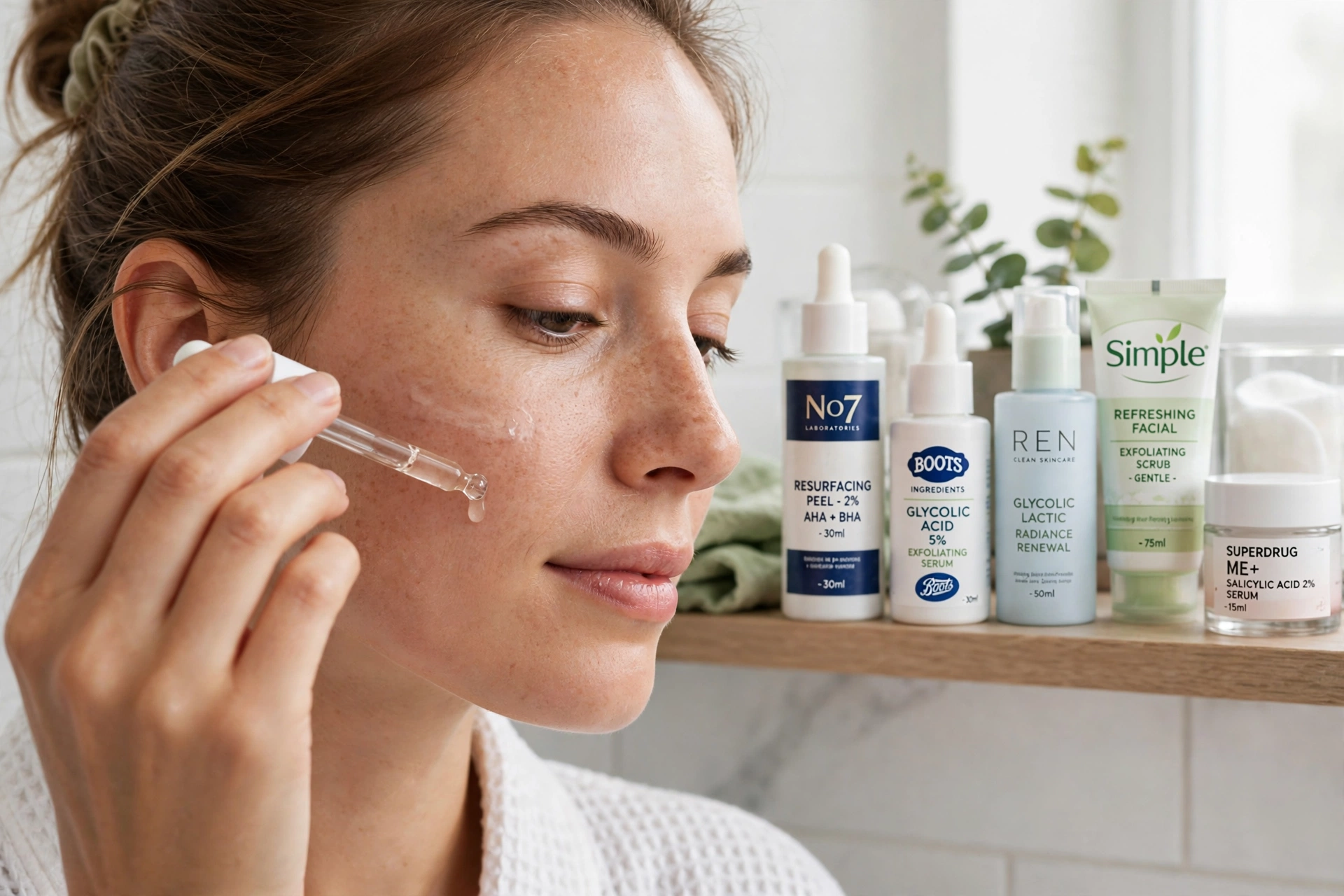
Struggling with stubborn under-skin bumps? This UK guide explains what closed comedones are, what causes them and the routine that clears them.
Read More arrow_forward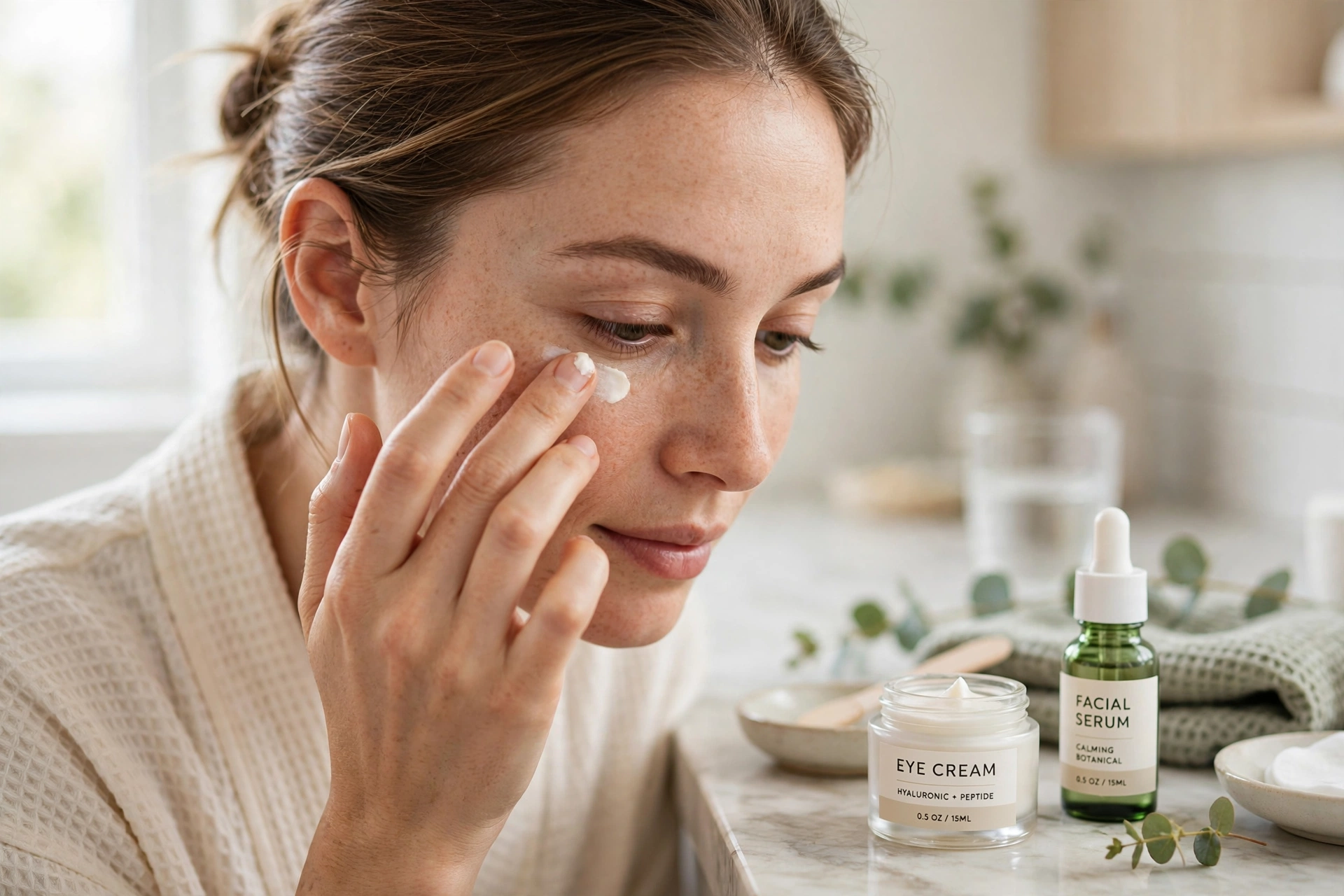
Learn how to get rid of milia around eyes safely in the UK — gentle at-home care, professional removal costs, prevention and when to see a GP.
Read More arrow_forward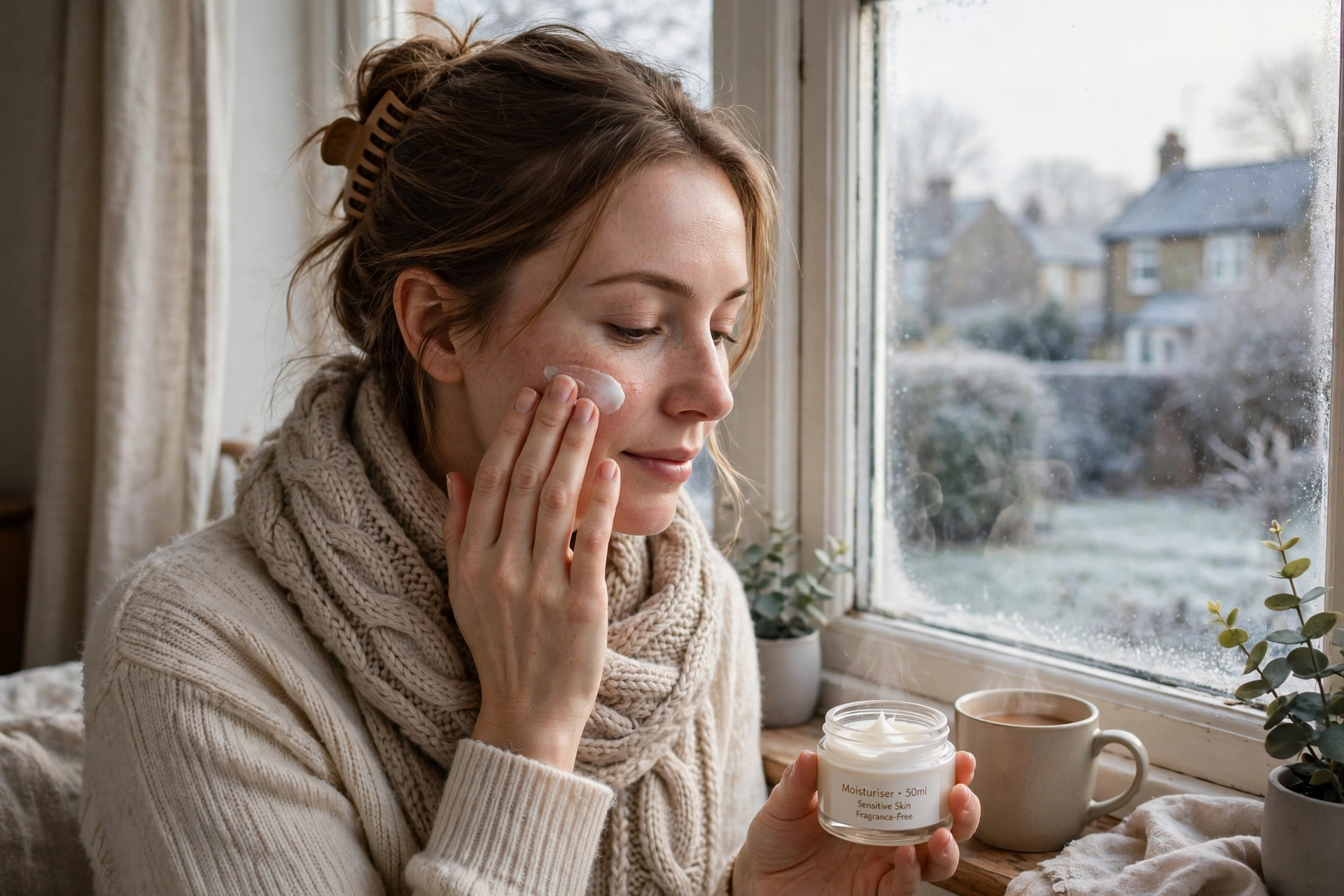
Winter skincare for sensitive skin UK: routines, barrier repair and rosacea tips for cold weather, with UK product picks from Boots, Superdrug and Cult Beauty.
Read More arrow_forward
A simple skincare routine for women over 50 uk — gentle morning and evening steps for menopause skin, hydration, retinol and daily SPF.
Read More arrow_forwardCalculate your Body Mass Index (BMI) in seconds. BMI is a quick screening number…
Use now arrow_forwardFind your daily calorie needs based on your age, sex, height, weight and activit…
Use now arrow_forwardFind how much water you should drink each day, in litres and glasses, based on y…
Use now arrow_forward